
Lead Qualification Frameworks That Actually Work
Table of Contents
- Introduction
- What is Lead Qualification?
- The Importance of Lead Qualification Frameworks
- Lead Qualification Frameworks
- Modern Qualification Frameworks
- Advanced Enterprise Frameworks
- Data-Driven Qualification Model
- How to Select the Appropriate Framework
- Common mistakes in lead qualification
- Conclusion
1. Introduction
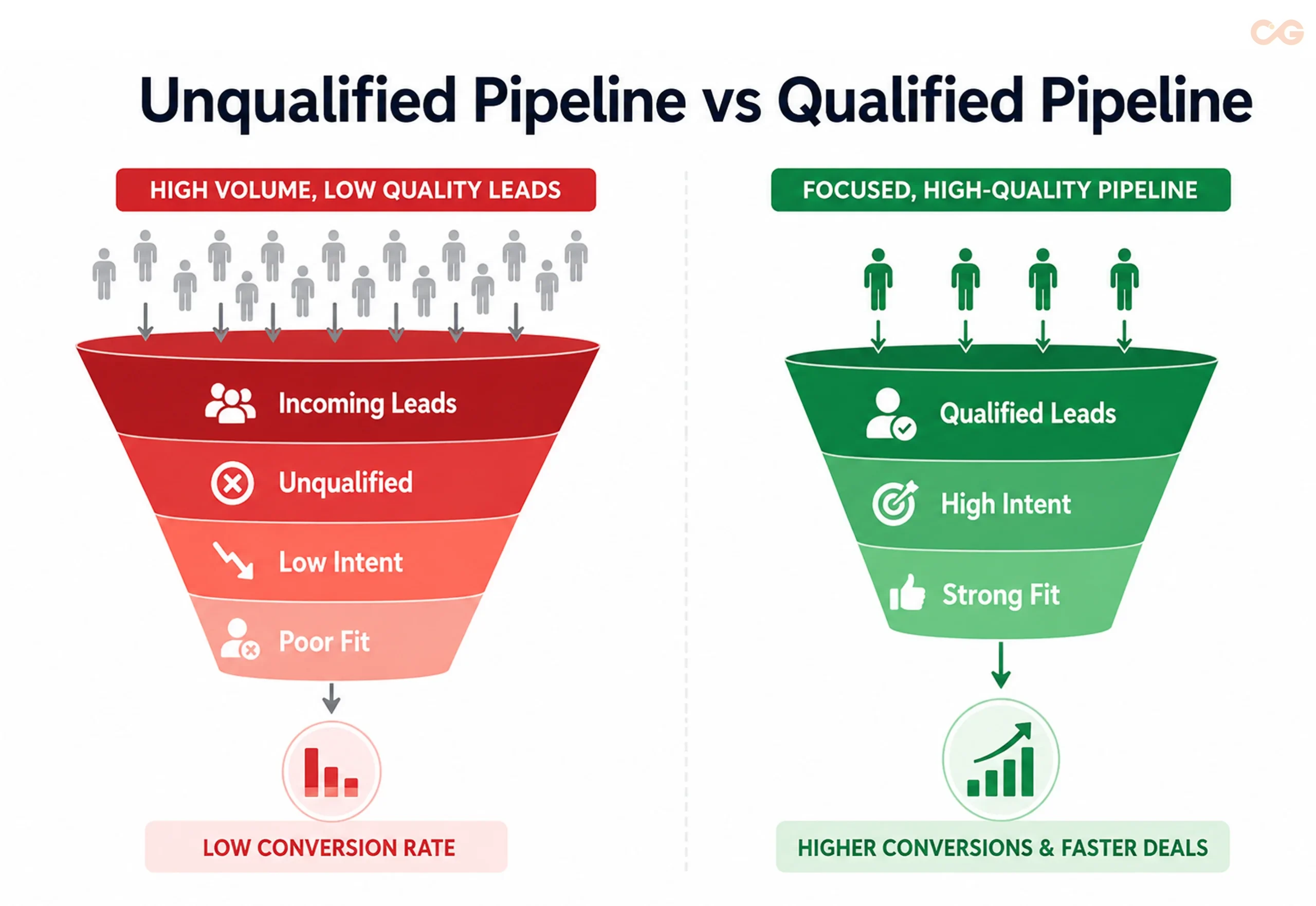
In today’s B2B sales landscape, the challenge has shifted from generating leads to identifying which leads to chase. While marketing teams focus on creating a full pipeline, sales teams often face low conversion rates. This issue often stems from a lack of a solid lead qualification process.
Research from MarketingSherpa reveals that 79% of marketing leads never convert into sales. This happens because many of them aren’t adequately qualified or nurtured. This disconnect results in wasted time and lower-quality pipelines, ultimately jeopardising sales.
Implementing effective lead qualification frameworks in sales can bridge this gap. These frameworks provide a structured and data-driven way to evaluate a prospect’s fit, intent, and value, moving away from guesswork.
In this blog, we’ll explore what lead qualification entails, highlight effective lead qualification methods, and examine popular frameworks like the BANT framework, ANUM framework, and MEDDIC framework. We’ll also discuss data-driven lead scoring systems to help determine the best approach for your sales environment.
2. What is Lead Qualification?
2.1 Definition
Lead qualification is a structured way to assess whether a prospect is suitable for your product or service and if they are likely to become a paying customer. This assessment focuses on key factors such as business needs, budget constraints, purchasing authority, and buying timeline.
At its core, lead qualification answers a crucial question:
“Is this prospect worth our sales time and resources?”
In high-performing sales organisations, this process relies on clearly defined criteria and standardised lead qualification methods, ensuring all teams operate consistently.
2.2 Lead Generation vs Lead Qualification
A common mistake many companies make is confusing lead generation with lead qualification. These functions serve different purposes.
Lead generation focuses on attracting prospects by creating content, running ads, and optimising for search engines and social media.
On the other hand, Lead Generation involves screening and identifying leads that are most likely to convert. This distinction is vital. Without an effective lead qualification process, companies risk overflowing their pipeline with low-quality leads.
Research by LandBase reveals that approximately 67% of lost sales opportunities stem from inadequate lead qualification by sales teams. This highlights a significant issue at the very start of the sales process. When leads aren’t properly evaluated, teams waste time on prospects unlikely to convert, ultimately compromising revenue performance.
People Also Ask
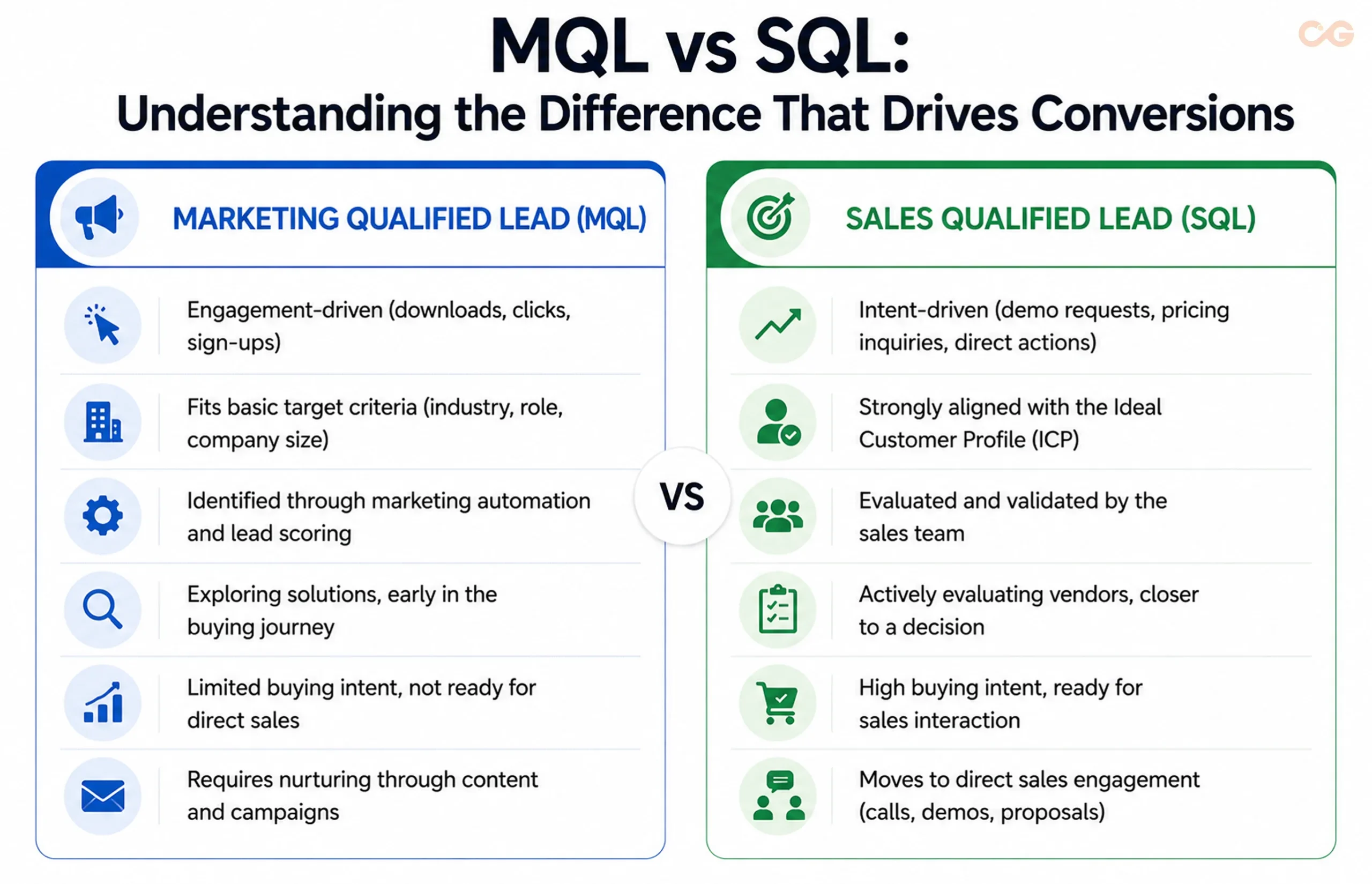
What is the difference between MQL and SQL in lead qualification?
A Marketing Qualified Lead (MQL) shows interest through actions such as downloading content or visiting a website, while a Sales Qualified Lead (SQL) is ready for direct sales contact, meeting stricter criteria like intent, fit, and readiness.
Investing in a solid lead qualification process enhances your sales efforts. Prioritise it to optimise your pipeline and improve your overall performance.
Takeaway

Download this guide to tailor your sales frameworks for different customer segments and turn structured qualifications into real sales.
3. The Importance of Lead Qualification Frameworks
Implementing an effective lead qualification framework transforms the sales process for organisations. It introduces much-needed structure and objectivity, moving away from inconsistent decision-making.
Key Benefits
1. Increased Sales Efficiency
Sales reps can zero in on leads that are more likely to convert, allowing for more time spent on high-value prospects.
2. Enhanced Conversion Rates
Well-qualified leads significantly boost the likelihood of closing deals.
3. Effective Opportunity Prioritisation
Not all leads hold the same potential. Qualification frameworks help teams prioritise the most valuable opportunities.
4. Lower Customer Acquisition Costs (CAC)
By streamlining efforts, companies can attract customers more cost-effectively, reducing wasted resources.
5. Consistent Decision-Making
Standardised frameworks foster a unified approach for all team members when assessing leads, enhancing consistency throughout the organisation.
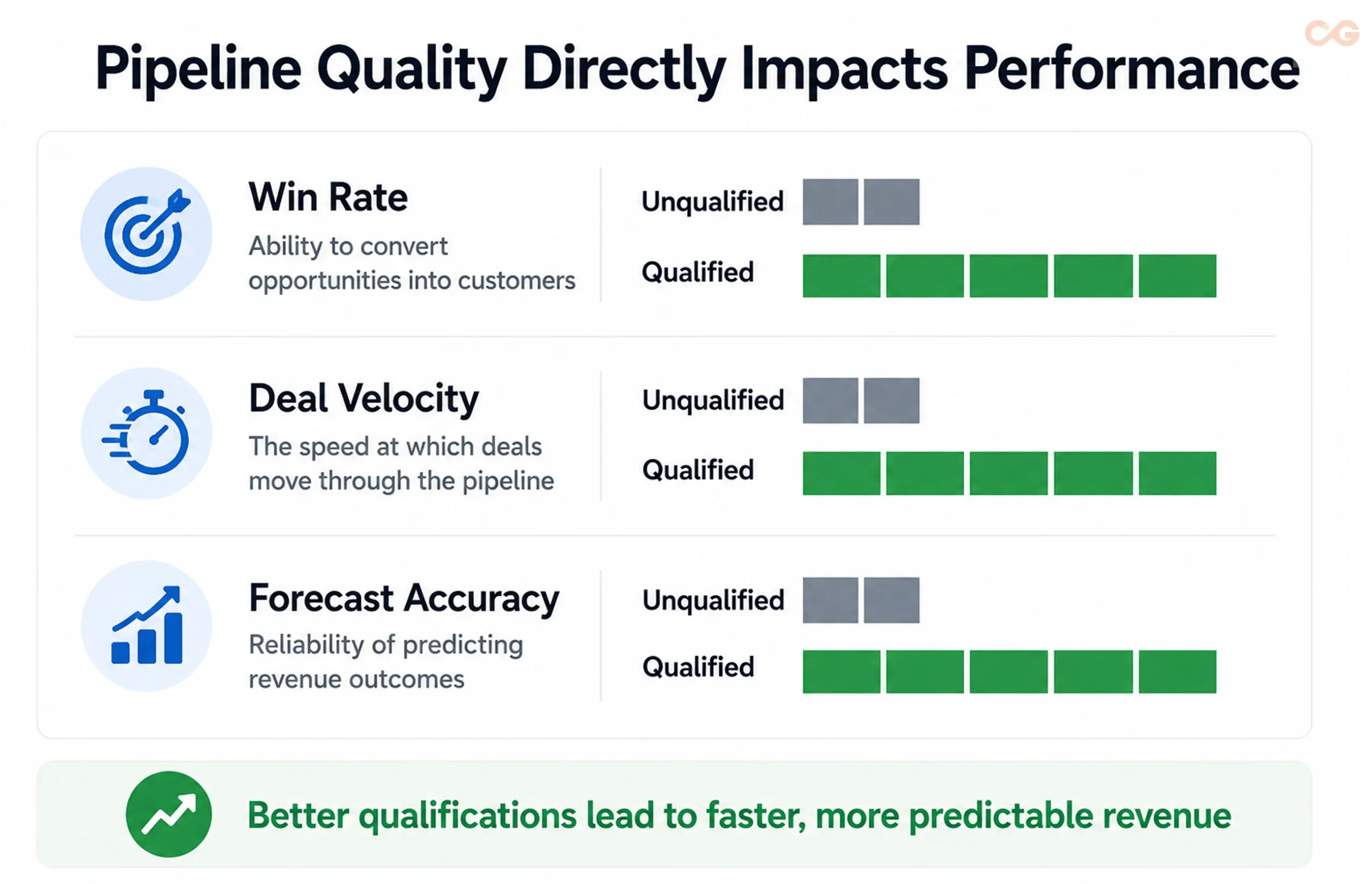
Research from LandBase shows that thoroughly qualified leads have a conversion rate of about 40%, compared to just 11% for unqualified prospects. This data highlights the crucial role of qualification in driving business results.
Furthermore, lead qualification frameworks in sales improve collaboration between marketing and sales teams. When both teams agree on what constitutes a qualified lead, the process flows more smoothly and effectively.
People Also Ask
How does lead qualification improve sales forecasting accuracy?
Accurate qualification ensures that only realistic opportunities enter the pipeline. This practice minimises overestimations and enhances revenue forecasting.
4. Lead Qualification Frameworks
Lead qualification frameworks form the foundation of your lead qualification process. They help determine if a lead can meet essential buying requirements, making them suitable for high-volume sales. However, their straightforward nature can limit effectiveness in complex buying scenarios.
4.1 BANT Framework (Foundational Model)
The BANT framework is a widely used lead qualification method assessing four key elements: budget, authority, need, and timeline. Here’s what you should consider:
- Budget: Does the prospect have an available budget?
- Authority: Are you speaking with a decision-maker?
- Need: Is there a defined business problem to address?
- Timeline: Is there a feasible timeframe for the purchase?
Benefits of BANT:
BANT enables swift filtering of low-probability leads, allowing focus on prospects most likely to close soon.
Limitations:
Strict application of BANT in the early stages might overlook opportunities, particularly when budgets aren’t set or buyers are still researching options.
When to use it:
- For high-volume inbound leads
- In low to mid-range deals
- During early qualification phases
4.2 ANUM Framework (Authority-First Approach)
The ANUM framework builds on BANT by prioritising authority, ensuring that you engage the right stakeholders from the beginning.
- Authority: Identify key decision-makers early.
- Need: Confirm the relevance of the identified problem.
- Urgency: Gauge the speed needed for action.
- Money: Evaluate the budget after validating the problem.
Why This Matters:
Many deals fail not due to budget issues but because sales teams engage with non-decision-makers for too long.
Strategic advantage:
With a focus on authority, ANUM can maintain deal momentum and facilitate essential conversations at the right level.
When to use it:
- Outbound sales
- Mid-level complexity deals
- Situations in which stakeholder mapping is unclear.
5. Modern Qualification Frameworks
Modern lead qualification frameworks have evolved from transactional to consultative selling. These approaches focus not just on qualifying leads but on understanding the reasons behind their buying decisions.
5.1 CHAMP Framework (Pain-Focused Selling)
The CHAMP framework emphasises understanding the business issues before proposing solutions, making it customer-centred.
- Challenges: Identify the problems facing the prospect.
- Authority: Determine who influences the decision.
- Money: Assess financial capabilities.
- Prioritisation: Evaluate the urgency of the issue.
Effectiveness of CHAMP:
CHAMP transforms the sales process into one focused on discovering problems, resulting in more valuable conversations.
Real-World Impact:
Clarity around the costs associated with problems — rather than just solution costs — accelerates deal conversions.
Example Scenario:
A marketing automation company using CHAMP might uncover that a prospect is losing leads due to poor segmentation. This issue then becomes a priority for discussion, paving the way for a pricing conversation.
When to use it:
- In solution-based selling
- In competitive markets
- When distinguishing your offer requires a strong understanding of customer context
5.2 NEAT Framework (Value-Driven Qualification)
The NEAT framework is an effective approach for lead qualification, especially when return on investment (ROI) is crucial. It connects the identification of problems directly to quantifiable business results.
- Needs: What issues must we resolve?
- Economic Impact: What financial benefits come from addressing these issues?
- Access to Authority: Can we reach decision-makers?
- Timeline: When will a decision take place?
Why NEAT Stands Out:
This framework shifts discussions from features to outcomes, aligning with how businesses measure their investments.
Key Difference from CHAMP:
While CHAMP focuses on identifying problems, NEAT emphasises quantifying their impact, reinforcing the business rationale for taking action.
Example:
A SaaS company leveraging NEAT might demonstrate that reducing churn by 10% can significantly boost annual revenue, making the purchase decision more defensible.
When to use it:
- For mid-market deals
- In ROI-centred environments
- During sales cycles that require financial justification
People Also Ask
Can CHAMP and NEAT work together?
Yes. Combining CHAMP with NEAT allows for identifying and prioritising customer challenges while measuring their business implications, leading to a stronger qualification approach.
6. Advanced Enterprise Frameworks
In enterprise environments, the lead qualification process is much more complex. Fit is no longer enough; qualification is now as much about understanding the dynamics of the decision as it is about getting the team on board and managing perceived risk throughout the deal.
6.1 MEDDIC Framework (Complex Sales Model)
The MEDDIC framework is a very structured lead qualification framework for highly complex, high-value transactions.
- Metrics – What measurable outcomes will define success?
- Economic Buyer – Who has final approval authority?
- Decision Criteria – What factors influence the decision?
- Decision Process – How does approval actually happen?
- Identify Pain – What’s the problem in the business?
- Champion – Who internally advocates for your solution?
What makes the MEDDIC sales methodology effective:
It gives transparency into the internal decision-making process, enabling sales teams to anticipate stakeholder involvement and minimise deal risk.
Critical insight:
Enterprise sales is where deals can often be lost because they don’t align with internal processes, rather than product features.
Example:
A company using MEDDIC may identify that procurement approval requires ROI validation and executive sponsorship—allowing the sales team to address these factors early instead of reacting late.
When to use it:
- For enterprise sales
- In lengthy sales cycles
- Where multiple stakeholders are involved
6.2 GPCTBA/C&I Framework (Deep Discovery Model)
The GPCTBA/C&I framework is a comprehensive qualification method that centres discussions on the prospect’s business goals.
- Goals, Plans, Challenges, Timeline: Understanding business context
- Budget and Authority: Assessing feasibility
- Negative Consequences: Understanding risks of not acting
- Positive Implications: Recognising the value of solving the issue
Distinctive Feature:
It integrates solutions into the customer’s broader business strategy.
Strategic advantage:
This framework creates urgency and enhances long-term alignment by emphasising risks and opportunities.
Strategic difference from CHAMP:
CHAMP identifies the problem, while NEAT quantifies its impact—strengthening the business case for action.
When to use it:
- For strategic accounts
- In high-value consultative sales
- When pursuing long-term partnerships
People Also Ask
What is the key advantage of the MEDDIC framework over simpler methods?
It enables sales teams to understand and influence the decision-making process, making deals more predictable and minimising attrition in later stages.
7. Data-Driven Qualification Model
7.1 Lead Scoring Framework
Lead scoring stands out as a highly effective lead qualification method, especially when handling a large influx of inquiries.
Key Components
Behavioural Scoring: This assesses how actively leads engage through metrics like website visits, email clicks, and content downloads.
Firmographic Scoring: This evaluates a company’s traits, such as its industry, size, and revenue.
Threshold-Based Qualification: This sets specific score levels to identify when a lead is ready for direct sales outreach.
People Also Ask
When should you update lead scoring models?
Regular updates are essential to align with changing customer behaviours and conversion data, keeping your qualification process current and effective.
8. How to Select the Appropriate Framework
Choosing a lead qualification method depends on your sales environment, the complexity of your deals, and your buying process. There is no universal solution; each framework is designed to tackle different sales challenges.
BANT / ANUM: Best suited for simple, transactional sales. These models help quickly verify feasibility and eliminate unsuitable leads.
CHAMP / NEAT: Ideal for consultative, mid-market sales. They focus on solving customer problems and linking those problems to real business benefits.
MEDDIC / GPCTBA/C&I: Necessary for complex, high-value deals involving multiple stakeholders. These frameworks help manage relationships and ensure alignment with business objectives, reducing risk.
Lead Scoring: Essential for managing high-volume inbound leads. This approach prioritises engagement with the most relevant and interested prospects.
Key Insight: No single approach is superior. Top-performing organisations often blend various qualification methods to create a flexible model that adapts to different sales situations, customer segments, and stages in the sales funnel.
9. Common mistakes in lead qualification
Effective lead qualification methods can fail if not executed correctly. The issue usually lies in their application, not the methods themselves.
- Relying on assumptions instead of data
Making qualification decisions based purely on intuition often leads to misprioritization. Use behavioural signals and firmographic data to inform your choices.
- Ignoring buying signals
Look for clear signs of intent, such as frequent website visits, content downloads, or demo signups. Neglecting these indicators can cause you to miss valuable conversions.
- Using frameworks rigidly
Treating qualification frameworks as strict checklists limits their effectiveness. Recognise that each deal is different, and let your approach adapt to those differences.
- Overcomplicating the process
Avoid adding too many criteria. This can slow down decisions and create friction between sales teams and prospects.
- Treating all leads equally
Not every lead holds the same potential. Focus on high-fit, high-intent prospects to boost sales efficiency and improve revenue.
Takeaway
Download this guide to tailor your sales frameworks for different customer segments and turn structured qualifications into real sales.
10. Conclusion
A solid lead qualification process serves as a strategic advantage, not just a tactic. Structured frameworks can enhance the sales process by:
- Boosting pipeline quality
- Increasing conversion rates
- Improving forecasting accuracy
- Lowering acquisition costs
Different frameworks serve various needs, from foundational models like BANT and ANUM to advanced techniques like MEDDIC.
Top-performing companies don’t limit themselves to one framework. They combine multiple methods with data insights to create flexible systems that adapt to changing buyer behaviours.
In today’s competitive B2B landscape, effective qualification is essential. It supports consistent and predictable revenue growth.