
Logo Design Psychology: From Aesthetics to Business Impact
Table of Contents
- Introduction
- The Neuroscience of Logo Recognition
- Conversion-Focused Logo Elements
- Industry-Specific Logo Strategies in India
- Measuring Logo Performance
- Future-Proofing Logo Design
- Conclusion
Introduction
Every day, consumers encounter hundreds of brand logos on websites, social media, mobile apps, and ads. However, only a handful make a lasting impact. This often depends on logo design psychology. By strategically using colours, typography, shapes, and visual elements, companies can shape perceptions, build trust, and enhance brand recognition.
In 2026, logo design psychology has become more than just looks. It has developed into a powerful tool for influencing consumer behaviour and purchasing decisions. This guide delves into the science behind logo recognition, effective design strategies, industry-specific tactics for Indian businesses, methods for measuring performance, and future logo trends you should embrace.
The Neuroscience of Logo Recognition
The human brain processes visual information almost instantly, making first impressions of a brand within moments. The brain follows a series of psychological steps before a logo influences purchasing decisions.
Here’s how the process works:
- Attention: Consumers notice a logo in as little as 50 milliseconds, making first impressions almost instantaneous, according to Taylor and Francis
- Recognition: Within 10 seconds, the brain begins associating the logo with a particular brand.
- Memory: Seeing the same logo 5 to 7 times strengthens brand recall, making it easier for consumers to recognise it in the future, according to DESIGNRUSH.
- Emotional Connection: Colours, typography, and shapes trigger emotional and cognitive responses that influence how trustworthy, innovative, or approachable a brand appears.
- Purchase Influence: Strong recognition and positive emotions increase consumer confidence, making them more likely to choose that brand over competitors.
For Indian businesses operating in a highly competitive digital marketplace, capturing attention is only the beginning. A memorable logo doesn’t just identify a brand—it builds familiarity, strengthens trust, and supports long-term customer loyalty.
Understanding how the brain recognises logos is only part of the equation. The next step is knowing which logo design elements influence customer perception and encourage action.
Conversion-Focused Logo Elements
A logo design’s effectiveness goes beyond visual appeal. Every design element—from typography to colour—shapes how consumers perceive a brand and influences whether they feel confident enough to engage or make a purchase.
Typography psychology in branding
Typography communicates a brand’s personality before customers read a single word. The right font helps establish credibility and aligns with customer expectations.
- Serif fonts: Convey tradition, trust, and reliability, making them suitable for finance, education, and luxury brands.
- Sans-serif fonts: Project simplicity, innovation, and modernity, making them ideal for technology and digital-first businesses.
- Script or decorative fonts: Add creativity and elegance but should be used sparingly to maintain readability.
In India’s culturally diverse market, choosing typography that reflects both brand values and audience preferences helps create stronger emotional connections.
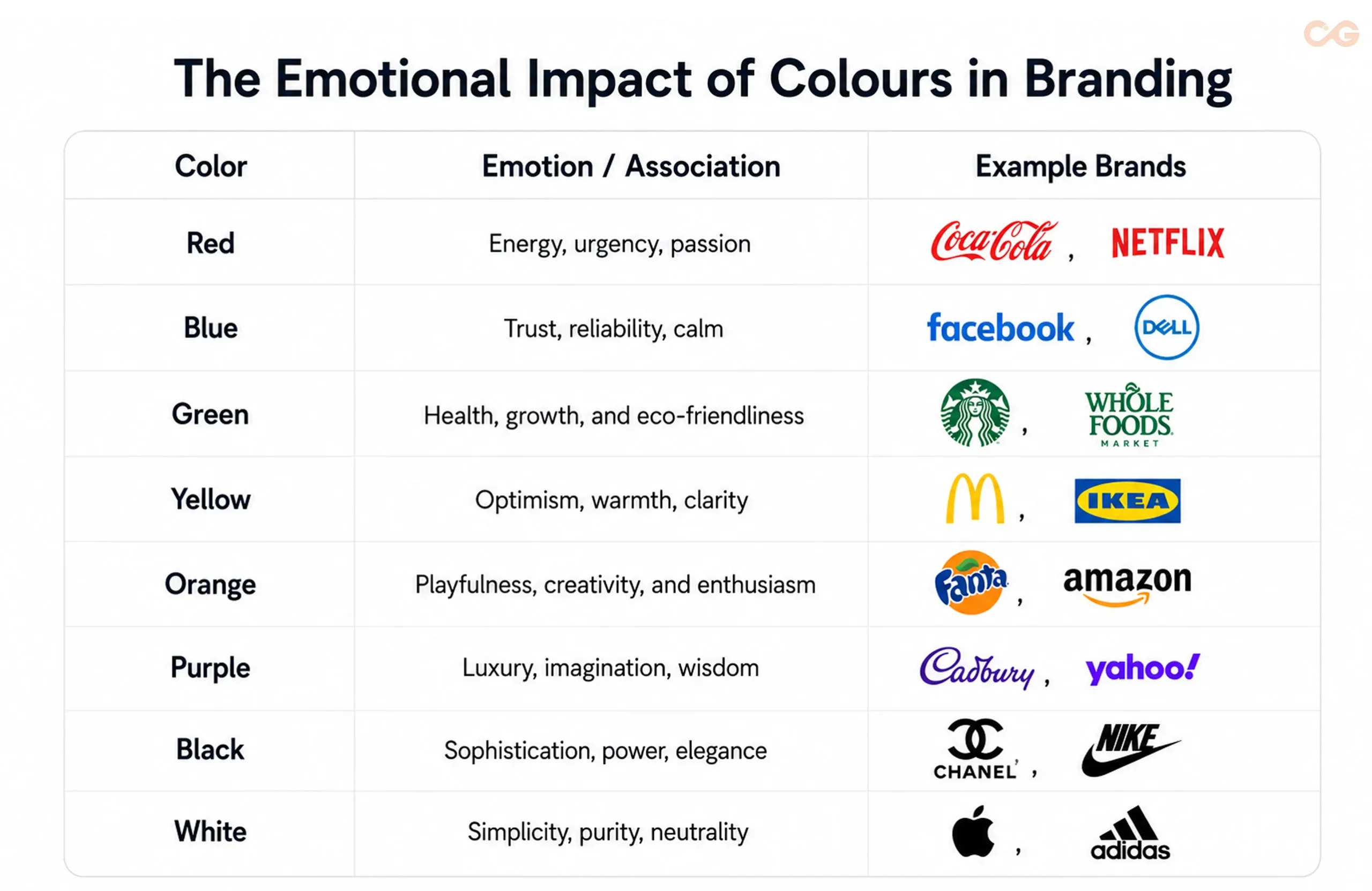
Logo colour psychology
Colours are often the first visual element consumers notice and play a significant role in shaping emotional responses.
- Blue: Represents trust, intelligence, and security, making it a preferred choice for fintech brands such as Paytm.
- Red: Symbolises energy, urgency, and excitement, encouraging action and stimulating appetite, as seen in McDonald’s India.
According to ExpertBeacon, more than 50% of logo familiarity increases purchase likelihood, highlighting how consistent colour choices strengthen recognition and influence buying decisions.
By combining thoughtful typography and colour psychology, businesses can create logos that not only enhance brand recognition but also build trust, encourage engagement, and improve conversion potential.
Research indicates that simpler logos are more memorable and versatile, particularly in the mobile-dominated Indian e-commerce sector. According to Nielsen reports, 70% of companies experience increased customer engagement after redesigning their logos.
While these psychological principles apply universally, different industries rely on them in different ways depending on customer expectations and buying behaviour.
Takeaway

Ready to redesign your logo with intention? Start implementing these strategies now and watch your brand connect with your audience!
Industry-Specific Logo Strategies in India
Healthcare: Logos in this sector convey trust and care. They often use calming colours like blue and green to reassure patients. For instance, the Apollo Hospitals logo combines soothing colours with friendly typography to foster confidence.
Fintech: In the fintech industry, security, trust, and innovation are essential. Companies such as Razorpay and PhonePe demonstrate how typography in branding, combined with blue colour palettes, can reinforce trust, reliability, and technological innovation.
E-commerce: A mobile-first approach is vital in India. Logos should be scalable and easily recognisable, even at smaller sizes. The Flipkart logo exemplifies this with its simple, contrasting design and distinctive shapes that are clear on mobile screens.
B2B SaaS: Here, muted colours such as blue and grey create professional, approachable designs. This palette supports a balance between sophistication and accessibility, catering to India’s growing tech startup ecosystem.
Great logo design shouldn’t rely on assumptions alone. Businesses also need measurable indicators to understand whether their visual identity is delivering real business value.
Measuring Logo Performance
To assess a logo’s effectiveness, consider the following metrics:
Brand Recall Test: Research by Linearity shows that 75% of people recognise a brand based solely on one logo. Maintaining exposure of 5 to 7 times is crucial for better retention.
Heat Mapping: Eye trackers studies reveal logos positioned in the top left corner attract 89% more user attention, enhancing brand visibility and engagement.
Conversion Rates: Following a rebranding effort, Shoppers Stop reported sales conversions soaring from 2% to 20%, highlighting the power of recognisable and emotionally appealing logos.
ROI Calculations: Mastercard’s logo simplification in 2019 led to significant gains, ranking them eight spots higher and boosting brand value by 25%. This success inspires Indian brands to pursue similar strategies.
Future-Proofing Logo Design
To keep logos relevant, they must adapt to emerging technologies and values:
Responsive Logos: Ensure your logo looks clear and engaging on all devices to thrive in India’s multi-screen environment.
Voice Interface Branding: As voice technology evolves, logos should have verbal or auditory equivalents for smart assistants.
AR/VR Applications: Leverage augmented and virtual reality for interactive brand experiences, gaining traction in the Indian retail and entertainment sectors.
Sustainability Messaging: Use logo colours with green hues and natural elements to resonate with eco-conscious consumers in India.
By prioritising these strategies, your branding can effectively capture attention and build lasting connections in the marketplace.
Takeaway
Ready to redesign your logo with intention? Start implementing these strategies now and watch your brand connect with your audience!
Conclusion
In 2026, logo design and logo colour psychology will extend beyond mere aesthetics. They will become vital elements of brand identity, consumer trust, and conversion rates. Indian brands that leverage insights from neuroscience, colour and typography psychology, or data-driven design will gain a significant competitive advantage.
CPluz reports that adopting AI-generated logo designs can increase conversion rates by 37.5%. Therefore, investing in science-based logo design is crucial for establishing a lasting brand.
By integrating these elements, Indian businesses can create logos that effectively engage and convert, ensuring their presence in a dynamic marketplace.
You May Also Like