
Mobile-First Marketing Strategies for Indian Consumers: A Comprehensive Guide for 2026
Table of Contents
- India’s Mobile-First Digital Landscape
- Understanding the Indian Mobile Consumer
- Mobile-First Customer Journey for Indian Consumers
- Core Mobile-First Marketing Strategies Needed for the Indian Market
- Advanced Mobile Marketing Strategies in 2026
- Measuring Mobile Marketing Success
- Overcoming Mobile Marketing Challenges in India
- Future Trends in India’s Mobile Marketing
- Conclusion: India’s Mobile-First Future
The digital landscape in India is shifting rapidly, with mobile devices leading the charge. By the end of 2025, India had approximately 1.03 billion internet users, representing 70% of the country’s population, according to DataReportal. This continued growth highlights the importance of mobile-first marketing as consumers increasingly rely on smartphones to browse, shop, and interact with brands. This makes mobile-first marketing essential; it forms the foundation of effective digital strategies in India.
This guide details mobile marketing strategies tailored for Indian consumers and highlights successful tactics used by leading brands to engage India’s mobile-savvy audience. You can implement these strategies in your business.
India’s Mobile-First Digital Landscape
Key Statistics on the Mobile Revolution
The smartphone market in India has evolved significantly. In 2024, mobile data consumption soared, with projections suggesting it will increase from INR 726.10 billion to INR 2.21 trillion by 2030, as reported by Yahoo Finance. This growth can be attributed to three key factors:
1. Affordable Data Plans: Reliance Jio has made internet access affordable through low-cost data packages, bringing millions online.
2. Budget Smartphones: Entry-level smartphones priced at around ₹5,000 allow new users to connect to the internet at minimal expense.
3. Expansion of 4G and 5G: Rapid network deployment has brought high-speed internet to Tier-2 and Tier-3 cities and underserved rural areas.
Embrace mobile-first marketing by leveraging these insights to enhance your strategies effectively.
Importance of Mobile Marketing for Indian Businesses
Mobile marketing is crucial for Indian companies. Most internet users in India primarily access digital content via smartphones. As mobile use increasingly leads online activities such as browsing and shopping, businesses with mobile-optimised websites and mobile-first marketing strategies can effectively engage and convert customers.
Understanding the Indian Mobile Consumer
It is vital to recognise that Indian mobile users behave differently than those in Western markets.
Engage with Regional Language Preference
A significant majority — 98% — of Indian internet users prefer content in regional language. A report from IAMAI and KANTAR shows that Tamil, Telugu, and Malayalam are the most commonly used languages. Furthermore, 57% of urban users prefer content in their native languages.
Strategies for Optimising for Mobile Users in India
To enhance the experience for mobile users in India, businesses should focus on:
1. Creating content and interfaces in local languages.
2. Designing lightweight pages to accommodate limited data usage.
3. Integrating UPI and digital wallet payment options.
4. Ensuring fast loading times, even on 3G/4G networks.
5. Prioritising vertical video formats for social media.
Optimising for India’s Mobile Usage Patterns
Although affordable mobile data has significantly increased internet usage in India, businesses should continue to optimise mobile experiences for speed and efficiency, particularly for users in areas with inconsistent network connectivity.
According to Nokia’s 2026 Mobile Broadband Index (MBiT), India’s average monthly mobile data consumption per user exceeded 31 GB in 2025, while pan-India 5G data traffic grew by 70% year-on-year to 12.9 exabytes. This growing demand highlights the importance of optimising mobile experiences to deliver rich content while maintaining fast loading speeds and smooth performance.
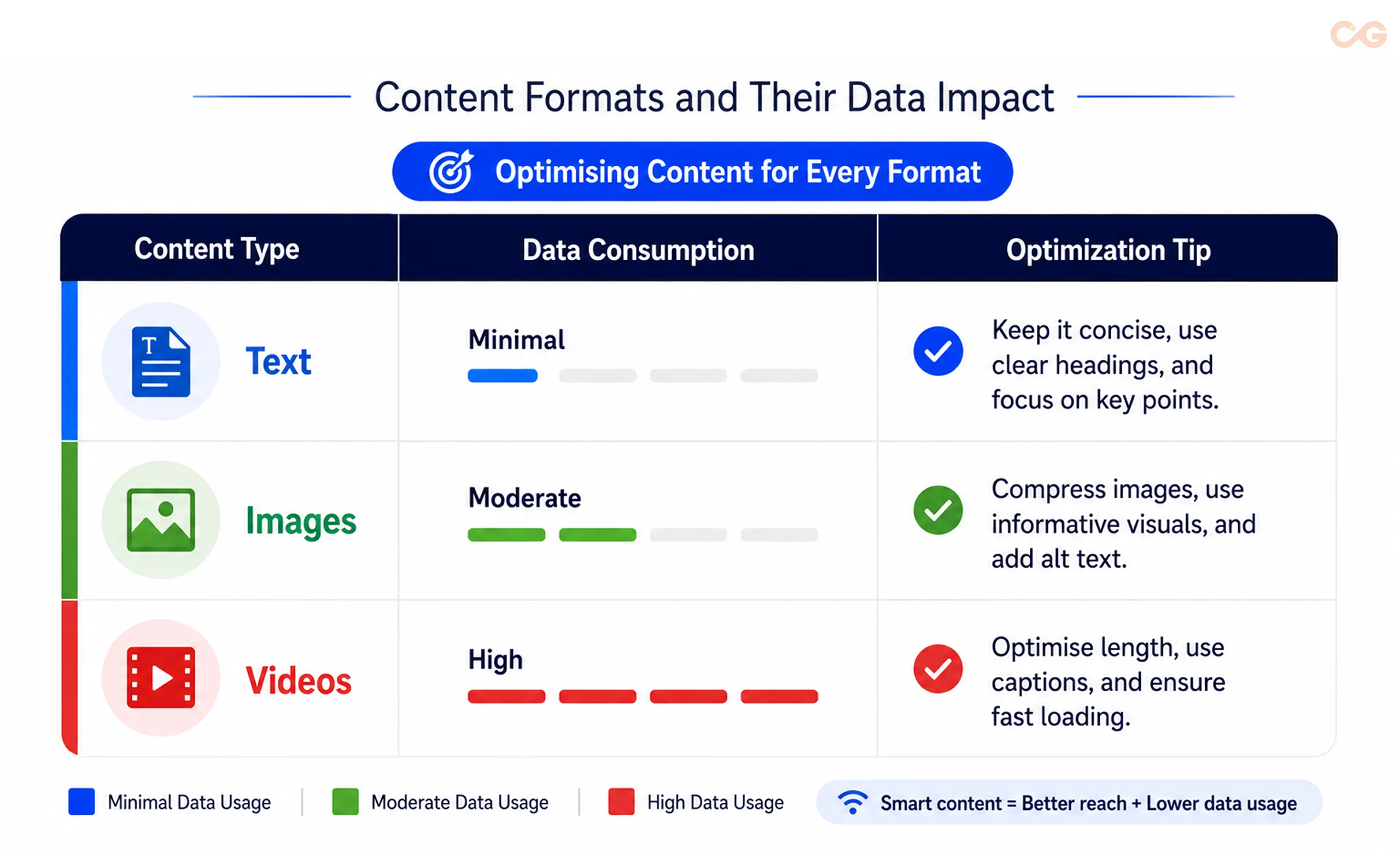
How Indians Consume Content Online
How Indians Consume Content Online
Mobile-First Customer Journey for Indian Consumers
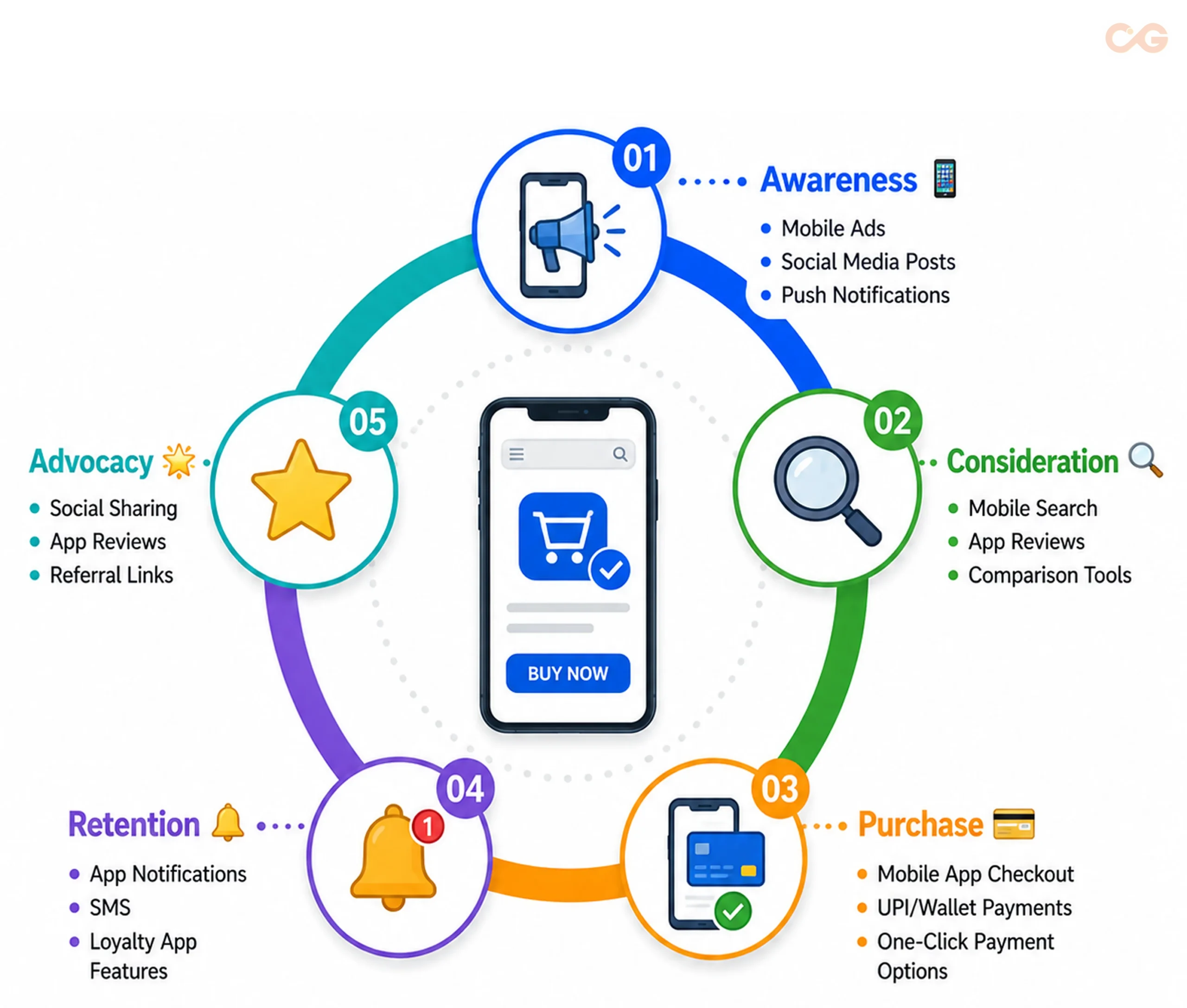
Understanding how Indian consumers interact with mobile devices at each stage of the buying journey helps businesses create more effective mobile-first marketing strategies. From product discovery to post-purchase engagement, every touchpoint should be optimised for a seamless mobile experience.
Awareness Stage: Mobile Discovery
Indian consumers typically discover brands through:
- Social media platforms such as Instagram and Facebook
- Regional content platforms and apps
- YouTube recommendations and short-form videos
- Google searches in regional languages
- WhatsApp recommendations from friends and family
- App store searches
Consideration Stage: Mobile Research
Before making a purchase, consumers use their smartphones to compare products and evaluate their options. Common activities include:
- Reading product reviews
- Watching YouTube unboxing and review videos
- Comparing prices across e-commerce platforms
- Seeking recommendations in WhatsApp groups
- Using voice search to find relevant information
Decision Stage: Mobile Purchase
A smooth and trustworthy mobile shopping experience plays a crucial role in influencing purchase decisions. Indian consumers prefer:
- Multiple payment options, including UPI and digital wallets
- Cash on Delivery (COD)
- Easy return and refund policies
- Product descriptions in regional languages
- Customer ratings and reviews
- Fast and secure checkout experiences
Takeaway

Build a Winning Mobile-First Strategy with Analytics-Driven Insights
Download our free guide to combine powerful analytics tools with practical mobile-first implementation strategies and achieve measurable business growth in the Indian market.
Retention Stage: Post-Purchase Engagement
Customer relationships continue beyond the purchase. Businesses can strengthen loyalty through:
- WhatsApp order updates and customer support
- Personalised push notifications
- Exclusive offers and in-app promotions
- Loyalty and rewards programmes
- Responsive after-sales support
The Mobile-First
Customer Journey
Core Mobile-First Marketing Strategies Needed for the Indian Market
After understanding how Indian consumers interact with brands throughout their mobile journey, businesses can implement the following mobile-first strategies to deliver faster, more engaging, and conversion-focused experiences. These strategies help improve accessibility, customer satisfaction, and long-term business growth in India’s mobile-driven digital landscape.
1. Mobile-Optimised Website Design: Beyond Responsive Design
A mobile-first website is the foundation of an effective digital marketing strategy, designed primarily for smartphone users rather than adapting desktop experiences for smaller screens. By prioritising speed, usability, and low data consumption, businesses can create seamless browsing experiences that improve engagement, user satisfaction, and conversions.
Key Elements
Progressive Web Apps (PWAs)
Companies such as Flipkart have adopted Progressive Web Apps (PWAs) to deliver app-like experiences with faster loading speeds and lower data consumption. Flipkart Lite was specifically designed to improve accessibility for users in areas with slower internet connectivity.
Accelerated Mobile Pages (AMP)
AMP technology enables web pages to load almost instantly, reducing bounce rates and improving the experience for mobile users who often abandon slow-loading websites within seconds.
Touch-Optimised Navigation
Mobile-friendly interfaces should include thumb-friendly buttons, swipeable carousels, sticky headers, and simplified menus to make navigation faster and more intuitive.
People Also Ask: What is the mobile-first design approach?
Mobile-first design is a development approach that prioritises designing websites and applications for smartphones before adapting them for tablets and desktops. It focuses on touch-friendly navigation, vertical layouts, simplified menus, faster loading speeds, and reduced data consumption, making it especially effective in mobile-dominant markets such as India.
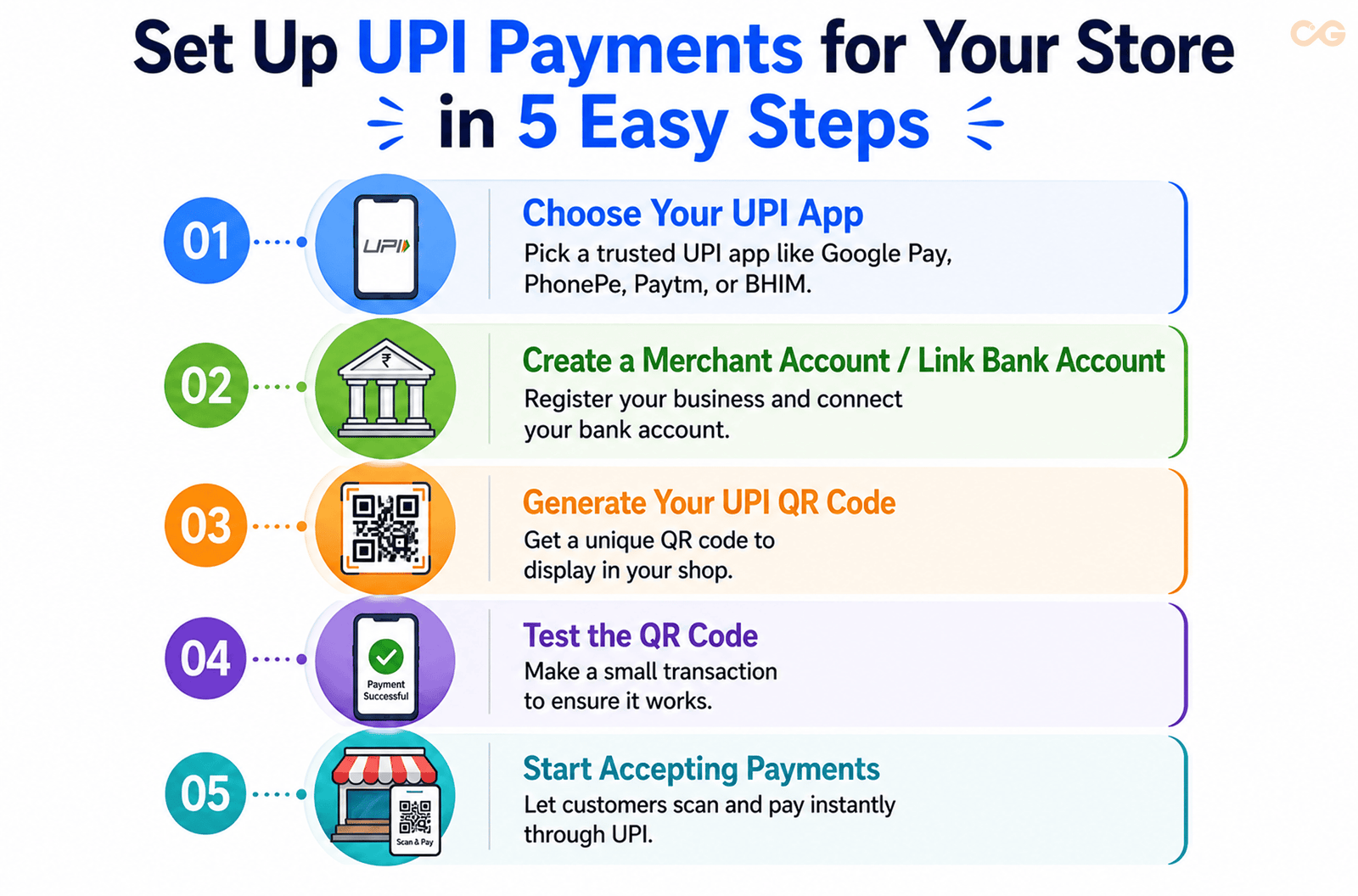
2. Digital Payment Solutions and UPI
A seamless payment experience is a critical component of mobile-first marketing. As UPI continues to dominate India’s digital payment ecosystem, businesses should optimise their payment processes to reduce checkout friction and improve customer convenience.
According to the RBI Annual Report, UPI accounted for 83.7% of India’s total digital payment transaction volume in FY25, up from 79.7% in FY24, reflecting its growing adoption across the country.
Case Study: Google Pay’s Mobile-First UPI Experience
Google Pay simplified digital payments by designing a mobile-first experience around the Unified Payments Interface (UPI). With a clean interface, instant bank-to-bank transfers, QR code payments, and a quick payment flow, the app made mobile transactions simple for both consumers and merchants.
By combining a seamless mobile experience with UPI integration and promotional campaigns, Google Pay contributed to the wider adoption of mobile payments in India, demonstrating how frictionless mobile experiences can improve customer convenience and engagement.
Implementation Tips
- Integrate multiple UPI payment options.
- Display QR codes prominently across physical and digital touchpoints.
- Send payment reminders through WhatsApp or SMS.
- Offer one-click checkout to simplify the payment process and improve conversions.
3. Data-Efficient Mobile Content Strategy
Many Indian consumers continue to experience inconsistent internet connectivity or rely on limited data plans. Optimising content for low-data usage helps businesses deliver faster, more accessible, and engaging mobile experiences without compromising user experience.
Lightweight Content Optimisation
Compress images, enable lazy loading, provide text alternatives, and include data-saver options to reduce loading times while maintaining content quality.
Short-Form Video Strategy
Create short, vertical videos for platforms such as Instagram Reels and YouTube Shorts. Use captions, autoplay previews, and progressive loading to improve engagement while minimising data consumption.
WhatsApp Business Marketing
Leverage WhatsApp Business to showcase product catalogues, automate customer responses, send promotional broadcasts, provide customer support, and facilitate payments through a familiar mobile platform.
Regional Social Media Platforms
Use platforms such as ShareChat to connect with regional language audiences through localised content, helping brands improve engagement and expand their reach across Tier-2 and Tier-3 cities.
Takeaway
Build a Winning Mobile-First Strategy with Analytics-Driven Insights
Download our free guide to combine powerful analytics tools with practical mobile-first implementation strategies and achieve measurable business growth in the Indian market.
Advanced Mobile Marketing Strategies in 2026
As mobile technology continues to evolve, businesses must go beyond the fundamentals and adopt advanced mobile marketing strategies that deliver personalised, location-aware, and app-centric experiences. These approaches help brands strengthen customer relationships, improve engagement, and stay competitive in India’s rapidly evolving mobile ecosystem.
1. Location-Based Mobile Marketing
Location-based marketing is a core mobile-first marketing strategy because it uses smartphone GPS capabilities to deliver highly relevant experiences based on a customer’s real-time location. Unlike traditional marketing, it enables businesses to engage users with timely, context-aware messages that increase both online engagement and in-store visits.
Key Strategies
- Use geofencing to send location-specific offers when customers are near physical stores.
- Optimise for “near me” searches to improve local visibility.
- Deliver location-triggered push notifications with personalised promotions.
- Recommend nearby stores, products, or services based on customer location.
2. Push Notification & In-App Engagement
A mobile-first strategy extends beyond acquiring users—it focuses on keeping them engaged throughout their journey. Push notifications and in-app messaging enable businesses to communicate directly with smartphone users in real time, encouraging repeat interactions without relying on email or SMS.
Key Strategies
- Send personalised notifications based on browsing or purchase behaviour.
- Remind users about abandoned carts.
- Share app-exclusive offers and product launches.
- Deliver contextual in-app messages to improve user engagement.
3. QR Code & Offline-to-Mobile Marketing
QR codes strengthen a mobile-first marketing strategy by connecting offline interactions with digital experiences. They allow customers to instantly access product information, offers, payment options, or loyalty programmes using their smartphones, creating a seamless transition between physical and digital touchpoints.
Key Strategies
- Enable scan-to-pay and scan-to-order experiences.
- Link customers to product guides and demonstrations.
- Launch QR-based promotional campaigns.
- Track customer engagement through QR scans.
4. Mobile Wallet & One-Tap Checkout
An effective mobile-first marketing strategy must minimise friction during the purchase journey. Mobile wallets and one-tap checkout simplify mobile transactions, reduce checkout abandonment, and help customers complete purchases quickly using their smartphones.
Key Strategies
- Offer one-tap checkout for returning customers.
- Integrate secure mobile wallets.
- Enable biometric authentication.
- Reduce checkout steps to improve mobile conversions.
5. Mobile App Engagement & Retention
A mobile app is more than a sales channel—it’s an opportunity to build long-term customer relationships. A mobile-first marketing strategy focuses on keeping users engaged through personalised experiences, exclusive benefits, and continuous interaction that encourages repeat usage and brand loyalty.
Key Strategies
- Launch loyalty and rewards programmes.
- Offer app-exclusive discounts and early access.
- Introduce gamification features.
- Continuously improve the app based on user behaviour and feedback.
Case Study: Swiggy’s Mobile App Performance Optimisation
Swiggy collaborated with Google’s Android Developer Relations (Android DevRel) team to improve the performance of its Android app by reducing UI lag (jank) and optimising app responsiveness. These improvements enhanced the overall mobile user experience and app performance. (Source: Android Developers)
Outcome
Following the optimisation, Swiggy reduced its bounce rate by 28%, increased homepage browsing and restaurant discovery by 50%, and generated an additional ₹11 million in monthly revenue.
Measuring Mobile Marketing Success
Measuring the performance of mobile-first marketing initiatives helps businesses understand user behaviour, optimise campaigns, and improve return on investment. Tracking the right key performance indicators (KPIs) enables brands to identify opportunities for improvement and make data-driven marketing decisions.
Key Performance Indicators (KPIs)
Engagement Metrics
These metrics measure how users interact with your mobile website or app.
- Mobile Site Bounce Rate: Aim to keep the bounce rate below 40% to improve engagement and reduce visitor drop-offs.
- Average Session Duration: Measure how long users stay on your mobile website or app to evaluate content quality and user engagement.
- Pages per Mobile Session: Track the number of pages users visit during a session to assess navigation and content effectiveness.
- Daily Active Users (DAU): Monitor the number of users engaging with your mobile app each day to evaluate user activity and adoption.
- User Retention Rate (Day 1, Day 7, Day 30): Measure how many users return after their first visit to assess customer loyalty and long-term engagement.
Conversion Metrics
These metrics evaluate how effectively your mobile marketing efforts drive business outcomes.
- Mobile Conversion Rate: Measure the percentage of mobile users who complete desired actions, such as purchases or enquiries.
- Cost per Mobile Acquisition (CPA): Track the cost of acquiring each mobile customer to optimise marketing spend and maximise ROI.
- Mobile Revenue Contribution: Measure the percentage of total revenue generated through mobile channels.
- Mobile Cart Abandonment Rate: Monitor how many users leave without completing their purchases to identify checkout friction and improve conversions.
- Payment Success Rate: Track successful mobile transactions to ensure a seamless checkout experience and minimise payment failures.
Technical Performance Metrics
These metrics help ensure a fast, reliable, and seamless mobile experience.
- Mobile Page Load Time: Aim for page load times of under three seconds to improve user experience and reduce bounce rates.
- Mobile Site Uptime: Monitor website availability to ensure uninterrupted access for users.
- App Crash Rate: Track app crashes to identify technical issues, improve stability, and enhance the overall user experience.
- API Response Time: Measure API performance to ensure fast interactions and smooth mobile functionality.
Overcoming Mobile Marketing Challenges in India
Mobile marketing is growing rapidly in India, but businesses face significant hurdles related to technology, consumer behaviour, and market diversity. By implementing effective strategies, brands can create smooth mobile experiences and secure lasting success.
Challenge 1: Device Fragmentation
The Indian mobile market features a wide range of Android devices, different screen sizes, and various operating system versions, complicating the delivery of a consistent user experience.
Solution:
Test websites and applications on multiple devices, Android versions, and screen resolutions. Focus on Android optimisation, as 96.67% of India’s mobile operating system market share is Android, according to Statcounter GlobalStats.
Challenge 2: Connectivity Limitations
Internet speeds and network reliability differ greatly across regions, particularly in rural and remote areas.
Solution:
Implement offline-first design principles, progressive enhancement techniques, and intelligent content caching. This will ensure faster loading and uninterrupted user experiences, even in areas with limited connectivity.
Challenge 3: Language and Cultural Diversity
India’s linguistic landscape demands effective communication with diverse audiences across various regions.
Solution:
Invest in professionally crafted regional language content and cultural localisation, rather than relying on simple translations. Collaborate with native language experts to enhance authenticity, engagement, and customer trust.
Challenge 4: Building Trust in Digital Payments
Many consumers hesitate to make online payments due to security issues and concerns about refunds.
Solution:
Show trusted security certifications, provide multiple payment options including UPI and Cash on Delivery (COD), and clearly communicate refund and return policies to enhance customer confidence.
Challenge 5: Intense Market Competition
The digital marketplace is becoming increasingly crowded, making price an insufficient differentiator.
Solution:
Set your brand apart by delivering exceptional customer service, personalised experiences, regional language support, and hyper-local marketing campaigns that foster stronger customer relationships.
Future Trends in India’s Mobile Marketing
To thrive, businesses must stay ahead of emerging trends shaping customer expectations and digital experiences in India.
Accelerating 5G Adoption
India’s digital landscape is evolving swiftly with the rollout of 5G connectivity. India had approximately 430 million 5G subscriptions by the end of 2025, accounting for 35% of all mobile subscriptions, according to the June 2026 Ericsson Mobility Report. Faster networks will facilitate immersive AR and VR shopping experiences, 4K video streaming, cloud gaming, and enhanced real-time mobile interactions across various sectors.
Rise of Voice Commerce
Voice-based shopping is set to grow as consumers increasingly utilise regional languages for online searches and purchases. Companies like Amazon and Flipkart are investing in multilingual voice assistants, making digital commerce more accessible.
Expansion of Social Commerce
Social media platforms are becoming comprehensive shopping destinations. Features like Instagram Shopping and WhatsApp Commerce simplify the customer journey by combining product discovery, engagement, and purchasing within a single mobile experience.
Growth of Hyperlocal Delivery Services
Hyperlocal delivery platforms such as Dunzo, Swiggy Instamart, and Blinkit are revolutionising last-mile logistics with ultra-fast delivery models. Their extensive networks of micro-warehouses and rapid fulfilment capabilities meet the increasing demand for convenience among urban consumers. As quick commerce expands, hyperlocal delivery will play a crucial role in India’s mobile-first economy.
Takeaway
Build a Winning Mobile-First Strategy with Analytics-Driven Insights
Download our free guide to combine powerful analytics tools with practical mobile-first implementation strategies and achieve measurable business growth in the Indian market.
Conclusion: India’s Mobile-First Future
This guide outlines essential mobile marketing strategies for Indian consumers. In today’s digital landscape, mobile devices dominate internet access, and many users prefer to engage in their regional languages. Companies must adapt to this trend to remain relevant.
To excel in smartphone marketing in India, recognise that users are not just viewing content on small screens. They engage with technology in their own languages, are data-conscious, and use platforms tailored for the Indian market.
Successful companies illustrate that success in India’s mobile market demands a mobile-first approach. This includes supporting regional languages, facilitating smooth UPI payments, providing data-efficient and culturally relevant content, and creating localised experiences.
Begin by evaluating your mobile presence. Identify gaps and implement strategies that align with your business objectives. The future market leaders in India will establish strong mobile-first foundations that prioritise user engagement and seamless digital experiences.