
Digital Transformation for Traditional Indian Businesses: A Practical Marketing Guide
Table of Contents
- Introduction: Transitioning from Traditional to Digital in Indian Business
- Understanding the Landscape of Traditional Indian Businesses
- Why Digital Marketing is Essential for Traditional Businesses
- Digital Marketing Strategies for Traditional Indian Businesses
- Applying Digital Marketing Across Traditional Industries
- A Practical Guide to Establishing Your Traditional Business Online
- Bridging Physical Sales with Digital Channels
- Cultural Sensitivity in Digital Marketing: Merging Heritage with Innovation
- Digitising the Supply Chain: From Procurement to Delivery
- Measuring Success: ROI Tracking and Analytics
- Navigating Digital Transformation: Key Challenges and Effective Solutions
- The Future of Traditional Indian Businesses in the Digital World
- Conclusion: Your Digital Journey Begins Today
- Frequently Asked Questions
Introduction: Transitioning from Traditional to Digital in Indian Business
Picture this: an old-fashioned sweet shop in Old Delhi, run by a family for over 70 years, now competes with modern dessert cafes that thrive on social media. The owner’s grandson points out how their competitors take orders through WhatsApp, drawing customers from as far as Mumbai, while loyal patrons still rely on visiting the shop directly.
This scenario reflects the reality for countless traditional Indian businesses today. The pandemic disrupted not just operations but also how customers discover and buy products. For small businesses, embracing digital transformation is no longer optional; it is essential for survival.
The positive aspect is that digital transformation of traditional businesses doesn’t mean losing your roots or compromising on the values that led to your success. It means amplifying your strengths, reaching more customers, and ensuring your legacy endures through future generations.
Understanding the Landscape of Traditional Indian Businesses
What Sets Traditional Indian Businesses Apart?
India’s economy relies heavily on traditional businesses. These enterprises employ millions and preserve age-old crafts and skills.
They include family-run textile stores, artisans of handicrafts, locally sourced food producers, vintage jewellery shops, manufacturers of Ayurvedic products, and long-established retail outlets that embody the richness of Indian culture.
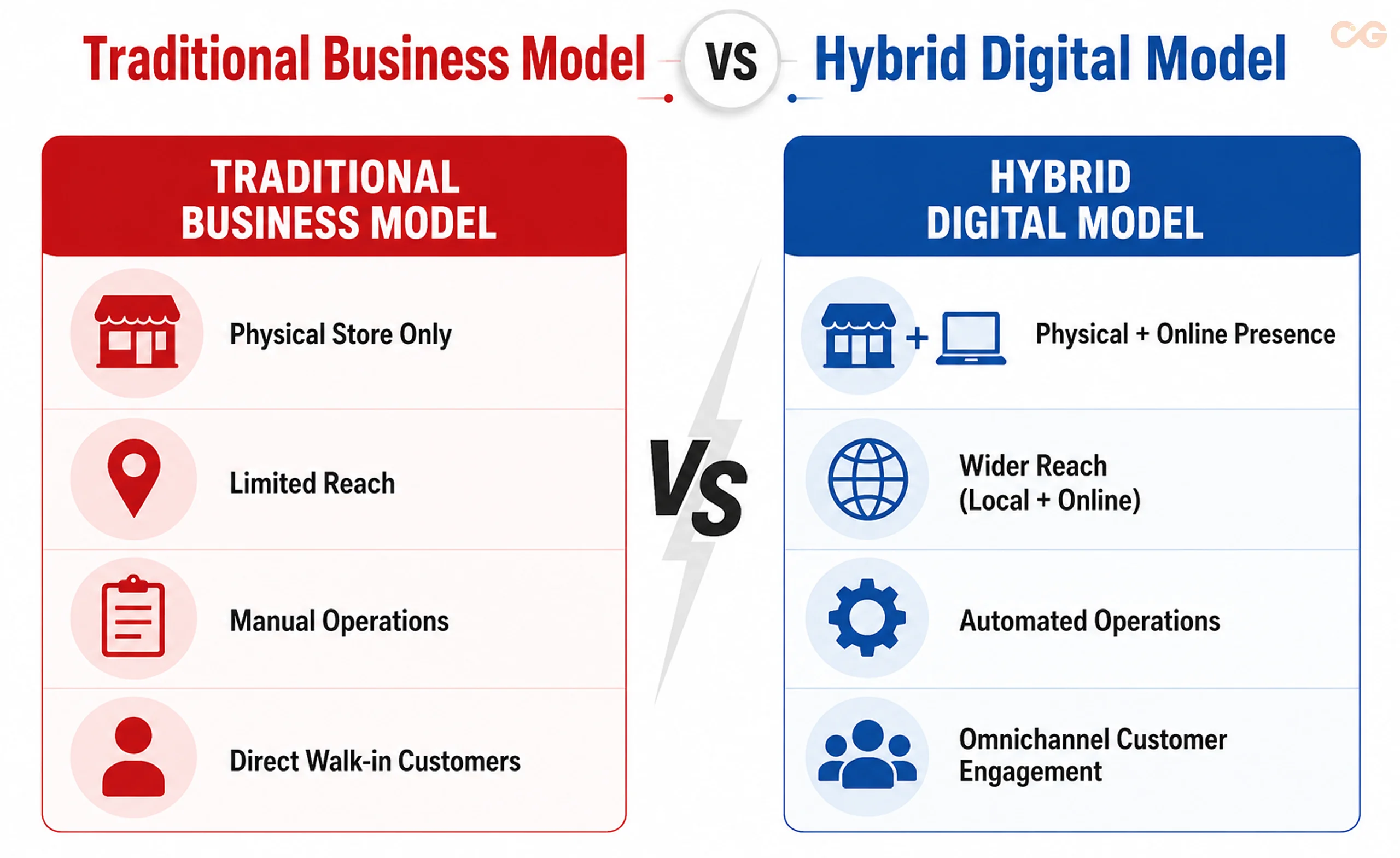
The defining feature of these businesses is their deep connection to culture. They offer personalised service, build trust, and deliver quality that is hard to replicate. However, they face unique challenges: limited marketing budgets, scepticism toward technology, dependence on foot traffic, and competition from large e-commerce companies.
Why Digital Marketing is Essential for Traditional Businesses
Understanding the Modern Indian Consumer
The landscape of Indian consumers has changed dramatically. With over 900 million internet users, many now research products online before buying them in stores, according to the report of The Economic Times. They compare prices on various platforms, read reviews, and expect a seamless experience across all channels.
Digital marketing often yields better outcomes than traditional marketing. It offers organisations a cost-effective way to connect with customers and communicate effectively.
Facing the Competitive Challenge
Traditional businesses typically rely on distribution channels. However, the rise of digital platforms is shifting this dynamic, enabling brands to reach customers directly. If your competitors are online and you are not, you are likely losing customers.
Taking Steps Toward Digitalisation
To thrive in the digital landscape, traditional businesses need to establish an online presence. This includes creating a website or social media profiles, implementing digital payment systems, and using online tools for inventory and customer management. Start small and scale your efforts as you grow.
Digital Marketing Strategies for Traditional Indian Businesses
Cost-Effective Digital Marketing Strategies That Deliver Results
Growing your business online doesn’t always require a large marketing budget. By focusing on the right digital channels, traditional Indian businesses can increase visibility, attract new customers, and strengthen relationships with existing ones. The key is to choose platforms that match your audience and consistently provide value.
1. Search Engine Optimisation (SEO)
SEO helps potential customers discover your business when they search online for products or services you offer. A well-optimised online presence increases visibility, builds credibility, and attracts customers who are already interested in what you sell.
Local SEO for Physical Stores
If you rely on walk-in customers, local SEO should be your priority. Keep your Google Business Profile updated with accurate business information, respond to customer reviews, and maintain consistent business details across online directories. Creating location-specific content, such as Best Silk Sarees in Kanchipuram, also improves your chances of appearing in local search results.
Product and Service SEO
Understand what your customers are searching for by using free tools like Google Keyword Planner. Use those keywords naturally in product descriptions, category pages, and blog articles that answer common customer questions. Don’t overlook image optimisation—descriptive file names and relevant alt text can also improve search visibility.
2. Social Media Marketing
Social media gives traditional businesses an opportunity to showcase their craftsmanship, share their brand story, and build lasting relationships with customers. Rather than trying to be present everywhere, focus on the platforms where your target audience spends the most time.
Choosing the Right Platform
Facebook is ideal for building a local community, sharing updates, and engaging customers who actively follow neighbourhood businesses.
Instagram works best for visually appealing products such as textiles, handicrafts, jewellery, food, and home décor. It helps create a strong brand identity through photos, Reels, and Stories.
WhatsApp Business offers personalised communication, making it easier to handle enquiries, share catalogues, receive orders, and provide after-sales support.
YouTube is an excellent platform for publishing tutorials, artisan stories, product demonstrations, and behind-the-scenes videos that build trust.
LinkedIn is valuable for B2B businesses looking to network, establish industry expertise, and connect with distributors, retailers, or corporate clients.
Content That Builds Engagement
Instead of publishing only promotional posts, create content that educates, inspires, and connects with your audience.
- Share behind-the-scenes videos that showcase your craftsmanship and production process.
- Publish customer testimonials to build trust and social proof.
- Create festival-themed campaigns that celebrate culture while promoting relevant products.
- Develop educational content such as product care guides, styling ideas, or usage tips.
- Host live Q&A sessions to answer customer questions and interact with your audience in real time.
- Encourage customers to share photos, reviews, and experiences to strengthen authenticity and community engagement.
3. WhatsApp Marketing
For many traditional businesses, WhatsApp is one of the most effective digital marketing channels because it closely mirrors the personalised service customers already receive in-store. It helps businesses stay connected while maintaining a familiar and trusted buying experience.
WhatsApp Strategy
- Organise broadcast lists to send relevant product updates to different customer groups.
- Keep your product catalogue updated so customers can easily browse new collections.
- Respond quickly to enquiries to improve customer satisfaction and build trust.
- Send personalised festival greetings and exclusive offers to encourage repeat purchases.
- Use WhatsApp Status to share limited-time offers, new arrivals, and behind-the-scenes updates.
- Create VIP customer groups that offer early access to new products, loyalty rewards, and exclusive discounts.
4. Content Marketing
Content marketing helps traditional businesses build credibility while preserving and sharing their heritage. Instead of focusing only on selling products, create content that answers customer questions, tells your brand story, and demonstrates your expertise.
For example, food businesses can publish recipes, textile brands can create fabric care guides, handicraft businesses can share artisan stories, and all businesses can benefit from customer testimonials, seasonal buying guides, and styling or DIY ideas that educate and inspire their audience.
5. Email Marketing
Email marketing remains one of the most cost-effective ways to nurture customer relationships. Collect email addresses through both online and offline touchpoints, then send newsletters that provide genuine value rather than constant promotions.
Share new product launches, festival offers, personalised birthday or anniversary wishes, helpful tips, product recommendations, and cart abandonment reminders to encourage repeat purchases and keep your brand top of mind.
6. Influencer Partnerships
Collaborating with micro-influencers (5,000–50,000 followers) allows traditional businesses to reach highly engaged audiences without spending heavily on advertising. Their recommendations often feel more authentic and relatable than celebrity endorsements.
Partner with influencers for product reviews, demonstrations, local campaigns, storytelling, and user-generated content that highlights your products naturally while expanding your reach.
7. Video Marketing
Video has become one of the most engaging forms of digital content because it allows customers to experience your products before making a purchase. It also helps traditional businesses showcase the craftsmanship, authenticity, and stories behind their products in ways that static images cannot.
Create product demonstrations, virtual store tours, artisan interviews, customer testimonials, unboxing videos, tutorials, and festival greetings to educate customers, build trust, and strengthen your brand presence.
Takeaway

Empower Your Traditional Business: A 90-Day Digital Transformation Blueprint with Essential Tools and Learning Resources
Download this action plan and start transforming your traditional business—one step at a time.
Applying Digital Marketing Across Traditional Industries
Every traditional business has its own challenges, customer expectations, and buying journey. While the core digital marketing channels remain the same, the way they are applied varies across industries. Here’s how traditional Indian businesses can tailor their digital strategies to connect with the right audience and grow online.
Textile and Saree Businesses
Selling textiles and sarees online is about more than uploading product photos. Customers want to experience the fabric, understand the drape, and appreciate the craftsmanship before making a purchase. Since they can’t do this through a screen, your digital marketing should focus on creating trust through engaging visuals and personalised experiences.
Digital Strategy Blueprint
- High-Quality Visual Content: Use professional photography, close-up fabric shots, draping videos, and 360-degree product views to showcase texture, colour, and craftsmanship.
- WhatsApp Business Catalogues: Share personalised product catalogues with customers who prefer one-to-one consultations before purchasing.
- Virtual Try-On Technology: Leverage augmented reality on Instagram and Facebook to help customers visualise products before buying.
- Live Shopping Events: Host Facebook or Instagram Live sessions to launch new collections, demonstrate products, and answer customer questions.
- Regional SEO: Optimise for location-based searches such as Wedding Sarees in Chennai or Banarasi Sarees Online to attract high-intent buyers.
Case Study: Digital Transformation at FabIndia
FabIndia is a strong example of how a traditional brand can embrace digital transformation without losing its heritage. The company strengthened its e-commerce platform, introduced a seamless online-to-offline shopping experience where customers could reserve products online and try them in-store, and used social media to tell the stories of its artisans.
According to Netcore Cloud, FabIndia doubled its digital revenue within 120 days through AI-powered customer segmentation and automated marketing across WhatsApp, email, and app notifications.
Handicraft Artisans and Businesses
Every handmade product tells a story, but many artisans struggle to share that story beyond their local communities. Digital platforms give traditional handicraft businesses the opportunity to reach customers across India and around the world while preserving the authenticity that makes their products unique.
Digital Strategy Blueprint
- Storytelling Marketing: Highlight the journey of artisans, the heritage behind each craft, and traditional production techniques to build emotional connections with customers.
- Platform Selection: Sell through marketplaces such as Etsy, Amazon Karigar, and GoSwadeshi, which are designed for handmade and heritage products.
- Instagram Shopping: Tag products in Instagram posts so customers can browse and purchase them directly.
- SEO for Crafts: Optimise product pages using keywords such as handmade brass lamps, Madhubani paintings, and Kashmiri papier-mâché to improve online visibility.
- Global Presence: Use Pinterest to showcase collections and reach international audiences interested in Indian handicrafts.
Case Study: The iTokri Success Story
iTokri successfully connected traditional artisans with online customers by creating detailed artisan profiles with stories and videos, implementing fair pricing, providing digital literacy training, and using content marketing to educate customers about India’s rich craft heritage.
According to the Facebook account of iTokri, the platform now supports more than 10,000 artisans and ships Indian handicrafts to international markets, including the USA, the UK, and Europe.
People Also Ask: What is the best way to sell traditional products online?
Start by choosing the platform that best suits your business, whether it’s your own website, an online marketplace, or social media. Use high-quality product images, write compelling descriptions that highlight heritage and craftsmanship, provide secure payment and reliable shipping, and implement digital marketing strategies that balance tradition with innovation.
Traditional Food Businesses
From neighbourhood sweet shops to pickle manufacturers and regional snack brands, traditional food businesses have enormous potential to grow online. Success, however, depends on building customer trust by communicating product quality, hygiene, freshness, and delivery reliability.
Digital Strategy Blueprint
- Hyperlocal Delivery Integration: Partner with platforms such as Swiggy, Zomato, or Dunzo to offer fast and convenient local delivery.
- Content Marketing: Keep customers engaged by sharing recipes, serving ideas, product tips, and behind-the-scenes videos.
- Google My Business Optimisation: Optimise your Google Business Profile so customers searching for food businesses “near me” can easily discover your store.
- Food Blogging Partnerships: Collaborate with food bloggers and local influencers to increase brand awareness and credibility.
- WhatsApp Orders: Simplify ordering by allowing customers to browse catalogues, place repeat orders, and communicate directly through WhatsApp.
Case Study: The Digital Journey of Haldiram
Haldiram successfully combined its traditional brand heritage with digital innovation by building a strong e-commerce presence, creating engaging festival-focused social media campaigns, partnering with quick-commerce delivery platforms, and using digital advertising to expand its reach.
According to The Economic Times, as of October 2024, Haldiram operates in more than 100 countries, including the UK, the US, and Japan, primarily through franchise partnerships. The company has also recorded an average annual revenue growth of 18% over the past five years.
Case Study: Paper Boat – Reviving Classic Indian Drinks
Paper Boat revitalised traditional Indian beverages like aamras, jaljeera, and thandai, setting a strong example for digital marketing in traditional sectors.
What They Did:
Paper Boat tapped into nostalgia to create strong product recognition. They generated visually appealing content, partnered with influencers, established direct distribution channels, and engaged customers through interactive social media campaigns.
Results:
Paper Boat built a brand valued at ₹668.28 crore from scratch. They achieved category leadership in traditional beverages and effectively complemented their retail distribution with a solid online presence, according to ENTRACKR.
Key Takeaways for Traditional Businesses:
Heritage is a powerful asset. Attractive packaging and thoughtful presentation matter online. Strong narratives help brands differentiate themselves in crowded markets. Employing digital strategies allows businesses to leverage existing strengths and reach broader audiences effectively.
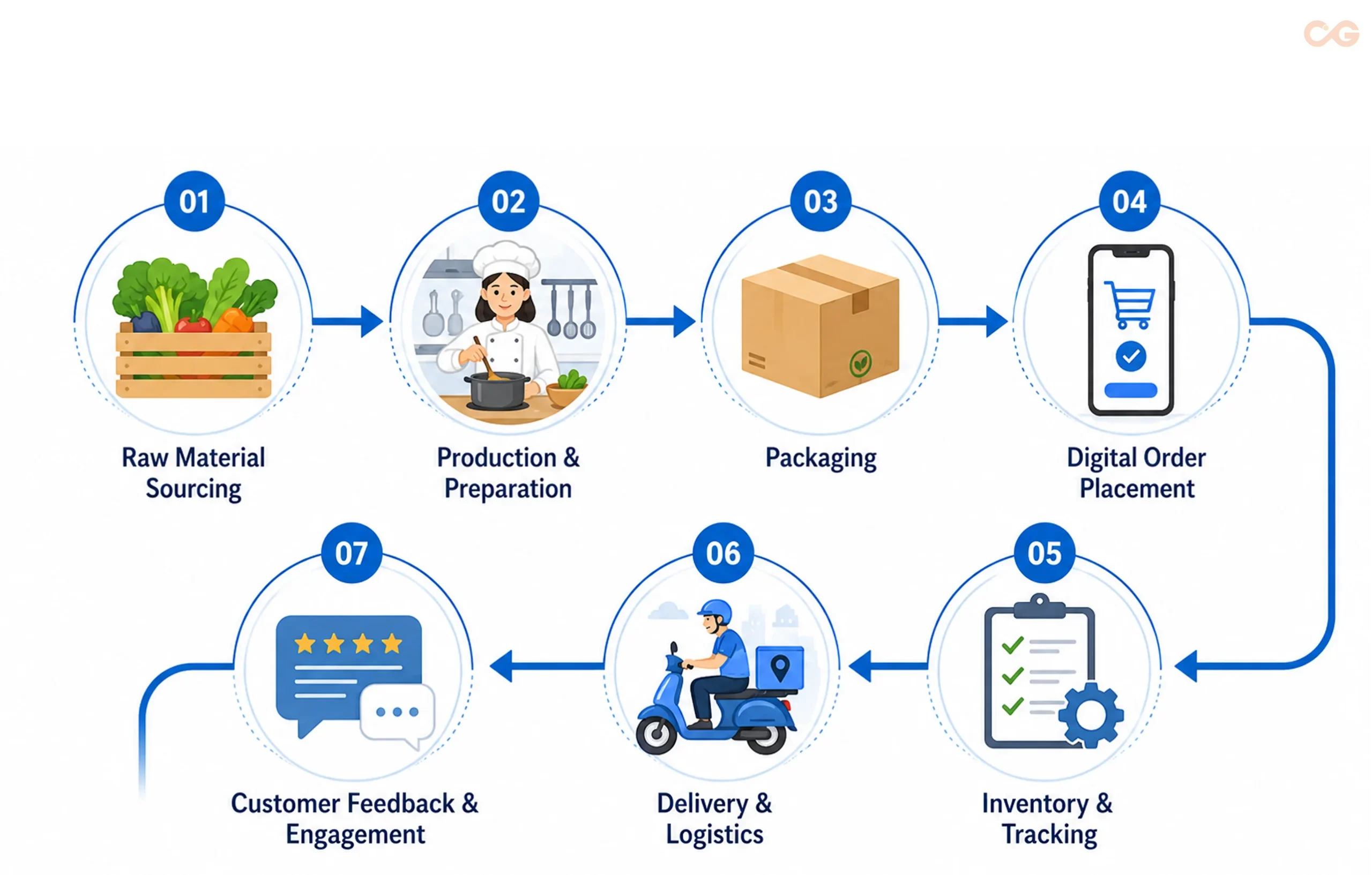
From Kitchen to Customer:
Digital Supply Chain for Food Businesses
A Practical Guide to Establishing Your Traditional Business Online
Phase 1: Building Your Digital Foundation (Months 1-2)
1. Secure Your Digital Space
Establish your online presence by obtaining a domain name, setting up an authenticated Google My Business profile, and creating social media accounts. This makes it easy for customers to find and interact with your business.
2. Adopt a Mobile-First Strategy
Since most Indian consumers use smartphones, ensure your website is mobile-friendly. Keep your WhatsApp Business catalogue updated and make sure all payment links function smoothly for mobile users.
People Also Ask: What’s the first step in digital transformation?
Start by assessing your digital readiness. Understand your business direction, know what your customers need, and identify the digital channels that will offer the most value. Focus on one channel at first, master it, then expand.
Phase 2: Fostering Content and Engagement (Months 3-4)
1. Produce Valuable Content
Go beyond just selling. Educate and engage your customers. Share useful product information, customer reviews, and behind-the-scenes content, especially during local festivals to strengthen emotional connections.
2. Build a Community
Focus on establishing genuine relationships online. Respond to all inquiries, create specialised WhatsApp groups, conduct polls to boost engagement, and share customer stories to turn buyers into loyal supporters.
Phase 3: Integrating E-Commerce (Months 5-6)
1. Select Your E-Commerce Model
Choose an effective online business model. Platforms like Amazon or Meesho offer visibility, while your own site allows for brand control. Utilise social commerce to boost sales, and a hybrid approach will broaden your reach.
2. Implement Digital Payments
Simplify transactions with UPI connections, payment gateways like Razorpay and PayU, and easy payments via QR codes. Offer cash-on-delivery to build trust among first-time online shoppers.
Bridging Physical Sales with Digital Channels
The Omnichannel Strategy
Successful small businesses blend traditional sales methods with digital solutions. Here’s how to implement this strategy effectively:
1. Click-and-Collect Model
Enable customers to shop online and pick up their purchases in-store. This approach reduces shipping costs, adds a personal touch, and merges the convenience of online shopping with the trust of local service.
2. From Showroom to Web Room
Transform your physical store into an experiential venue. Allow customers to explore products and then order them online for home delivery. This builds trust, simplifies logistics, and helps customers transition smoothly from in-store discovery to online purchasing.
3. Digital Tools for In-Store Shopping
Use digital tools like tablets to showcase a wider range of products. Promote online-exclusive items and utilise customer data for targeted marketing. Implement online loyalty programs to enhance customer retention and create a modern shopping experience within the store.
Actions for Integrating Online and Offline Marketing
Utilise QR codes in your store to connect customers to online resources. Collect customer email addresses and phone numbers for effective digital marketing. Advertise in-store events through social media. Follow up with online customers who visit your store. Ensure consistent branding and messaging across all channels for a unified experience.
Blending Digital and Traditional Marketing
The hybrid approach stands out as the best way to elevate traditional businesses online in India.
Hybrid Marketing Tactics
1. Integrate Print and Digital
Merge traditional and digital techniques by using QR codes in newspapers that link to product pages. Promote discounts available only online and share social media handles on physical ads to encourage online engagement.
2. Leverage Word-of-Mouth Digitally
Encourage satisfied customers to leave Google reviews and create digitally monitored referral programs. Sharing authentic testimonials on social media and using WhatsApp can enhance your brand’s online reputation.
3. Enhance Event Marketing
Transform traditional event marketing by live-streaming product launches and creating unique event hashtags for social media. Collect attendee emails to maintain communication and influence beyond the event.
4. Build Community Connections
Strengthen relationships within the local community by sponsoring events and partnering with local influencers. Develop localised content that combines print and digital ads for broad visibility.
Combining Marketing Strategies
Yes, it’s entirely feasible to blend traditional and digital marketing. Integrated campaigns yield optimum results, using traditional marketing to build local trust while digital methods reach a wider audience and provide convenient purchasing options. These approaches work in harmony, not opposition.
Cultural Sensitivity in Digital Marketing: Merging Heritage with Innovation
Understanding Regional and Cultural Nuances
India is not a single market, but rather a rich tapestry of diverse cultures, languages, and traditions. Businesses must adopt a multifaceted approach in their digital marketing efforts to engage effectively.
Cultural Adaptation Strategies:
1. Create Content in Local Languages
Brands should craft marketing messages in regional languages such as Hindi, Tamil, Bengali, and Marathi. Incorporating local festivals and collaborating with regional influencers fosters a deeper emotional connection with various audiences.
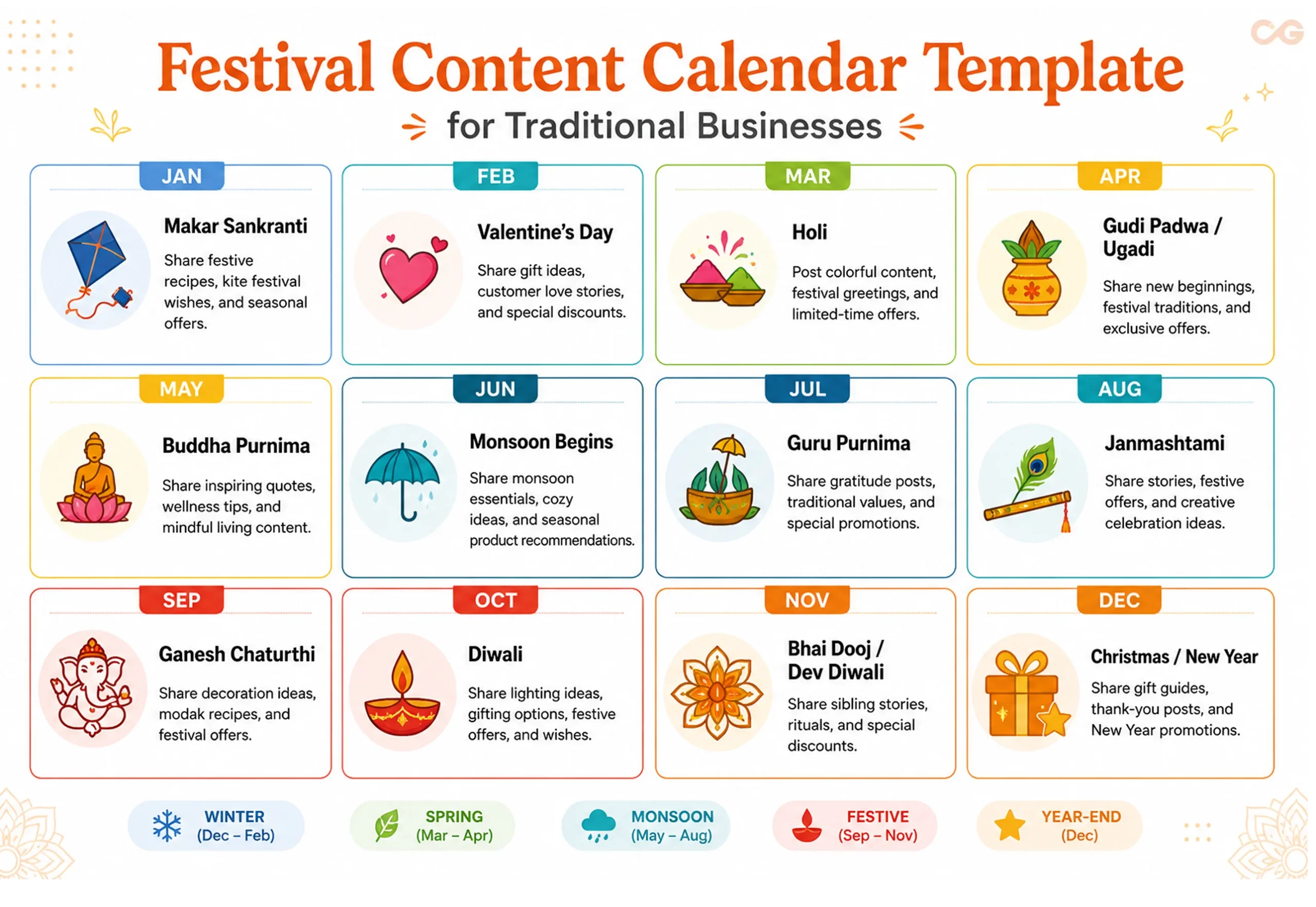
2. Launch Festival-Centric Campaigns
Structure campaigns around prominent Indian festivals like Diwali, Eid, Pongal, and Durga Puja. Use culturally relevant imagery and create special holiday packages to resonate emotionally with customers during peak seasons.
3. Focus on Core Values
Emphasise family values, heritage, and authenticity. By respecting cultural identity and traditions, brands can build trust and stay relevant in India’s evolving digital landscape.
Guidelines and Regulations for Traditional Businesses Entering the Digital Age
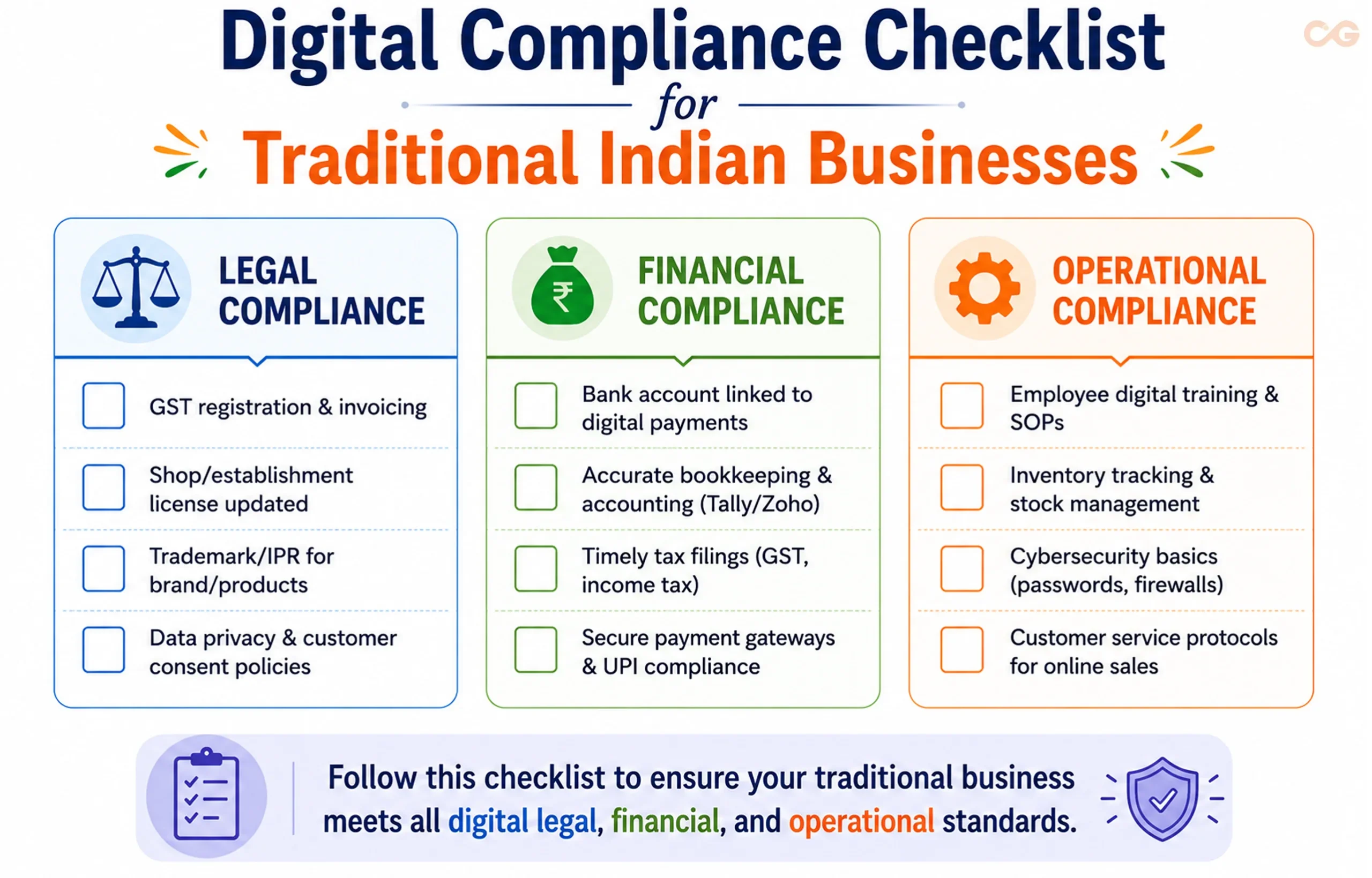
As your traditional business expands online, staying compliant with legal and regulatory requirements becomes just as important as your digital marketing efforts. Following the right regulations not only helps you avoid legal issues but also builds customer trust and strengthens your brand’s credibility.
Legal and Regulatory Requirements
1. Business Registration and Compliance
Before selling online, ensure your business is legally registered and meets all applicable regulatory requirements. Register for GST if your business is liable for online sales, obtain an FSSAI licence if you sell food products, and protect your brand by registering a trademark. Your website should also include clear privacy policies and terms of service to promote transparency and comply with legal requirements.
2. Payment Gateway Compliance
Choose payment gateways that comply with PCI DSS security standards and follow the RBI guidelines for online transactions. In addition, provide clear refund and cancellation policies and ensure customer payment information is handled securely. Strong payment security not only reduces legal risks but also increases customer confidence during online purchases.
3. E-Commerce Regulations
Ensure your online business complies with the Consumer Protection Act and other applicable e-commerce regulations. Keep product listings accurate and transparent, establish a customer grievance redressal system, and follow data protection and privacy laws. These practices help build trust while protecting your business from compliance-related issues.
4. Industry-Specific Regulations
- Textile and Handicraft Businesses: Comply with export regulations where applicable and register on the GeM portal if you plan to supply products to government buyers.
- Food Businesses: Obtain the required FSSAI licence, display clear ingredient and nutritional information on product labels, and provide accurate manufacturing and shelf-life details.
- Jewellery Businesses: Follow BIS hallmarking standards and comply with all applicable precious metals regulations to assure customers of product authenticity and quality.
Digitising the Supply Chain: From Procurement to Delivery
Digital transformation goes beyond marketing—it also improves the way traditional businesses manage their day-to-day operations. By digitising the supply chain, businesses can streamline inventory, strengthen vendor relationships, speed up deliveries, and provide a better customer experience.
Supply Chain Digital Transformation
1. Inventory Management
Replace manual stock tracking with digital inventory management tools such as Zoho Inventory or Tally. Features like barcode or QR code scanning, real-time inventory updates, and low-stock alerts help businesses reduce stock shortages, minimise errors, and maintain optimal inventory levels.
2. Vendor and Artisan Management
Digitally manage vendors and artisans by maintaining online records, placing purchase orders electronically, and making transparent digital payments. Tracking supplier performance through analytics also helps strengthen relationships and improve supply chain efficiency.
3. Logistics and Delivery
Partner with delivery platforms such as Dunzo, Shadowfax, or Delhivery to simplify order fulfilment. Real-time order tracking, automated shipping labels, and delivery performance monitoring help ensure faster deliveries while improving customer satisfaction.
4. Customer Relationship Management (CRM)
Maintain a digital customer database to track purchase history, preferences, and interactions. Use this information to automate birthday or anniversary greetings, send personalised offers, and build long-term customer relationships that encourage repeat purchases.
People Also Ask: What are the advantages of digital transformation for small businesses?
Digital transformation helps small businesses improve operational efficiency, reduce costs through automation, gain better customer insights using data, expand beyond geographical limitations, enhance customer experiences, and make informed business decisions. It also provides a competitive advantage while enabling businesses to scale more efficiently.
Takeaway
Empower Your Traditional Business: A 90-Day Digital Transformation Blueprint with Essential Tools and Learning Resources
Download this action plan and start transforming your traditional business—one step at a time.
Measuring Success: ROI Tracking and Analytics
Launching your digital transformation journey is only the beginning. To know whether your efforts are paying off, you need to track the right metrics. Monitoring Key Performance Indicators (KPIs) helps you understand customer behaviour, measure business growth, and identify opportunities to improve your digital strategy.
Key Performance Indicators (KPIs) for Traditional Businesses
1. E-commerce and Website Metrics
Your website is often the first impression customers have of your business. These metrics help you understand how visitors interact with your website and whether they’re taking the actions you want.
- Website Traffic: Shows how many people visit your website and whether your online visibility is improving.
- Conversion Rate: Reveals how many visitors become customers by making a purchase, submitting an enquiry, or completing another desired action.
- Average Order Value (AOV): Helps you understand how much customers typically spend per order, making it easier to identify opportunities to increase sales.
- Cart Abandonment Rate: Highlights the number of shoppers who leave without completing their purchase, allowing you to identify and fix potential barriers in the buying process.
- Product Page Views: Shows which products attract the most interest and helps you understand customer preferences.
- Bounce Rate: Indicates whether visitors are finding relevant information or leaving your website after viewing just one page.
- Average Time on Site: A longer visit usually suggests that customers are exploring your products and engaging with your content.
2. Social Media Metrics
Social media success isn’t just about gaining followers—it’s about building meaningful relationships with your audience. These metrics help you understand how people interact with your brand.
- Follower Growth Rate: Shows whether your audience is steadily growing over time.
- Engagement Rate: Measures likes, comments, shares, saves, and other interactions that indicate how well your content resonates with your audience.
- Reach: Tells you how many unique users have seen your content.
- Impressions: Shows how often your content appears on users’ screens, even if the same person views it multiple times.
- Click-Through Rate (CTR): Measures how many people click on your links after seeing your posts or advertisements.
- Message Response Rate and Time: Reflects how quickly your business responds to customer enquiries, helping you deliver better customer service.
- User-Generated Content (UGC): Shows how often customers create and share content about your brand, which is a strong indicator of trust and loyalty.
3. Customer Metrics
Building lasting customer relationships is just as important as attracting new ones. These metrics help you understand customer satisfaction, loyalty, and long-term business growth.
- Customer Acquisition Cost (CAC): Shows how much you spend, on average, to acquire a new customer.
- Customer Lifetime Value (CLV): Estimates the total revenue a customer is likely to generate throughout their relationship with your business.
- Repeat Purchase Rate: Measures how many customers return to buy from you again, indicating customer loyalty.
- Customer Satisfaction Score (CSAT): Helps you understand how satisfied customers are with your products, services, and overall experience.
- Review Ratings and Volume: Gives valuable insights into customer feedback while strengthening your online reputation.
- Net Promoter Score (NPS): Measures how likely customers are to recommend your business to friends, family, or colleagues.
4. Business Impact Metrics
While marketing metrics show campaign performance, business impact metrics reveal whether digital transformation is contributing to overall business growth.
- Online vs. Offline Sales Ratio: Helps you compare the contribution of digital channels with your physical store sales.
- Revenue Growth: Measures whether your digital initiatives are driving overall business growth.
- Geographic Expansion: Tracks your ability to attract customers from new cities, regions, or markets.
- New Customer Segments: Shows whether your business is successfully reaching different age groups, demographics, or customer profiles.
- Inventory Turnover: Indicates how efficiently products are sold and restocked, helping you optimise inventory management.
- Operational Cost Reduction: Measures the savings achieved by streamlining business processes through digital tools and automation.
Tools for Measuring Performance
Tracking digital performance doesn’t require expensive software. The right mix of free and affordable tools can help you monitor website performance, customer engagement, sales, and marketing effectiveness, enabling you to make informed business decisions.
Free Tools
- Google Analytics: Track website traffic, user behaviour, conversions, and traffic sources to understand how visitors interact with your website.
- Google Business Profile Insights: Gain insights into how customers discover your business through Google Search and Maps by monitoring profile views, website visits, phone calls, and direction requests.
- Facebook Insights: Analyse audience demographics, reach, engagement, and content performance to identify the posts that resonate most with your audience.
- Instagram Insights: Measure the performance of posts, Stories, Reels, follower growth, and audience engagement to refine your content strategy.
Affordable Tools
- WhatsApp Business Analytics: Evaluate customer communication by monitoring message delivery, read rates, and response times.
- Mailchimp: Measure email campaign performance through open rates, click-through rates, and subscriber engagement to optimise future campaigns.
- Zoho CRM: Organise customer information, manage leads, and monitor sales activities to build stronger customer relationships.
Platform-Specific Tools
- WhatsApp Business Analytics: Provides insights into message reply rates, read receipts, and responses to interact with customers.
- Mailchimp (Email Marketing): Monitors the performance of email campaigns such as open rates, click-through rates, and the level of engagement with subscribers.
- Zoho CRM: This handles customer relations, leads, sales, and contacts in order to enhance business efficiency and conversions.
Platform Selection:
- Shopify Analytics: Gain detailed insights into sales, customer behaviour, traffic sources, and product performance to optimise your online store.
- Amazon Seller Central Reports: Review sales trends, product performance, customer reviews, and marketplace insights to identify opportunities for business growth.
Navigating Digital Transformation: Key Challenges and Effective Solutions
Digital transformation can drive significant growth, but it often presents hurdles. Traditional businesses frequently encounter issues with technology, budgets, and operations. Fortunately, adopting the right strategies can help overcome these challenges.
Challenge 1: Limited Digital Skills
Many leaders and staff might struggle with digital tools, which can hinder the adoption of new technology.
Solution:
Use user-friendly platforms to ease into digital tools. Engage in government programs like Digital India or PMEGP. Invest in staff training, hire digitally-savvy employees or interns, and consult experienced digital marketing agencies as needed.
Challenge 2: Financial Limitations
Budget constraints can make the digital shift daunting, especially for small or family-run businesses.
Solution:
Start with affordable tools like Google Business Profile, WhatsApp Business, and social media. Focus on organic marketing at first, and introduce paid promotions as your business grows. Look for government support and reinvest part of your digital revenue into future marketing.
Challenge 3: Building Online Trust in Product Quality
Customers can’t physically inspect products before buying, so establishing trust online is crucial.
Solution:
Showcase high-quality images, provide thorough descriptions, create demonstration videos, share customer feedback, and display relevant certifications. Have clear return policies to enhance confidence in your offerings.
Challenge 4: Competing with Big E-commerce Platforms
Going head-to-head with established marketplaces can be tough, but traditional businesses have unique strengths.
Solution:
Emphasise your authenticity, craftsmanship, and personalised customer service. Target niche products, strengthen ties within the community, and leverage your brand’s story to connect with customers.
Challenge 5: Logistics and Delivery
Reliable delivery is essential for customer satisfaction and repeat business, especially for online expansion.
Solution:
Collaborate with trustworthy logistics partners. Start with local deliveries before branching out. Use hyperlocal delivery services where suitable, offer flexible fulfilment options, communicate clear delivery timelines, and ensure packaging reflects your brand.
The Future of Traditional Indian Businesses in the Digital World
Embracing New Technologies and Trends
1. Leveraging Voice Search with Regional Language AI
Utilise advanced voice assistants in Indian languages to optimise content for voice searches. For instance, target phrases like “Mere paas wale banarasi saree ki dukaan” to attract local customers.
2. Integrating Augmented Reality (AR) for Product Visualisation
Use AR technology to offer virtual try-ons for jewellery, to visualise furniture in homes, or to show how clothing fits. This enhances customer experience and boosts sales.
3. Harnessing Social Commerce
Capitalise on platforms like Instagram, Facebook, and WhatsApp. Customers can explore products, compare options, and make purchases directly within these apps.
4. Implementing AI for Personalisation
Employ AI tools to deliver personalised product recommendations, automate customer service, manage inventory, and refine pricing strategies. This approach enhances customer satisfaction and drives sales.
5. Focusing on Hyperlocal Marketing
Use technology to target specific geographic areas effectively. Traditional businesses can dominate local markets online while expanding selectively.
6. Utilising Blockchain for Authenticity
Apply blockchain technology to verify the authenticity and provenance of high-value traditional products, such as handicrafts and organic items. This builds trust with customers.
Takeaway
Empower Your Traditional Business: A 90-Day Digital Transformation Blueprint with Essential Tools and Learning Resources
Download this action plan and start transforming your traditional business—one step at a time.
Conclusion: Your Digital Journey Begins Today
Digital transformation of traditional businesses isn’t about replacing tradition—it’s about strengthening it. The qualities that have helped traditional businesses thrive for generations, such as trust, craftsmanship, authenticity, and strong customer relationships, remain just as valuable in the digital age. Digital tools simply make it easier to showcase those strengths to a wider audience.
Whether you’re a family-run textile business, a local food brand, or a handicraft artisan, embracing digital marketing allows you to connect with today’s customers, expand your reach, and create new opportunities for growth without compromising your identity.
The key is to start with small, practical steps. Build your online presence through a Google Business Profile, create high-quality product visuals, engage customers on social media, or use WhatsApp Business to provide personalised service. As your confidence grows, you can gradually adopt more advanced digital strategies.
The future belongs to businesses that successfully combine tradition with innovation. By embracing digital transformation today, you can preserve your legacy, strengthen customer relationships, and ensure your business continues to grow in an increasingly digital world.
Your story has already stood the test of time. Now it’s time to share it with a much larger audience.
Frequently Asked Questions
What does it cost to digitise a traditional business?
You can start with free tools like Google Business Profile, WhatsApp Business, and social media. A basic digital presence, including a website and initial marketing, typically costs between ₹10,000 and ₹25,000.
Will digital marketing affect my relationship with existing customers?
No. It can strengthen customer relationships by improving communication through channels like WhatsApp Business, email, and social media.
How soon can I expect results from digital marketing?
You may see improvements in visibility within 2–4 weeks, while meaningful business results generally take 3–6 months with consistent effort.
Do I need to hire a digital marketing agency?
Not necessarily. Many small businesses start on their own and work with an agency later when they need specialised expertise or want to scale.
Can traditional products be sold successfully online?
Yes. High-quality visuals, clear product descriptions, reliable delivery, and authentic storytelling can help traditional products attract online customers.
How should I respond to negative online reviews?
Respond promptly and professionally, thank customers for their feedback, address concerns politely, and offer to resolve the issue privately whenever possible.
Do I need to be active on every social media platform?
No. Start with one or two platforms where your target audience is most active. For many traditional Indian businesses, Facebook, Instagram, and WhatsApp Business are a good starting point.
How can I compete with large e-commerce platforms?
Focus on your strengths, such as authenticity, craftsmanship, personalised service, product quality, and your brand story, instead of competing on price alone.
How can I protect customer data and privacy?
Use secure digital platforms, enable strong passwords and two-factor authentication, avoid storing payment details, and comply with applicable data protection regulations.
Can I continue running my business traditionally while expanding online?
Absolutely. Digital transformation complements traditional business practices by helping you reach more customers while preserving your values, quality, and personal service.