
Voice Search & AI SEO: Optimizing for the Future of Search
Table of Contents
- Introduction
- The Growth of Voice Search & AI in SEO
- How Voice Search Affects User Behaviour: Changing Search Patterns and Expectations
- The Role of Advanced Technologies and Trends: AI-Driven Search Algorithms
- Key Strategies for Optimising for Voice Search & AI SEO
- Future Trends in AI & Voice Search SEO
- Conclusion
Introduction:
The Smarter Search: How AI is Transforming SEO
Search engines have come a long way. They began with basic keyword matching, but today AI-driven technologies such as Google BERT, RankBrain, and Google Gemini have transformed how search works. AI-powered search systems use natural language processing (NLP) and machine learning to better understand user intent, going beyond simple keyword matches. They analyse content quality, context, tone, and user needs to deliver more relevant and personalised search results.
At the same time, the growing adoption of voice assistants and mobile devices has changed how people search online. Instead of typing short keywords, users increasingly ask complete, conversational questions. As a result, businesses must optimise not only for traditional search engines but also for voice search and AI-powered search experiences to remain visible in an evolving digital landscape.
Preparing for the Future of Search
The way users interact with search engines continues to evolve, making conversational search and long-tail keywords essential components of modern SEO. To stay competitive, brands should focus on optimising for featured snippets, AI-generated search results, and zero-click searches while ensuring a fast, mobile-friendly website.
Implementing structured data and schema markup helps search engines better understand and present your content through rich results. Strengthening local SEO by optimising your Google Business Profile can also improve visibility for nearby searches.
As AI continues to reshape search, businesses should prioritise E-E-A-T (Experience, Expertise, Authoritativeness, and Trustworthiness), create high-quality, user-focused content, and prepare for multimodal search experiences. Mastering both voice search optimisation and AI SEO is key to staying competitive in the future of search.
The Growth of Voice Search & AI in SEO
Voice Search: A Game Changer in Consumer Behaviour
The rise of voice search and AI-powered search experiences is reshaping how people discover information online. Users increasingly rely on natural, conversational queries instead of short keyword phrases, prompting businesses to rethink traditional SEO strategies. As search engines become better at understanding context and intent, optimising content for voice search and AI SEO is no longer optional—it is essential for maintaining online visibility.
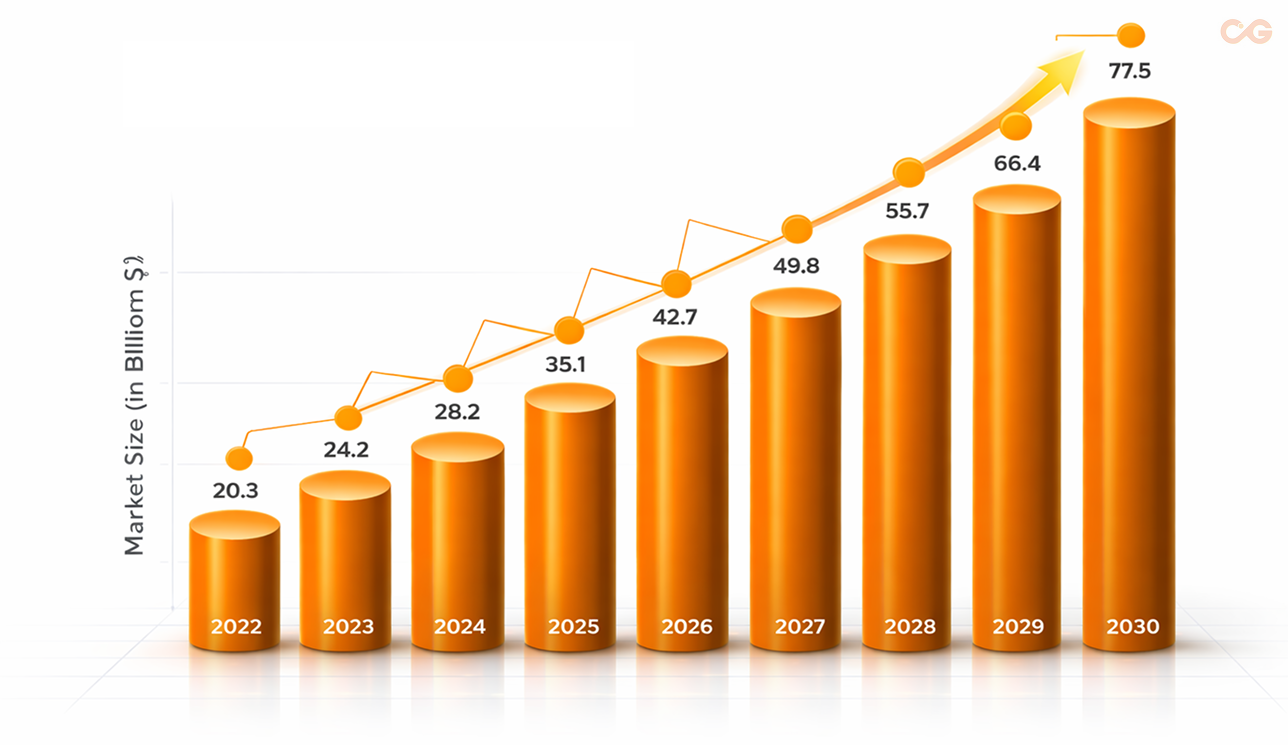
The numbers reflect this growing shift. As of 2026, more than 1 billion voice searches take place every month, while approximately 8.4 billion active voice assistants are in use worldwide. Additionally, industry research from Yaguara indicates that nearly one in four mobile users globally now use voice search regularly. These trends highlight the growing importance of creating conversational, user-focused content and strengthening local SEO to meet evolving search behaviours.
Global Voice Search Market Size (2022–2030)
The Rise of Conversational and Contextual SEO
With the proliferation of voice assistants and smart speakers, users increasingly search using natural, question-based phrases. This shift encourages marketers to adopt a more contextual SEO strategy. It’s essential to address specific questions and craft content that mirrors real-world conversations, especially for long-tail queries.
Featured snippets are crucial, as they account for 40.7% of voice search results, according to MYCODELESSWEBSITE. To succeed, content must be concise, directly answer questions, and be optimised for zero-click searches, structured data, and mobile devices.
NLP and the Future Landscape of Search
NLP is transforming SEO by focusing on semantics, user satisfaction, and context. To achieve better rankings, optimise for recognised entities and user intent, and simplify content for clarity. As AI and NLP progress, the future of search will emphasise conversational interactions, multimodal interfaces combining text, voice, and visuals, and personalised, context-aware results.
With approximately 65% of Indian users utilising voice search due to its multilingual capabilities, adapting to this new landscape is essential for success, according to Co-founder and CSO of AdCounty Media. Taking these steps now will position your business to thrive in the evolving search environment.
Takeaway

How Indian Brands Are Leading the Charge in Voice Search and AI SEO
Are you interested in discovering how Indian brands harness voice technology and AI to outshine in the digital landscape? Dive into these concise case studies to see their strategies in action and how you can apply similar tactics to enhance your digital approach.
How Voice Search Affects User Behaviour: Changing Search Patterns and Expectations
1. The Importance of Conversational and Long-Tail Queries
Voice recognition technology enables users to search with complete sentences rather than brief phrases. This trend results in an increase in questions starting with “how,” “what,” and “where,” highlighting the need for long-tail keywords that mimic natural speech. To meet these conversational needs, businesses must optimise their content effectively.
2. The Rise of Local SEO and “Near Me” Searches
Local SEO is becoming increasingly essential due to the growth of voice searches. According to DemandSage’s 2026 voice search statistics, approximately 76% of voice searches are “near me” or local queries, highlighting the importance of optimising for local SEO and maintaining an up-to-date Google Business Profile.
3. Users Want Instant Answers Without Clicking
Many voice searches derive answers from featured snippets or “People Also Ask” sections, allowing users to receive information without visiting a website. Brands must create precise, authoritative, and well-structured content, including Schema markups, to capture these prime response positions.
4. The Dominance of Voice Search on Mobile Devices, Smart Speakers, and Wearables
A significant number of voice searches happen on mobile devices. As of March 2024, 27% of users employ voice search on their smartphones, according to OuterBox. The Indian smart speaker market reached USD 502.4 million in 2025 and is projected to reach USD 18,661.4 million by 2034, growing at a CAGR of 47.95% during 2026–2034, as predicted by IMARC Group. Prioritising mobile optimisation and ensuring an enjoyable experience across all devices is crucial for staying competitive.
The Role of Advanced Technologies and Trends: AI-Driven Search Algorithms
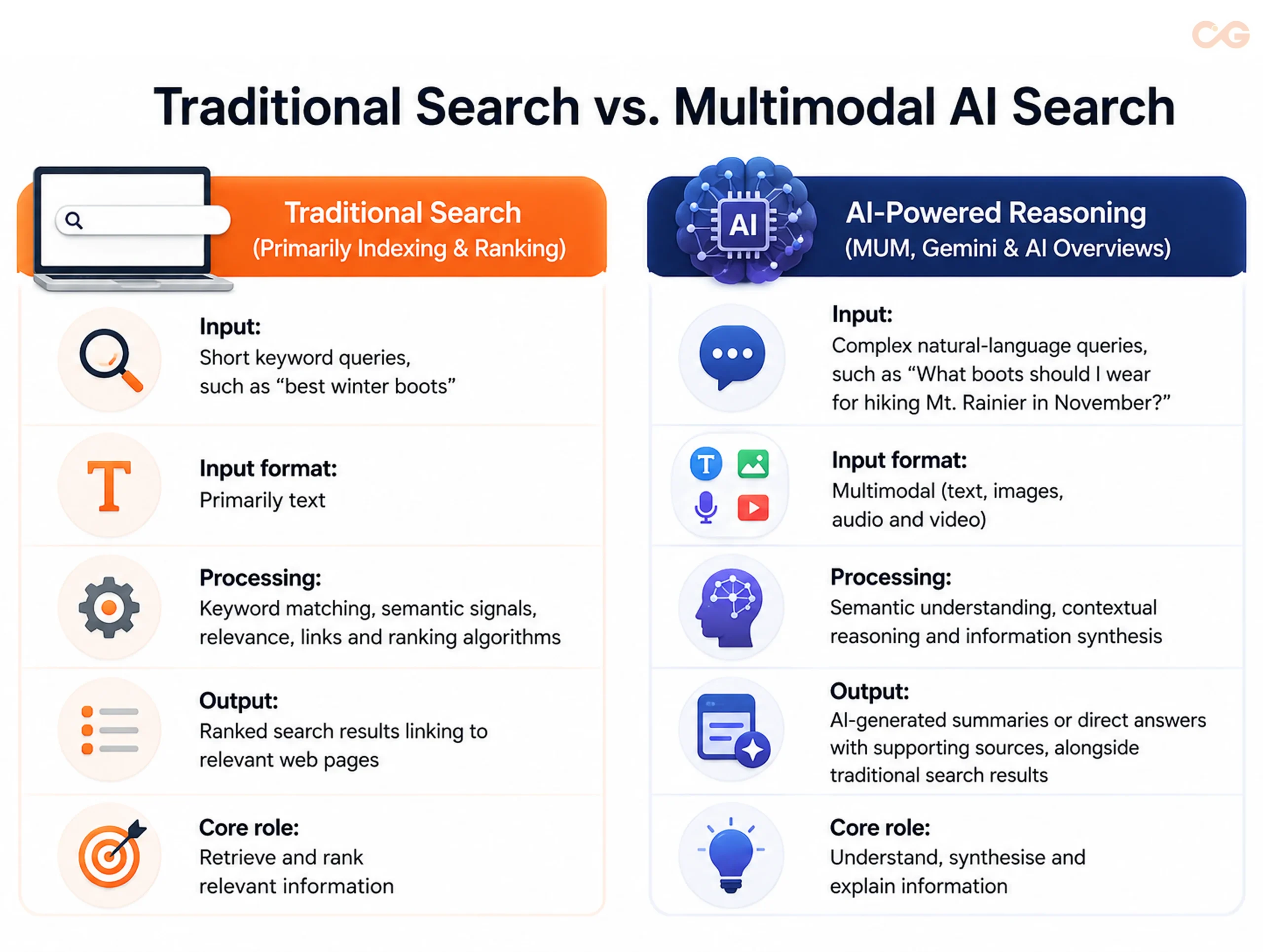
Google’s MUM and Gemini: Enhanced Intelligence for Complex Queries
The latest AI models, MUM (Multitask Unified Model) and Google Gemini, transform how search engines comprehend and answer complex questions.
- MUM processes information in various formats, including text, images, audio, and video, enabling Google to respond to intricate queries with comprehensive answers.
Gemini enhances MUM’s multitasking capabilities, allowing it to analyse and integrate information from diverse sources, regardless of language or form, to produce clear and accurate results. It also helps Google grasp the deeper meanings behind user queries.
AI-Driven Personalisation: Tailored Search Results for Users
Modern AI SEO goes further than traditional methods, offering personalised results based on user behaviour. If a user searches for “best rain shoes” in Mumbai, they receive recommendations for waterproof options suited for monsoons. Meanwhile, users in Delhi see suggestions tailored to lighter rain conditions.
These systems leverage collaborative and content-based filtering to predict what matters most to each user. Brands must focus on search intent, local SEO, and providing value to specific audience segments.
Machine Learning: The Engine Behind Content Ranking and SERP Evolution
Machine learning drives the evolution of Google’s search ranking systems. Technologies like RankBrain and natural language processing (NLP) models such as BERT help Google understand user queries and deliver relevant results, even for complex or unfamiliar searches.
Machine learning continuously improves the relevance of search results by learning from aggregated search patterns and user interactions over time. This enables high-quality content from emerging websites to compete more effectively when it best satisfies user intent, while advancing semantic and multimodal search capabilities.
Delivering valuable, user-focused content in this dynamic landscape is vital for businesses to thrive. Optimise for voice search, leverage AI SEO, and embrace the role of machine learning to boost your visibility and engagement.
Key Strategies for Optimising for Voice Search & AI SEO
a.Conversational and User-Intent Driven Content
Craft Content for Conversational Search and Voice Assistants
- Use natural language that matches how people interact with voice assistants. For instance, instead of targeting phrases like “best pizza places near me,” try “Which pizza place near me is open right now?”
- Focus on question-based keywords: “Who,” “What,” “Where,” “When,” “Why,” and “How.” For example, ask “How does Google BERT support natural language processing in search?”
- Create FAQ sections and utilise structured data/schema markup to improve chances of being featured in snippets and zero-click searches.
b. Optimise for Local Visibility and Featured Snippets
- Keep your Google My Business profile updated with accurate hours, address, and other relevant details. For example, a coffee shop should list its hours and menu to be found easily during voice searches like “coffee shop near me.”
- Incorporate local and long-tail keywords to capture specific search intentions. For instance, “Best vegan bakery in Yeshwanthpur opens on Sundays.”
- Keep the content clear and straightforward. Use bullet points for answers to enhance your chances of appearing in featured snippets from AI-driven search engines like RankBrain and Google Gemini.
Takeaway
How Indian Brands Are Leading the Charge in Voice Search and AI SEO
Are you interested in discovering how Indian brands harness voice technology and AI to outshine in the digital landscape? Dive into these concise case studies to see their strategies in action and how you can apply similar tactics to enhance your digital approach.
c. Focus on Mobile Optimisation and AMP
- Ensure your website functions well on mobile devices by checking loading speed. Utilise Google’s Mobile-Friendly Test for assessment.
- Implement AMP for quicker loading times, especially for news, blogs, and product pages.
- Optimise images and videos for multimodal searches, allowing users to search through voice, text, or images.
d. Use Schema Markup and Structured Data for AI SEO
Enhance Understanding with Structured Data
- Apply schema markup to clarify important business details, products, events, and FAQs. This helps AI SEO and algorithms like Google Gemini and RankBrain comprehend your content better.
- For example, use the Product schema to enhance the visibility of product pages.
- Mark reviews, ratings, and local information to boost your chances of appearing in zero-click searches and featured snippets.
e. Strengthen E-A-T for AI-Driven Search
Build Expertise, Authoritativeness, and Trustworthiness (E-A-T)
- Showcase your niche expertise by publishing well-researched and authoritative content. Add author bios with qualifications and update your content regularly using credible sources.
- Establish trust by acquiring backlinks from reputable sites and collaborating with experts for guest posts or interviews.
- In 2026, optimising for voice search and AI SEO will demand conversational, intent-driven content, along with structured data and mobile optimisation, while reinforcing E-A-T. Stay updated with the latest AI-driven algorithms like Google BERT, RankBrain, and Google Gemini to enhance visibility across all platforms and devices, targeting featured snippets, zero-click searches, local SEO, and multimodal searches.
Future Trends in AI & Voice Search SEO
The Role of AI-Generated Content and Its Impact on SEO
AI-generated content has become a valuable tool for creating and optimising content at scale, but quality remains the key ranking factor. Google evaluates content based on its usefulness, originality, accuracy, and ability to meet user intent rather than how it was created.
Businesses that combine AI-powered efficiency with human expertise, unique insights, and real-world experience are better positioned to achieve long-term search visibility.
Multimodal Search Is the Emerging Frontier
Users now search using voice, images, videos, and text, often combining multiple formats within a single search journey. Google’s AI-powered search experiences, including Gemini, are designed to understand and connect information across these formats, making multimodal search a vital part of modern SEO.
To stay visible, businesses should optimise text, images, videos, and structured data to meet the needs of AI-powered search.
Integrating AI-Powered SEO
AI-powered SEO is becoming essential for improving search visibility in an increasingly AI-driven search ecosystem. It helps businesses analyse search trends, identify content opportunities, automate optimisation tasks, and better understand user intent.
By combining AI-driven insights with human creativity and strategic thinking, brands can create more relevant content, strengthen customer engagement, and remain competitive in the evolving search landscape.
Takeaway
How Indian Brands Are Leading the Charge in Voice Search and AI SEO
Are you interested in discovering how Indian brands harness voice technology and AI to outshine in the digital landscape? Dive into these concise case studies to see their strategies in action and how you can apply similar tactics to enhance your digital approach.
Conclusion:
Voice search is becoming smarter, faster, and more conversational, transforming how users discover information online. As AI-powered search continues to evolve, businesses must optimise for natural language queries, local intent, and multimodal search experiences to remain visible in an increasingly competitive digital landscape.
Search engines have moved beyond simple keyword matching to understanding context, intent, and user behaviour. Success in modern SEO depends on creating high-quality, user-focused content, implementing structured data, and continuously adapting to emerging technologies such as AI-powered search, voice assistants, and visual search tools like Google Lens.
The future of SEO lies in combining AI-driven insights with human expertise to deliver relevant, trustworthy, and engaging experiences. Businesses that embrace these changes today will be better positioned to improve search visibility, strengthen customer engagement, and achieve sustainable growth in the years ahead.
You May Also Like