
The Ultimate Guide to Content Marketing for Indian Businesses to Drive More Sales

Table of Contents
- Understanding Indian Content Consumers: Key Insights
- Building a Conversion-Focused Content Funnel for the Indian Market
- Content Types That Drive Conversions in India
- Innovative Content Strategies for Indian Small Businesses
- Regional Language Content Strategy: A Valuable Opportunity
- Content Distribution in Indian Digital Media
- Crafting Content to Build Trust with Value-Conscious Indian Consumers
- Measuring Content Marketing Success in India
- Challenges to Avoid in Indian Content Marketing
- Conclusion: Future-Proofing Content Marketing in India
In digital-first India, there are 1.09 billion internet subscribers as of March 2026, according to TRAI, highlighting the country’s rapid digital adoption and expanding online ecosystem. The challenge lies in developing a content marketing strategy that captivates readers and converts them into customers. Launching a small business in Mumbai or Bangalore or trying to expand nationally demands a keen understanding of what drives content conversion in the Indian market.
Research by Beyond The Work shows that companies with well-defined content marketing strategies focused on blogging see a positive return on investment 13 times more often. Many strategies fail because they overlook the buying behaviours and preferences of Indian consumers.
A well-planned content marketing strategy can help Indian businesses attract the right audience, build trust, and generate quality leads. From choosing the right content formats to measuring results, a focused approach can turn content into a powerful sales tool.
Understanding Indian Content Consumers: Key Insights
To craft effective strategies, it’s crucial to recognise what makes Indian consumers distinct:
1. Price-Sensitive and Value-Driven: Indian buyers thoroughly research to compare prices, reviews, and offers, ensuring they get the best value for their money before making decisions.
2. Trust-Dependent: Recommendations from friends and family play a vital role. Indian consumers value authenticity and credibility more than generic advertising.
3. Mobile-Centric: With about 78.2% of internet traffic coming from mobile devices, as per Statcounter, it’s essential to create mobile-optimised content and user-friendly apps.
4. Language Diversity: While English connects with urban audiences, local languages often resonate better for deeper engagement.
5. Storytelling Approach: Indian consumers prefer stories that reflect cultural values, traditions, and emotions over straightforward product details.
Content that converts in India leverages these psychological insights to address practical needs.
Case Study: Zomato’s Content-Led YouTube Strategy
Zomato, by partnering with 147, strengthened its digital presence through a creator-led content strategy on YouTube, focusing on entertainment, cultural relevance, and audience engagement rather than conventional promotional content.
- Creator-Led Content: Zomato collaborated with creators and celebrities such as Sunny Leone, Tiger Shroff, Alan Walker, Samay Raina, and Kusha Kapila to create engaging, platform-specific content.
- Consistent Content Formats: The strategy included repeatable content formats supported by concept development, scripting, editing, and creative production.
- Audience Engagement: Interactive and entertaining content encouraged viewers to participate and return to the channel, helping strengthen brand connection.
Outcome: According to 147’s published case study, Zomato’s YouTube channel grew to 250,000+ subscribers, with millions of cumulative views, comments, and shares.
Key Takeaway: Zomato demonstrates how content marketing can combine entertainment, creators, and platform-specific formats to build engagement and strengthen brand affinity.
Building a Conversion-Focused Content Funnel for the Indian Market
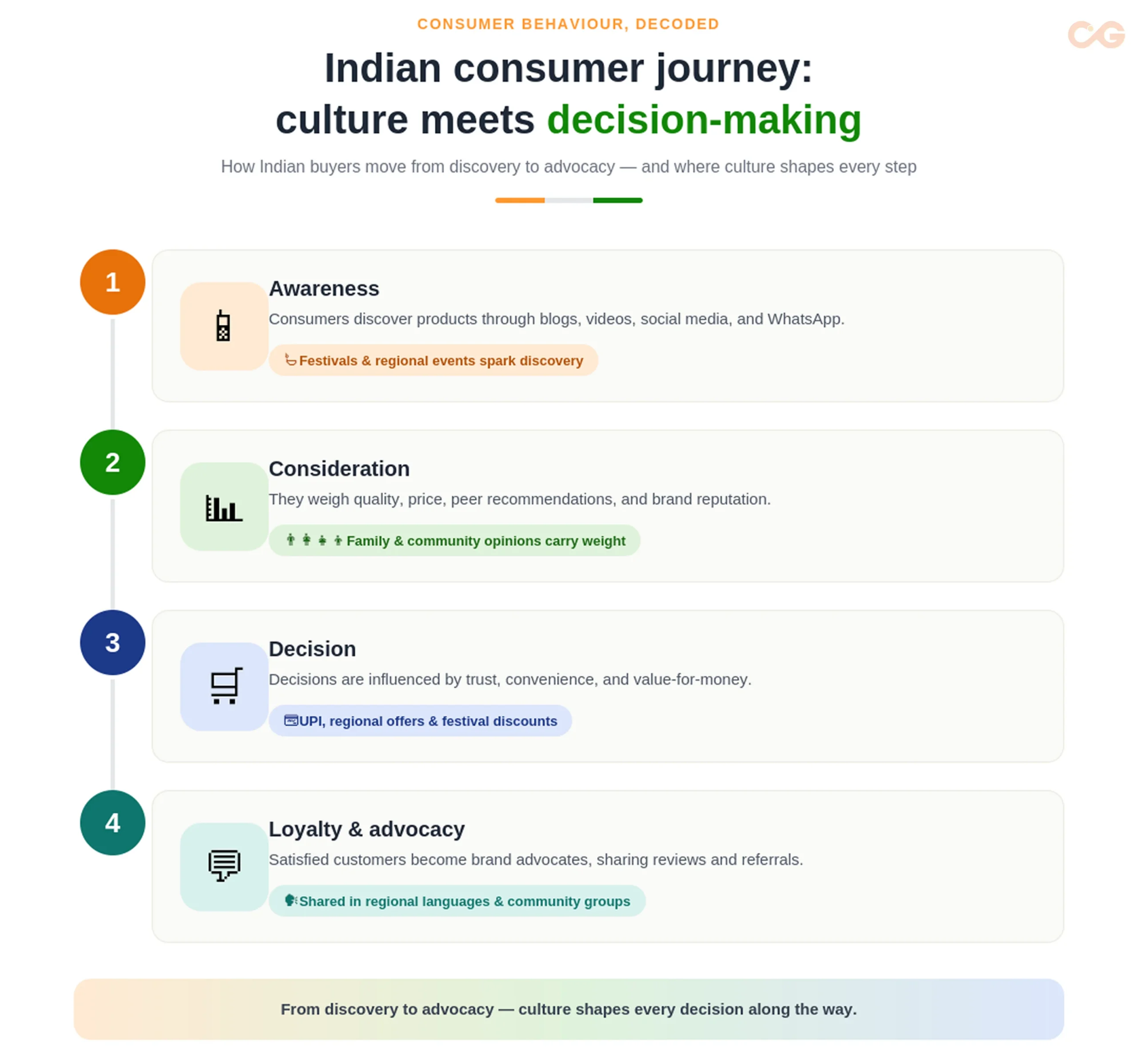
A content marketing funnel guides potential customers through awareness, consideration, and decision stages using tailored content. To create effective conversion-focused content, one must understand the Indian customer journey. Unlike the linear Western funnel, Indian consumers typically navigate a circular and community-influenced process.
Focus on crafting content that engages customers at each stage to convert them into buyers effectively.
Stage 1: Building Awareness Through Cultural Connection
At the start of the funnel, focus on educational and culturally relevant messages that build trust.
Effective Content Types:
- Educational Blog Posts: Create informative articles that address common local issues and help users make informed choices.
- How-to Videos: Produce step-by-step videos in local languages to simplify complex tasks and engage users.
- Cultural Trend Analysis: Link products to local festivals, seasons, or trends to boost relevance.
- Expert Interviews: Feature insights from respected industry figures to enhance credibility and trust.
Stage 2: Influencing Consideration Through Social Proof
Indian consumers value social proof when evaluating products or services. Your content should emphasise this aspect during their consideration phase.
Key Content Types:
Customer Testimonials and Case Studies: Share in-depth testimonials from similar businesses, highlighting results and practical applications to build trust.
Before and After Results: Present quantifiable success stories to demonstrate impact.
Community Success Stories: Highlight local success stories that resonate with your audience.
Expert Endorsements: Include endorsements from industry experts to strengthen your brand’s credibility.
Stage 3: Converting Interest by Demonstrating Value
At this stage, focus on content that showcases clear return on investment (ROI) and is price-sensitive.
Recommended Content Types:
Detailed Comparison Guides: Compare products or services side by side to clarify your value proposition and assist customers in making informed decisions.
ROI Calculators: Offer tools that show potential savings or benefits, illustrating the practical value of your offerings.
Free Samples and Trials: Provide opportunities for users to experience your product, creating a pathway to conversion.
Limited-Time Offers: Encourage quicker purchases with time-sensitive deals
Takeaway

Is Your Content Strategy Delivering Results?
Complete this 3-step self-assessment to identify areas for improvement and implement our proven action plan to drive better outcomes.
Case Study: UltraTech Cement’s Content-Led Customer Journey
UltraTech Cement’s #BaatGharKi campaign used educational content to help individual home builders navigate the complex home-building process. The campaign addressed questions across seven stages of home building, using videos, social media and website content to provide relevant information.
- Awareness: Short videos, social media posts and other content introduced audiences to important aspects of home building.
- Consideration: Content provided practical answers across the seven stages, positioning UltraTech as an expert home-building companion.
- Product Discovery: Users engaging with the content were directed to UltraTech’s website to explore relevant products based on their stage of construction.
Outcome: The #BaatGharKi 2.0 campaign reached 200 million people, generated 350+ million video views, and recorded a 225% increase in brand searches and an 89% lift in brand-message recall, according to the published campaign results.
Key Takeaway: UltraTech demonstrates how content marketing can support customers throughout their decision journey by providing useful, stage-specific information and connecting audiences with relevant products.
Content Types That Drive Conversions in India
Different content formats can influence consumers at various stages of the buying journey. For Indian businesses, the following formats can help attract attention, build trust, encourage engagement, and support conversions.
1. Video Content in Regional Languages
Language plays a crucial role in India’s diverse landscape. Research from IAMAI shows Indian users spend about 48 minutes daily on social media video content, nearly double the global average of 28 minutes. Hindi content generates 3.2 times more engagement than English among Indian audiences, as per the research of Rethinking The Future.
Action Steps:
- Create product demos in various regional languages like Hindi, Tamil, and Bengali to resonate with local audiences.
- Incorporate local cultural themes and festivals to connect emotionally.
- Ensure clear calls-to-action in native languages to guide users effectively.
- Optimise videos for mobile use, especially in vertical format, to enhance user experience.
2. Interactive and Game-based Content
Indian consumers favour interactive experiences, especially those that offer rewards.
Examples:
- Host quizzes about products with prizes to boost interest.
- Organise competitions that celebrate local culture to foster engagement.
- Arrange live Q&A sessions with industry experts to build credibility and provide valuable insights.
- Initiate campaigns encouraging users to share their experiences.
3. Community-Focused Content
Community opinions hold significant weight in India, contributing to higher conversion rates.
Effective Strategies:
- Create niche Facebook communities for discussing ideas and sharing information.
- Organise community events, capturing them through photos and videos to show brand involvement.
- Share customer success stories to build trust and illustrate real-life benefits.
- Establish brand ambassador programs to facilitate authentic word-of-mouth marketing and broaden reach.
4. User-Generated Content and Reviews
User-generated content can build trust by showing authentic customer experiences and real product usage. Indian businesses can:
- Encourage customers to share reviews, photos, videos, and testimonials.
- Feature genuine customer experiences on product pages and social media.
- Repurpose relevant user content across marketing channels.
- Respond to reviews and customer feedback to strengthen engagement and credibility.
5. Educational and Informational Content
Effective Formats:
- Publish SEO-friendly blogs, guides, and how-to articles that address common customer needs.
- Create carousel posts to present tips, comparisons, FAQs, and step-by-step information in an easy-to-consume format.
- Develop case studies and testimonials to demonstrate real-world value and build credibility.
- Offer checklists, e-books, or downloadable resources to generate qualified leads.
Industry Example: Nykaa uses content formats such as beauty tutorials, product reviews, expert advice, videos, and creator-led content to educate and engage consumers. Its community-focused approach also encourages users to exchange recommendations and discover products, making its content more useful and relatable.
Innovative Content Strategies for Indian Small Businesses
For small businesses in India, effective content marketing does not always require a large budget. Focusing on local relevance, efficient content creation, and transparent communication can help businesses build stronger relationships with their audiences.
1. Build a Hyper-Local Content Strategy
Connect your content with the community you serve:
- Create content around local events, festivals, and cultural moments.
- Address location-specific customer needs and challenges.
- Collaborate with relevant local creators and complementary businesses.
- Use local landmarks, experiences, and references to make content more relatable.
2. Create Content Cost-Effectively
Small businesses can maximise their resources by repurposing existing content and using affordable digital tools.
Key Actions:
- Repurpose blogs into social posts, videos, carousels, or newsletters to extend their value.
- Plan and schedule content in advance to maintain consistency without increasing workload.
- Use free, freemium or affordable tools to simplify content creation, SEO research, social media management, and analytics.
Essential Content Marketing Toolkit for Small Businesses
1. Content Creation & AI
- Canva – Create social media posts, carousels, graphics, and presentations.
- ChatGPT – Brainstorm ideas, draft content, and adapt messaging for different platforms.
- InVideo – Create short-form videos and marketing content without advanced editing skills.
2. SEO & Content Research
- Google Trends – Find trending topics and understand customer search interests.
- Google Keyword Planner – Discover relevant keywords and plan search-focused content.
- Semrush – Conduct keyword research, competitor analysis, and SEO research. (Useful when you need more advanced capabilities.)
3. Social Media Management
- Meta Business Suite – Manage Facebook and Instagram posts, messages, scheduling, and insights.
- Buffer – Schedule and manage content across multiple social media platforms.
4. Analytics & Performance
- Google Analytics 4 – Track website traffic, user behaviour, and conversions.
- Google Search Console – Monitor Google search performance and identify SEO opportunities.
5. Email Marketing
- Brevo – Create email campaigns, manage contacts, and set up basic automation.
- Mailchimp – Create newsletters, manage audiences, and automate email campaigns.
Start with tools that address your immediate needs rather than investing in multiple platforms at once.
3. Build Trust Through Transparency
Authenticity can help small businesses establish stronger customer relationships. Share behind-the-scenes glimpses of your team and operations, respond openly to feedback, explain how you address challenges, and communicate your business journey honestly. Consistent transparency can strengthen credibility and encourage long-term customer relationships.
Regional Language Content Strategy: A Valuable Opportunity
With over 22 official languages and countless dialects, regional language content presents a significant opportunity:
Market Insights
Internet Usage: About 98% of internet users interact with content in Indic languages, highlighting the relevance of vernacular content, as noted by DD News.
Engagement Levels: Content in regional languages outperforms English-only content by 40-60% in terms of viewer interaction, as per Savit Interactive.
Reduced Competition: Regional keywords face less competition, making it easier for brands to rank and connect with their target audiences.
Improved Conversion Rates: Localised content can yield conversion rates up to 70% higher than non-localised options, enhancing campaign ROI and driving impactful business outcomes, as per the research of WinSavvy.
Implementation Strategy
Phase 1: Research and Prioritisation
Identify key languages and demographics within your target audience. Analyse local search volume and competition. Understand cultural nuances and map the customer journey to align your content strategy with local expectations.
Phase 2: Content Creation
Translate high-performing English content into local languages, adapting cultural references appropriately. Utilise local insights to create region-specific case studies, testimonials, and relatable content.
Phase 3: Distribution and Optimisation
Distribute your content on regional or local platforms, optimising for regional language searches. Collaborate with local influencers, track performance metrics, and refine your strategy monthly to boost engagement and conversions across various Indian markets.
Content Distribution in Indian Digital Media
Effective Platforms for Content Marketing
Creating valuable content is only part of the strategy; distributing it through the right platforms helps businesses reach relevant audiences and improve engagement. Indian businesses should select channels based on their target audience, content format, and marketing goals.
WhatsApp Marketing
WhatsApp is valuable for direct and personalised customer communication. Businesses can use WhatsApp Business to share product updates, educational content, offers, catalogues, and customer support messages. WhatsApp Status can help maintain regular visibility, while broadcast lists and communities can support targeted communication without relying solely on public social media reach.
Instagram and Facebook
These platforms are effective for visual storytelling, community engagement, and product discovery. Businesses can use Instagram Reels, Stories, carousels, and polls to educate and engage audiences, while Facebook Groups and Live sessions can encourage discussions and strengthen customer relationships. Repurposing suitable content across both platforms can also improve efficiency.
YouTube
YouTube works well for long-form and short-form video content, including tutorials, product demonstrations, reviews, educational videos, and expert-led content. Businesses can organise videos into playlists based on customer needs or buying stages and use regional-language titles, descriptions, and subtitles to improve accessibility for India’s diverse audiences.
LinkedIn
LinkedIn is particularly valuable for B2B content marketing, professional services, and businesses targeting decision-makers. Companies can share industry insights, case studies, research, thought-leadership articles, company expertise, and professional updates to build credibility and generate relevant business leads.
Regional and Short-Form Platforms
Platforms such as ShareChat, Moj, and Josh can help businesses reach audiences interested in regional-language and short-form content. Local brands can use these platforms to share culturally relevant videos, tips, entertainment, and promotional content tailored to specific regional audiences.
Key Tip: Businesses do not need to be active on every platform. Focus on the channels where your target customers are most engaged, adapt content to each platform, and measure performance regularly to identify where your content marketing strategy delivers the strongest results.
Crafting Content to Build Trust with Value-Conscious Indian Consumers
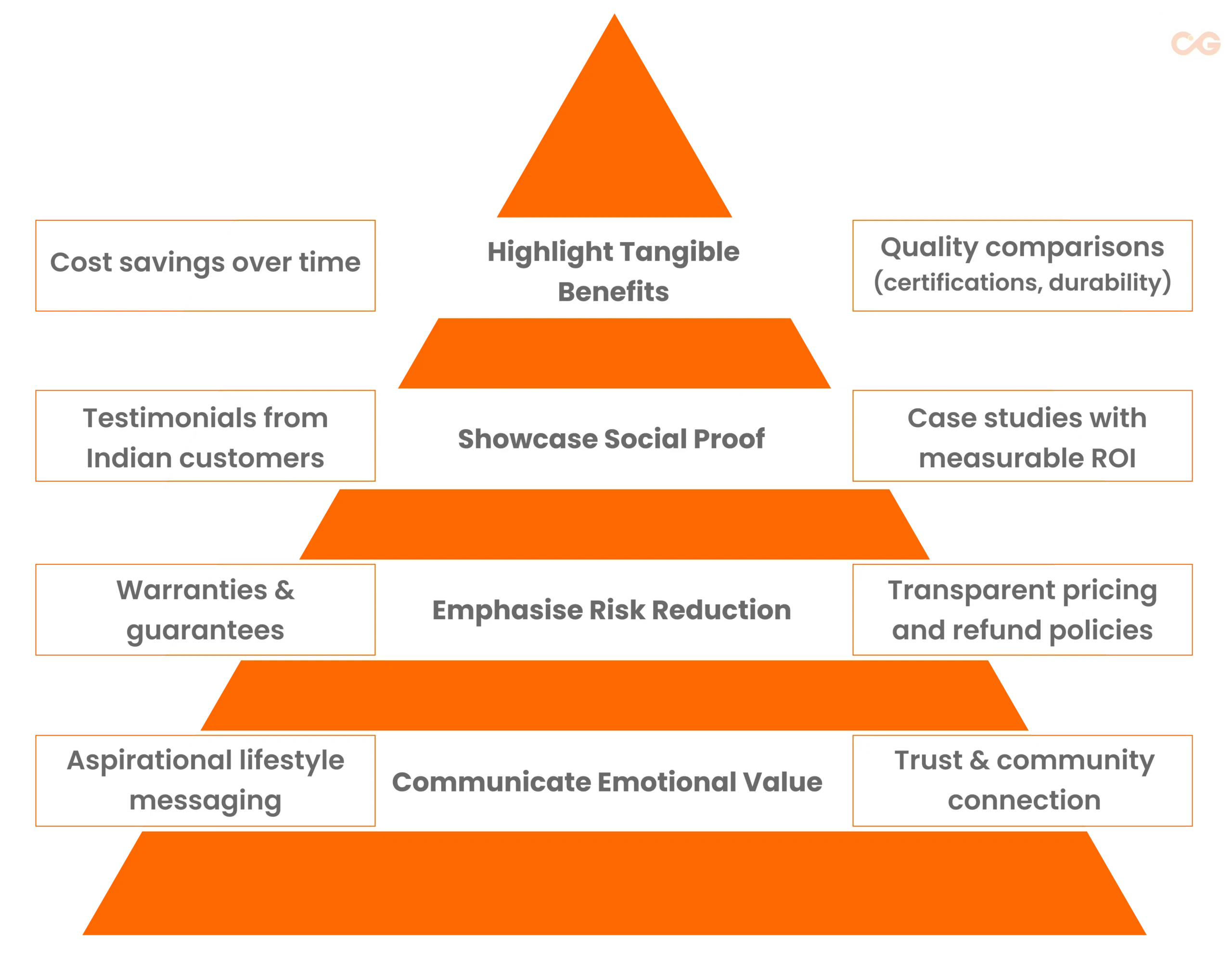
Indian consumers often look beyond the lowest price and evaluate the value, quality, and reliability a product or service offers. A strong content marketing strategy should address these concerns by providing useful information, demonstrating value, and communicating openly.
Takeaway
Is Your Content Strategy Delivering Results?
Complete this 3-step self-assessment to identify areas for improvement and implement our proven action plan to drive better outcomes.
1. Offer Educational Resources to Reduce Purchase Risk
Help customers make informed decisions with content that answers their practical questions:
- Create product demos in various regional languages like Hindi, Tamil, and Bengali to resonate with local audiences.
- Incorporate local cultural themes and festivals to connect emotionally.
- Ensure clear calls-to-action in native languages to guide users effectively.
- Optimise videos for mobile use, especially in vertical format, to enhance user experience.
2. Leverage Social Proof
Real customer experiences can strengthen credibility and reduce hesitation. Include:
- Customer reviews, ratings, testimonials, and success stories.
- Detailed case studies demonstrating real-world results.
- Expert opinions, professional endorsements, and relevant industry recognition.
- User experiences that highlight specific product benefits rather than making broad claims.
3. Make Transparency Part of Your Content Strategy
Build trust by communicating clearly and honestly throughout the customer journey:
- Display pricing, additional charges, warranties, and terms without hidden conditions.
- Address common concerns and acknowledge genuine limitations where appropriate.
- Share your business practices, values, and commitments openly.
- Respond to customer feedback professionally and explain how concerns are addressed.
When content consistently provides useful information, authentic proof, and transparent communication, businesses can reduce purchase hesitation and build stronger, long-term customer relationships.
Proving Your Product’s Worth: A Value-First Framework for Price-Sensitive Indian Consumers
Measuring Content Marketing Success in India
Measuring content marketing success requires looking beyond views and likes. Indian businesses should track metrics that show how content attracts, engages, and converts their target audience.
Core Conversion Metrics
- Lead-to-Customer Conversion Rate: Track the percentage of leads that become paying customers. Ruler Analytics reports average conversion rates of 2.7% for B2B and 2.1% for B2C across the industries it analysed. Ruler Analytics conversion benchmarks
- Customer Acquisition Cost: Measure the cost of acquiring customers through content-led channels to evaluate spending efficiency.
- Revenue Attribution: Identify which content pieces and channels contribute to conversions and revenue.
- Customer Lifetime Value: Assess the long-term revenue generated by customers acquired through your content marketing strategy.
- Content Engagement Rate: Track metrics such as average time on page, video completion rate, scroll depth, saves, and meaningful interactions to identify whether audiences find your content valuable.
India-Specific Measurement Areas
- Regional Engagement: Compare engagement across cities and states to identify locations where your content performs best.
- Language Performance: Track engagement and conversions across different language versions to understand which content resonates with specific audiences.
- Mobile vs. Desktop Performance: Compare performance across devices. Razorpay reports an average conversion rate of 4.14% on desktop compared with 2.94% on mobile in its analysed data. Razorpay conversion rate benchmarks
- Social Sharing and Referral Traffic: Monitor shares, mentions, and referral visits to understand how effectively content generates organic reach and word-of-mouth.
Key Takeaway: Regularly reviewing these metrics helps businesses identify high-performing content, allocate resources effectively, and continuously improve their content marketing strategy.
Challenges to Avoid in Indian Content Marketing
India’s diverse audiences make localisation essential for an effective content strategy. Businesses should understand regional preferences, digital behaviour, and cultural expectations before creating and distributing content.
1. Cultural Missteps
Using cultural references without understanding their local context can make content feel irrelevant or insensitive. Avoid directly copying Western campaigns. Instead, consider regional festivals, traditions, languages, humour, and local experiences when developing regional content.
2. Technical and Accessibility Issues
Poor mobile optimisation, slow-loading pages, unclear navigation, and difficult-to-read content can prevent audiences from engaging with your content. Ensure your website and content work smoothly across mobile devices, use accessible formats, and optimise pages for a better user experience.
3. Strategic Errors
A one-size-fits-all approach can limit the effectiveness of content marketing in India. Avoid targeting only urban, English-speaking audiences when your customer base is more diverse. Consider regional markets, language preferences, purchasing behaviour, and the influence of family and community on buying decisions.
4. Inconsistent Content and Messaging
Publishing content without a clear purpose or consistent brand message can confuse audiences and weaken trust. Define your target audience, content goals, key messages, and distribution channels before publishing, and regularly review performance to improve your strategy.
Key Takeaway: Successful content marketing in India requires more than translating existing campaigns. Businesses need to understand their audiences, adapt content to local contexts, and create a consistent experience across channels.
Takeaway
Is Your Content Strategy Delivering Results?
Complete this 3-step self-assessment to identify areas for improvement and implement our proven action plan to drive better outcomes.
Conclusion: Future-Proofing Content Marketing in India
Successful content marketing in India requires more than just translation. It demands a thorough understanding of cultural dynamics, consumer behaviour, and local market conditions. Companies that recognise India’s diversity will connect with their audience by delivering trustworthy and relevant content.
India’s digital economy is on track to surpass US$1 trillion by 2030, driven by rapid growth in digital payments, e-commerce, AI, cloud computing, and digital public infrastructure, according to GSMA.
Begin by understanding your regional audience. Create value-driven content that caters to their unique needs, and gradually expand into other regions and languages. Remember, content marketing in India should focus on building lasting relationships that turn customers into advocates.
Action Steps for Your Content Marketing Strategy
Conduct a comprehensive audit of your existing content through the lens of Indian consumers. Identify gaps in cultural relevance, regional engagement, and conversion effectiveness. Fill these gaps with targeted, locally resonant content that directly addresses the needs of your Indian audience.
The brands set to dominate the Indian digital market in the next decade are being built today, one culturally relevant piece of content at a time.