
The Human Side of AI: How Chatbots Are Reshaping Customer Relationships
Table of Contents
- Embracing the Era of Essential Chatbots
- Numbers Are Proving the Case of Explosive Growth
- Indian Success Stories: Real Companies, Real Outcomes
- Global Success Stories: Learning from the Leaders
- Beyond 24/7: Unlocking the Benefits of Always-On Support
- The Power of Emotional Intelligence
- Seamless Chatbot Integration: Creating a Frictionless Customer Experience
- Real Business Impact: The Evidence Beyond the Hype
- Indian ROI Spotlight: Tangible Success
- The Human-AI Partnership: Finding the Right Balance
- Emerging Trends: Shaping the Future of Customer Service
- Addressing Challenges with Human-Centred Solutions
- Conversations Are the Future
- The Bottom Line: Focus on People
Embracing the Era of Essential Chatbots
When customers face urgent issues late at night, they no longer have to wait until morning. Instead, they receive instant, helpful answers that feel genuinely human. This scenario reflects the reality of AI-powered chatbots, which significantly influence businesses today.
We are seeing a crucial shift in how companies engage with customers. Organisations worldwide recognise that customer service chatbots are not just tools for cutting costs; they foster trust and build relationships that drive growth. The conversation has evolved from “Should we adopt chatbots?” to “How can we make them more human?”
AI is transforming business communications at every stage, from initial contact to ongoing relationship management. These advanced AI chatbot solutions offer more than simple responses. They understand context, emotion, and intent, enhancing interactions with customers.
Forward-thinking companies should integrate intelligent chatbots into their strategies to improve customer experiences and boost loyalty. Embrace this evolution now to stay ahead in the competitive landscape.
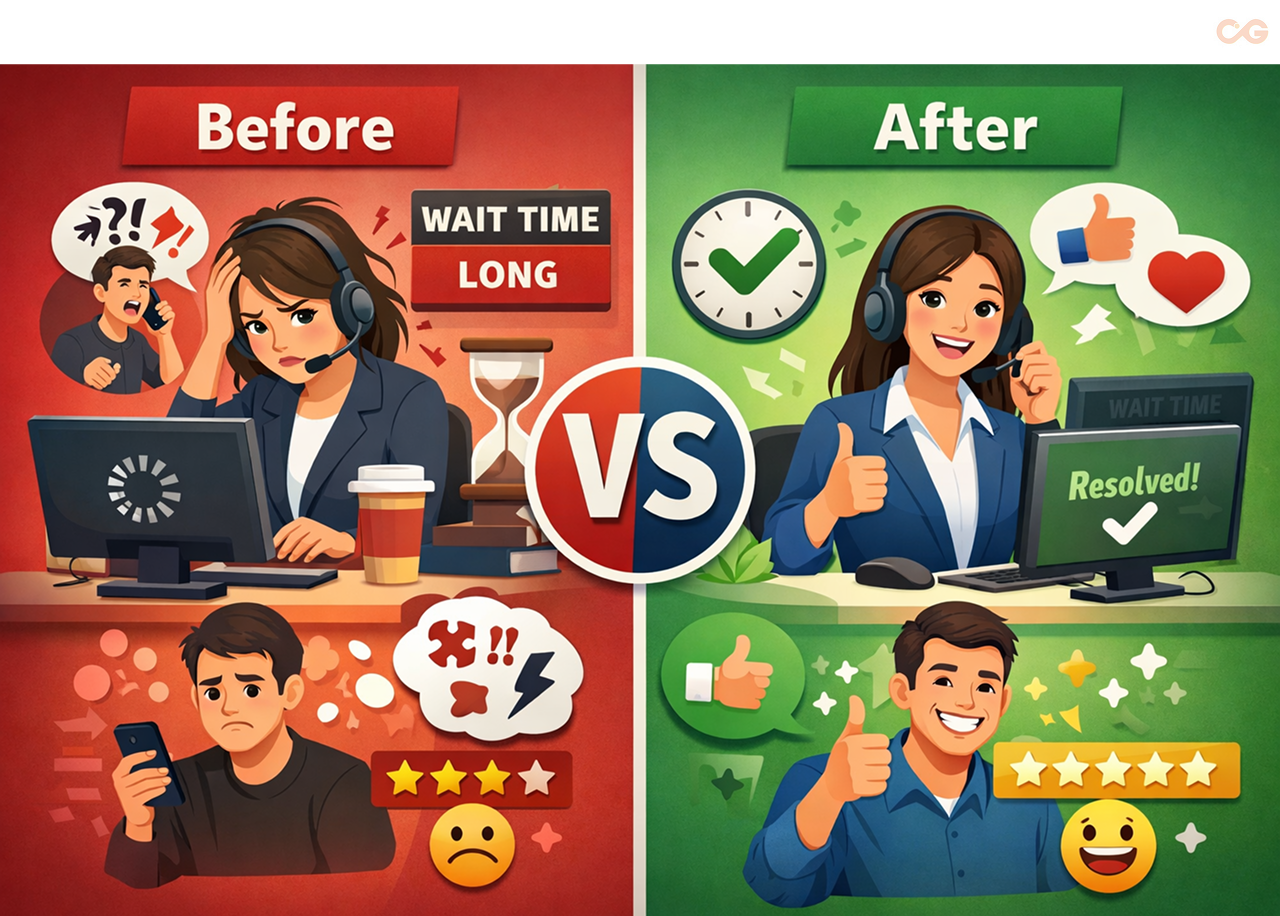
“Before vs After” customer service
Numbers Are Proving the Case of Explosive Growth
Global Markets Explosion
The customer service chatbot market is not just growing; it’s booming. It was valued at $7.76 billion (₹67,500 crore) in 2024; Grand View Research estimates it could surge to $27.29 billion (₹2.37 lakh crore) by 2030. This remarkable growth highlights how AI chatbot solutions are transforming everyday business operations.
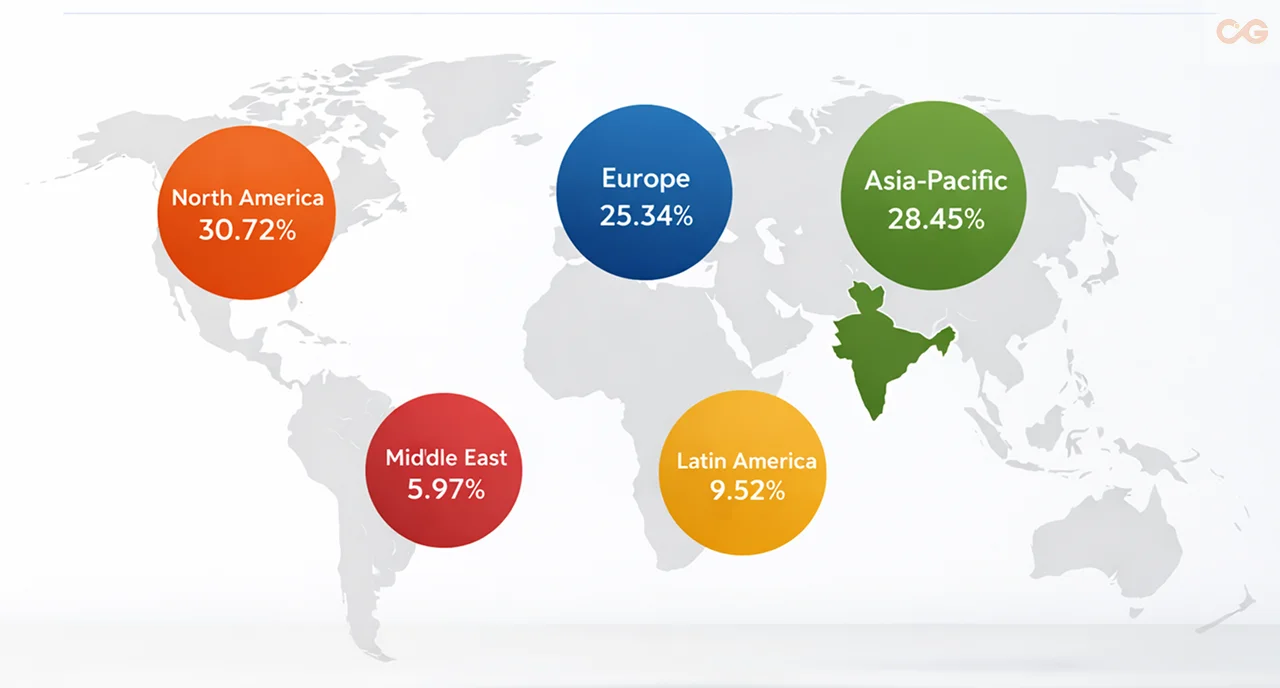
Market Expansion: According to Global View Research, the market will expand at a compound annual growth rate (CAGR) of 23.3% from 2025 to 2030. North America leads globally, holding a 30.72% market share, as reported by Exploding Topics.
Regional Adoption: Then comes Asia Pacific with 28.45% and Europe at the 3rd place by having 25.34%, as represented in Exploding Topics Statistics Blog.
Industry Leaders: Industry-wise, the Technology industry stands first as the most satisfied one with 73%, then comes retail with 67%, and in the third place is the manufacturing industry with 57%, according to Saufter.io.
Query Resolution: As per Haptik, most of the day-to-day queries, which may be personalised queries or FAQs, are answered by AI chatbots, constituting 80%.
These statistics represent real interactions and resolved issues. They show how many customers received timely support through automated responses. The growth of this market reflects a significant shift in how businesses engage with their customers.
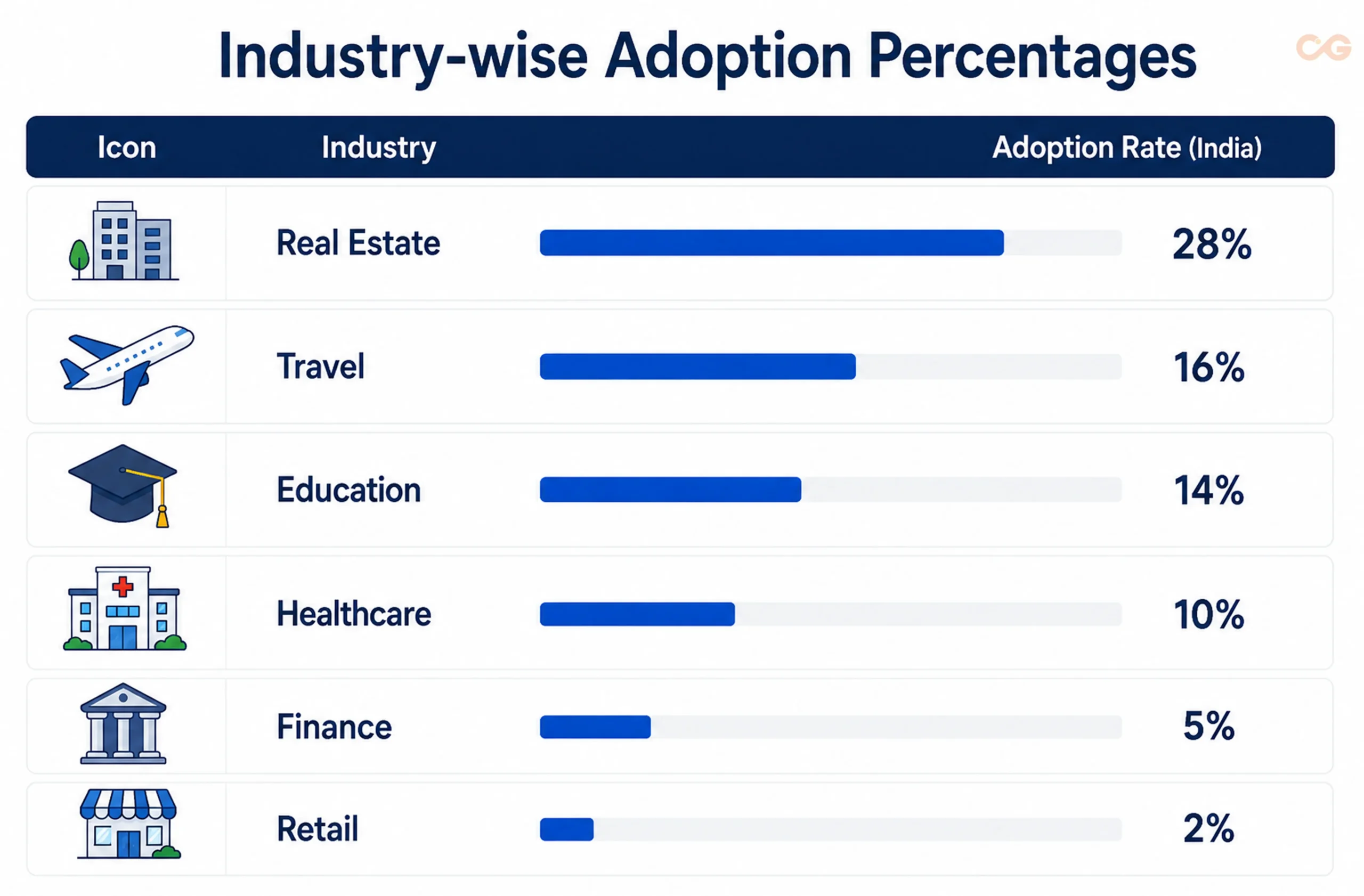
Regional Adoption Rates:
India’s Digital Transformation
India is witnessing remarkable growth in AI chatbots, with customer support AI expected to climb from $243.3 million (₹2,342 crore) in 2024 to an impressive $1,465.3 million (₹1.41 lakh crore) by 2033, according to IMARC Group. This advancement goes beyond simply adopting technology; it aims to make high-quality customer service accessible to everyone.
Key Statistics on AI Chatbots
Growth Rate: According to IMARC Group projection, the CAGR of 20.43% is expected growth rate in the market of Indian chatbots from the year 2025 to 2033.
Digital Population: In India, the internet users are expected to reach 900 million by 2025 due to the powerful role of AI, as reported in DD News.
Language Diversity: Most of the users, nearly 98% consumed the content in regional languages like Telugu, Tamil, etc, and 57% of users still choose to consume in Indian languages, indicating the scope for local language in all platforms, according to the report of DD News.
Top Applications: Chatbots for the Service sector stand at the top, for social media being in second place, and payments and order processing in third place, as shown by IMARC.
Takeaway

Ready to build stronger customer relationships with AI chatbots? Here’s a practical roadmap to help you get started.
Indian Success Stories: Real Companies, Real Outcomes
Case Study 1: HDFC Bank – EVA Chatbot
HDFC Bank has developed the Electronic Virtual Assistant (EVA) chatbot, the largest in the banking sector, designed by Senseforth AI Research. This chatbot provides instant information and 24/7 customer support regarding products, fees, bank processes, IFSC codes, and more.
Results:
- Resolved over 2.7 million customer queries within six months.
- Engaged with more than 530,000 unique users, totalling 1.2 million interactions.
- Achieved 85% accuracy with a 99.9% on-time resolution rate, as reported by ET CIO.
Case Study 2: Ola – Multilingual Assistance
Ola introduced the Kutrim, an AI-powered chatbot capable of supporting 10 Indian languages, including Hindi and Tamil. This innovation addresses the need for multilingual support, breaking down language barriers for Indian users.
Impact:
- Efficiently manages customer inquiries across multiple channels: web, mobile, and voice.
- Reduced reliance on human agents, significantly boosting service efficiency.
- Provides real-time information about suspicious activities.
Global Success Stories: Learning from the Leaders
Case Study 1: Creval – Transforming Banking Support with an AI-Powered Virtual Assistant
Challenge:
Italian banking group Creval wanted to improve its internal service desk by reducing the time employees spent handling repetitive support requests while ensuring faster and more efficient assistance for staff across more than 360 branches.
Approach:
Creval partnered with IBM to deploy Alfredo, an AI-powered virtual assistant built using IBM Watson technologies. The assistant provides first-line support by answering routine queries in natural language, resolving common issues automatically, and forwarding complex requests to the appropriate specialists when needed. The service is available 24/7, allowing employees to receive assistance at any time.
Results:
- Reduced back-office service desk calls by 80%.
- Reduced service desk effort by 40%, enabling staff to focus on higher-value tasks.
- Achieved 92% positive user feedback from employees using the AI assistant.
Case Study 2: Erica Chatbot at Bank of America
Challenge:
Bank of America wanted to provide customers with instant, personalised support while simplifying everyday banking tasks.
Approach:
The bank introduced Erica, a 24/7 AI-powered virtual financial assistant that helps customers manage tasks such as bill payments, transaction searches, account management, and personalised financial guidance. It also connects users to a live representative when needed.
Results:
- Surpassed 2 billion customer interactions since its launch.
- Assisted more than 42 million clients.
- Handles over 2 million customer requests daily. (Bank of America, 2024)
In summary, India’s progress in AI chatbots shows significant potential for enhancing customer service while addressing linguistic diversity. Companies should explore these innovations to improve efficiency and engagement.
Beyond 24/7: Unlocking the Benefits of Always-On Support
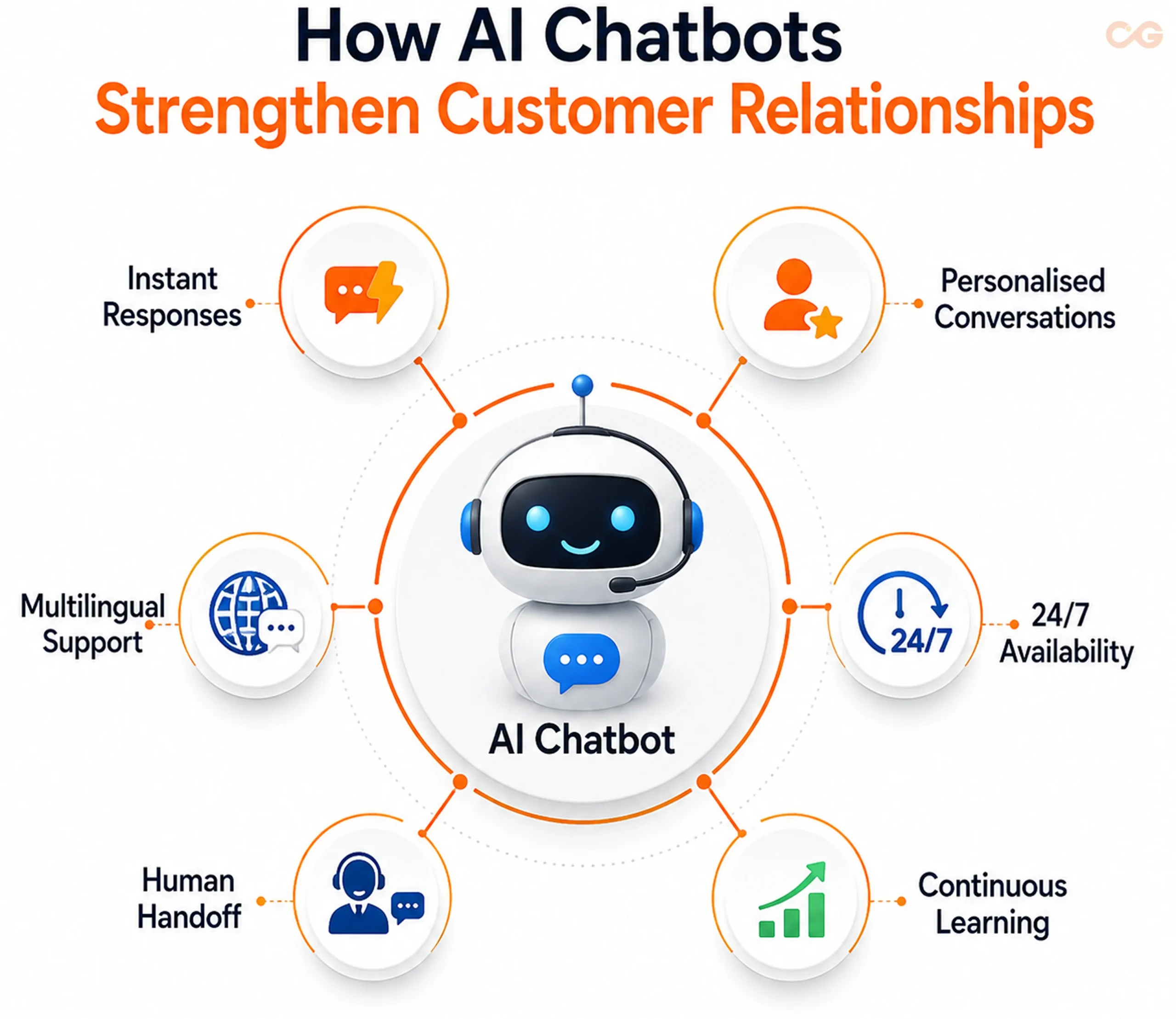
Our 24/7 customer support chatbots are always ready to assist. This constant availability reassures customers. Knowing they can reach support at any time enhances their confidence in our brand.
Key Insights on the Impact of Chatbots
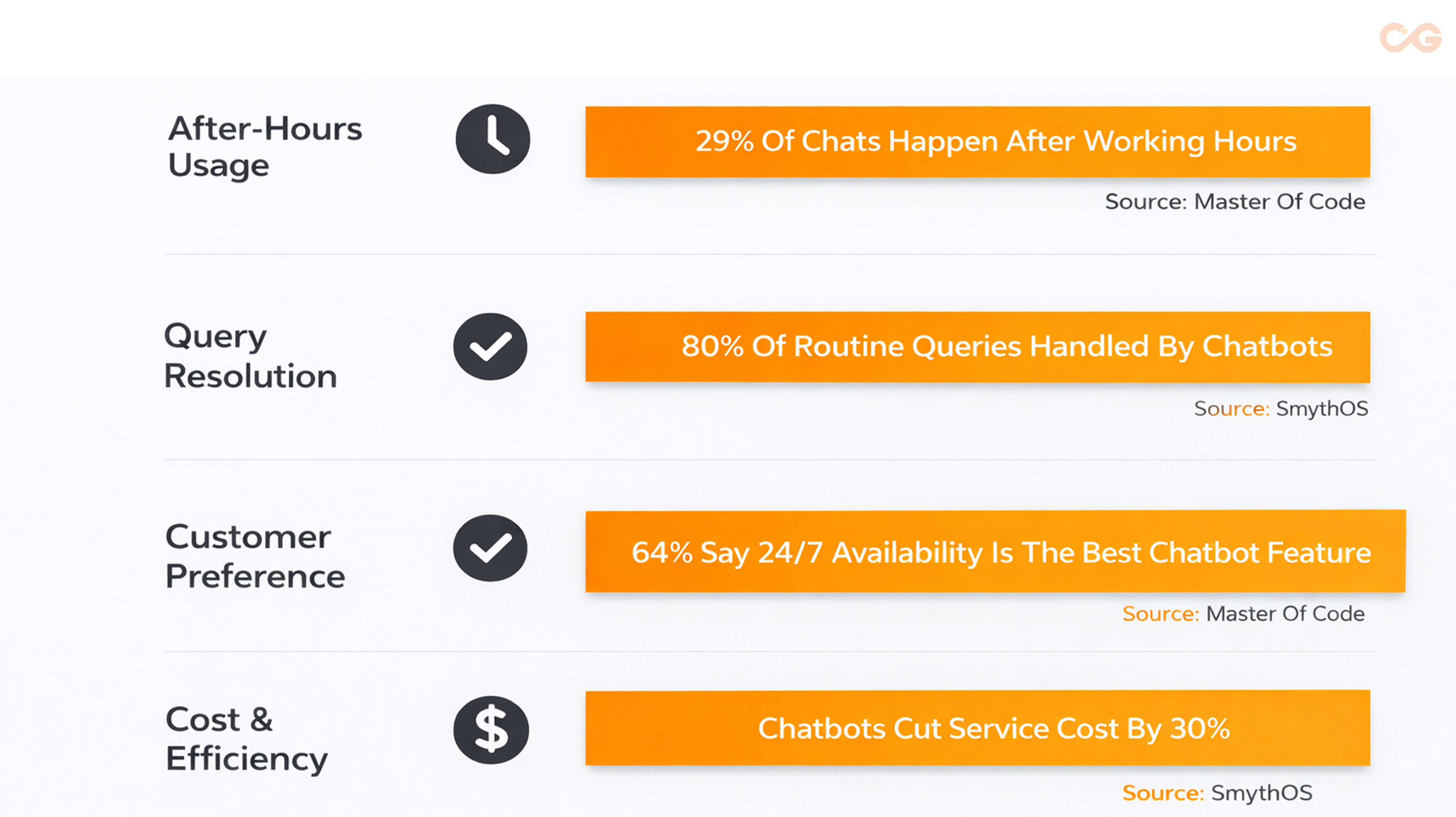
After-Hours Engagement: Almost 29% of customer interactions occur outside normal business hours.
Customer Satisfaction: According to Master Of Code, 64% of customers value the 24/7 support of chatbots most. This feature helps resolve their issues at any time.
Cost Efficiency: Chatbots reduce customer service expenses by 30% and operate four times more efficiently than human agents.
High Resolution Rates: As per Smythos, chatbots effectively handle around 80% of basic customer queries, significantly minimising the need for human involvement.
By leveraging chatbots, businesses can enhance support, cut costs, and improve customer experiences.
The Real Impact of Chatbots on Customer Service
Transitioning from traditional customer care centres to AI-driven chatbots represents more than just a technological upgrade; it demonstrates our commitment to valuing our customers’ time and addressing their needs.
The Power of Emotional Intelligence
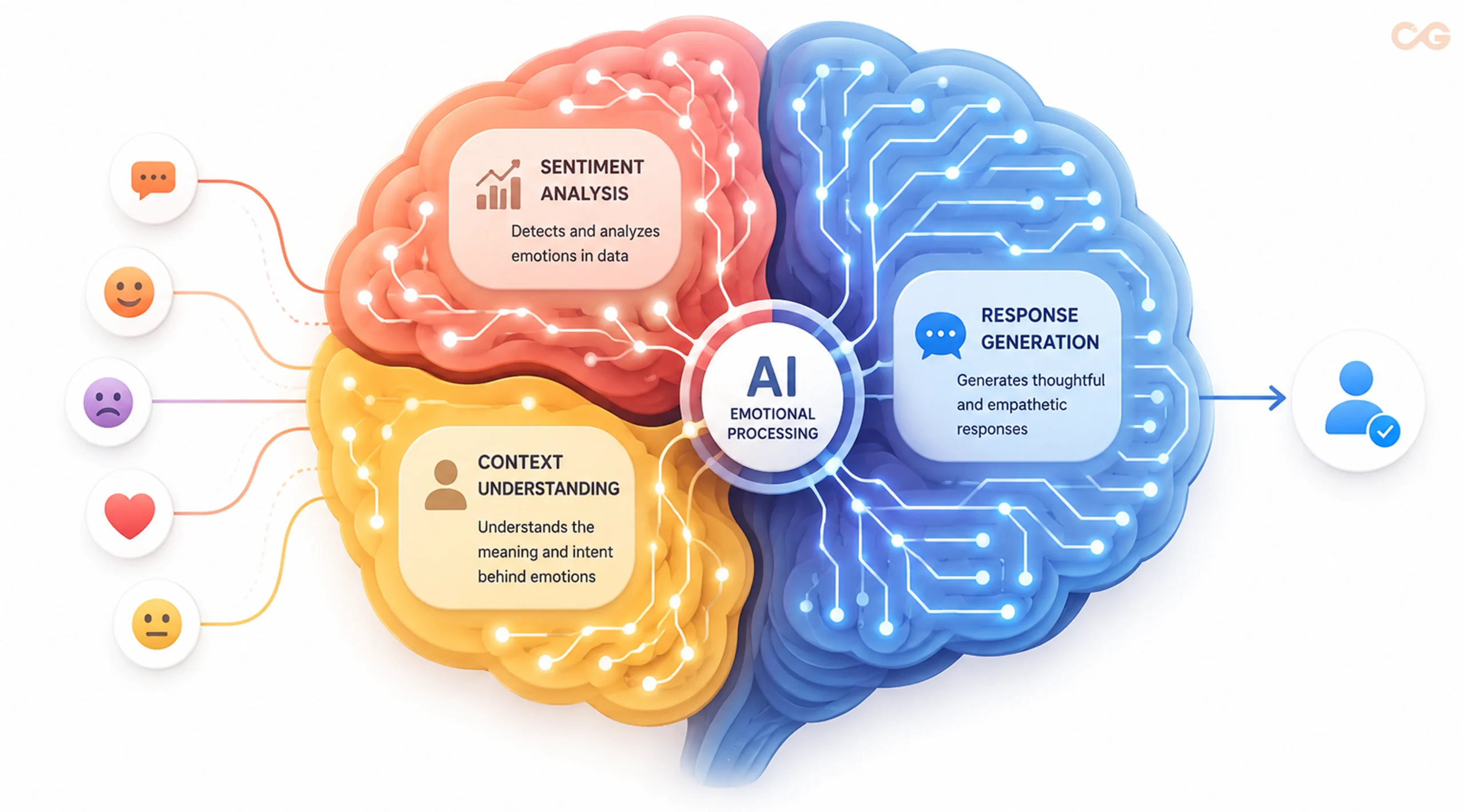
This is where true innovation occurs. Our conversational AI doesn’t just tackle customer queries; it recognises the emotions behind those questions. Research from Zendesk shows that 71% of customers feel that AI enhances empathy in their interactions.
Enhanced AI Capabilities
1. Sentiment Analysis: By leveraging advanced emotion detection, we have seen a 30% boost in customer satisfaction and purchase rates, according to Scanwatch.
2. Tone Adjustment: Our chatbots can adjust their tone and communication style based on the customer’s mood.
3. Escalation Intelligence: If a customer displays frustration, our chatbots seamlessly connect them to a human agent.
4. Emotional Analytics: Our technology monitors and tracks customer emotions over time.
Where Emotional Intelligence Shines
Context-Aware Conversations: Today’s AI-powered chatbots recall past interactions and understand contextual nuances. They adapt their tone, proactively offer assistance, and know when to involve a human agent. This precision ensures customers feel recognised and understood.
Personalisation at Scale: With over 1.4 billion users engaging with AI chatbots globally, technology now provides tailored experiences that mimic in-person solutions, as per the research of VFS Global. Research by Genesys highlights the essential role of AI in customer experience, particularly in the upcoming years.
Advanced Natural Language Processing systems don’t just interpret words; they capture the way those words are spoken. This fosters genuine empathy in customer interactions and elevates engagement to new heights.
Indian Innovation Spotlight:
Haptik and Yellow.ai stand out in creating culturally sensitive and emotionally intelligent chatbots. These tools understand the unique communication styles of Indian customers, leading to higher satisfaction than typical chatbots.
Seamless Chatbot Integration: Creating a Frictionless Customer Experience
An effective AI chatbot integrates seamlessly with your existing customer service ecosystem. Whether customers interact through your website, mobile app, messaging platforms such as WhatsApp or Facebook Messenger, or voice assistants, they should receive a consistent and uninterrupted experience across every touchpoint.
Indian Innovation Spotlight:
Platform Coverage: Leading companies deploy chatbots across more than eight channels simultaneously, as per ProProfs.
Mobile Optimization:The mobile segment is expected to grow at a CAGR of 24.1% from 2022 to 2032, as reported in Kommunicate.
Data Consistency: Establish a unified customer view across all channels. Modern businesses leverage AI and CRM integration to create comprehensive customer profiles.
For example, if a customer starts on WhatsApp and moves to your website, the chatbot retains the conversation context, saving the customer time and hassle.
Real Business Impact: The Evidence Beyond the Hype
Let’s explore how AI chatbots are genuinely driving business growth. Here are some key results.
Revenue Impact:
With personalised recommendations and smart follow-ups from AI chatbots, companies see a 20% increase in repeat purchases, according to CONVIN. Chatbots also enhance lead generation by cutting unqualified leads by 50%, as noted in the SmythOS report. They boost average cart value by 31%, leading nearly half of customers to make unexpected purchases, as reported by the God of Prompt. Additionally, chatbots resolve 20-30% of customer queries, streamlining the buying process, according to SmythOS.
Operational Excellence:
AI assistants enhance basic query resolution by 25% through improved tools, as ClearTouch highlights. They also increase agent productivity by 40% by alleviating repetitive query workloads, according to Sprinklr. Compared to traditional channels, AI chatbots boost customer satisfaction by about 87.58%, as stated by Sobot. These statistics illustrate how customers receive timely help, swift complaint resolution, and improved relationships through empathetic automated customer interaction.
Indian ROI Spotlight: Tangible Success
Conversational AI shows measurable results across major sectors in India, especially in banking and e-commerce. This robotic automation lowers operational costs while enhancing customer experience, creating significant competitive advantages. Here are examples of how Indian companies are transforming their technology investments into business benefits.
Banking Sector:
ICICI Bank: Chatbots have slashed response times by up to 60% while achieving 100% accuracy, according to Emerj.
SBI: The SIA chatbot has reduced call centre workload by 40%, managing around 25% of daily customer inquiries, as Emerj reports.
E-commerce Leaders:
Amazon India: 55% of customer inquiries are resolved through automation, with issue resolution times reduced by 30% thanks to instant solutions from their conversational AI, according to CONVIN AI.
BigBasket: The implementation of an AI chatbot has increased uptime to 99.9%, as stated in a LinkedIn post.
These successful businesses leverage AI-driven insights to meet customer needs. They use chatbot engagement metrics to enhance their strategies and improve customer experiences.
Takeaway
Ready to build stronger customer relationships with AI chatbots? Here’s a practical roadmap to help you get started.
The Human-AI Partnership: Finding the Right Balance
Industry leaders indicate that AI works more efficiently than humans for routine customer service. However, for complex issues, customers prefer human agents. This highlights the necessity of balancing AI and human support.
Approximately 72% of business leaders emphasise integrating AI into customer service to meet digital demands, according to Zendesk. Despite AI handling 95% of inquiries, the remaining 5% still require the unique touch of human agents, as reported by Infosys BPM.
Successful implementations follow a clear principle: let AI manage instant responses, data processing, and routine queries while human agents handle complex or sensitive situations. This approach fosters collaboration that enhances customer engagement.
Such a balanced strategy combines the efficiency of AI chatbots with the personal touch of human interaction. Together, they create a powerful customer experience that drives success.
Emerging Trends: Shaping the Future of Customer Service
As AI continues to evolve, chatbots are becoming more than just automated support tools. They are transforming into intelligent assistants that deliver faster, more personalised, and more meaningful customer experiences.
1. Generative AI: Smarter and More Personalised Conversations
Generative AI enables chatbots to understand context, generate natural responses, and deliver highly personalised interactions. Beyond answering routine questions, these AI assistants can recommend products, draft personalised emails, and provide tailored solutions based on customer preferences and previous interactions. This helps businesses create more engaging and human-like conversations.
2. Voice-First Customer Experiences
Voice-enabled chatbots are making customer interactions more natural and accessible. As voice search and smart assistants continue to gain popularity, businesses are increasingly adopting conversational AI to support hands-free interactions. Modern AI platforms can also communicate in multiple languages, making customer service more inclusive for global audiences.
3. Predictive Customer Support
Instead of waiting for customers to report problems, AI is becoming increasingly proactive. By analysing customer behaviour and historical interactions, chatbots can identify potential issues, send timely reminders, recommend relevant solutions, and assist at the right moment. This proactive approach reduces customer effort while improving satisfaction and loyalty.
4. Multilingual AI for Inclusive Customer Experiences
For diverse markets like India, multilingual AI is becoming essential for building stronger customer relationships. By communicating in customers’ preferred languages, chatbots make interactions more comfortable, accessible, and personalised. Companies such as Flipkart, Paytm, and Bharti Airtel have expanded support for multiple regional languages, helping millions of users access services with greater ease and confidence.
The Future Is Human-Centred AI
The future of customer service lies in combining AI’s speed and efficiency with experiences that feel personal and empathetic. As generative AI, voice interactions, predictive support, and multilingual capabilities continue to advance, businesses that embrace these innovations will be better positioned to build stronger, more meaningful relationships with their customers.
Addressing Challenges with Human-Centred Solutions
While AI chatbots offer speed and efficiency, building meaningful customer relationships requires more than automation. Businesses must overcome several challenges to ensure AI interactions remain helpful, trustworthy, and genuinely human.
1. Preserving the Human Touch
One of the biggest concerns surrounding AI chatbots is that conversations may feel robotic or impersonal. To create more engaging experiences, businesses should design chatbots with a clear brand voice, use natural language, and enable seamless handovers to human agents whenever complex or sensitive issues arise.
2. Building Authentic Conversations
Customers expect AI to understand context, remember previous interactions, and respond naturally. Developing conversational flows that reflect real customer behaviour, combined with continuous training using customer feedback, helps chatbots deliver more personalised and meaningful interactions over time.
3. Supporting Diverse Customer Needs
In multilingual markets like India, language and cultural diversity play a vital role in customer engagement. AI chatbots that support regional languages and recognise local communication preferences can make interactions more inclusive, helping customers feel understood and valued.
4. Strengthening AI with High-Quality Data
The quality of a chatbot’s responses depends on the quality of the data it learns from. Regularly updating knowledge bases, expanding conversation examples, and monitoring customer interactions enable businesses to improve accuracy while reducing misunderstandings.
5. Measuring What Matters
Successful chatbot strategies go beyond automation. Businesses should monitor metrics such as customer satisfaction (CSAT), first-contact resolution, response time, and escalation rates to understand how effectively AI is supporting customers and identify opportunities for continuous improvement.
Key Takeaway
The most successful AI chatbots are not those that replace human interaction but those that enhance it. By combining intelligent automation with empathy, personalisation, and continuous learning, businesses can create customer experiences that are both efficient and genuinely relationship-driven.
Conversations Are the Future
We stand at the beginning of a new era where customer service chatbots will evolve into digital assistants. Gartner found that 91% of customer service leaders face executive pressure to adopt AI in 2026 as organisations prioritise better customer experiences, greater operational efficiency, and stronger self-service capabilities.
Future Predictions (2026-2030):
1. Autonomous Agents: Chatbots will learn and improve on their own, without human input.
2. Emotional Intelligence: AI will recognise cultural nuances and emotional contexts.
3. Universal Translation: AI will break language barriers by translating into any regional language.
4. Predictive Assistance: AI will anticipate customers’ needs before they even ask.
The Next Generation Will Experience:
- Emotional AI: Systems that can detect frustration, excitement, or confusion in real time.
- Multimodal Experiences: Combining text, voice, video, and possibly AR/VR for a seamless customer journey.
- Predictive Support: Chatbots will foresee customer needs ahead of their requests.
- Hyper-personalisation: Crafting unique interactions that make each customer feel valued.
Indian Future Outlook:
- Government AI: AI assistants will enhance public services at the national level.
- Revamped Education: AI will support vernacular language learning in education.
- Smart Agriculture: AI-driven tools will assist farmers in their practices.
- Healthcare Revolution: AI-enabled doctors will provide services even in rural areas.
This shift signifies a transformation in customer service automation. AI will enhance human interaction, improving overall efficiency in processes.
Funding and Investment Trends
Thunderbit reports that AI startups secured over $100 billion in funding in 2024. According to Zoho SalesIQ, the global chatbot market is expected to hit $46.6 billion by 2029.
Takeaway
Ready to build stronger customer relationships with AI chatbots? Here’s a practical roadmap to help you get started.
The Bottom Line: Focus on People
AI chatbots succeed by simplifying lives. They don’t replace human contact; they enhance it. In ideal situations, chatbots enable human agents to tackle more complex issues, build connections, and create meaningful moments.
In the near future, companies that embrace chatbots for boosting engagement instead of cutting costs will flourish. They understand that every conversation involves real people with genuine needs and design AI chatbots to respect that human element.
The future of customer service automation isn’t a choice between human agents and AI; it’s about leveraging both to elevate work quality beyond what either could achieve alone. Today, AI plays a supportive role for human agents in business communications.
Your customers are ready, and the technology is here. The question is not if you will implement conversational AI, but how soon you will do it effectively to meet your customers’ needs.
The conversation is already underway. Are you ready to engage?
You May Also Like