
How Web3 is Transforming Digital Marketing Strategies

Table of Contents
- Introduction
- Understanding Web3 in the Digital Marketing Context
- Key Ways Web3 Is Transforming Digital Marketing
- Challenges & Considerations for Marketers
- Future of Web3 in Digital Marketing
- Conclusion
Introduction
What Is Web3, and Why Is It Important in Digital Marketing?
Web3 represents a new approach to how the internet is built and how people interact with it. Often referred to as the decentralised web, Web3 is built on blockchain technology, decentralisation, and user data ownership. Unlike traditional internet platforms, where companies typically manage user data and digital identities, Web3 aims to give individuals greater control over their information, digital assets, and online interactions. Permissionless networks and smart contracts support this model, allowing users to interact and transact with greater independence from centralised intermediaries.
This shift is also changing how brands connect with their audiences. Instead of relying entirely on centralised platforms to collect and manage customer data, businesses can explore more direct and transparent ways to engage with users. Through the decentralisation of data, Web3 creates opportunities for brands to build stronger relationships while giving consumers more control over how they participate in digital experiences.
Web3 is gaining attention in digital marketing because it can help address long-standing concerns around data privacy, ad fraud, and transparency. Brands can adopt decentralised marketing strategies that use tokenised rewards, Non-Fungible Tokens (NFTs), and decentralised applications (dApps) to create community-led campaigns and strengthen blockchain marketing initiatives.
These technologies give users more opportunities to participate in brand ecosystems rather than simply receiving marketing messages. They can engage with communities, earn rewards, and gain digital ownership, creating a more interactive relationship between brands and their audiences. As per the Claspo report 2025, 86% of users choose brands that emphasise data privacy and transparency in marketing. This highlights why privacy, transparency, and user control are becoming increasingly important in the future of digital marketing.
Understanding Web3 in the Digital Marketing Context
Major Differences Between Web2 and Web3
Web2 and Web3 represent two different approaches to how the internet works, particularly when it comes to data ownership, identity, transparency, and user control. Web2 is largely built around centralised platforms that manage user data and online interactions. Web3 takes a more decentralised approach, using blockchain technology, smart contracts, and peer-to-peer networks to give users greater control over their digital identities, assets, and interactions.
Key Differences Between Web2 and Web3
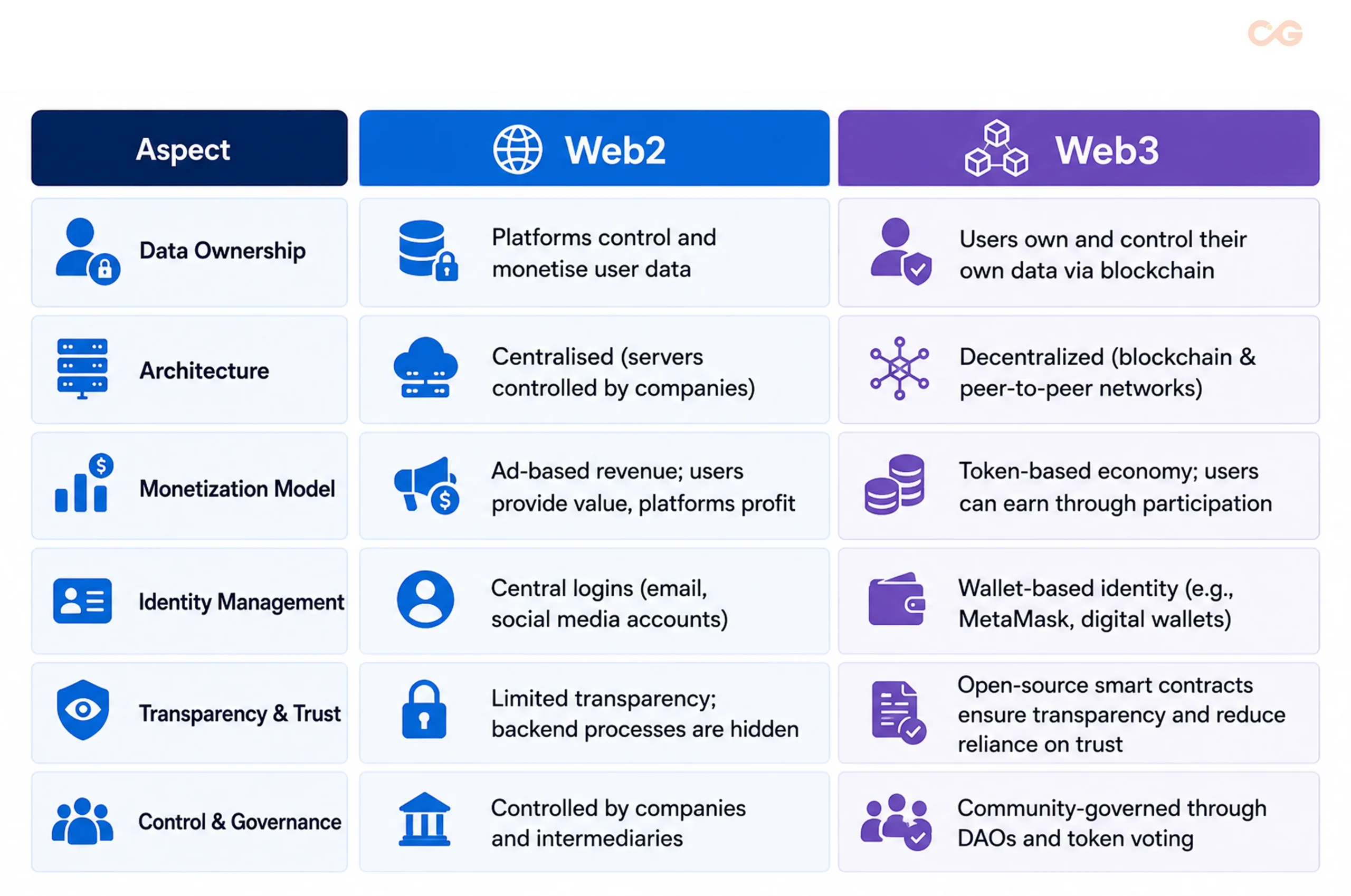
This also changes how brands can approach their audiences. Web2 marketing often depends on collecting user information to deliver targeted advertising. Web3 creates opportunities for more peer-to-peer marketing, where privacy, transparency, community participation, and user ownership can play a greater role.
Understanding the LinkedIn algorithm can help you make more informed decisions about your content and engagement strategy. Rather than relying on guesswork, knowing how LinkedIn distributes content allows you to create a more focused approach to building visibility and reaching the right professional audience.
Identity management is another key difference. Users can interact with decentralised applications (dApps) through wallet-based identities instead of relying entirely on email addresses or social media logins. While this can provide greater privacy, wallet addresses are not automatically anonymous because blockchain transactions can often be viewed and traced publicly.
For marketers, this shift opens up new ways to build customer engagement and loyalty. Instead of relying only on advertisements, brands can create communities and digital ecosystems where users actively participate, interact with digital assets, and receive rewards for their involvement.
Takeaway

Ready to future-proof your marketing strategy? Explore these Web3 tools to discover new opportunities for audience engagement, community building, and brand growth.
Understanding Web3 in the Digital Marketing Context
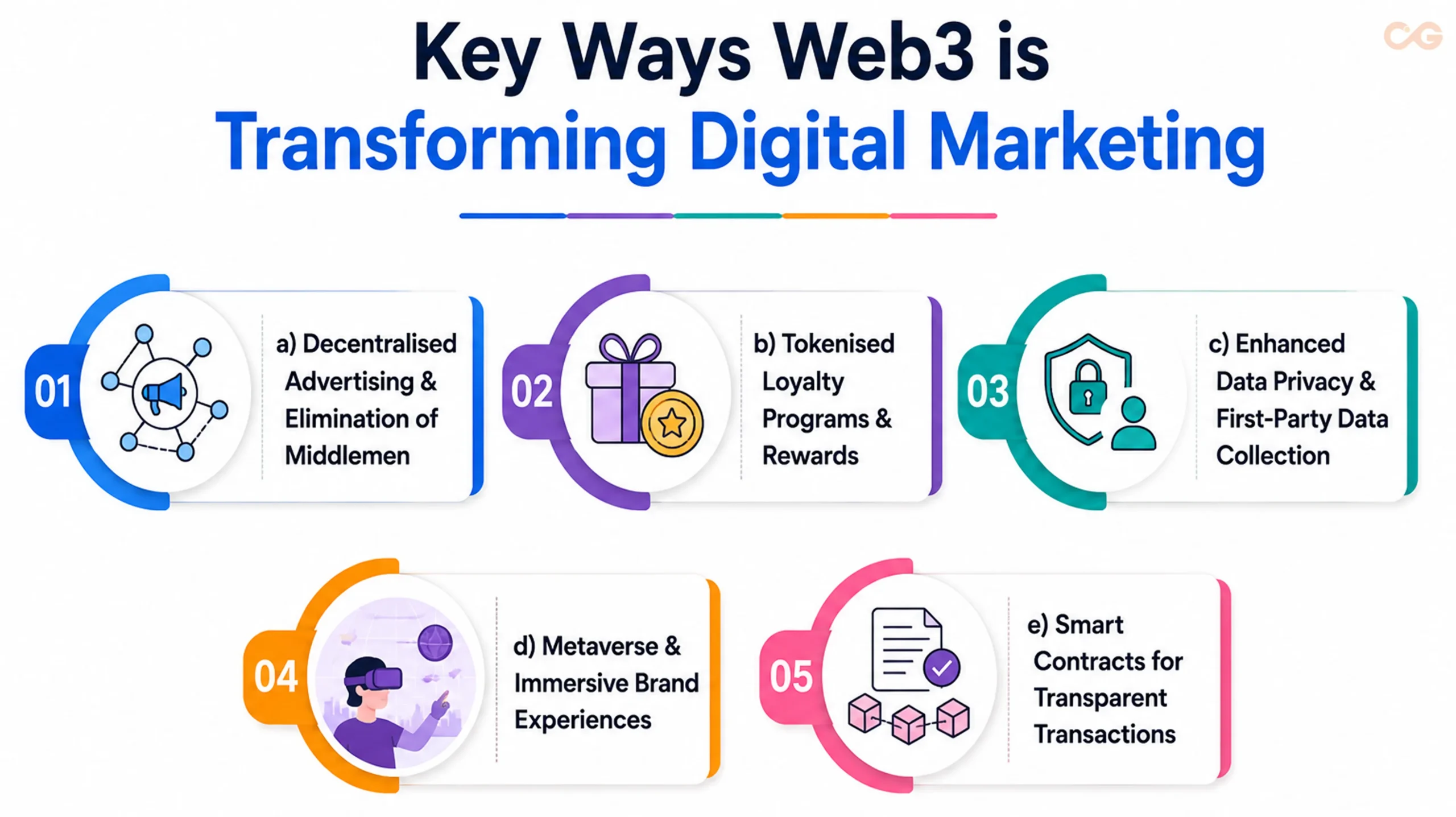
a) Decentralised Advertising and Reduced Dependence on Intermediaries
Traditional digital advertising often involves several intermediaries between brands, publishers, and audiences. This can make it difficult to understand how advertising budgets are distributed and can also create opportunities for fraud. Decentralised advertising uses blockchain technology to create a more direct and transparent connection between these participants.
Case Study: Brave Browser
Brave Browser is a practical example of how Web3 principles can be applied to digital advertising. Through its Brave Ads ecosystem, users can choose to view privacy-focused ads and earn Basic Attention Tokens (BAT) through Brave Rewards. Brave also performs ad matching on the user’s device, reducing the need to share browsing data with advertisers.
According to Brave, the ad campaign achieved a 15.8% click-through rate (CTR), demonstrating strong audience engagement with the campaign. At the time, Brave’s advertising model also offered users 70% of advertising revenue through its rewards system. By connecting user attention with tangible rewards, Brave demonstrates how Web3 can create a more transparent and user-centric advertising experience.
b) Tokenised Loyalty Programs and Rewards
Traditional loyalty programs usually rely on points that can only be redeemed within a particular brand or platform. Web3 introduces another possibility: tokenised loyalty programs that use crypto tokens and NFTs to turn rewards into digital assets with greater flexibility and, in some cases, digital ownership.
Customers can earn, collect, and redeem tokenised rewards while brands can use these assets to encourage repeat purchases, community participation, and long-term engagement. Because these rewards are recorded on the blockchain, brands can also create more transparent systems for tracking ownership and transactions.
A few examples of these programs include:
- Numeros Motors launched what it described as India’s first NFT-backed EV loyalty program. The initiative rewarded early EV buyers with exclusive digital collectables that also provided access to its community.
- Tata Consultancy Services (TCS) developed a blockchain-based multi-brand customer loyalty platform that allowed customers to earn and redeem tokenised rewards across participating brands. The approach was designed to provide greater flexibility and transparency than traditional loyalty systems.
These examples show how Web3 can turn loyalty rewards from simple points into more interactive digital assets that support ongoing customer relationships.
c) Enhanced Privacy and First-Party Data Acquisition
As concerns around data privacy continue to grow, Web3 is encouraging marketers to rethink how they collect and use customer information. Its focus on user-owned data places greater emphasis on consent, transparency, and privacy-first approaches.
Blockchain can provide transparent and verifiable records of data-related transactions, while decentralised identity mechanisms and cryptographic proofs can give users greater control over the information they choose to share. With explicit user permission, marketers can collect first-party data through direct interactions with their audiences rather than depending entirely on third-party data sources.
This creates a more continuous process: create content, measure the response, learn from the results, and improve the next piece.
This approach can help businesses respond to privacy regulations such as GDPR while also addressing consumers’ growing expectations around transparency and control. Studies indicate privacy-first marketing models may achieve up to 10-15% more revenue, according to UserCentric. This suggests that respecting digital ownership and data privacy can support both stronger customer relationships and potential commercial benefits.
d) Metaverse and Immersive Brand Experiences
The metaverse gives brands another way to move beyond traditional digital advertising and create experiences that audiences can actively participate in. Virtual stores, branded NFT wearables, interactive events, and digital environments allow consumers to explore products and interact with brands in more engaging ways.
Indian brands have already experimented with these experiences, particularly in fashion, entertainment, automotive, and consumer products.
Below are a few Indian examples of metaverse brand experiences:
- Tata Tea Premium’s Metaverse Holi Party created a virtual Holi celebration where participants could use avatars, play games, and experience virtual performances. The campaign brought India’s regional cultures and festive traditions into an immersive digital environment.
- Mahindra & Mahindra explored the connection between physical and digital experiences through an NFT initiative linked to the Thar. Owners of the digital collectables received exclusive opportunities, including access to in-person off-road experiences.
- Papa Don’t Preach by Shubhika experimented with digital fashion through a metaverse fashion show, allowing its virtual designs to be showcased on user avatars. The initiative combined fashion, digital creativity, and new forms of brand expression.
These campaigns demonstrate how the metaverse can give brands more creative ways to tell stories, showcase products, and build experiences that audiences can actively explore.
Takeaway
Ready to future-proof your marketing strategy? Explore these Web3 tools to discover new opportunities for audience engagement, community building, and brand growth.
e) Smart Contracts for Transparent Transactions
Smart contracts can simplify marketing transactions by automatically executing predefined agreements when specific conditions are met. Because the terms are recorded on a blockchain, the process can reduce manual intervention and provide all parties with a verifiable record of the agreement.
This can be particularly useful in influencer marketing. For example, a smart contract could release payment once agreed engagement metrics or campaign requirements have been verified. This can reduce delays, minimise disputes, and make payment terms clearer for both brands and influencers.
Smart contracts can also automate the distribution of tokenised rewards and campaign incentives. Instead of manually processing every reward or payment, brands can define the rules in advance and allow the contract to execute them automatically when the required conditions are satisfied.
By combining automation with blockchain-based records, smart contracts can improve accountability and auditability across marketing activities. They can therefore support a more efficient and transparent marketing ecosystem while aligning with the broader principles of Web3.
Challenges & Considerations for Marketers
Web3 creates new opportunities for digital marketing, but adopting it also comes with practical challenges. Brands need to consider technical complexity, user expectations, regulatory requirements, and the changes needed in their existing marketing strategies before investing in Web3 initiatives.
Adoption Barriers: Technical Complexity and User Education
Technical Complexity: Web3 technologies such as blockchain, smart contracts, and decentralised applications (dApps) require specialised knowledge that many marketing teams may not yet have. Integrating these technologies with existing marketing systems can also require new infrastructure, technical expertise, and support from blockchain professionals.
User Education: Concepts such as token ownership, digital wallets, and NFTs can be unfamiliar to many consumers. If users do not understand how a Web3 experience works or what they can gain from it, they may hesitate to participate. Marketers need to simplify the onboarding process and clearly explain how the technology, rewards, and data-sharing processes work.
Scalability Issues: Some blockchain networks can still face limitations when handling a large number of transactions. Network congestion can increase transaction costs and slow down processes, which may affect the user experience and make large-scale marketing campaigns more difficult to implement.
Regulatory Concerns and Compliance Issues
Unclear Legal Frameworks: Regulations surrounding Web3, cryptocurrency, and digital assets continue to evolve across markets. This can create uncertainty for brands, particularly when campaigns involve tokens, NFTs, or other blockchain-based assets. Marketers need to understand the relevant regulations before launching such campaigns.
Data Protection Compliance: Web3 promotes greater user control over data, but brands must still comply with regulations such as GDPR and CCPA. Maintaining transparent and consent-based data collection can become more complex when information is managed through decentralised systems. Clear data policies and appropriate compliance processes are therefore essential.
Jurisdictional Variability: Web3 regulations can vary significantly between countries, especially when cryptocurrency and digital assets are involved. Brands running international campaigns need to understand the requirements of each market and ensure that their marketing activities remain compliant.
Rethinking Digital Marketing Strategies for Web3
Adopting Web3 successfully requires more than introducing new technology. Brands also need to rethink how they build relationships with their audiences and create value through digital experiences.
- Move from platform-centric to user-centric models: Instead of depending entirely on centralised platforms, brands can explore community-led and permission-based marketing approaches that give greater importance to user privacy, participation, and ownership.
- Build transparency and trust: Marketers should clearly communicate how data is collected and used, how Web3 campaigns work, and how rewards are distributed. Being transparent can make unfamiliar Web3 experiences easier for users to understand and trust.
- Use tokenisation and community governance strategically: Tokenised rewards, NFTs, and DAOs can create new opportunities for customer participation and loyalty. However, these technologies should serve a clear marketing objective rather than being used simply because they are associated with Web3.
- Focus on long-term brand engagement: Web3 can help brands build communities around shared interests and experiences. Instead of focusing only on one-time campaigns, marketers can use these communities to encourage ongoing participation and strengthen long-term customer relationships.
- Simplify user education and onboarding: Web3 experiences should be easy for customers to understand and use. Clear instructions, simple interfaces, and straightforward explanations can reduce technical barriers and encourage wider participation.
Ultimately, Web3 adoption requires marketers to balance innovation with practicality. Brands that understand the technology, prioritise user needs, plan for regulatory requirements, and focus on meaningful customer value will be better positioned to make Web3 a useful part of their digital marketing strategy.
Future of Web3 in Digital Marketing
How Will AI, DAOs, and Blockchain Shape Marketing’s Next Frontier?
The next phase of Web3 marketing will be shaped by the convergence of AI, Decentralised Autonomous Organisations (DAOs), and blockchain. AI can support more personalised, data-driven experiences while working with privacy-focused and decentralised data models. DAOs can give communities a greater role in brand decisions, product development, and loyalty initiatives. At the same time, blockchain and smart contracts can improve transparency and automate processes such as influencer payments and tokenised reward distributions. Together, these technologies can help brands build more personalised, transparent, and community-driven marketing experiences.
Preparing Businesses for a Web3 Revolution
Businesses can prepare for this shift by focusing on a few practical priorities:
- Invest in Education and Talent: Build marketing teams’ understanding of blockchain, smart contracts, tokenomics, and AI integrations.
- Build Strong Communities: Encourage meaningful participation and turn customers into active brand advocates.
- Prioritise User-Owned Data: Adopt permission-based, privacy-first approaches that give customers greater control over their information.
- Experiment with Tokenisation and NFTs: Explore tokenised loyalty programs and NFTs when they provide genuine value to customers.
- Automate with Smart Contracts: Use smart contracts for payments, campaign incentives, and reward distribution where appropriate.
- Explore the Metaverse: Test immersive virtual experiences that align with the brand and its target audience.
According to Deloitte, 77% of global executives expect blockchain to emerge as a disruptive force in their industries, highlighting the growing business interest in blockchain technology.
The future of Web3 marketing will ultimately depend on how well brands balance innovation with transparency, privacy, decentralisation, and user empowerment. Rather than adopting Web3 simply because it is a new technology, businesses should focus on where it can create meaningful value for their customers and strengthen long-term relationships.
Takeaway
Ready to future-proof your marketing strategy? Explore these Web3 tools to discover new opportunities for audience engagement, community building, and brand growth.
Conclusion
Web3 is changing digital marketing by placing greater emphasis on data privacy, decentralisation, transparency, and digital ownership. Technologies such as blockchain, smart contracts, NFTs, and decentralised platforms give brands new ways to engage audiences through community-led experiences, tokenised loyalty programs, and privacy-conscious data practices. More importantly, users can take a more active role in their relationships with brands.
The opportunity is also growing in India. According to the India Web3 Landscape Report by Hashed Emergent, Indian Web3 startups raised $626 million in 2025, including $396 million across Series B and B+ rounds, signalling renewed investor confidence in India’s growing Web3 ecosystem. However, successful adoption requires more than experimenting with new technologies. Brands need to focus on customer value, user education, privacy, and regulatory compliance.
For marketers and business leaders, the next step is to identify where Web3 technology can genuinely improve customer experiences and strengthen relationships. Whether through tokenisation, smart contracts, decentralised communities, or immersive experiences, thoughtful experimentation can help brands prepare for the evolving decentralised digital landscape.