
How Indian Businesses Can Build Customer Reviews and Online Reputation

Table of Contents
- Understanding Online Reputation Management in India
- Understanding Cultural Influences on Review-Seeking in India
- Building an Online Reviews Strategy
- Indian Reputation Management Tools
- Boosting Local SEO with Customer Reviews in India
- Establishing Trust with Customer Reviews in India
- Advanced Reputation Management Strategies
- Measuring Your Online Reputation Success
- Common Reputation Management Mistakes and Legal Considerations
- Building a Long-Term Reputation Management Culture
- Future Trends in Online Reputation Management in India
- Conclusion: Your Online Reputation Is Your Most Valuable Business Asset
In today’s digital India, your online reputation management is crucial. With 900 million internet users actively researching businesses before making a purchase, your strategy can significantly impact your success, according to Business Standard report.
Whether you run a small café in Bengaluru or a multi-location chain in Mumbai and Delhi, creating and managing customer reviews for your business is essential for survival.
This guide provides essential insights on building an outstanding online reputation in the Indian market. You will learn about local review platforms and culturally relevant strategies for managing reviews effectively.
Understanding Online Reputation Management in India
Online reputation management (ORM) involves shaping and controlling how your business is perceived online. The dynamics of online reputation management in India differ from those in Western markets, presenting unique challenges and opportunities.
Unique Features of the Indian Review Landscape
Unique Features of the Indian Review Landscape1. Platform Variety: Unlike Western markets dominated by Google and Yelp, Indian consumers use platforms like Google Reviews, Justdial, Zomato, Sulekha, and other industry-specific directories.
2. Language Considerations: With 22 official languages and numerous dialects, you must adopt specific strategies to manage reviews across this linguistic diversity.
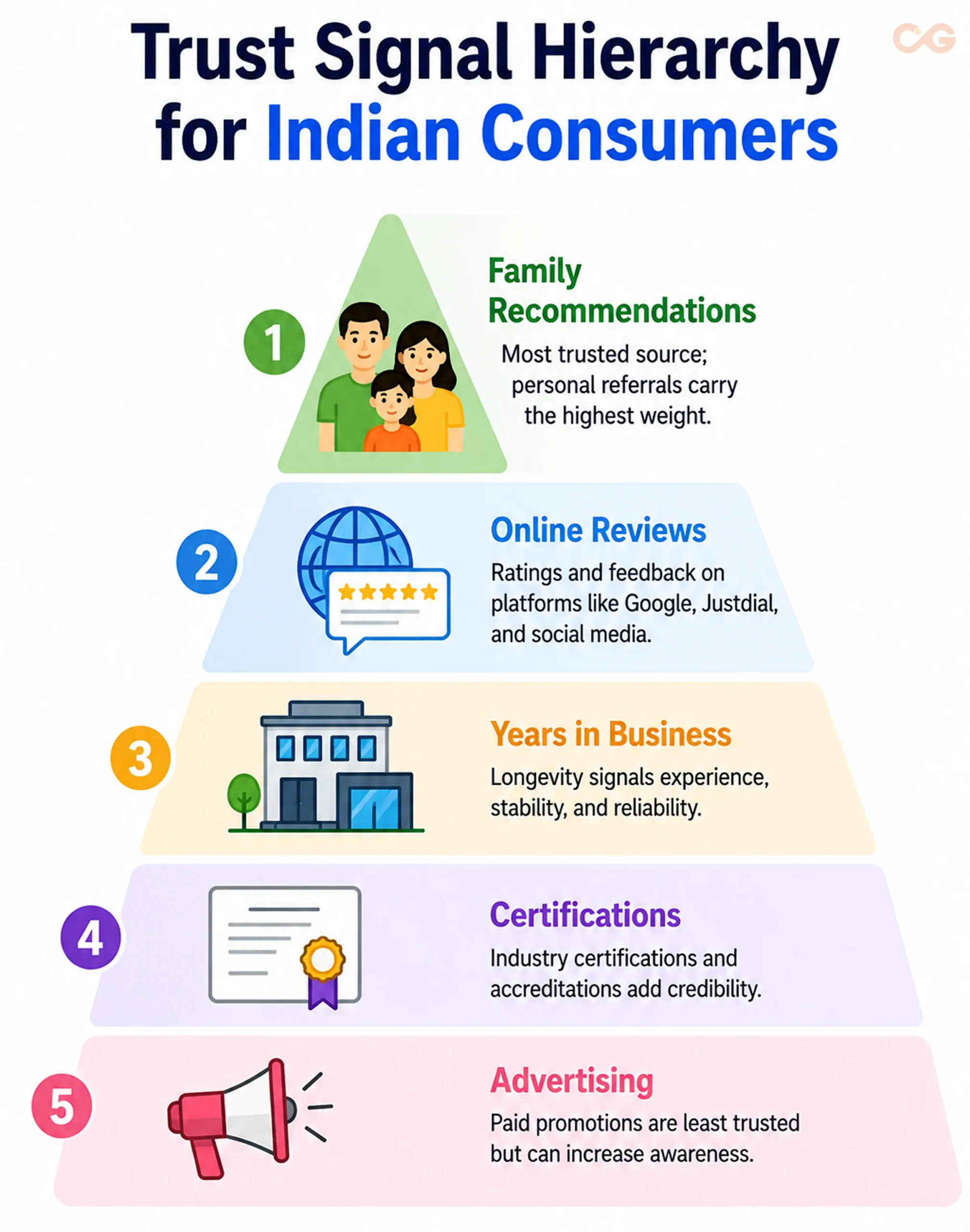
3. Trust Factors: Indian consumers highly value personal recommendations. Authentic reviews carry significant weight in their decision-making process.
4. Mobile-Centric Approach: More than 96% of Indian users access review sites via smartphones, according to Meltwater. Tailor your online review strategy for mobile optimisation.
People Also Ask: Why Online Reputation Management Is Essential for Small Businesses in India?
Effective online reputation management helps small businesses build trust, improve visibility in local searches, attract new customers, and compete against larger brands in their markets. Focused efforts in these areas can lead to significant growth and sustainability.
The True Impact of Failing to Manage Your Online Reputation
Research shows that businesses with low ratings — between 1 and 1.5 stars on Google — earn 33% less revenue than those with average ratings, as per WPSocialNinja. In India’s competitive market, even a few negative reviews can significantly harm your business.
Consider this: A restaurant with a 4.5-star rating typically attracts 30-40% more customers than one with a 3.5-star rating. Positive reviews are crucial for driving business growth.
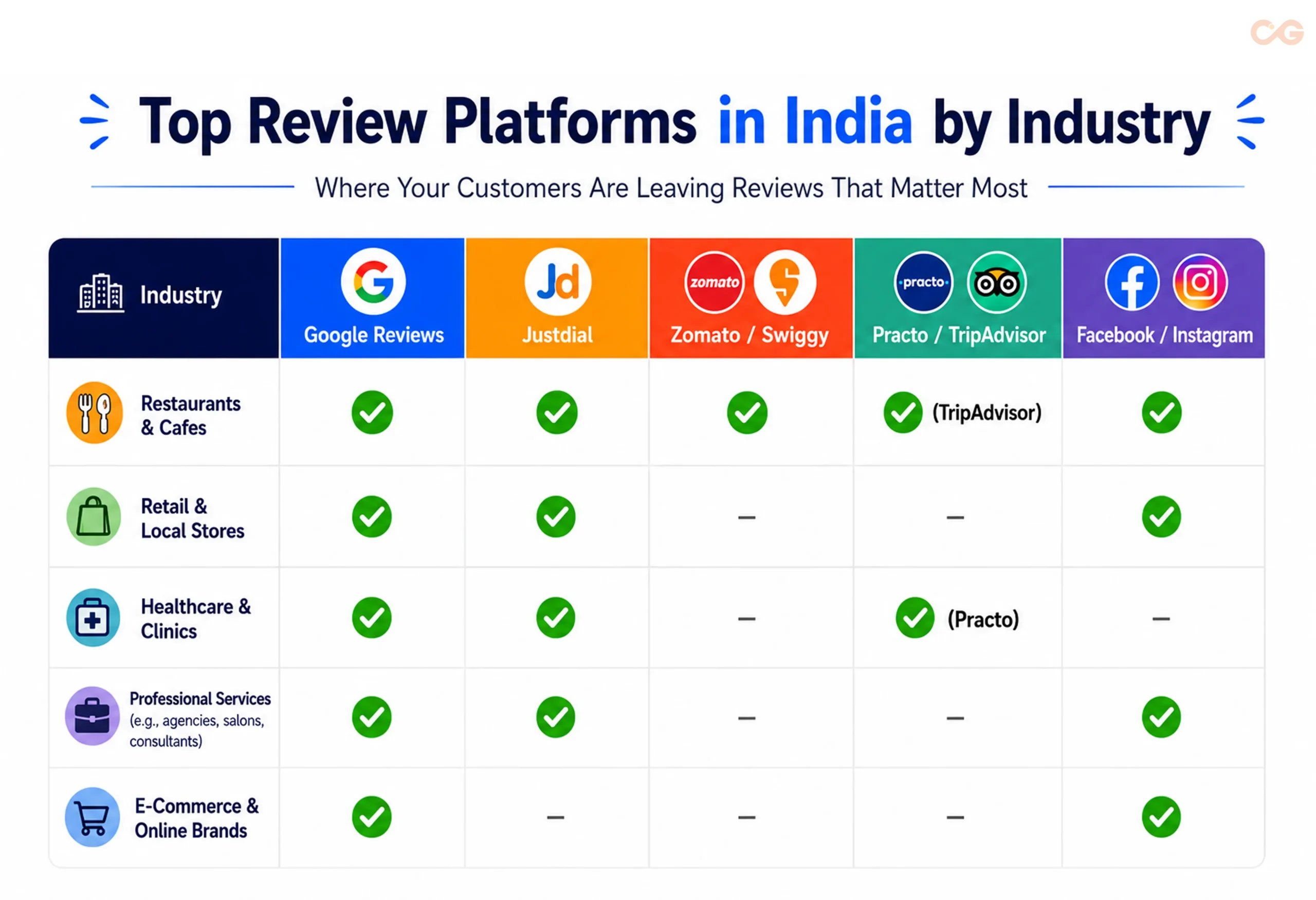
Key Review Platforms for Indian Businesses
1. Google My Business (Google Business Profile):
Google Reviews ranks as the leading site in India, appearing in Search, Maps, and Local Pack results. It offers free listings, multi-location support, Google Pay integration, and regional language capabilities.
2. Justdial:
Justdial stands out as one of India’s foremost local search engines, boasting 55.1 million monthly users, according to the research of Semrush. It serves various sectors including healthcare, retail, and B2B entities, although opinions on its paid services vary.
Pro Tip: Claim your free listing on Justdial and keep it updated. The verified badge significantly enhances your credibility.
3. Industry-Specific Platforms:
Different sectors require attention to specific platforms:
Food & Beverage: Zomato, Swiggy
Healthcare: Practo, Lybrate
Hospitality: MakeMyTrip, TripAdvisor, Goibibo.
Professional Services: Sulekha, UrbanClap (Urban Company)
Important Platform for Restaurants
Restaurants in India should prioritise Zomato and Google My Business. These platforms are vital for showcasing menus, receiving online orders, and attracting local diners.
Emerging Platforms to Watch
ClipsTrust: This video-based review platform allows businesses to showcase authenticity through verifiable video reviews. It’s particularly effective in tier-2 and tier-3 cities.
Facebook Business Reviews: Facebook remains highly relevant in India for community engagement and local business discovery, despite global shifts.
In summary, actively managing your online reputation on these platforms can drive customer engagement and boost your business’s success.
Understanding Cultural Influences on Review-Seeking in India
Learning the Indian Consumer Psychology
Indian consumers approach online reviews differently from customers in many Western markets. Personal relationships, family recommendations, and community opinions strongly influence purchasing decisions. While satisfied customers often hesitate to leave reviews due to social norms and politeness, they are more likely to share their experiences when asked directly. At the same time, dissatisfied customers may initially express their concerns privately before posting public feedback.
Understanding these behavioural patterns helps businesses create review strategies that feel natural, respectful, and culturally relevant.
Strategies for Culturally Effective Review Requests
1. The Personal Touch Approach
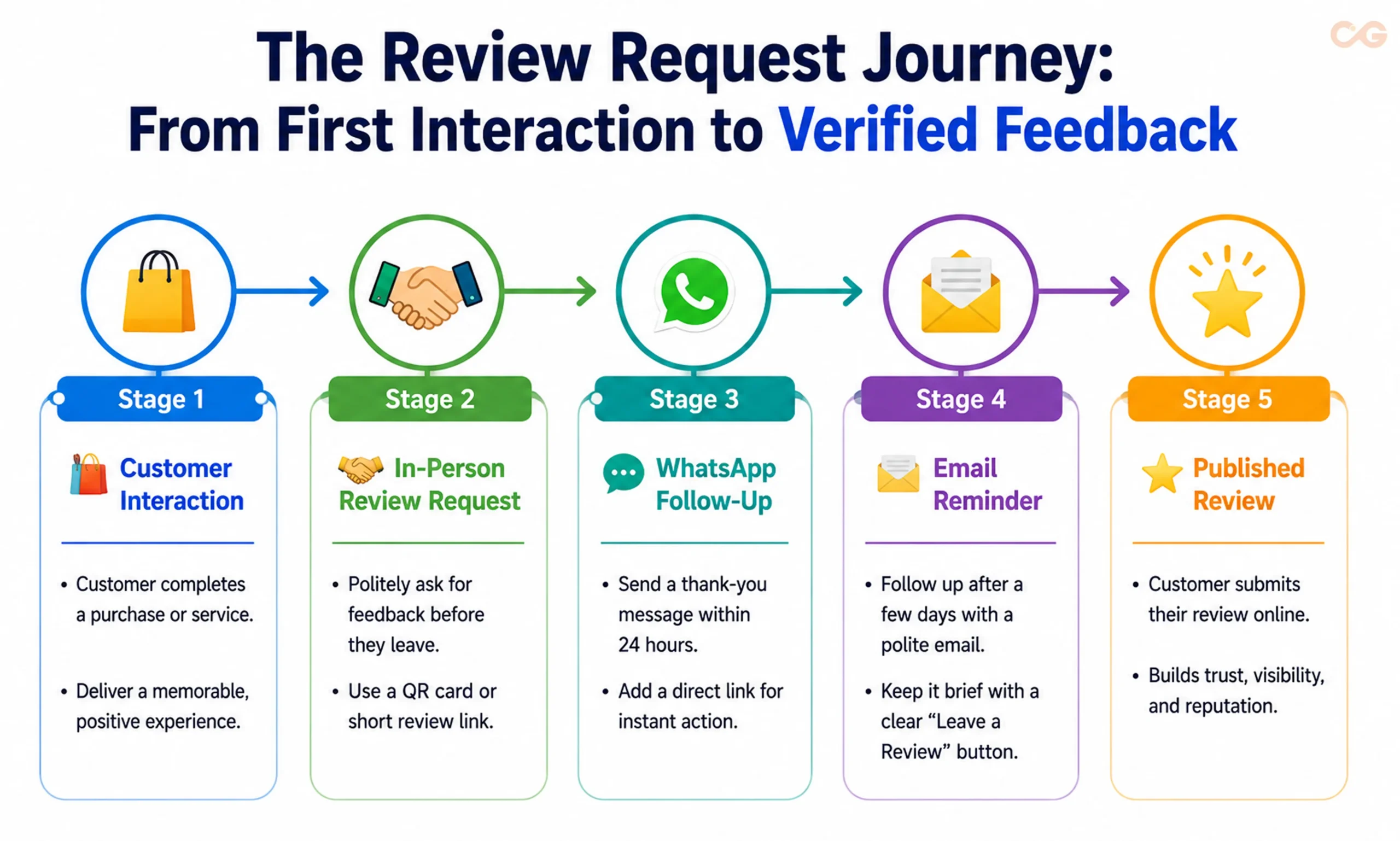
Personalised interactions are highly effective in India. Businesses can encourage reviews through face-to-face requests, personalised WhatsApp messages, direct phone calls to valued customers, and by building rapport before asking for feedback.
Indian Context Example Script
“Namaste [Customer Name], we’re delighted to hear that you had a wonderful experience with us! As a small family business, your feedback means a lot. If you have two minutes, would you mind sharing your experience on Google? Your review will help other families discover us too.”
2. Timing Is Everything
Ask for reviews immediately after a positive experience, ideally within 12–24 hours of a purchase or service. Businesses can also leverage festive occasions when customers are more engaged. To maximise response rates, avoid requesting reviews during late evenings, early mornings, lunch hours, or religious observances.
3. Incentives That Work in Indian Markets
Indian customers respond well to loyalty points, discount vouchers, referral benefits, and contest entries linked to verified reviews. However, incentives should always reward honest feedback, never positive-only reviews, to maintain transparency and credibility.
4. Use Regional Languages
Communicating in English or regional languages makes review requests feel more authentic and relatable. Simple phrases such as “Aapka feedback bahut important hai” can improve engagement and encourage customers to respond naturally.
Building Online Reviews Strategy
After understanding how Indian consumers interact with reviews, the next step is to build a structured review management process. The following six-step framework helps businesses generate authentic reviews, respond effectively, and strengthen their online reputation over time.
Step 1: Survey Your Present Reputation
Before implementing new strategies, evaluate your current online reputation.
Online Reputation Evaluation
Review your presence across Google Business Profile, Justdial, industry-specific platforms, and social media. Compare your ratings, review volume, and customer feedback with competitors to identify strengths, weaknesses, and opportunities for improvement.
Tools for Monitoring:
Monitor your reputation using tools such as:
- Google Alerts for free brand mentions
- Famepilot for Indian multi-platform review management
- QuickMetrix for real-time monitoring
- Monthly manual reviews across major review platforms
People Also Ask
What are the most effective free tools to manage online reviews?
Google Business Profile, Google Alerts, Facebook Business Suite, and manual monitoring through platforms such as Justdial and Zomato are among the most effective free options for small businesses. Weekly monitoring is often sufficient before investing in paid reputation management tools.
Step 2: Install Review Generation Systems
Automated Review Request System
Create a consistent process that encourages customers to leave reviews soon after their interaction with your business.
CRM Integration
Integrate your POS or booking system so customers automatically receive review requests immediately after completing a purchase or service.
Multi-Channel Approach
Use multiple communication channels to maximise response rates.
- SMS within 2 hours
- WhatsApp follow-up within 12 hours
- Email reminder within 24 hours for customers who have not responded
Smart Routing
Direct satisfied customers to public review platforms such as Google or Justdial, while routing dissatisfied customers to private customer support channels for resolution.
Sample Automation Process of an Indian Business:
Purchase/Service Complete
↓
Internal Satisfaction Check (Quick WhatsApp survey: “How was your experience? 1-5”)
↓
If 4-5: Send public review request to Google/Justdial
If 1-3: Route to customer service for resolution
↓
Follow up after 3 days if no response
↓
Final reminder after 7 days
Step 3: Create a Frictionless Review Process
Removing barriers makes customers more likely to leave reviews.
Reduce Friction Points
- QR Codes: Display QR codes on billing counters, packaging, or thank-you cards.
- Short URLs: Use memorable links such as bit.ly/YourBusinessName.
- Direct Review Links: Share platform-specific review links for Google and Facebook.
- Voice-Based Alternatives: Offer phone-based feedback options for customers who prefer speaking instead of typing.
Step 4: Respond to Every Review
Step 4: Respond to Every Review
Responding consistently demonstrates professionalism and builds customer trust.
Positive Reviews (4-5 Stars)
Respond within 24–48 hours. Thank customers personally, acknowledge specific feedback, encourage future visits, and naturally include relevant service keywords where appropriate.
Example Response
“Thank you so much, Priya! We’re delighted you enjoyed our butter chicken and appreciated our friendly staff. Your feedback means a great deal to our family business. We look forward to welcoming you again soon!”
Neutral Reviews (3 Stars)
Reply within 12–24 hours. Acknowledge the customer’s experience, address specific concerns, offer practical solutions, and continue detailed discussions privately if required.
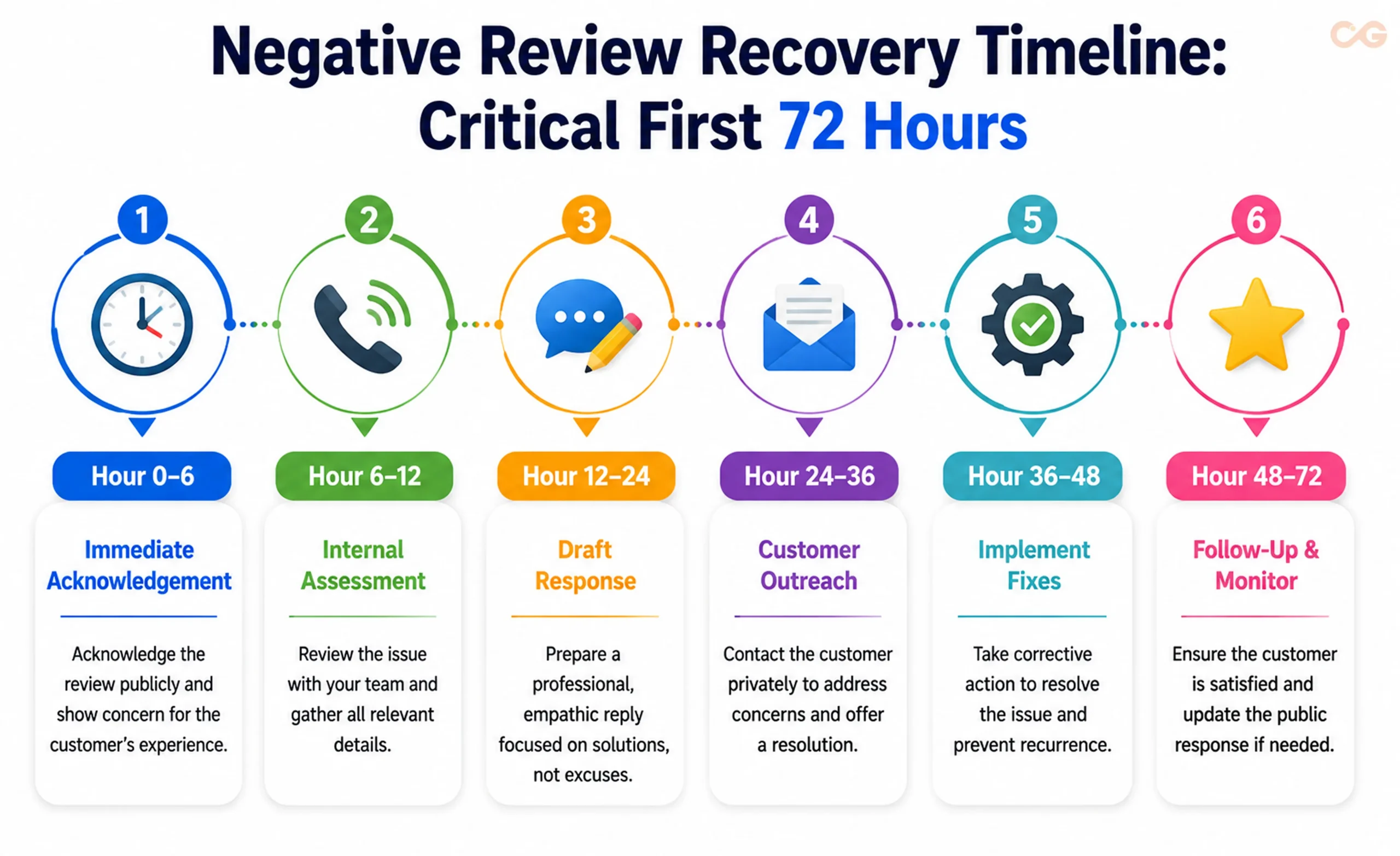
Negative Reviews (1–2 Stars)
Respond within 6–12 hours. Remain calm, apologise sincerely, clarify the situation, offer a solution, and provide direct contact details for further assistance.
People Also Ask
How should I handle negative reviews without ruining my reputation?
Respond quickly, remain empathetic and professional, acknowledge the customer’s concerns, and focus on providing practical solutions. Timely and respectful responses demonstrate accountability and strengthen customer trust.
Takeaway

Rebuild Trust in 30 Days: Your Reputation Transformation Blueprint
Put these strategies into action with a practical 30-day plan to build trust, strengthen your online reputation, and earn authentic customer reviews.
Example Response
“Dear Priya, we’re sincerely sorry about the delay in service. We’ve addressed the issue and would like to offer you a full refund along with a 15% discount on your next order. Please contact us at [number/email] so we can assist you further. — The Team”
Step 5: Recover from Negative Reviews
Responding to a negative review is only the first step. An effective recovery process helps rebuild customer trust and prevents similar issues in the future.
Understanding Negative Reviews in the Indian Context
Indian customers often leave negative reviews when they feel genuinely disappointed or disrespected. Common reasons include:
- Perceived rudeness
- Poor value for money
- Broken promises
- Comparisons with competitors
- Hygiene concerns, particularly in food businesses
- Lack of a family-friendly environment
Four-Step Recovery Framework
Step 1: Immediate Acknowledgement
Respond publicly within six hours to acknowledge the issue and assure the customer that their concerns are being taken seriously.
Step 2: Deep-Dive Investigation
Contact the customer through WhatsApp or a phone call to understand the issue in detail. Review internal processes to determine whether the incident is isolated or indicates a broader operational problem.
Step 3: Make It Right
Offer solutions appropriate to the situation, such as refunds, replacements, discounts on future purchases, or a personal apology from management.
Cultural Note: In India, a personal phone call from the business owner can significantly improve conflict resolution and rebuild trust.
Step 4: Follow-Up
Once the issue has been resolved, document the lessons learned, update internal processes, and politely request an updated review if appropriate.
Step 6: Handle Fake or Unfair Reviews
Not every negative review is genuine. Businesses should have a clear process for identifying and addressing fake or malicious reviews.
Identifying Fake Reviews
Warning signs include:
- Generic or vague comments
- No supporting details or images
- Multiple reviews posted at suspicious times
- Similar wording across different reviews
- Inactive profiles with little activity
- References to products or services your business does not offer
Action Steps
- Flag the Review: Report suspicious reviews through Google, Justdial, or Facebook using their official reporting tools.
- Document Everything: Save screenshots, timestamps, and supporting evidence for future reference.
- Respond Professionally: Post a calm public response explaining that no matching transaction could be found while inviting genuine customers to contact your business.
- Consider Legal Action: Seek legal advice for malicious or defamatory reviews where appropriate under the IT Act 2000.
Indian Reputation Management Tools
Choosing the right reputation management tool can help businesses monitor customer reviews, respond quickly, analyse customer sentiment, and strengthen their online presence. Here are some of the leading reputation management tools for Indian businesses.
1. Famepilot (Best for Indian Businesses)
Install the free monitoring tools, optimise and claim listing, create baseline measurement and response templates to ensure consistent, timely and professionally delivered communication with a customer on all platforms.
2. QuickMetrix
QuickMetrix specialises in real-time social media and brand monitoring. It provides competitor analysis, crisis management alerts, and extensive coverage of Indian digital platforms, making it an ideal choice for businesses that prioritise social media reputation management.
3. Locobuzz
Locobuzz is an enterprise-grade reputation management platform that offers social listening, influencer tracking, advanced analytics, and dedicated account management. It is best suited for large organisations and national brands that require comprehensive reputation insights and customer engagement.
4. Manual Monitoring Toolkit (Best for Small Businesses)
Small businesses and single-location startups can begin with a cost-effective manual monitoring approach. Combining Google Business Profile, Google Alerts, Zomato Business, and an Excel-based review tracker with weekly monitoring helps businesses manage their online reputation without investing in paid software.
Your Tool Strategy in Practice
Rather than investing in advanced software immediately, businesses should adopt reputation management tools in phases based on their growth and monitoring needs.
Phase 1: Foundation (Months 1–2)
Start with free monitoring tools such as Google Business Profile and Google Alerts. Claim and optimise your business listings, establish baseline reputation metrics, and create response templates to ensure timely and consistent communication across review platforms.
Phase 2: Systemisation (Months 3–4)
Automate review requests, train your team on responding with the right tone and timing, set up review alerts, and consider investing in a paid reputation management platform if managing multiple locations or review platforms becomes challenging.
Phase 3: Optimisation (Months 5–6)
Analyse review trends and recurring customer concerns, refine your review request strategy, experiment with different outreach timings, and continuously optimise your response process to improve customer satisfaction and strengthen your online reputation.
Boosting Local SEO with Customer Reviews in India
Customer reviews not only foster trust but are also crucial for enhancing your local search rankings. For businesses in India, having positive and genuine reviews signals to Google that your business is relevant and reliable. When combined with a well-optimised Google Business Profile, these reviews can significantly improve your visibility in local searches and “near me” queries. This makes it easier for potential customers to discover your business.
How Reviews Influence Local Search Rankings
Google considers several review-related signals when deciding which businesses appear in local search results.
- Review Quantity: Businesses with a higher number of genuine customer reviews are more likely to appear in local search results.
- Review Freshness: Receiving new reviews regularly shows that your business is active and consistently serving customers.
- Review Diversity: Reviews across different platforms, such as Google, Justdial, and Facebook, strengthen your online presence and credibility.
- Response Rate: Responding to customer reviews regularly demonstrates that you value customer feedback and actively engage with your audience.
- Relevant Keywords: Reviews that naturally mention your products, services, or location can improve your business’s relevance for local searches.
- Star Rating: Maintaining an average rating of 4.0 stars or above can improve customer confidence and positively influence your local visibility.
Optimise Your Google Business Profile
Your Google Business Profile is often the first impression customers have of your business. Keeping it complete and up to date not only improves user experience but also strengthens your local SEO
Complete Every Section
Make sure your profile includes:
- Your official business name
- A complete and accurate address with nearby landmarks
- An active phone number and WhatsApp contact
- A mobile-friendly website
- Relevant primary and secondary business categories
- Updated business hours, including holiday and festival timings
- High-quality photos of your storefront, interiors, products, services, and team
Use Reviews to Strengthen Your Local SEO
Customer reviews and your responses can reinforce your local relevance when used naturally.
Include Keywords Naturally
When responding to reviews, mention your location or services where it feels appropriate. This helps search engines better understand what your business offers without making the response sound forced.
Customer Review
Great samosas and friendly service!
Response
Thank you so much! We’re delighted that you enjoyed our samosas and appreciated our friendly service. It means a lot to us to serve customers in Malviya Nagar, and we look forward to welcoming you again soon.
Best Practice
Write responses naturally. Avoid stuffing them with keywords, as genuine and conversational replies create a better experience for both customers and search engines.
Keep Your Business Information Consistent
Ensure your Name, Address, and Phone Number (NAP) are consistent across your website, Google Business Profile, and other online directories. Even small differences can confuse search engines and reduce your local search visibility.
Improve Your Visibility in “Near Me” Searches
“Near me” searches continue to grow in India, making local optimisation more important than ever. Customer reviews can improve your chances of appearing in these searches by providing Google with strong local relevance signals.
Best Practices
- Encourage customers to mention your location in their reviews whenever it feels natural.
- Reference your location in your responses, such as “Thank you for visiting our Indiranagar branch.”
- Upload photos featuring nearby landmarks to make your business easier for local customers to recognise.
- Use local keywords naturally in your review responses to strengthen your relevance for nearby searches.
Case Study: Delhi Café Improves Local Visibility Through Google Business Profile
A café in Delhi strengthened its local SEO by optimising its Google Business Profile with high-quality food photographs, regularly updated menu information, and active participation in local events. According to ANSOFIC, these efforts resulted in a 38% increase in daily foot traffic within two months. The café also gained more than 180 customer reviews while maintaining an average 4.6-star rating, demonstrating how a well-managed online presence can improve both visibility and customer trust.
Establishing Trust with Customer Reviews in India
Local SEO helps customers find your business, but trust drives their purchasing decisions. For Indian consumers, customer reviews serve as critical trust signals. However, trust goes beyond mere star ratings. Businesses that feature genuine reviews, showcase social proof, maintain transparent communication, and ensure a robust online presence are more likely to gain customer confidence and foster loyalty.
Key Trust Signals
Indian consumers seek particular indicators to determine a business’s reliability. By emphasising these signals through customer reviews and your online presence, you can enhance your credibility.
1. Family-Friendly Atmosphere
Reviews highlighting your welcoming environment for families, child-centric services, or enjoyable family experiences reassure customers. Share photos showcasing families engaging with your offerings to bolster this image.
2. Value for Money
Indian consumers prioritize whether your product or service offers fair value. Reviews mentioning reasonable pricing, attractive combo deals, or phrases like “worth every rupee” reinforce your value proposition and build customer confidence.
3. Cleanliness and Hygiene
Since the COVID-19 pandemic, cleanliness has become vital, particularly for restaurants, cafés, healthcare facilities, and hotels. Customer reviews that discuss cleanliness, hygiene practices, sanitization efforts, or open kitchens instill confidence in potential clients.
4. Personalised Customer Care
Reviews that commend friendly staff, tailored service, respectful interactions, or direct involvement from the business owner create a positive impression. These experiences showcase that you value your customers, enhancing trust and fostering long-term loyalty.
Business Trustworthiness and Longevity
Businesses that highlight their history and enduring relationships with customers tend to seem more trustworthy. Phrases like “Providing service since [Year],” along with stories of multi-generational success, customer reviews, and recognition through awards, all contribute to a sense of reliability and established credibility.
Building Trust Beyond Just Reviews
While customer feedback holds significant weight, incorporating various types of social proof can enhance your reputation even further, aiding customers in their decision-making.
- Video Testimonials: Bring your customers’ success stories to life on platforms like YouTube, Instagram, and Facebook, fostering authenticity and trust.
- Case Studies: Present genuine customer journeys, showcasing measurable outcomes through impactful before-and-after narratives.
- Media Coverage: Feature articles, online mentions, and television highlights to strengthen your credibility in the eyes of potential customers.
- Certifications: Display reputable certifications, such as ISO or specific industry credentials, to emphasize your professionalism and adherence to quality standards.
- Awards and Honors: Publicize accolades received from industry bodies, local business chambers, or esteemed organizations to bolster your reputation.
- Employee Feedback: Share what employees say about their experiences to illustrate a positive work environment and stability within the organization.
- Community Engagement: Shine a light on your corporate social responsibility activities, local sponsorships, and charitable efforts to show your dedication beyond mere business transactions.
Highlight Customer Reviews Across Your Digital Platforms
Gathering customer reviews is just the beginning. Actively showcasing them on your digital platforms strengthens trust throughout the customer journey.
Add Reviews to Your Website
Utilize third-party widgets or APIs from services like EmbedSocial, Trustmary, or the Google Places API to incorporate customer reviews.
Follow these steps for implementation:
1. Choose an appropriate review widget or API.
2. Create the necessary API key or embed code.
3. Integrate the code into your homepage, testimonials page, or relevant landing pages.
4. Adjust the design to align with your brand.
5. Test the integration to ensure reviews appear correctly and update automatically.
Recommended Practices
To maximize effectiveness:
- Highlight reviews on your homepage and significant landing pages.
- Share a mix of recent feedback and top-rated testimonials.
- Ensure star ratings are easily visible.
- Include verification labels from the review platforms when possible.
- Regularly refresh reviews to maintain current content.
- Make certain the review section is optimized for mobile devices.
Trustworthy Impact
The Spiegel Research shows that websites featuring customer reviews achieve a 270% increase in conversion rates compared to those without. This illustrates the powerful role of authentic customer feedback in driving purchasing decisions and enhancing business outcomes.
Build Trust Through WhatsApp Business
WhatsApp has become one of the most trusted communication platforms in India, making it a valuable channel for strengthening customer relationships and encouraging engagement.
Best Practices
- Create a verified WhatsApp Business profile.
- Set up quick replies for frequently asked questions.
- Keep your business information updated.
- Share recent customer reviews through Status updates or broadcasts where appropriate.
- Include direct review links to make it easy for customers to leave feedback after a positive experience.
Cultural Insight
Indian consumers often feel more comfortable interacting with businesses through WhatsApp because it offers quick, familiar, and convenient communication. Businesses that are easily accessible on WhatsApp are generally perceived as more responsive, approachable, and customer-focused, which can further strengthen trust and encourage long-term relationships.
Advanced Reputation Management Strategies
As your business grows, reputation management should evolve from a simple review collection process into a scalable strategy. Whether you operate multiple locations, collaborate with influencers, empower employees, or run seasonal campaigns, these advanced strategies can help you generate more authentic reviews while maintaining a consistent brand reputation.
Scale Review Management Across Multiple Locations
Managing reviews across multiple branches requires consistency without losing local relevance. While every location should follow the same reputation management framework, businesses should tailor their communication to regional audiences and customer preferences.
Best Practices
- Standardise Review Requests: Create a consistent process for requesting customer reviews across all business locations to maintain a uniform customer experience.
- Customise for Local Markets: Adapt review requests to regional languages, cultural preferences, and customer expectations to improve engagement.
- Monitor Performance: Use centralised dashboards to track review volume, ratings, and response times for each location and identify areas for improvement.
- Encourage Healthy Competition: Recognise branches with the highest review ratings or customer satisfaction scores to motivate continuous improvement.
- Appoint Regional Champions: Assign location managers or reputation champions to oversee review generation and ensure quality standards are maintained.
Once you have established a consistent review management system across all locations, the next step is expanding your brand’s reach through trusted voices in your target market.
Expand Your Reach Through Influencer Partnerships
Influencer collaborations can increase your brand’s visibility while building credibility through authentic customer experiences. In India, regional creators and nano-influencers often deliver higher engagement because of their close connection with local communities.
Effective Influencer Strategies
- Partner with Nano-Influencers: Creators with 1,000–10,000 followers often have highly engaged audiences and strong community trust, as per Influencity.
- Collaborate with Regional Language Creators: Work with influencers who create content in languages such as Tamil, Bengali, Marathi, Telugu, or Kannada to connect with local audiences.
- Encourage YouTube Reviews: Long-form video reviews allow creators to showcase products, services, restaurants, or customer experiences in greater detail.
- Leverage Instagram Stories and Reels: Share authentic, behind-the-scenes experiences that increase local visibility and customer engagement.
While influencer partnerships help expand your reach, your employees also play an important role in creating positive customer experiences that lead to genuine reviews.
Empower Employees as Brand Advocates
Your employees interact with customers every day, making them valuable ambassadors for your business. Equipping them with the right knowledge and tools can encourage more authentic customer reviews while improving the overall customer experience.
Build Internal Review Champions
- Provide Training: Help employees understand why customer reviews matter and how they contribute to business growth.
- Recognise and Reward Success: Acknowledge team members who consistently encourage genuine customer feedback through monthly recognition or performance-based incentives.
- Provide Easy Review Tools: Equip staff with QR codes, direct review links, or tablets that make it easy for customers to leave reviews.
- Empower Quick Problem Resolution: Encourage employees to resolve customer concerns immediately to prevent negative experiences from turning into negative reviews.
Beyond everyday customer interactions, seasonal campaigns provide another opportunity to increase review generation by engaging customers during important celebrations and shopping periods.
Takeaway
Rebuild Trust in 30 Days: Your Reputation Transformation Blueprint
Put these strategies into action with a practical 30-day plan to build trust, strengthen your online reputation, and earn authentic customer reviews.
Leverage Festivals and Seasonal Campaigns
Festivals and seasonal events provide excellent opportunities to encourage customer engagement and collect more authentic reviews. Aligning review campaigns with major celebrations makes your communication more relevant and memorable.
Diwali Campaign Example
Launch a festive campaign such as “Light Up Our Reputation with Your Review.” Encourage customers to share an honest review during the festive season while offering a discount voucher or loyalty reward as a thank-you for their feedback. Support the campaign with festive review cards, personalised WhatsApp messages, and in-store review reminders.
Other Seasonal Opportunities
Businesses can also plan review campaigns around major national and regional celebrations, including
- New Year: Encourage customers to share their experiences as part of a “new beginnings” campaign.
- Holi: Invite customers to review their colourful and memorable experiences.
- Independence Day: Celebrate and encourage support for local businesses.
- Regional Festivals: Create location-specific campaigns for festivals such as Pongal, Durga Puja, Onam, Ganesh Chaturthi, and Navratri to connect with regional audiences in a meaningful way.
Measuring Your Online Reputation Success
Building a strong online reputation is only the first step. To understand whether your efforts are delivering results, you need to track the right performance metrics. Monitoring these KPIs helps you identify what is working, where improvements are needed, and how your reputation management strategy contributes to business growth.
Essential KPIs to Track
Reputation Metrics
These metrics help you evaluate the strength and consistency of your online reputation.
- Review Volume: Track the total number of customer reviews across platforms. A steady increase indicates growing customer engagement and a stronger online presence.
- Review Frequency: Measure how consistently you receive new reviews each week or month. Regular reviews signal that your business is active and trusted by customers.
- Average Rating: Monitor your overall star rating. Maintaining an average rating of 4.3 stars or higher can improve customer confidence and local search visibility.
- Response Rate: Measure the percentage of customer reviews your business responds to. A higher response rate demonstrates active customer engagement.
- Response Time: Track how quickly your business responds to customer reviews. Responding within 24 hours helps build trust and shows customers that their feedback is valued.
- Customer Sentiment: Analyse the balance between positive, neutral, and negative reviews to understand overall customer satisfaction.
- Review Conversion Rate: Measure the percentage of customers who leave a review after interacting with your business. This indicates how effective your review request strategy is.
Benchmark Your Performance Against Competitors
Tracking your own performance is important, but comparing it with competitors provides valuable context and highlights opportunities for improvement.
Regularly monitor your key competitors by:
- Comparing their average ratings and review volumes.
- Analysing common themes in customer feedback.
- Identifying gaps in their products or services that your business can address.
- Reviewing how they respond to positive and negative customer reviews.
- Monitoring changes in their online reputation over time to identify emerging trends.
People Also Ask
How many reviews does my business need to rank well in local search?
There is no fixed number of reviews required to rank well locally. However, businesses in competitive cities such as Mumbai, Bengaluru, and Delhi should aim for 50–100 authentic Google reviews while maintaining a 4.0-star rating or above. Consistently collecting high-quality reviews is more important than simply increasing the review count.
Common Reputation Management Mistakes and Legal Considerations
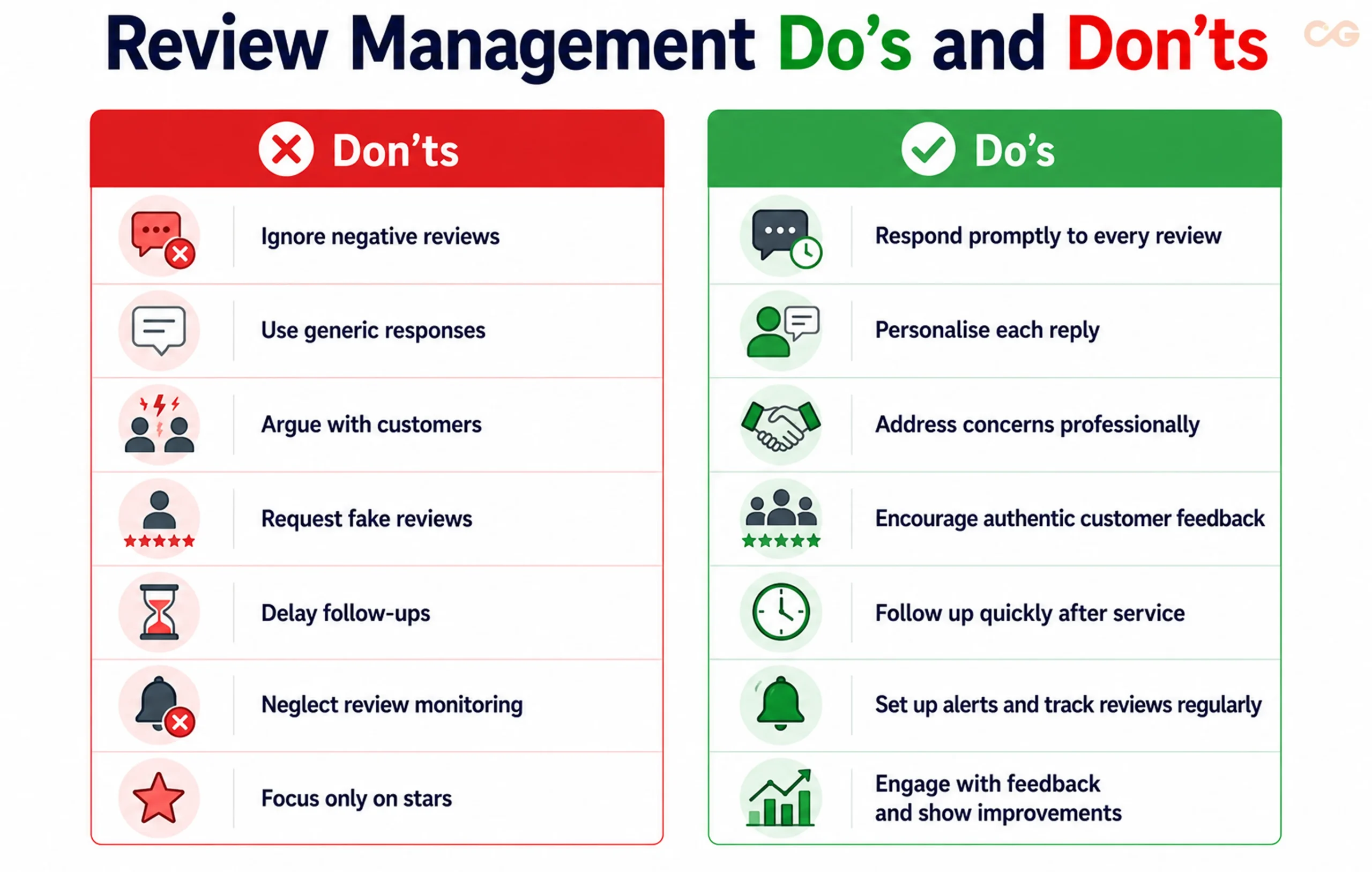
Even the best reputation management strategy can fail if common mistakes are overlooked. Understanding these pitfalls and following legal and platform guidelines can help protect your business while building long-term customer trust.
Common Mistakes to Avoid
1. Buying Fake Reviews
Problem: Purchasing large numbers of five-star reviews may seem like a quick way to improve ratings, but review platforms can detect suspicious patterns. This can lead to review removal, account penalties, loss of customer trust, and potential legal consequences.
How to Prevent It: Focus on collecting authentic reviews from genuine customers through ethical review request strategies.
2. Ignoring Regional Language Reviews
Problem: Responding only to English-language reviews means overlooking a significant portion of your customer base and may make your business appear less connected to local communities.
How to Prevent It: Use translation tools or involve bilingual team members to respond to customer reviews in regional languages whenever possible.
3. Responding Defensively to Negative Reviews
Problem: Emotional or defensive responses can damage your reputation more than the original negative review and discourage potential customers.
How to Prevent It: Respond professionally, acknowledge the customer’s concerns, show empathy, and focus on resolving the issue.
4. Asking Only for Positive Reviews
Problem: Requesting only five-star reviews violates the policies of most review platforms and reduces the authenticity of customer feedback.
How to Prevent It: Encourage customers to share honest feedback by saying something like, “We’d love to hear about your experience. Your feedback helps us improve our services.”
5. Responding Inconsistently
Problem: Ignoring neutral or negative reviews gives the impression that your business only values positive feedback.
How to Prevent It: Respond to all customer reviews whenever possible, prioritising negative feedback within 24–48 hours.
6. Treating Review Collection as a One-Time Campaign
Problem: Short-term review campaigns often create sudden spikes in reviews followed by long periods of inactivity, which may appear unnatural.
How to Prevent It: Make review generation a consistent part of your everyday customer engagement process.
Understand Your Legal Responsibilities
Reputation management should always comply with Indian laws and the policies of the platforms you use.
- Defamation Laws: False, misleading, or malicious reviews may be subject to legal action under the relevant provisions of Indian defamation law.
- Information Technology Act, 2000: The Act provides legal protection against cyber defamation, online harassment, and other forms of harmful digital content.
- Consumer Protection Act, 2019: Businesses must not publish fake reviews, manipulate ratings, or use misleading practices that influence consumer decisions.
- Competition Law: Reviews and ratings should never be used to unfairly damage competitors or create anti-competitive advantages.
- Platform Policies: Follow the review guidelines of platforms such as Google, Facebook, Justdial, and Zomato to avoid account restrictions or review removal.
When Should You Seek Legal Advice?
Consider seeking legal guidance if your business experiences:
- Coordinated fake review attacks.
- Defamatory or malicious reviews.
- Fake reviews posted by competitors.
- Reviews that disclose confidential or private information.
- Reputation damage that violates platform policies or applicable laws.
Practical Tip
Before pursuing legal action, report the issue to the review platform using its official complaint process. Many cases can be resolved more quickly and cost-effectively through platform moderation than through legal proceedings. If the issue persists or involves serious reputational harm, consult a cyber law professional for appropriate guidance.
Takeaway
Rebuild Trust in 30 Days: Your Reputation Transformation Blueprint
Put these strategies into action with a practical 30-day plan to build trust, strengthen your online reputation, and earn authentic customer reviews.
Building a Long-Term Reputation Management Culture
Building a strong online reputation requires more than collecting reviews. It involves creating a customer-focused culture where leadership, employees, and business processes work together to deliver consistently positive experiences.
Organisational Integration
1. Leadership Commitment
Business owners and leaders should regularly monitor reputation metrics, include reputation goals in business objectives, invest in review management tools and employee training, and consistently demonstrate a commitment to excellent customer service.
2. Employee Training Programmes
Train employees on the importance of customer reviews, how to create review-worthy experiences, request feedback professionally, handle difficult customers, respond to reviews, and follow platform-specific best practices. Include reputation management in employee onboarding and conduct regular refresher training.
3. Customer-Centric Service Design
Design customer experiences that are welcoming, memorable, and easy to navigate. Resolve issues quickly, follow up after service, and make it simple for customers to share their feedback.
4. Feedback Loop Integration
Use customer reviews to identify improvement opportunities, refine business processes, recognise employee performance, resolve recurring issues, and share success stories across the organisation.
Maintaining Long-Term Customer Engagement
WhatsApp Community Building
Strategy: Build customer communities through WhatsApp, where satisfied customers can stay connected and naturally share their experiences.
Implementation: Share exclusive offers, behind-the-scenes updates, and valuable content before requesting reviews. Engaging customers consistently helps build stronger relationships and encourages authentic feedback.
Loyalty Programme Integration
Structure:
- Tier 1: Reward customers with points for every purchase.
- Tier 2: Offer bonus points for submitting a verified review.
- Tier 3: Provide VIP benefits to customers who regularly engage through reviews and referrals.
Example: A café chain can offer loyalty points or a complimentary coffee for submitting a verified Google review. The reward should be linked to honest feedback, not positive ratings.
Customer Milestone Campaigns
Request reviews during meaningful occasions such as purchase anniversaries, birthdays, business anniversaries, or other important milestones. Personalised review requests strengthen customer relationships and encourage genuine feedback.
Future Trends in Online Reputation Management in India
The future of online reputation management in India is being shaped by emerging technologies and changing customer behaviour. Businesses that adapt to these trends early will be better positioned to build trust, strengthen customer relationships, and stay competitive.
AI-Powered Sentiment Analysis:
AI-driven sentiment analysis is making reputation management smarter and more accessible. Businesses can now analyse customer sentiment across multiple Indian languages, identify negative feedback early, detect fake review patterns, and generate response suggestions. These capabilities help even small businesses manage their online reputation more efficiently.
Video Review Dominance:
Video reviews are becoming a powerful form of social proof. Platforms such as YouTube Shorts and Instagram Reels, along with regional language videos and behind-the-scenes content, help businesses showcase authentic customer experiences and build greater trust.
Voice Search Optimisation:
As voice search continues to grow, customer reviews written in natural, conversational language are becoming increasingly valuable. Detailed reviews that describe real experiences can improve visibility in local voice searches and help businesses appear in relevant search results.
Blockchain-Verified Reviews:
Blockchain technology has the potential to improve review authenticity by verifying purchases, reducing fake reviews, rewarding verified reviewers, and creating tamper-proof records. As adoption grows, it could further strengthen trust between businesses and customers.
Local Reputation Platforms:
Neighbourhood-focused platforms, WhatsApp communities, gated society apps, and local community forums are becoming important sources of recommendations, particularly in Tier 2 and Tier 3 cities. Building a strong reputation within these communities can significantly influence local purchasing decisions.
Future-Proofing Your Reputation Strategy
To stay ahead of evolving customer expectations, businesses should:
- Invest in creating authentic video content.
- Engage customers in regional languages whenever possible.
- Maintain a consistent presence across all customer touchpoints.
- Prioritise transparency and genuine customer interactions.
- Use reputation data to improve customer experience and business decisions.
- Stay updated with emerging platforms and technologies.
- Continue delivering exceptional customer experiences that naturally earn positive reviews.
People Also Ask
What is the future of AI in online reputation management for businesses?
AI is transforming online reputation management through real-time sentiment analysis, multilingual review monitoring, automated response suggestions, predictive analytics, and fake review detection. For Indian businesses, AI makes advanced reputation management tools more accessible, enabling organisations of all sizes to analyse customer feedback efficiently and manage reviews across multiple regional languages.
Conclusion: Your Online Reputation Is Your Most Valuable Business Asset
In the digital landscape of India today, your online reputation goes beyond customer opinions; it plays a crucial role in establishing trust, enhancing visibility, and driving business growth. Each review, rating, and comment impacts how potential customers view your brand and whether they select you over others.
To build a strong online reputation, focus on delivering exceptional customer experiences consistently. Encourage genuine feedback, respond professionally, and leverage customer insights to make continuous improvements. Companies that prioritize reputation management integrate it into their operations and gain credibility, foster customer loyalty, and achieve lasting growth.
Each review conveys a message. Positive feedback builds trust, constructive criticism presents areas for improvement, and thoughtful responses exhibit a dedication to customer satisfaction.
Take action to enhance your online reputation today. Your future customers are actively seeking trustworthy businesses.