
Employee Brand Advocacy: Your Team as Brand Ambassadors - A Complete Guide for Indian Businesses

Table of Content
- Introduction
- What Is Employee Brand Advocacy?
- Why Employee Brand Advocacy Matters in 2026
- The Indian Context: Why Employee Advocacy Works
- Indian Case Studies: Employee Advocacy Success Stories
- How to Create an Employee Brand Advocacy Program: A Step-by-Step Guide
- Content Strategy and Success Metrics for Employee Advocates
- Addressing the Challenges of Employee Brand Advocacy
- Technology Stack for Employee Advocacy
- Legal and Ethical Considerations for Employee Advocacy
- Conclusion: Your Workforce Is Your Best Brand Asset
Introduction
In today’s highly connected digital landscape, consumers are becoming increasingly sceptical of polished brand messages. They want to hear from real people with genuine experiences and perspectives. This shift has made employee brand advocacy a powerful way for businesses to build trust, humanise their brand, and reach audiences through authentic voices.
Employee brand advocacy enables employees to become natural brand ambassadors by sharing their experiences, expertise, and insights across their personal and professional networks. For Indian businesses, this can strengthen brand credibility while expanding reach through conversations that feel more personal and relatable than traditional advertising.
But successful advocacy is more than simply asking employees to share company content. It requires the right strategy, employee participation, and a culture that encourages authentic communication. This guide explores how Indian businesses can build an effective employee brand advocacy programme and turn their teams into a genuine extension of the brand.
What Is Employee Brand Advocacy?
Employee brand advocacy is the practice of employees actively promoting and representing their company, products, services, and workplace through their personal and professional networks. By sharing company content, industry insights, workplace experiences, or personal perspectives on social media and other channels, employees can increase brand awareness, credibility, and reach.
Unlike traditional brand ambassadors, who are often external influencers, celebrities, or paid representatives, employee advocates are people who are already part of the organisation. They can share authentic experiences and insights because they understand the company culture and work closely with its products, services, and customers. According to Employfluence, 76 per cent of individuals trust content that is shared by individuals rather than by brands.
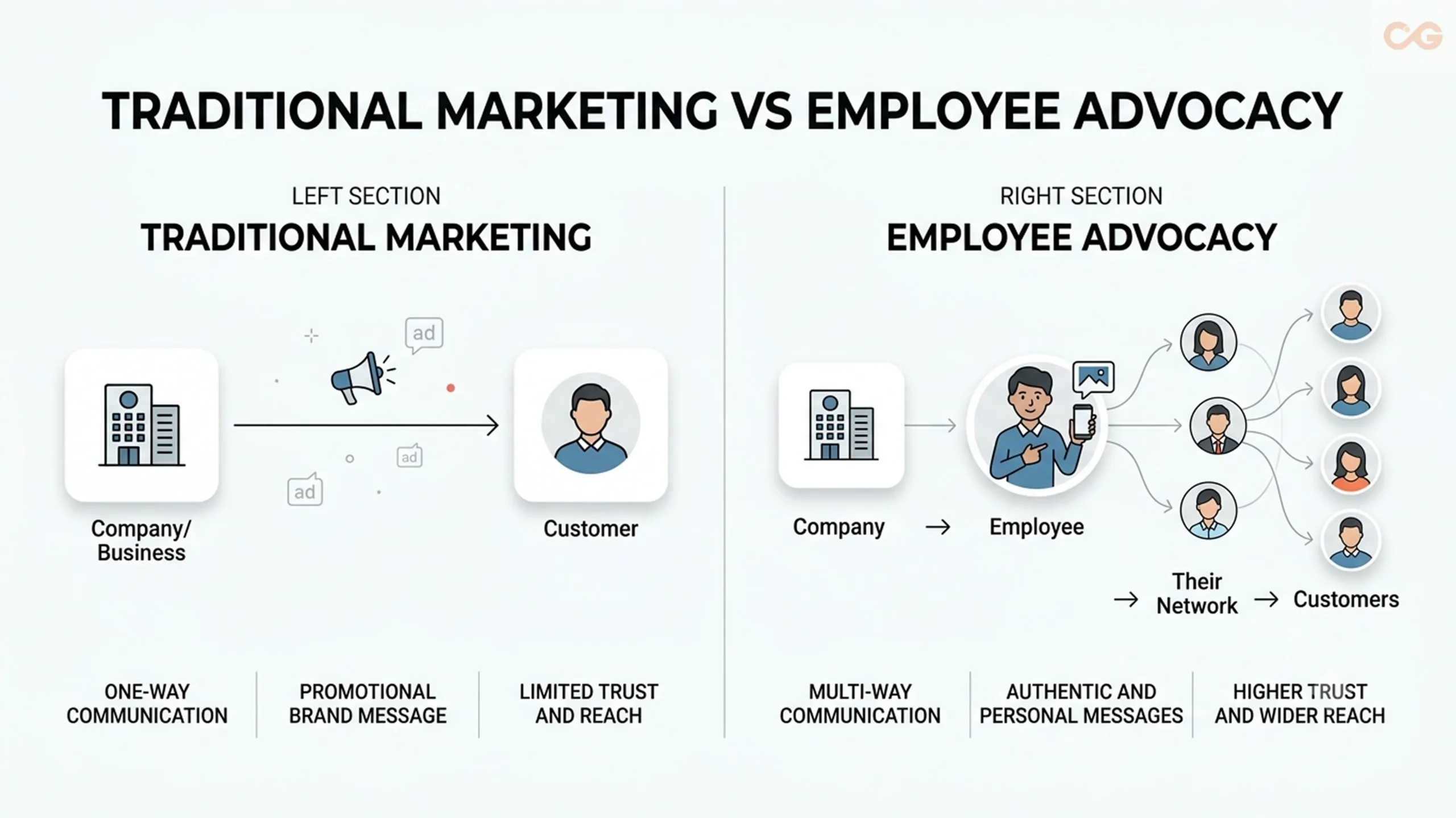
Employee Advocacy vs. Traditional Brand Ambassadors
Understanding the difference between employee advocacy and traditional brand ambassador programmes helps businesses choose the right approach for their brand advocacy strategy.
Employee Advocacy:
Employees organically share their workplace experiences, expertise, and company content through their personal networks. The approach is typically broader, more authentic, and driven by employee participation rather than formal representation.
Traditional Brand Ambassadors:
Traditional programmes usually select a smaller group of official representatives to promote the brand through defined campaigns, events, or social media activities. They often involve formal guidelines, training, and incentives, giving businesses greater control over messaging.
Employee advocacy focuses on authentic participation at scale, while traditional brand ambassador programmes focus on formal representation by selected individuals.
Why Employee Brand Advocacy Matters in 2026
Employee brand advocacy has become an important strategy for businesses looking to build trust, expand their reach, and strengthen their brand presence. Here’s why it matters more than ever in 2026.
The Trust Factor
According to Employfluence research, employee-shared content may receive 8x more engagement than brand-shared content. This makes employee advocacy especially valuable in India’s diverse market, where personal relationships, recommendations, and trust can strongly influence business decisions.
Digital Transformation Impact
The rapid adoption of digital transformation in Indian businesses has changed how employees communicate and represent their organisations. As remote and hybrid work have expanded digital interactions, employees are increasingly active on professional platforms such as LinkedIn. Their existing digital networks therefore create valuable opportunities for businesses to extend their brand presence through employee voices.
The Millennial and Gen Z Workforce
Millennials and Gen Z are becoming an increasingly influential part of India’s workforce. As digitally connected generations who are comfortable using social media, they can naturally contribute to employee brand advocacy programmes by sharing professional experiences, industry insights, and company-related content with their networks.
Frequently Asked Questions About Employee Brand Advocacy
1. What can I do to make employees brand ambassadors?
Turning employees into effective brand advocates requires more than simply asking them to promote the company. Businesses should create the right environment and provide the necessary support:
a. Build a Healthy Company Culture:
Advocacy starts with belief. Employees who genuinely connect with the company’s values, culture, and mission are more likely to represent the brand naturally and authentically.
b. Provide Clear Guidelines:
Give employees practical guidance on what they can share, which channels to use, and how to communicate about the company without making their posts feel overly promotional.
c. Offer Training and Support:
Equip employees with relevant workshops, content resources, and digital skills so they feel confident participating in advocacy activities.
d. Recognise and Reward Participation:
Use recognition, incentives, or public appreciation to acknowledge employee contributions and encourage continued participation.
2. What is the distinction between employee advocacy and employer branding?
Although both contribute to a company’s reputation, their objectives are different:
3. How do you measure the success of employee brand advocacy?
Businesses can track a combination of engagement, participation, brand visibility, and business outcomes:
- Social Media Engagement Rates: Track likes, comments, shares, and impressions generated by employee-shared content.
- Share of Voice in Industry Conversations: Measure how frequently the brand is mentioned compared with competitors in relevant industry discussions.
- Employee Participation Rates: Monitor the percentage of employees actively participating in advocacy programmes.
- Leads and Conversions Generated: Track website visits, enquiries, leads, and sales that can be attributed to employee advocacy efforts.
- Brand Sentiment Improvements: Assess changes in public perception, credibility, and overall trust associated with the brand.
Takeaway

Ready to identify your advocacy maturity and activate the right employee voices? Use our Employee Advocacy Maturity and Activation Framework to assess your current position and identify the next steps for growth.
The Indian Context: Why Employee Advocacy Works
India’s diverse business landscape makes employee brand advocacy particularly effective. Strong professional relationships, expanding digital networks, and regional diversity allow employees to communicate with audiences in ways that often feel more personal and relevant than corporate messaging.
Relationship-Driven Business Culture
Indian business culture places considerable value on relationships, trust, and personal connections. When employees share genuine workplace experiences, industry insights, or company stories, their content can resonate more naturally with their existing communities. This makes employee advocacy a valuable approach for building credibility and strengthening brand relationships in the Indian market.
Expanding Professional Networks
According to MoneyControl, India has the second-largest base of LinkedIn users in the world, with more than 167 million users as of Feb 2026. This extensive professional network creates significant opportunities for employee advocacy programmes to reach relevant audiences through employees’ existing connections.
Language and Regional Diversity
India’s linguistic and regional diversity gives employees an important advantage when connecting with local audiences. Their understanding of regional languages, cultural nuances, and local preferences can help brands communicate more naturally and make their messaging more relevant across different markets.
Indian Case Studies: Employee Advocacy Success Stories
Real-world examples show how Indian companies can use employee advocacy to extend brand reach, strengthen digital visibility, and generate measurable business outcomes.
Case Study: TCS Employee Advocacy Programme
Tata Consultancy Services (TCS) partnered with Sociabble to build an employee advocacy programme that encouraged employees to share curated company content and engage with their professional networks. The initiative aimed to strengthen TCS’s digital presence while using employees’ networks to support lead generation and brand awareness.
Results:
- Conversion rates increased from an average of 3–5% to 10%.
- The programme generated more than $200,000 in marketing cost savings over its first three years.
- It helped expand TCS’s digital visibility while giving employees a structured way to participate in brand advocacy.
These results demonstrate how a well-supported employee advocacy programme can contribute to both brand visibility and measurable marketing outcomes.
Case Study: Infosys Employee Advocacy Initiative
Infosys has also used employee advocacy to strengthen its digital presence. According to Sociabble, Infosys implemented an employee advocacy initiative that encouraged employees and business leaders to share and create content online, helping increase the visibility of its business units and stimulate conversations around the brand.
The example highlights how employee-generated and employee-shared content can extend a company’s digital reach while creating more authentic interactions with professional audiences. Rather than relying solely on corporate channels, Infosys leveraged the voices and networks of its people to support its broader digital communication efforts.
How to Create an Employee Brand Advocacy Program: A Step-by-Step Guide
A successful employee brand advocacy program needs more than employees sharing company posts. It requires a strong foundation, clear strategy, practical training, and a gradual rollout that makes participation easy and sustainable.
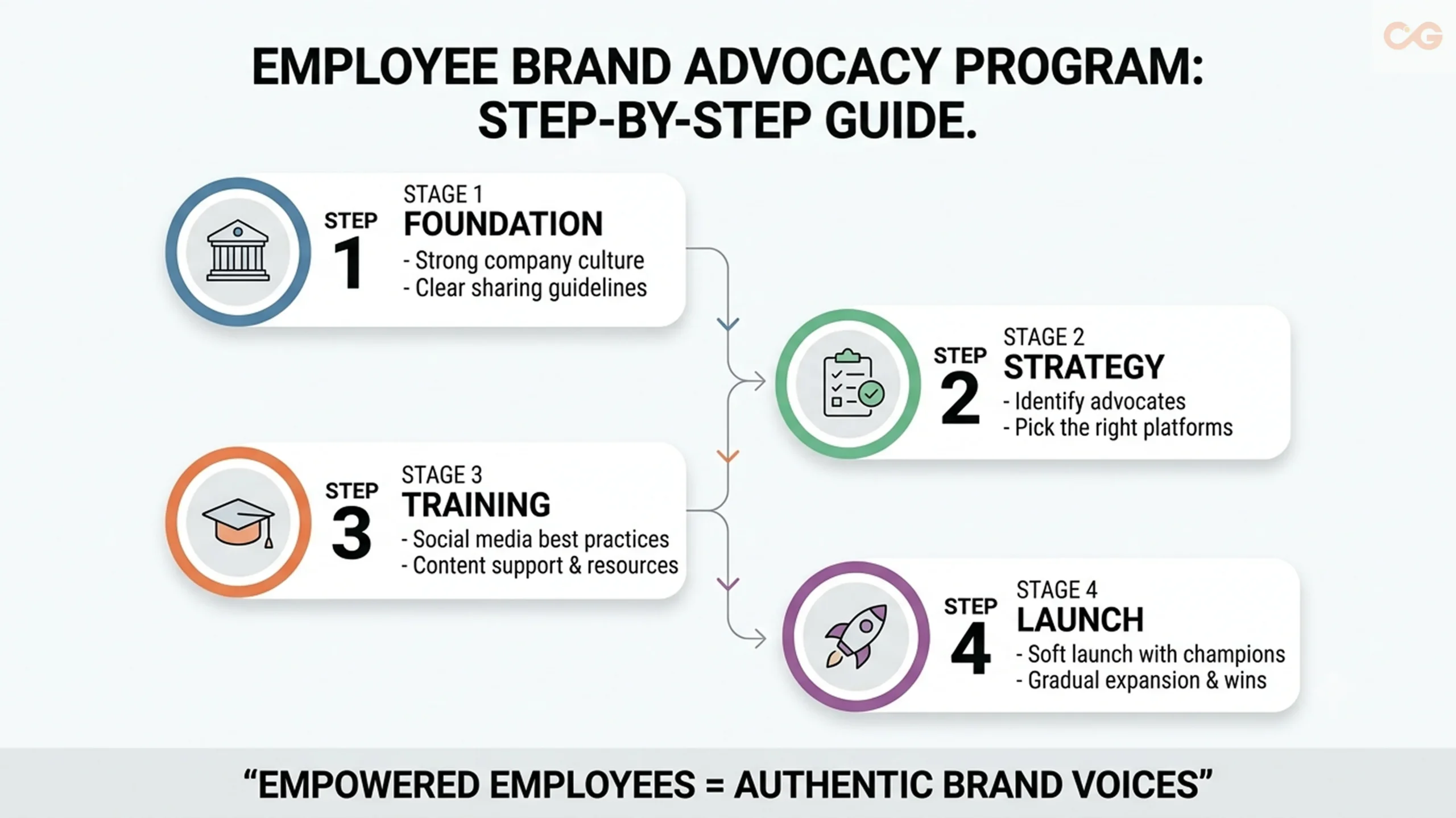
Step 1: Build the Foundation
Develop a Strong Company Culture
Employees are more likely to advocate for a company when they genuinely believe in its mission, values, and workplace culture. Strong leadership communication, meaningful work, professional development, and regular recognition can help create the trust and connection needed for authentic advocacy.
Create Clear Sharing Guidelines
Give employees practical guidelines on what they can share and how to communicate about the company. Include brand voice, platform-specific best practices, confidentiality requirements, legal and compliance considerations, and examples of appropriate content. The goal should be to provide direction without making employee posts sound scripted.
Step 2: Structure Your Program and Strategy
Identify Your Advocates
Not every employee will want to participate at the same level. Look for people who:
- Are naturally active and comfortable communicating online.
- Have relevant professional or community networks.
- Already demonstrate genuine enthusiasm for the company.
- Can bring different perspectives from across departments.
- Include team leaders or department heads who can encourage participation among their teams.
Focus on willing and authentic participants rather than simply selecting employees based on follower count.
Choose the Right Platforms
Your platform mix should depend on your audience, industry, and business objectives.
- LinkedIn Ideal for B2B companies, professional services, employer branding, thought leadership, and industry expertise.
- X (formerly Twitter): Useful for technology, news, industry commentary, and real-time thought leadership.
- Instagram: Well suited to consumer, lifestyle, recruitment, and visually driven brands.
- WhatsApp Business: Useful for customer communication and local or regional engagement, although it should be used carefully within employee advocacy because of privacy and consent considerations.
Step 3: Train and Enable Employees
Provide Social Media Training
Give employees practical training on platform-specific best practices, content creation, personal branding, privacy, and responsible social media use. Basic guidance on analytics can also help participants understand what content performs well and improve their approach over time.
Provide Useful Content Resources
Make advocacy easy by giving employees resources they can adapt to their own voices:
- Maintain a pre-approved content library with company updates, insights, and campaign material.
- Provide templates and brand assets for creating professional visuals.
- Share relevant industry news, trends, and expert insights that employees can add their own perspectives to.
- Communicate company announcements promptly so employees have timely information to share.
The aim is to enable employees, not turn them into copy-paste publishers.
Step 4: Launch and Expand the Program
Start with Advocacy Champions
Begin with a small group of enthusiastic employees before introducing the programme organisation-wide. Use the pilot to:
Expand Gradually
Once the initial programme is working effectively, expand it across teams and departments. Provide onboarding sessions for new participants, maintain ongoing support, and regularly share useful resources and best practices. Recognise meaningful contributions and celebrate early wins to maintain momentum.
A gradual rollout helps build long-term employee participation without making advocacy feel like another mandatory task.
Takeaway
Ready to identify your advocacy maturity and activate the right employee voices? Use our Employee Advocacy Maturity and Activation Framework to assess your current position and identify the next steps for growth.
Content Strategy and Success Metrics for Employee Advocates
A strong employee advocacy programme needs two things: content employees genuinely want to share and clear metrics to measure whether those efforts are creating meaningful business and brand impact.
Create Content Employees Can Share Naturally
Behind-the-Scenes Stories
Give audiences an authentic look at office culture, team activities, product development, company events, and everyday work experiences. This content humanises the organisation and helps audiences understand the people behind the brand.
Thought Leadership
Encourage employees to share industry insights, professional opinions, educational tips, event takeaways, and practical expertise. This can position employees as knowledgeable voices while strengthening the company’s authority within its industry.
Personal Professional Stories
Career milestones, learning experiences, project achievements, challenges, mentorship, and teamwork can make advocacy more relatable. Personal stories add a human dimension to the brand while allowing employees to build their own professional presence.
Follow Content Creation Best Practices
Prioritise Authenticity
Employees should share experiences and perspectives in their own voices rather than relying on overly polished or scripted content. Authentic communication is more likely to feel credible and relatable.
Lead With Value
Employee-shared content should offer something useful to the audience—such as industry insights, practical tips, educational information, solutions to common challenges, or meaningful experiences. The objective is to inform or engage first and promote the brand naturally.
Use Visual Storytelling
Photos, short videos, infographics, team moments, product demonstrations, and tutorials can make employee content more engaging and easier to understand. Visuals should support the story rather than simply repeat corporate messaging.
Measure What Matters
A combination of quantitative and qualitative KPIs provides a more complete view of employee advocacy performance.
Reach and Engagement
Track impressions, reach, likes, comments, shares, engagement rates, clicks, and relevant follower growth to understand how effectively employee content is attracting and engaging audiences.
Leads and Conversions
Measure advocacy-driven website visits, enquiries, leads, conversion rates, pipeline value, and sales. Where possible, use trackable links, campaign codes, or dedicated landing pages to identify business generated through employee advocacy.
Brand Awareness and Perception
Monitor brand mentions, share of voice, search visibility, and changes in brand sentiment to assess whether employee advocacy is improving visibility and credibility in the market.
Employee Participation and Satisfaction
Track programme participation, content contribution, feedback, and employee satisfaction. Consistent voluntary participation can indicate whether employees find the programme useful and sustainable.
External Brand Perception
Customer feedback, testimonials, employer brand surveys, industry recognition, and sentiment analysis can reveal whether employee voices are positively influencing how the organisation is perceived.
The key is to look beyond vanity metrics: successful employee advocacy should connect employee participation and audience engagement with measurable improvements in brand visibility, trust, relationships, and business outcomes.
Every employee advocacy programme can face challenges related to participation, content control, and performance measurement. Addressing them proactively helps maintain employee engagement and programme effectiveness.
Challenge 1: Employee Reluctance
What it means: Employees may be unwilling or unsure about participating in advocacy activities.
Solution: Keep participation voluntary and provide simple training, resources, and clear guidance on privacy and professionalism. Recognise early participants and share their success to encourage wider involvement.
Challenge 2: Content Quality and Compliance
What it means: Employee-shared content may become inconsistent, inaccurate, or unsuitable for the brand.
Solution: Provide clear brand, content, and compliance guidelines along with pre-approved content that employees can personalise. Offer regular training and review sensitive content when necessary.
Challenge 3: Measuring ROI
What it means: It can be difficult to connect employee advocacy activities with measurable business results.
Solution: Set clear objectives and track reach, engagement, leads, conversions, and other relevant KPIs using analytics, trackable links, and attribution methods. Review performance regularly to improve the programme.
Technology Stack for Employee Advocacy
The right technology can make an employee advocacy programme easier to manage, from distributing approved content to tracking employee participation, audience engagement, and business outcomes. For most businesses, a dedicated advocacy platform is more useful than relying on multiple disconnected tools.
Essential Employee Advocacy Platforms
Hootsuite Parliament
Parliament by Hootsuite is designed specifically for employee advocacy. It helps businesses distribute brand-safe, pre-approved content that employees can share with their networks while tracking shares, reach, engagement, and conversions. It is particularly suitable for organisations running large-scale advocacy programmes.
What it means: Employees may be unwilling or unsure about participating in advocacy activities.
Sociabble
Sociabble combines employee advocacy with internal communications and employee engagement. Employees can discover and personalise approved content for social sharing, while businesses can use analytics, gamification, and content targeting to encourage participation and measure programme performance.
Content and Brand Asset Management
A successful programme also needs a centralised content and brand asset management system. Maintain approved social posts, campaign materials, brand guidelines, visuals, and product information in one accessible location. Approval workflows and permission controls can help maintain brand consistency, accuracy, and compliance while still allowing employees to personalise content.
Analytics and Measurement
Use advocacy-platform analytics and existing social media analytics tools to track metrics such as employee participation, reach, impressions, engagement, clicks, leads, conversions, and earned media value. Connecting these insights with website analytics or CRM data can help businesses understand how employee advocacy contributes to broader marketing and business objectives.
Choosing the Right Technology
The best tool depends on your organisation size, budget, employee participation, compliance requirements, social channels, and reporting needs. Smaller businesses can begin with simple content-sharing workflows, while larger organisations may benefit from dedicated platforms such as Parliament by Hootsuite, Sprout Social Employee Advocacy, or Sociabble.
Legal and Ethical Considerations for Employee Advocacy
An employee advocacy programme should protect both the organisation and its employees. Clear disclosure, industry-specific compliance, authenticity, and data security guidelines help businesses build advocacy without creating unnecessary legal or reputational risks.
Compliance Requirements
Disclosure and Transparency
Employees should clearly disclose their relationship with the company when sharing endorsements, promotions, or company-related content.
- Identify themselves as an employee when appropriate.
- Follow applicable advertising, endorsement, and disclosure requirements.
- Avoid presenting company-related promotional claims as completely independent personal opinions.
- Use approved messaging when discussing regulated, sensitive, or legally significant information.
Industry-Specific/ Considerations
Different industries may have additional requirements:
- Financial Services: Employee communications should comply with applicable SEBI regulations and organisational policies, particularly when discussing financial products, investments, or promotions.
- Healthcare: Advocacy content should avoid misleading claims and follow applicable healthcare advertising, professional, and consumer-protection requirements.
- Technology: Employees should follow applicable data privacy and security requirements and avoid sharing customer, employee, proprietary, or other confidential information.
Ethical Guidelines
Protect Authenticity and Employee Choice
Employee advocacy should be voluntary rather than forced. Employees should be able to communicate in their own voice without being pressured to publish only positive opinions. Clear boundaries should also exist between personal and professional communication, helping employees maintain privacy while preserving the credibility of the programme.
Data Privacy and Security
Protect Confidential Information
Train employees to identify and protect confidential business, customer, employee, and personal information. Establish clear rules for social media use, access controls, account security, and handling sensitive content. Regular reviews and updated security training can further reduce the risk of accidental disclosure and protect the integrity of the employee advocacy programme.
Takeaway
Ready to identify your advocacy maturity and activate the right employee voices? Use our Employee Advocacy Maturity and Activation Framework to assess your current position and identify the next steps for growth.
Conclusion: Your Workforce Is Your Best Brand Asset
In an increasingly crowded digital landscape, authentic voices can often make a stronger impact than corporate messaging alone. Your employees already have the experience, expertise, and networks that can help humanise your brand, strengthen credibility, expand reach, and support business growth.
A successful employee advocacy programme is not about turning employees into salespeople. It is about giving them the freedom, resources, training, and recognition to share genuine experiences and professional insights in their own voices. When employees feel connected to the organisation and confident in what they share, advocacy becomes more natural and sustainable.
Building an effective programme is a long-term process. Start with a strong foundation, begin with willing advocates, provide practical support, and measure the outcomes that matter to your business. With consistency and authenticity, your employees can become some of your most credible and influential brand voices.
Your employees are already talking about their work, industry, and experiences. The opportunity is to empower them to become a meaningful part of your brand story.