
A Comprehensive Guide to the Digital Marketing of Small Businesses in India
Table of Contents
- The Reasons Why Digital Marketing Is Important to Indian Small Businesses
- Top Digital Marketing Channels for Indian Small Businesses
- Integration with Traditional Business Models
- Digital Marketing Strategies for Small Businesses by Industry
- Advanced Digital Marketing Tactics for Growing Small Businesses
- Measuring Digital Marketing Success for Small Businesses
- Digital Marketing: GST and Regulatory Compliance
- Conclusion: Your Digital Marketing Journey Begins Here
The digital revolution in India is creating opportunities for small businesses that were once difficult to access. The digital marketing of small businesses in India has become increasingly important, with 958 million active internet users in 2026, according to Business Standard. From local kirana shops and boutique coffee shops to home-based service providers, digital platforms enable entrepreneurs to reach wider audiences, attract new customers, and compete with established brands without relying heavily on expensive traditional advertising.
As consumer behaviour continues to shift towards online shopping, digital payments, learning, and entertainment, having a strong digital presence is no longer optional for small businesses. By combining SEO, social media campaigns, regional content, and targeted advertisements, small businesses can strengthen their online visibility, build credibility, connect with customers more effectively, and create sustainable growth in both local and national markets.
The Reasons Why Digital Marketing Is Important to Indian Small Businesses
India’s digital advertising ecosystem continues to expand, creating significant opportunities for businesses of all sizes. The Indian digital ad market is estimated to reach ₹84,977 crores by 2026, as per the report by Financial Express. For small businesses, this growing digital landscape provides a cost-effective way to reach the right customers, compete with larger brands, and build a stronger market presence. Key advantages include:
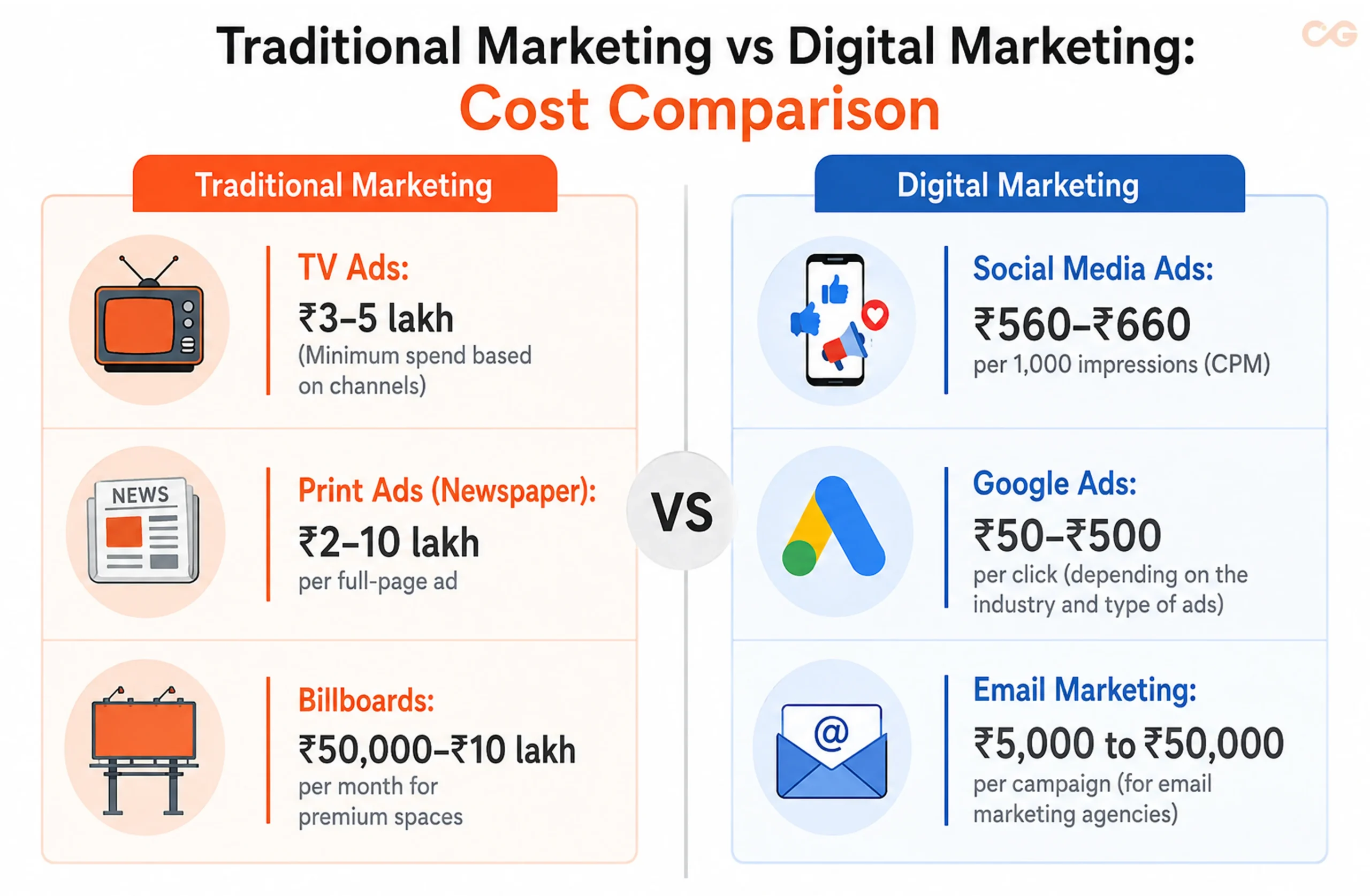
Affordable coverage: Digital marketing campaigns can be launched with budgets of just a few thousand rupees, making them significantly more accessible than traditional TV or print advertising, which can require lakhs of rupees. Small businesses can also adjust their spending based on campaign performance and business goals.
Measurable results: Digital marketing allows businesses to track how their budgets are performing in real time. Metrics such as impressions, clicks, leads, conversions, and ROI help businesses understand what is working and make data-driven improvements to their campaigns.
Local targeting: Platforms such as Google and Facebook enable businesses to reach customers based on their city, neighbourhood, or pin code. This hyperlocal visibility is particularly valuable for small businesses serving specific geographic areas.
Mobile-first strategy: With 1.12 billion mobile connections in India, businesses have a significant opportunity to connect with their target audience through mobile-friendly websites, applications, and SMS campaigns, as per DataReportal. A mobile-first approach helps small businesses stay accessible to customers throughout their online journey.
People Also Ask
What Is Digital Marketing, and Why Should Small Businesses Care About It?
Digital marketing involves using digital platforms such as search engines, social media, email, and websites to reach existing and potential customers. For small businesses in India, it offers an affordable way to build visibility, reach targeted audiences, and compete with larger businesses with minimal initial investment.
Top Digital Marketing Channels for Indian Small Businesses
1. Search Engine Optimisation (SEO)
Why it works in India:
Since 81 percent of Indian customers visit the Internet to read reviews and check ratings of products before buying, having a strong online presence is essential, according to IJNTI. Local SEO helps small businesses compete with larger brands by improving visibility among nearby customers. The growing popularity of voice search, particularly in regional languages, also makes it important to optimise content for conversational and local search queries.
SEO strategies that are Indian-specific:
Focus on regional language keywords, near me searches, and searches that include local landmarks, neighbourhoods, or area names. Creating content around local festivals, events, and community activities can also strengthen local relevance, build audience connections, and attract consistent organic traffic.
2. Google My Business Optimisation
Why Indian businesses need it:
A Google My Business Profile is important for Indian businesses because 97 percent of customers rely on Google to discover local services, as per the research of Safari Digital. Integrated with Google Maps, it displays essential information such as business hours, contact details, location, and customer reviews, helping businesses improve local visibility and credibility.
- Share regular updates about promotions, special events, seasonal offers, and new products or services.
- Respond to customer reviews, where feasible, in the local language to build trust and stronger connections with the audience.
- Upload high-resolution images of the storefront, products, team, and services to create a strong visual impression.
- Keep business hours accurate and updated, particularly during festivals, holidays, and special events, to prevent customer inconvenience.
3. Social Media Marketing
Social media provides Indian Small Businesses with affordable ways to build awareness, engage customers, and generate conversions.
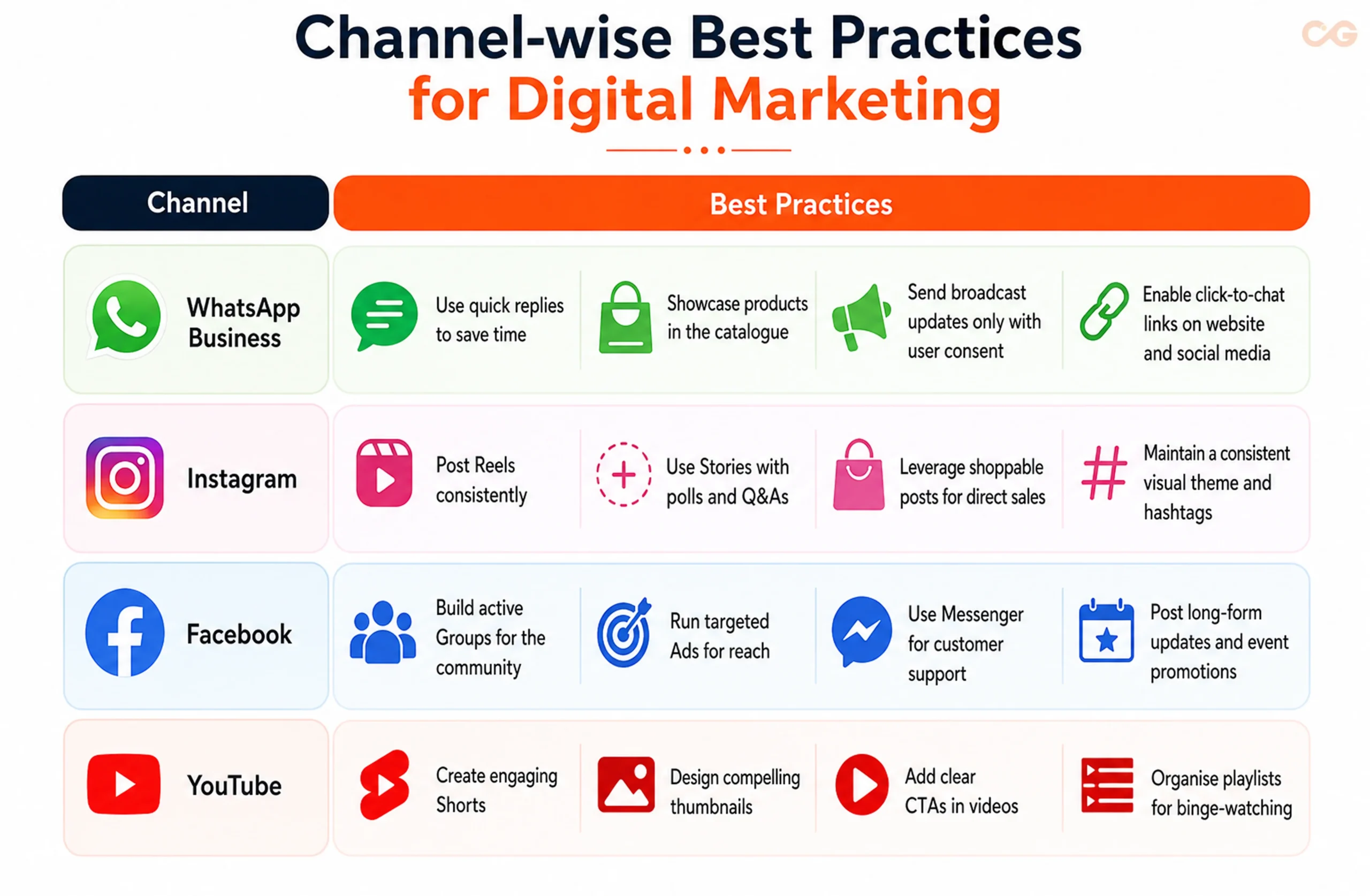
WhatsApp Business has more than 535 million users in India, the highest worldwide, as per AiSensy. It is particularly useful for customer service, order management, product enquiries, and direct communication. Businesses can also use broadcast lists to share relevant promotions and updates, provided they have the user’s consent.
Facebook and Instagram are particularly effective for visually driven businesses such as restaurants, fashion brands, retailers, and service providers. Their location and audience targeting capabilities also allow small businesses to reach relevant local customers without requiring large advertising budgets. According to the research of NapoleonCat, India has approximately 702 million Facebook users and 551 million Instagram users as of July 2026.
YouTube has 500 million users in India, the biggest in the world, according to GrabOn. It is particularly effective for tutorials, product demonstrations, how-to content, and educational videos. Creating content in regional languages can help small businesses reach audiences across different parts of the country.
4. Pay-Per-Click Advertising (Google Ads)
Pay-Per-Click Advertising (Google Ads) can provide Indian Small Businesses with immediate visibility for competitive keywords, allowing brands to appear prominently in search results without waiting for organic rankings to develop. Businesses can target specific locations, including cities, geographic radii, or pin codes, while controlling budgets and monitoring clicks, conversions, and ROI.
Indian PPC considerations:
Prioritise mobile-optimised ads to reach India’s large mobile audience. Using ad copy in regional languages can improve relevance among local audiences, while festival and seasonal campaigns can help businesses capture increased purchase intent. Click-to-call features can also make it easier for potential customers to contact businesses directly and improve lead generation.
People Also Ask: What Is the Most ROI-Effective Digital Marketing Channel for a Small Business?
Google Business Profile optimisation and local SEO usually offer the best long-term ROI for Indian small businesses, while Google Ads can deliver quicker results. The ideal channel depends on the business type, location, target audience, and marketing goals.
Case Study: eSamudaay – Digital Success for Indian Entrepreneurs
Many small-town Indian entrepreneurs, including street vendors and local retailers, lacked an online presence and had limited access to digital commerce. eSamudaay, co-founded by Anup Pai and Ravi Haldipur in Udupi, Karnataka, addressed this challenge by enabling entrepreneurs with limited technical skills to build and operate digital storefronts, as per YourStory.
The platform uses local data governance and the Beckn protocol to support interoperability, enabling micro-entrepreneurs to sell products, manage orders, and receive digital payments efficiently. This approach demonstrates how digital platforms can help small businesses overcome technology barriers and participate more effectively in India’s growing digital economy.
Integration with Traditional Business Models
Omnichannel Solutions for Indian Small Enterprises
For many Indian small businesses, digital marketing works best when it complements existing offline operations rather than replacing them. An omnichannel approach allows businesses to connect their physical and digital customer journeys, creating a more consistent and convenient experience.
Offline-to-Online Integration:
Businesses can use QR codes on packaging, receipts, brochures, and in-store displays to direct customers to their website, social media profiles, or review pages. In-store Wi-Fi can encourage email or WhatsApp subscriptions, while traditional advertising can promote digital channels for continued customer engagement.
Online-to-Offline Integration:
Digital campaigns can encourage customers to visit physical stores through redeemable online coupons, social media offers, online appointment bookings, and click-and-collect services. This approach helps businesses turn online engagement into offline visits and sales while providing greater convenience to customers.
Case Study: Anandhaas – Using Digital Marketing to Support Business Growth
Anandhaas, a traditional sweets and food brand, faced challenges from a limited digital presence and increasing market competition. To strengthen its overall market presence, the brand developed a stronger online ecosystem through an improved website, targeted digital marketing, and SEO while continuing to serve customers through its established physical business presence, as reported by Rush Republic.
Results:
Over eight years, Anandhaas increased its website traffic by 430 percent and its followers by 1,530 percent through its digital marketing efforts. The growth in digital visibility supported the brand’s broader expansion, helping it strengthen customer engagement and build a wider customer base across both online and offline touchpoints.
Takeaway

Ready to grow your small business online? Follow this 12-week roadmap to build your digital foundation, reach the right customers, and scale what works. Start small, measure your progress, and grow strategically.
Digital Marketing Strategies for Small Businesses by Industry
Different industries require different digital marketing strategies based on their customer behaviour, buying journey, and business goals. Here are practical strategies for some of the most common small-business categories in India.
Food and Restaurants
Instagram and Facebook: Share high-quality food photos, Reels, offers, and customer experiences to attract local audiences and showcase menu items.
Google Business Profile: Keep business information updated, add menus, upload photos, and enable relevant ordering or booking options to improve local discovery.
Food Delivery Applications: Maintain an active presence on platforms such as Zomato and Swiggy to increase online visibility and reach customers looking for food delivery.
WhatsApp: Use WhatsApp Business for table bookings, takeaway orders, enquiries, and customer updates to make communication more convenient.
Retail and E-commerce
Product Photography: Use clear, professional product images across websites, social media, and online marketplaces to improve product appeal and customer confidence.
Google Shopping Ads: Promote product listings to reach customers actively searching for relevant products online.
Retargeting Campaigns: Re-engage website visitors who viewed products but did not purchase, encouraging them to return and complete their purchase.
Inventory Advertising: Promote available or high-demand products to generate timely sales while helping businesses manage inventory more effectively.
Professional Services
LinkedIn Marketing: Use LinkedIn to generate B2B leads, showcase expertise, connect with potential clients, and build professional relationships.
Content Marketing: Publish informative blogs, guides, and industry insights to demonstrate expertise, answer customer questions, and strengthen brand authority.
Video Testimonials: Share authentic customer testimonials and success stories to build trust and demonstrate the value of the services.
Local Networking: Participate in local business events, community initiatives, and professional networks to strengthen relationships and increase local visibility.
Healthcare and Wellness
Educational Content: Share accurate, useful health and wellness information to educate audiences, address common questions, and build credibility.
Online Appointment Booking: Integrate convenient online booking systems to make it easier for patients and customers to schedule consultations or services.
Review Management: Monitor and respond appropriately to reviews to strengthen trust and demonstrate a commitment to customer experience.
Compliance Focus: Ensure that all healthcare and wellness marketing follows applicable advertising, privacy, and professional guidelines to maintain ethical standards and avoid regulatory issues.
Advanced Digital Marketing Tactics for Growing Small Businesses
Once a small business has established its core digital channels, it can adopt more advanced tactics to improve efficiency, strengthen customer relationships, and scale its marketing efforts.
Marketing Automation
Email Sequences: Set up automated welcome emails, abandoned-cart reminders, and re-engagement campaigns based on customer behaviour to maintain consistent communication.
Social Media Scheduling: Plan and schedule posts in advance to maintain a consistent publishing schedule without requiring daily manual management.
Chatbots: Use chatbots to handle frequently asked questions, provide basic support, and respond to customer enquiries outside business hours.
Review Management: Automate review requests after purchases or service interactions to encourage customer feedback and strengthen online reputation.
Customer Retention and Lifetime Value
Loyalty Programmes: Introduce points, rewards, or exclusive offers to encourage repeat purchases and increase customer retention.
Personalised Communication: Segment customers based on their purchase history, interests, or engagement and provide relevant offers and content.
Referral Programmes: Encourage existing customers to recommend the business to friends and family through incentives or referral rewards.
Community Building: Create WhatsApp communities, Facebook Groups, or other relevant online communities to maintain ongoing engagement with customers.
Scaling Strategies
Once a strategy consistently generates results, businesses can scale it systematically rather than increasing spending across every channel.
- Expand geographically: Test successful campaigns in nearby cities or locations before expanding further.
- Add complementary offerings: Introduce related products or services based on existing customer demand.
- Build strategic partnerships: Collaborate with complementary, non-competing businesses to reach new audiences.
- Work with micro-influencers: Partner with relevant local creators to increase awareness and build trust within specific communities.
- Reinvest based on performance: Increase budgets for channels that consistently generate profitable leads, sales, or repeat customers.
Takeaway
Ready to grow your small business online? Follow this 12-week roadmap to build your digital foundation, reach the right customers, and scale what works. Start small, measure your progress, and grow strategically.
Measuring Digital Marketing Success for Small Businesses
Tracking the right metrics helps Indian Small Businesses understand whether their digital marketing efforts are generating meaningful business results. Instead of focusing only on likes or followers, businesses should monitor metrics that connect marketing activity with revenue, customers, and local visibility.
Key Performance Indicators (KPIs)
Revenue Metrics: Track monthly recurring revenue (MRR) and average order value (AOV) to understand sales performance and customer spending.
Customer Metrics: Monitor customer acquisition cost (CAC), customer lifetime value (CLV), and customer retention rate to evaluate acquisition efficiency, profitability, and loyalty.
Digital Metrics: Measure website traffic, conversion rates, and social media reach to understand how effectively digital channels are attracting and converting audiences.
Local Metrics: For location-based businesses, monitor local search visibility, review ratings, and foot traffic, where measurable, to assess performance within the local market.
People Also Ask
1. Which Are the Most Valuable Digital Marketing Metrics That Small Businesses Should Track?
The most useful metrics include website traffic, conversion rate, customer acquisition cost, customer lifetime value, customer retention rate, social media engagement, local search visibility, and return on ad spend (ROAS). Businesses should prioritise metrics that directly relate to their marketing objectives rather than trying to track every available metric.
2. What Is the Cost of Digital Marketing for Small Businesses in India, and How Should They Plan Their Budget and ROI Expectations?
Digital marketing costs vary depending on the business type, target audience, competition, selected channels, and scope of work. According to the market research of DigitalSky 360, the following are indicative digital marketing costs for small businesses in India in 2025:
Realistic Indian Small Business Budget Breakdown
SEO (₹12,000-₹50,000/month): SEO investment helps improve search engine rankings and build a consistent flow of organic traffic. Costs depend on keyword competition, ranking difficulty, website size, and the scope of SEO work.
Google Ads/PPC (₹10,000-₹1,00,000/month): Google Ads provides flexible visibility, allowing businesses to scale their spending based on industry, location, competition, and campaign objectives.
Social Media Marketing (₹8,000-₹40,000/month): This typically covers social media strategy, content creation, publishing, audience engagement, and community management across relevant platforms.
Email Marketing (₹5,000-₹25,000/month): Email marketing can help businesses nurture leads, promote offers, maintain customer relationships, and encourage repeat purchases.
Content Marketing (₹2,000-₹10,000/piece): Content marketing can include blogs, articles, videos, graphics, and other formats created to attract and engage the target audience. Costs vary according to the format, complexity, research, and production requirements.
Expected ROI Timelines
Short term (0-3 months): Paid advertising and Google Business Profile optimisation can generate early visibility, website traffic, enquiries, and local discovery when campaigns are properly targeted.
Medium term (3-12 months): SEO, organic social media, and email marketing can gradually strengthen search visibility, audience engagement, and customer relationships.
Long term (12+ months): Brand building, consistent content marketing, SEO, and customer retention efforts can contribute to stronger authority, trust, repeat business, and customer lifetime value.
3. How Much Does a Small Business Need to Spend on Digital Marketing in India?
There is no fixed digital marketing budget that applies to every Indian small business. According to Intellitron Genesis, Indian small enterprises are expected to invest 7-10 percent of their annual earnings in digital marketing, while new businesses or businesses seeking rapid expansion may invest 15 percent or more, as per Intellitron Genesis.
Businesses should use these figures as a planning reference rather than a fixed rule. The ideal budget should depend on business goals, available resources, customer acquisition costs, and the channels that generate the strongest returns. Starting with a manageable budget and increasing investment based on measurable performance can help minimise unnecessary spending and improve ROI.
Digital Marketing: GST and Regulatory Compliance
Understanding the Key Legal Requirements
Digital marketing can help small businesses grow, but businesses should also ensure that their marketing activities, customer data practices, and advertising remain compliant with applicable Indian regulations.
GST and Invoicing:
Businesses should understand the GST treatment applicable to the digital marketing services they purchase or provide and maintain accurate invoices, records, and supporting documents. The tax treatment can vary depending on the nature of the service and the transaction, so businesses should seek professional tax advice where required.
Data Protection and Privacy:
Businesses that collect customer information through websites, forms, apps, email, or WhatsApp Business should handle personal data responsibly and provide clear information about how it is collected and used. Consent-based processing should be clear and informed, with appropriate mechanisms for customers to withdraw consent where applicable.
Advertising Standards:
Digital advertisements should be truthful, transparent, and supported by appropriate evidence. Businesses should avoid misleading claims and follow applicable consumer-protection requirements as well as the advertising policies of platforms such as Google, Facebook, and Instagram. Businesses operating in regulated sectors should also pay particular attention to sector-specific advertising requirements.
Small Business Compliance Checklist
- Maintain accurate invoices and records for digital marketing expenses and services.
- Keep customer-facing privacy notices and data practices clear and up to date.
- Obtain appropriate consent before sending promotional email or WhatsApp communications.
- Provide customers with clear ways to manage or withdraw consent where applicable.
- Review advertising claims to ensure that they are accurate, transparent, and supportable.
- Follow the advertising and content policies of every digital platform used for marketing.
- Seek professional tax or legal advice when a transaction, industry, or marketing activity involves specific compliance requirements.
Takeaway
Ready to grow your small business online? Follow this 12-week roadmap to build your digital foundation, reach the right customers, and scale what works. Start small, measure your progress, and grow strategically.
Conclusion: Your Digital Marketing Journey Begins Here
India’s digital landscape continues to create new opportunities for small businesses willing to adapt and invest in the right channels. Success in digital marketing for small businesses in India starts with understanding your local audience, building a strong digital foundation, and gradually scaling the strategies that deliver measurable results.
Start small, focus on the platforms where your customers are most active, and use mobile-first strategies, regional relevance, and consistent optimisation to strengthen your presence. At the same time, integrate digital initiatives with your existing offline operations to build a customer experience that feels authentic and connected.
Your competitors are already building their digital presence. The question is no longer whether digital marketing is worth exploring, but how effectively your business can use it to attract, convert, and retain customers.
People Also Ask: How Long Does Digital Marketing Take to Generate Results for Small Businesses?
Results vary by channel, competition, industry, and consistency. Google Business Profile optimisation and paid advertising can generate initial results within 1-3 months, while SEO and organic social media typically require 6-12 months to build meaningful momentum. Brand awareness, customer loyalty, and retention are longer-term efforts that generally require 12+ months of consistent activity.
Are You Ready to Transform Your Business?
Digital marketing is not simply about being present online. It is about making it easier for your target customers to find your business, choose your products or services, and remember your brand.
Use this digital marketing guide for India as a practical roadmap: begin with the fundamentals, measure what matters, learn from the results, and scale gradually. You do not need to master every channel at once – you need to consistently improve the channels that matter most to your customers and business.
The best time to start your digital marketing journey is now.