Local SEO Strategies for Indian Small Businesses: The Ultimate Guide to Master Your Local Market in 2026
Table of Contents
- Local SEO in the Indian Context
- Maximising Google My Business for the Indian Market
- Harnessing the Impact of Reviews in India
- Expanding Beyond Google: Mastering Local Directories in India
- Voice Search Optimisation for Indian Languages and Accents
- Regional Language and Cultural Optimisation for Local SEO
- Local Link Building Strategies for Indian Businesses
- Technical SEO for Local Indian Businesses
- Local SEO through Social Media Engagement
- Local SEO Success: Measuring and Tracking Your Progress
- Future-Proofing Your Local SEO Strategy
- Conclusion: Your Local SEO Roadmap to Success
Local SEO in India is crucial for small businesses navigating the digital landscape. Whether you’re operating a local restaurant in Mumbai, a beauty salon in Bangalore, or a mobile repair shop in Delhi, your growth hinges on your ranking in local search results. Customers now rely heavily on their phones and search engines to find nearby services, making local search visibility vital for attracting new clients.
Statistics highlight this trend: APPCO Software reports that over 78% of local mobile searches lead to offline purchases, showcasing the strong intent of local searchers. However, many small businesses in India struggle because they haven’t optimised their online presence. Common mistakes include incomplete Google Business Profiles, inconsistent contact information, and ineffective local keywords. Focusing on local SEO ensures that your business connects with the right audience at the right time, giving you a competitive advantage and converting searches into sales.
The Local SEO in the Indian Context
Why is Local SEO Different for Indian Businesses?
Local SEO for small businesses in India isn’t just a direct application of Western strategies. It requires an understanding of unique Indian online behaviour, diverse languages, and popular local platforms.
So, what exactly is local SEO, and why should small businesses prioritise it?
Local SEO in India is a digital marketing approach that boosts your company’s ranking in local search results. For Indian businesses, it’s more than just ranking. It’s about engaging customers who speak different languages, use various platforms, and exhibit distinct search habits. Embrace local SEO to effectively reach your target audience.
Title: Traditional SEO vs Local SEO (Indian Market)
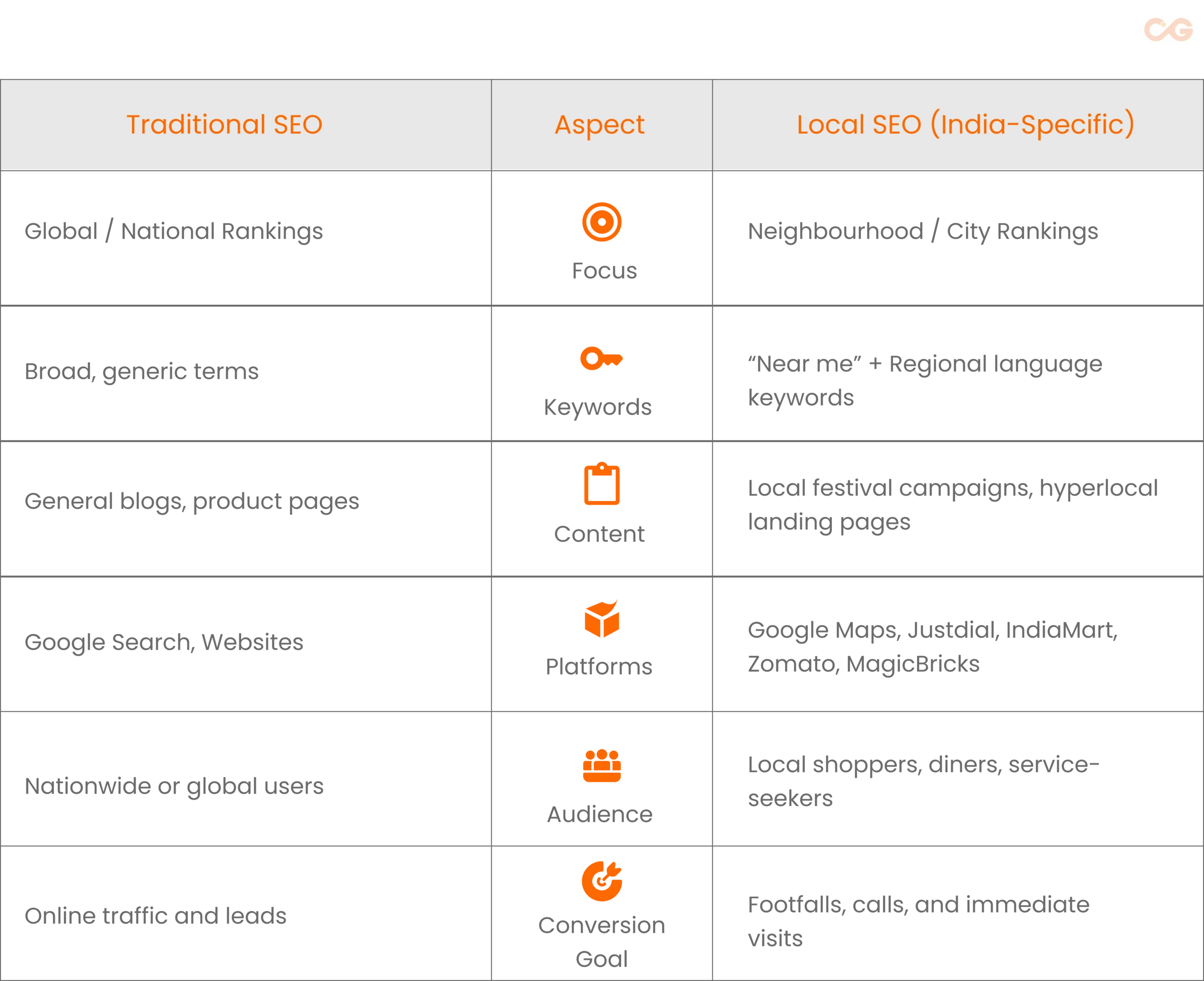
Local SEO speaks the language, culture, and intent of your nearby customers.
Indian Digital Consumer Behaviour
In India, consumers are increasingly mobile-oriented. Research from APPCO Software reveals that over 85% of local search activities on mobile devices result in a visit or phone call within 24 hours. Additionally, many Indian consumers are multilingual.
For example, users may search for “restaurants near me” in English but engage more with local business information available in regional languages such as Hindi or Tamil, making multilingual content an important consideration for Local SEO.
Indian Case Study: Fitlife Gym’s Digital Triumph
Fitlife Gym in Pune struggled with visibility in a competitive market. To improve their online presence, they optimised their Google My Business profile with accurate information and appealing images. They also utilised targeted Google Ads with local keywords, such as “best gym in Pune,” and created dedicated landing pages to boost their local search ranking and ad performance.
Results:
- They ranked in the top three for local Google searches, which greatly enhanced their visibility.
- Targeted Google Ads campaigns increased website traffic by 120%.
- New memberships surged by 60% within six months, showcasing strong local engagement and campaign effectiveness, as reported by the Premium School of Digital Marketing.
Maximising Google My Business for the Indian Market
Key Strategies for Google My Business Optimisation in India:
To strengthen your local visibility, it is crucial to optimise your Google Business Profile (GBP) with accurate, complete, and locally relevant information. Inconsistent or outdated business details can create confusion for customers and weaken your local presence. Here’s how to tailor your profile for Indian consumers:
1. Complete Every Section Thoroughly
- Business Name: Use your exact business name as it appears offline to ensure consistency and credibility.
- Address: Provide your physical address accurately to generate correct local search results.
- Phone Number: List a local Indian number in the correct format — including the country code +91 — so customers can reach you easily.
- Hours: Clearly state your regular hours as well as hours for Indian festivals and holidays.
- Categories: Select primary and secondary categories that best represent your business for improved local search visibility.
2. Leverage Local Preferences
- Attributes: Highlight features like acceptance of UPI payments, availability of Hindi-speaking staff, or vegetarian options.
- Payment Methods: Accept widely used payment methods like PhonePe, Google Pay, and Paytm for customer convenience.
- Delivery Services: If your business provides delivery, clearly mention the service and ensure your profile reflects the areas and options you actually serve.
3. Use High-Quality Local Visuals
Upload recent, authentic photos and videos of your storefront, interiors, products, services, team, and surrounding location. For local businesses, visual content can help customers recognise the business when they visit and understand what to expect.
Takeaway

Elevate Your Local SEO: Essential Tools and Audits for Steady Growth.
Want to stay relevant to your local customers? Utilise the right tools and keep your SEO practices updated with regular audits. It’s simpler than it seems.
4. Keep Your Profile Active
Don’t treat GBP as a one-time setup. Regularly update your profile with Google Business Profile posts, seasonal announcements, new products, offers, events, and other relevant updates. For example, during Diwali, Eid, Pongal, Onam, or Dussehra, businesses can share festive offers, special timings, or seasonal products where relevant.
By following these strategies, businesses can turn their Google Business Profile into an ongoing local marketing channel – keeping information accurate, adding fresh visuals and updates, responding to customers, and maintaining a strong local presence in the Indian market.
Festival Calendar + GMB Post Ideas for Businesses
Indian Festival Marketing Calendar for Local Businesses
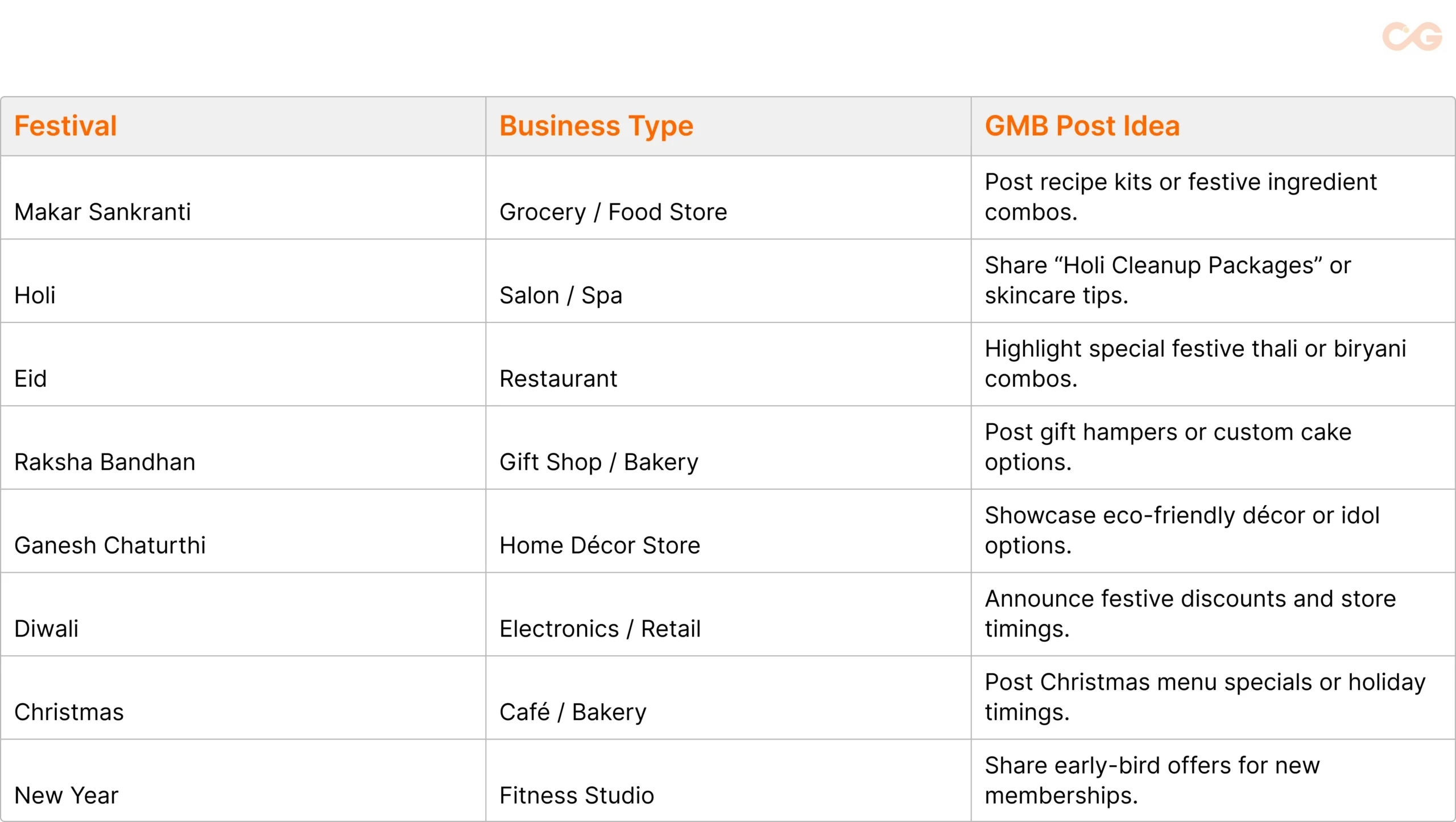
Timely GMB posts keep your business visible and relevant during every celebration.
Harnessing the Impact of Reviews in India
Online reviews play an important role in how Indian consumers evaluate local businesses. Positive ratings, genuine customer experiences, and thoughtful responses can strengthen trust and influence a customer’s decision to visit, call, or purchase from a business. For local SEO, businesses should actively manage reviews on their Google Business Profile, respond to customer feedback, and maintain consistent information across relevant local directories.
Effective Review Management Strategy:
- Respond in Local Languages: Where appropriate, respond to reviews in a language familiar to the customer, such as Hindi, Tamil, Kannada, or another regional language. This can make interactions feel more personal and relevant.
- Respond to Positive and Negative Reviews: Thank customers for positive feedback and address negative reviews professionally. A helpful response shows potential customers that the business values feedback and takes customer concerns seriously.
- Encourage Genuine Reviews: Ask satisfied customers to share their honest experience after a purchase or service. You can use follow-up messages, receipts, QR codes, or in-store prompts to make the process easier. Avoid incentivising reviews in ways that violate Google’s policies.
- Consider Cultural and Regional Sensitivities: Keep responses respectful of local customs, festivals, language preferences, and community expectations. This is particularly useful for businesses serving diverse Indian audiences.
- Highlight Local Experiences: When relevant, respond naturally to reviews that mention local areas, neighbourhoods, festivals, or community events. This can demonstrate that your business is actively connected to the local community.
- Learn from Customer Feedback: Reviews are not only a reputation-management tool. Look for recurring comments about service quality, pricing, products, staff behaviour, or customer experience and use these insights to improve the business.
Insight: Don’t focus only on getting a higher star rating. A steady flow of genuine, detailed customer reviews and meaningful business responses creates a stronger local reputation than simply collecting a large number of ratings.
Expanding Beyond Google: Mastering Local Directories in India
Unlocking the Potential of Indian Directories
While many local SEO tips for Indian businesses focus on Google, local directories are popular among Indian consumers and are often overlooked by Western SEO strategies.
Top Indian Directories for Local SEO:
1. JustDial
JustDial leads as India’s largest local search engine, boasting over 193 million users, as per JustDial’s report. It’s vital for local directory submissions. Businesses should keep their photos updated, highlight current promotions, and respond quickly to inquiries for better visibility.
2. Sulekha
Sulekha thrives among service-oriented businesses, especially in cities. It is effective for fields like tutorials, home services, and consulting, helping companies connect with customers actively seeking their services.
3. IndiaMART
IndiaMART is essential for B2B firms, especially manufacturers and wholesalers. It offers extensive product showcasing, enabling businesses to interact closely with potential customers, boosting bulk sales and reputation in the industry.
4. Quikr
Quikr targets local classifieds and service listings, appealing mostly to younger audiences. It’s perfect for businesses providing home services or community products, allowing for greater exposure and customer inquiries.
5. 99acres
For real estate businesses, 99acres helps showcase properties and connect with relevant local buyers, tenants, and investors.
6. Naukri
For recruitment agencies and employers, Naukri helps reach relevant candidates and strengthen visibility among job seekers.
By leveraging these local directory submission sites in India, businesses can significantly improve their local SEO performance, connect more effectively with customers, and drive growth.
Integrating with Food Delivery Platforms
For restaurants and food businesses, integrating with platforms like Zomato and Swiggy goes beyond just delivery. It plays a crucial role in your “near me” search optimisation strategy. Their search capabilities can significantly boost your visibility in your local area.
Voice Search Optimisation for Indian Languages and Accents
The Growing Importance of Voice Search in India
Voice search is particularly relevant to Local SEO because people often use conversational queries to find nearby businesses, services, and locations. Searches such as “best tiffin centre near me,” “pharmacy open now,” or “where can I find a good South Indian restaurant?” reflect the natural, location-focused way customers search.
For Indian small businesses, voice optimisation should focus on understanding how local customers naturally phrase their queries, including regional-language and bilingual searches.
How to Optimise for Voice Search in India
- Target Conversational, Long-Tail Queries: Create content around natural questions customers are likely to ask, such as “Where can I find a budget-friendly salon near me?” or “Which restaurant is open near me tonight?”
- Build Question-Based Content: Use FAQs and concise answers to address common customer questions about your location, services, pricing, opening hours, parking, delivery, and availability.
- Optimise for Regional and Bilingual Searches: Where relevant, include naturally used local-language terms alongside English terminology. For example, a business serving Bengaluru customers could consider commonly used Kannada and English expressions when developing its local content.
- Strengthen Local Signals: Keep your Google Business Profile, address, phone number, opening hours, services, and location information accurate and consistent. Mention relevant neighbourhoods or landmarks naturally when they genuinely help customers find your business.
- Prioritise Mobile Experience: Ensure your website is mobile-friendly, easy to navigate, and fast enough for users searching on smartphones.
Optimising for Featured Snippets and Direct Answers
Voice assistants and search engines may use information from prominent search results to answer user queries. While there is no guaranteed way to secure a voice-search position, businesses can improve their chances of being surfaced for relevant questions by:
- Providing clear, concise answers to common local queries.
- Structuring content with descriptive headings, FAQs, lists, and easy-to-scan answers.
- Using relevant structured data where appropriate.
- Keeping business information accurate across the website and Google Business Profile.
Pro Tip: Don’t write content solely for voice search. Create genuinely useful, conversational content for customers first, while naturally incorporating the questions and phrases they use to find local businesses.
Regional Language and Cultural Optimisation for Local SEO
The Multilingual Advantage
India’s linguistic and cultural diversity gives small businesses an opportunity to make their local presence more relevant to specific communities. A business does not necessarily need to translate its entire website into multiple languages. Instead, it should identify the languages commonly used by its target customers and localise the most important customer-facing content.
Effective Regional Language Strategies
1. Create Bilingual or Localised Content
Develop key pages, FAQs, service descriptions, or landing pages in English and the primary regional language when it matches your audience’s needs. Use natural language rather than directly translating keywords, and ensure the content remains easy to read on mobile devices.
2. Make Reviews More Locally Relevant
Sulekha thrives among service-oriented businesses, especially in cities. It is effective for fields like tutorials, home services, and consulting, helping companies connect with customers actively seeking their services.
3. Localise Social Media Content
Use regional languages, local expressions, and community-focused content on social platforms when appropriate. Share information about local events, neighbourhood activities, seasonal offers, and topics that matter to your target audience.
4. Create Festival and Seasonal Content
Use relevant festivals and regional occasions to create timely local content. For example, a business could publish special offers, updated opening hours, festive products, or event information around Diwali, Pongal, Onam, Durga Puja, Eid, Dussehra, or other locally significant occasions.
5. Reflect Local Culture Thoughtfully
Avoid simply adding festival names or regional terms for SEO purposes. Make the content genuinely useful by reflecting relevant local traditions, customer preferences, and community context. This helps the business feel more connected to the audience it serves.
6. Participate in the Local Community
Where appropriate, participate in neighbourhood events, local initiatives, or community activities and share these experiences through your website, social media, and Google Business Profile. Genuine community involvement can strengthen local awareness and brand trust.
Example: Zomato’s Kolkata Durga Puja Campaign
During Durga Puja 2024, Zomato ran a Kolkata-focused campaign celebrating the city’s street-food culture. The campaign worked with local artisans and highlighted iconic street-food vendors and their locations, using Bengali cultural elements such as Alpana to create a strong connection with the local community, as per the research of Financial Express.
Local Link Building Strategies for Indian Businesses
Building Local Authority Through Community Engagement
Traditional link-building advice often overlooks unique opportunities for Indian businesses. Here’s how to build strong local authority:
Home Page Link Building Techniques:
1. Partner with Local Organisations
Collaborate with local NGOs, community groups, and associations. Sponsoring events or joining business chambers enhances credibility and visibility in the community. This involvement builds trust and positions your brand as an active contributor to local development.
2. Create Location-Specific Content
Develop content about local events, landmarks, and highlights. Resources like travel guides and news articles related to your industry resonate with your audience. This approach boosts SEO, sparks interest among local readers, and showcases your brand’s expertise in the area.
3. Contribute to Local Publications
Write articles for local news sites, city blogs, and business directories. These guest posts elevate your local search results, establish you as a thought leader, and integrate your business into local conversations and the economy.
4. Leverage Local Media Coverage
Reach out to local bloggers and journalists with interesting stories about industry trends or community projects. Highlight newsworthy events that capture attention and can be covered in the media. This raises brand awareness and builds trust within the local audience.
Tracking Local Link Building Success
Use tools like Google Search Console to monitor your progress:
Check Local Keyword Rankings: Regularly assess your keyword positions to understand your visibility and identify growth areas.
Analyse Click-Through Rates: Track how well your listings attract local interest and engagement.
Examine Traffic Geography: Study traffic sources to pinpoint high-performing regions for targeted strategies.
Test Landing Page Performance: Regularly evaluate location-based landing pages to improve user experience and boost conversions, enhancing your overall SEO impact.
Implement these strategies to strengthen your local authority and drive business success.
Takeaway
Elevate Your Local SEO: Essential Tools and Audits for Steady Growth.
Want to stay relevant to your local customers? Utilise the right tools and keep your SEO practices updated with regular audits. It’s simpler than it seems.
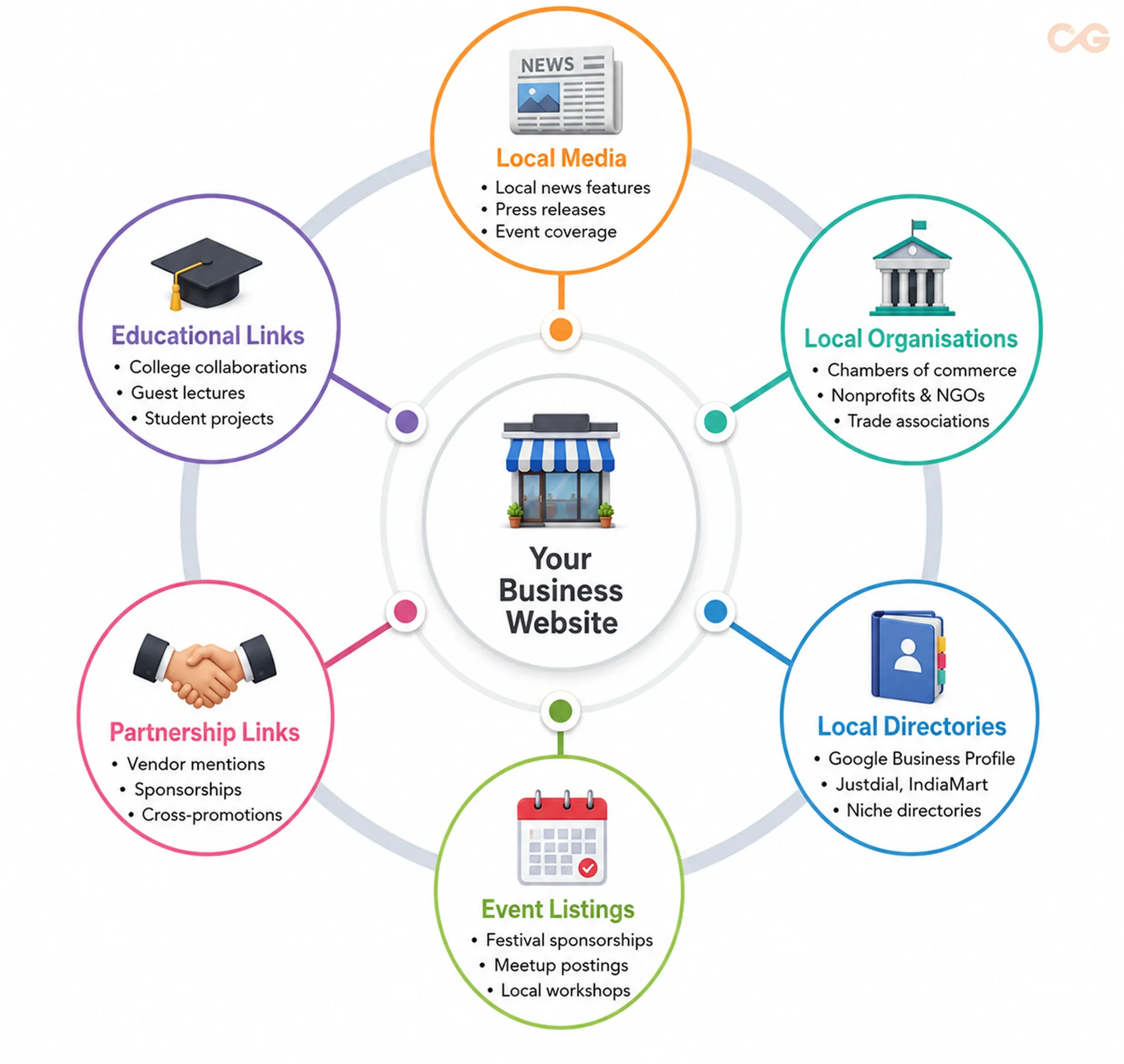
Local Link Building Network
Technical SEO for Local Indian Businesses
Prioritising Mobile Experience for Indian Consumers
In India’s mobile-first market, your local search optimisation must prioritise mobile usability.
Key Mobile Optimisation Strategies:
1. Enhancing Page Speed
- Ensure that your website loads quickly, especially on slower 3G and 4G networks common in many regions in India, as per the report of Akashvani. This reduces loading times and bounce rates.
- Utilise image compression and lazy loading techniques to boost speed while maintaining quality.
- Streamline JavaScript and CSS files to further decrease load times.
- Consider progressive web apps (PWAs) for a fast, app-like experience.
2. Implementing Local Schema Markup
- To improve visibility in local search results, use LocalBusiness schema markup. This helps search engines recognise your business as local.
- Incorporate features relevant to Indian customers, such as UPI payment options and local contact methods, to build trust.
- Verify address formatting for Indian locations on Google Maps and directories for accuracy.
- Clearly indicate business hours and note significant Indian holidays to avoid customer confusion.
3. Creating Location-Specific Landing Pages
- Develop tailored landing pages for each service area focusing on hyperlocal keywords to drive targeted searches.
- Include references to local landmarks, neighbourhoods, and cultural elements to make content relatable.
- Optimise pages according to neighbourhood-specific searches to capture precise local traffic.
- Highlight local phone numbers and addresses to boost trust and encourage calls and direction requests.
Structuring Multi-Location Business Websites
For businesses with multiple locations across India:
- Create city-specific subdirectories like /mumbai/ or /delhi/ to categorise content and enhance search relevance.
- Avoid duplicate content by writing unique copy for each location page, focusing on specific services and setting.
- Include local contact information, addresses, and Google Maps integration to foster local trust.
- Add region-specific testimonials, success stories, and case studies to build social proof and increase conversions from local visitors.
Local SEO through Social Media Engagement
Social media can support Local SEO by increasing local visibility and helping businesses connect with nearby customers. Sharing location-specific content, engaging in local conversations, and participating in community activities can strengthen brand awareness and complement your local SEO strategy.
Leveraging Indian Social Platforms
Facebook and Instagram are important, but consider other popular platforms too:
1. WhatsApp Business
- Use WhatsApp Business as a primary communication tool. Add a WhatsApp contact button to your website for easy messaging.
- Share hyperlocal promotions through status updates and facilitate location sharing for customer convenience.
2. Facebook and Instagram
- Utilise posts and stories to engage with your local audience.
- Use geotags and local hashtags. Share user-generated content to build credibility and relationships in your community.
3. YouTube
- Create videos in local languages that showcase your offerings and location.
- Produce guides featuring nearby landmarks and highlight community events or CSR initiatives to enhance visibility and loyalty.
Fostering Community Engagement on Social Media
- Actively participate in local Facebook groups and communities by answering questions and joining discussions.
- Share updates on local events and news to stay relevant and visible.
- Collaborate with local influencers to broaden outreach and strengthen trust.
- Establish unique, location-specific hashtags to encourage user-generated content and bolster local brand awareness.
Local SEO Success: Measuring and Tracking Your Progress
Local SEO is an ongoing process, and tracking your performance helps you understand whether your efforts are delivering meaningful results. Instead of relying on rankings alone, Indian small businesses should evaluate how local search contributes to customer engagement, enquiries, and business growth.
Key Performance Indicators for Indian Businesses
You can gauge the effectiveness of your local SEO efforts using these essential KPIs
1. Local Search Visibility
Track your presence through Google My Business insights. Monitor views, searches, and user actions. Regularly check keyword rankings in each target city, evaluate your visibility on local search engines, and note the appearance of featured snippets. This helps you assess your search prominence and the competitive landscape.
2. Engagement Metrics
Analyse click-through rates from local searches to measure how relevant your listings are. Keep an eye on phone calls generated from your listings, requests for directions, in-store visits, and customer reviews. These metrics provide insights into audience engagement and brand recognition.
3. Conversion Metrics
Assess online versus offline conversion rates to see how effectively local searches drive foot traffic. Attribute revenue gained from local searches, calculate customer acquisition costs, and analyse the lifetime value of customers acquired through local SEO to understand your long-term ROI.
Future-Proofing Your Local SEO Strategy
Stay ahead by anticipating trends in Indian local SEO:
1. Embrace AI and Machine Learning
Search engines increasingly use AI to deliver personalised local search results. Companies should focus on creating tailored search experiences that consider user location, behaviour, and preferences. Enhance content quality to genuinely address user needs and solve problems.
2. Optimise for Visual Search
Utilise appropriate alt text and local context to boost visual search effectiveness. Use high-quality images of your products and locations to drive engagement. Consistent visual branding across all platforms helps improve local recognition and trust.
3. Implement Hyperlocal Targeting
Target specific neighbourhoods to enhance relevance. Create custom content that resonates with micro-communities and focus on proximity and transport accessibility. This focused SEO strategy helps businesses connect with local consumers, driving foot traffic and improving brand loyalty.
Adapting to Local Search Algorithm Changes
Google’s local search systems continue to evolve, so businesses should focus on sustainable practices rather than trying to optimise for every algorithm update. A strong foundation helps your business remain visible even as ranking factors and search behaviour change.
- Prioritise Customer Value: Provide accurate, useful information about your products, services, location, and opening hours rather than creating content solely to improve rankings.
- Build Genuine Customer Relationships: Deliver a positive customer experience and encourage honest reviews without offering incentives or manipulating ratings.
- Keep Business Information Updated: Regularly review your Google Business Profile, website, and local listings to ensure your business name, address, phone number, services, and operating hours remain accurate.
- Create Helpful Local Content: Publish useful, location-specific content that answers genuine customer questions and demonstrates your knowledge of the community you serve.
- Monitor Performance, Not Just Rankings: Track changes in visibility, website traffic, calls, enquiries, and conversions to understand whether an update has actually affected your business.
Takeaway
Elevate Your Local SEO: Essential Tools and Audits for Steady Growth.
Want to stay relevant to your local customers? Utilise the right tools and keep your SEO practices updated with regular audits. It’s simpler than it seems.
Conclusion: Your Local SEO Roadmap to Success
Achieving success in local SEO in India requires understanding your market and consistently serving your community. Successful companies:
- Acknowledge the diverse, multicultural nature of their audience to create relatable content.
- Maintain a presence on Indian-specific platforms for maximum reach.
- Consider mobile-first strategies to ensure quick and seamless access.
- Engage meaningfully with local communities to build true relationships.
- Stay informed about trends and technology to adjust strategies effectively.
- Provide locally relevant content while ensuring brand consistency across channels.
- Focus on long-term engagement rather than quick, surface-level tactics.
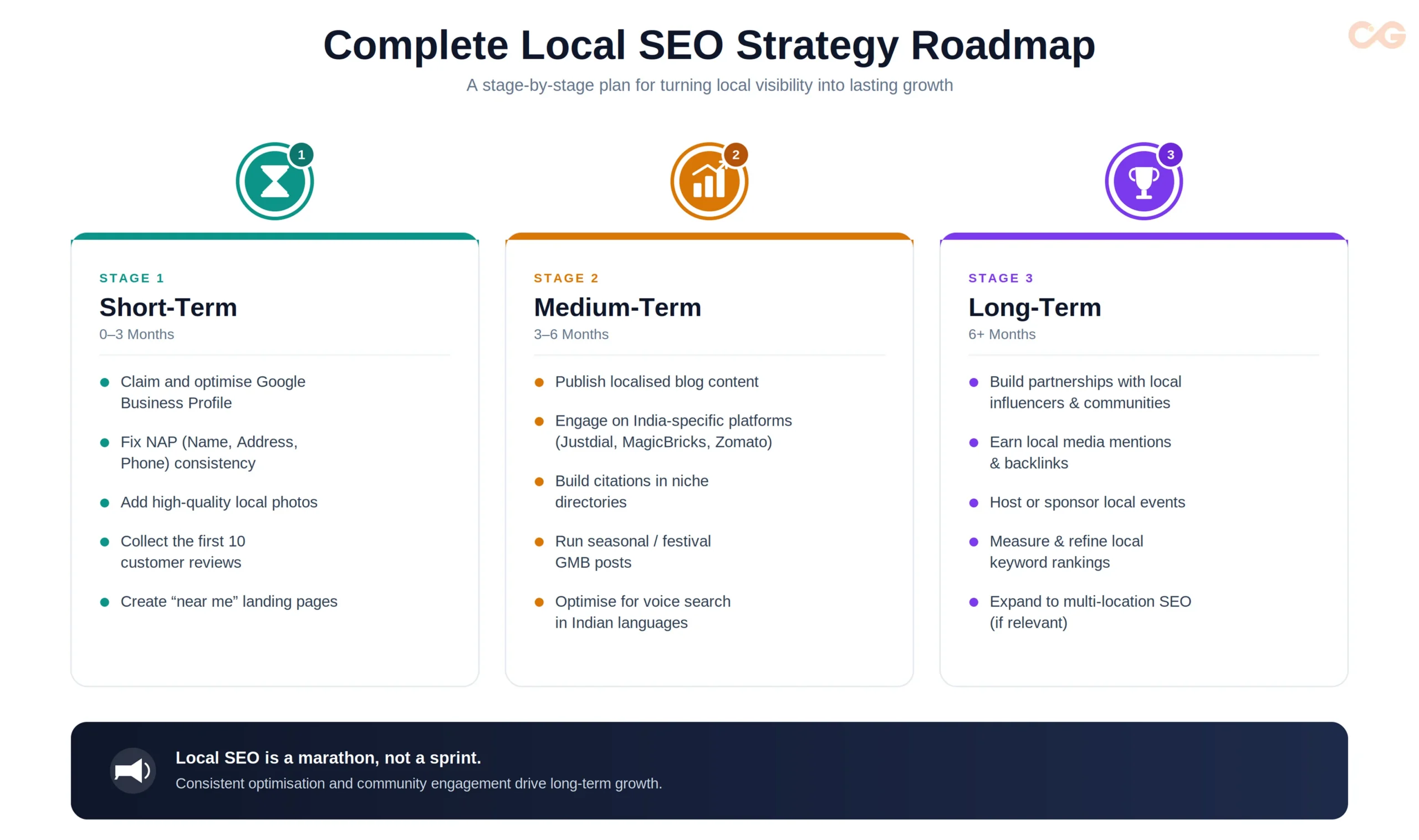
Local SEO for small businesses in India demands patience, consistency, and cultural sensitivity. Start by optimising your Google My Business profile, ensuring consistent NAP (Name, Address, Phone number), and creating quality local content. Progress to advanced strategies such as voice search optimisation and regional language targeting.
The digital landscape in India is evolving. Businesses that invest in comprehensive local search strategies are poised to lead the market. Make sure customers can find you when they need you.