
Micro-Branding of Niche Markets: Small Budget, Big Impact
Table of Contents
- What Is Micro-Branding and Why Does It Matter in 2026?
- Innovative Low-Cost Micro-Branding Strategies
- Scaling Your Micro-Brand: Growing Without Losing Your Soul
- Measuring Micro-Branding Success: Track What Matters
- Conclusion: Your Micro-Branding Journey Starts Here
Make your small business a household name without breaking the bank.
In today’s competitive market, small business branding is no longer a luxury; it is essential for building recognition, trust, and long-term customer loyalty. Small businesses are also increasing their focus on marketing, with almost half (49%) planning to spend more on marketing in 2026, according to Priorities in SMB Marketing Newsletter. Yet, building a memorable brand does not necessarily require a large marketing budget.
This is where micro-branding comes in. By focusing on a clearly defined niche, consistent brand identity, authentic storytelling, and high-impact marketing activities, small businesses can create stronger connections with their target audience without competing with larger brands on spending power. The goal is not to be everywhere – it is to become highly recognisable and relevant within the market that matters most.
Whether you are running a bootstrapped startup in Bangalore or a family-run business in Bihar, this practical guide will show you how to build a distinctive brand, maximise limited resources, and create meaningful visibility that helps your business punch above its weight.
What Is Micro-Branding and Why Does It Matter in 2026?
Micro-branding is the practice of developing a focused brand identity that directly appeals to a clearly defined niche market. Unlike traditional branding, which often aims to reach a broad audience, micro business brand development concentrates on understanding a specific customer group and creating relevant, memorable experiences through focused messaging, authentic storytelling, and consistent communication.
For small businesses, this approach can be particularly valuable because it allows them to compete through relevance and personal connection rather than advertising scale. A well-defined niche can help a business build stronger recognition, establish trust, and develop deeper relationships with the customers it is best positioned to serve.
Why Small Businesses Are Adopting Micro-Branding in 2026
Consumers increasingly discover and experience brands through social media, online communities, creator platforms, and personalised digital experiences. Small businesses are therefore looking for ways to reach specific audiences more authentically, including through niche communities and micro-influencers.
This reflects a broader shift from mass-market communication towards more personalised and community-driven brand experiences.
The Micro-Branding Competitive Edge: Why Small Is the New Big
Large corporations may have greater resources, while small businesses can leverage their size as an advantage. Micro-branding gives them an opportunity to compete through agility, personalisation, authenticity, and closer customer relationships rather than trying to match larger competitors on advertising scale.
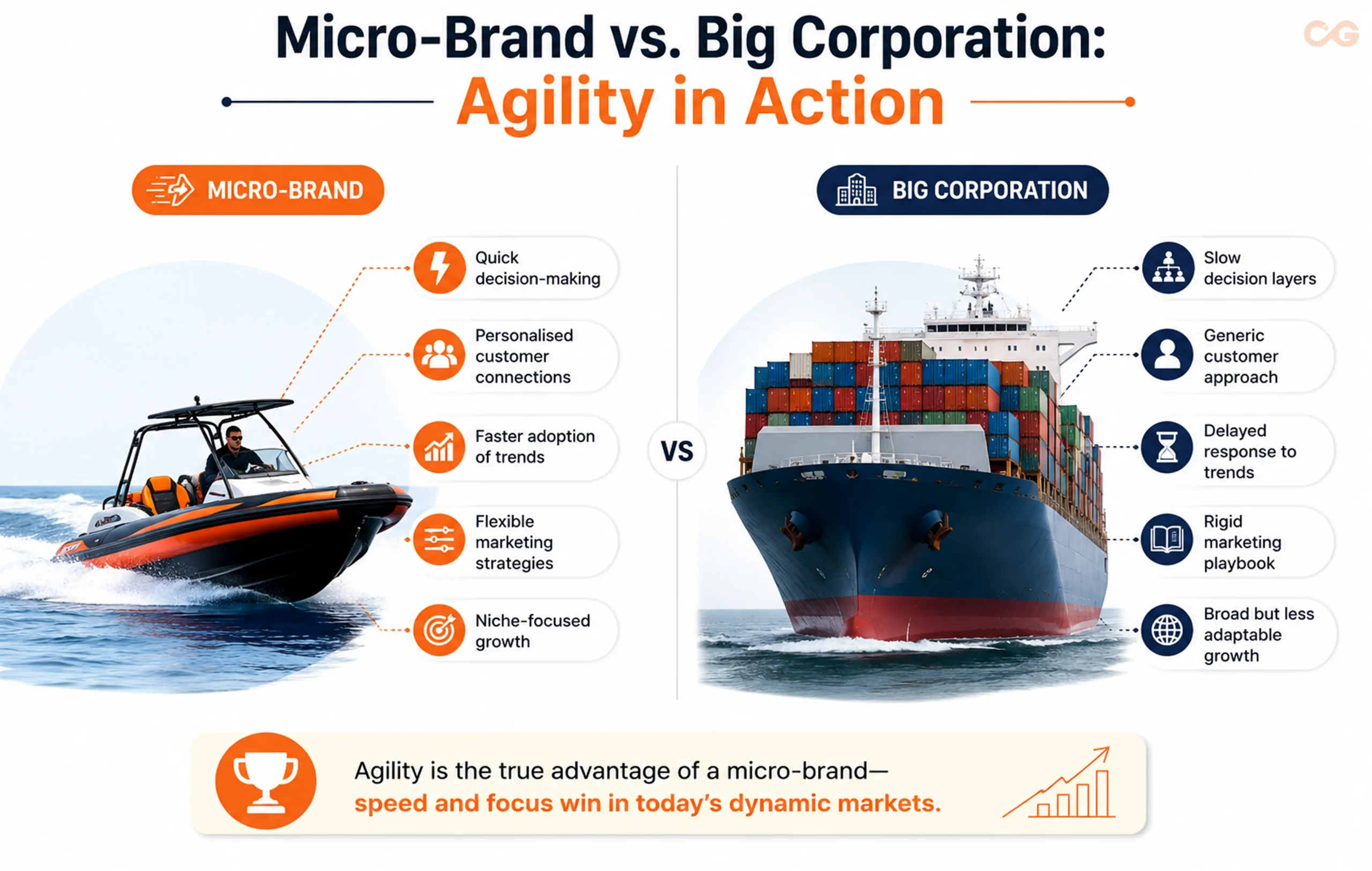
1. Brand Positioning Agility
Large companies often require multiple stages of approval before changing campaigns, messaging, or positioning. Small businesses can respond much faster by testing new ideas, adapting their offers, and acting directly on customer feedback.
In a rapidly changing 2026 market, this flexibility can become a significant competitive advantage. A micro-brand can experiment, learn, and refine its positioning without the complexity associated with large-scale organisations.
Case Study: Chai Point
Chai Point began as a single store in Bengaluru in 2010, as reported by Tracxn. Its subsequent growth demonstrates how a focused proposition, local relevance, menu innovation, and responsiveness to changing consumer preferences can help a growing brand establish a distinctive position in a competitive category, according to Canvas.
Micro-branding lesson: A clear proposition, combined with the ability to respond quickly to customer preferences, can help a growing brand differentiate itself without relying solely on the scale of larger competitors.
2. Authentic Storytelling Opportunities
Small businesses often have a natural storytelling advantage because customers can connect directly with the people and purpose behind the brand. Founder journeys, business challenges, customer experiences, and the reasons behind the business can make a brand feel more human and relatable.
People Also Ask: How can I effectively tell my brand story on a budget?
Start with the reason behind your business – the problem you wanted to solve, the experience that inspired you, or the purpose that drives your work. Share behind-the-scenes moments, founder stories, customer experiences, and lessons learned through accessible channels such as Instagram Stories, LinkedIn, YouTube, or WhatsApp Business. Consistency and authenticity matter more than expensive production.
3. Community-Building Potential
A clearly defined niche gives small businesses an opportunity to build communities around shared interests, needs, or values. Customers can become more than buyers – they can become active participants in the brand.
Encourage conversations, respond to feedback, showcase customer stories, and use user-generated content to involve customers in the brand narrative. Over time, satisfied customers can become brand advocates who introduce the business to others within the same niche.
4. Strategic Competitive Differentiation
Small businesses do not always need to compete with large corporations on price, product range, or advertising reach. They can differentiate through specialised expertise, personality, customer experience, local relevance, or strong brand values.
The key question is: What should your brand become known for within its niche?
A distinctive position makes it easier for customers to understand how your business is different, recognise its value, and remember it when they are ready to buy.
Finding the Right Niche for Your Brand
Effective micro-branding begins with choosing a clearly defined audience and understanding what makes that audience different.
- Define your ideal customer: Identify their needs, preferences, behaviours, challenges, and purchasing motivations.
- Identify an underserved need: Look for problems or expectations that existing competitors are not addressing effectively.
- Create a focused value proposition: Clearly explain what you offer, who it is for, and why your brand is different.
- Build around the niche: Align your messaging, visual identity, content, products, and customer experience with the expectations of your chosen audience.
A focused niche gives a small business greater clarity and helps ensure that limited branding resources are directed towards the customers most likely to value the brand.
Takeaway

Turn your niche audience into a clear customer profile and create branding that speaks directly to the people most likely to choose your business.
Innovative Low-Cost Micro-Branding Strategies
Micro-branding is not simply about spending less. It is about directing limited resources towards activities that are highly relevant to your target audience and capable of creating meaningful brand visibility.
1. Guerrilla Marketing for Local Brand Awareness
Bootstrap branding can use unconventional marketing techniques to generate attention without requiring the advertising budgets of larger competitors. The right approach should match your audience, location, brand personality, and local regulations.
Street Art / Murals: Collaborate with local artists to create visually distinctive murals in permitted locations. A strong design can increase local visibility while creating content that customers may want to photograph and share, according to Nouka.
Flash Mob Marketing: Organise a short, unexpected performance in an appropriate public or event setting to generate attention and create shareable campaign content.
Sticker Campaigns: Use memorable, brand-consistent stickers in relevant and legally permitted locations. Creative designs can help reinforce brand recognition through repeated visual exposure, according to Trade India.
Reverse Graffiti: Create temporary brand messages by cleaning selected outdoor surfaces rather than adding paint or permanent materials. This can work particularly well for creative, location-focused, or environmentally themed campaigns.
2. Social Media Brand Building Strategies
Social media can give micro-brands access to niche audiences without requiring a large advertising budget. However, small businesses do not need to maintain an active presence on every platform. Choose the channels where your target audience is most active and create content that supports specific branding objectives.
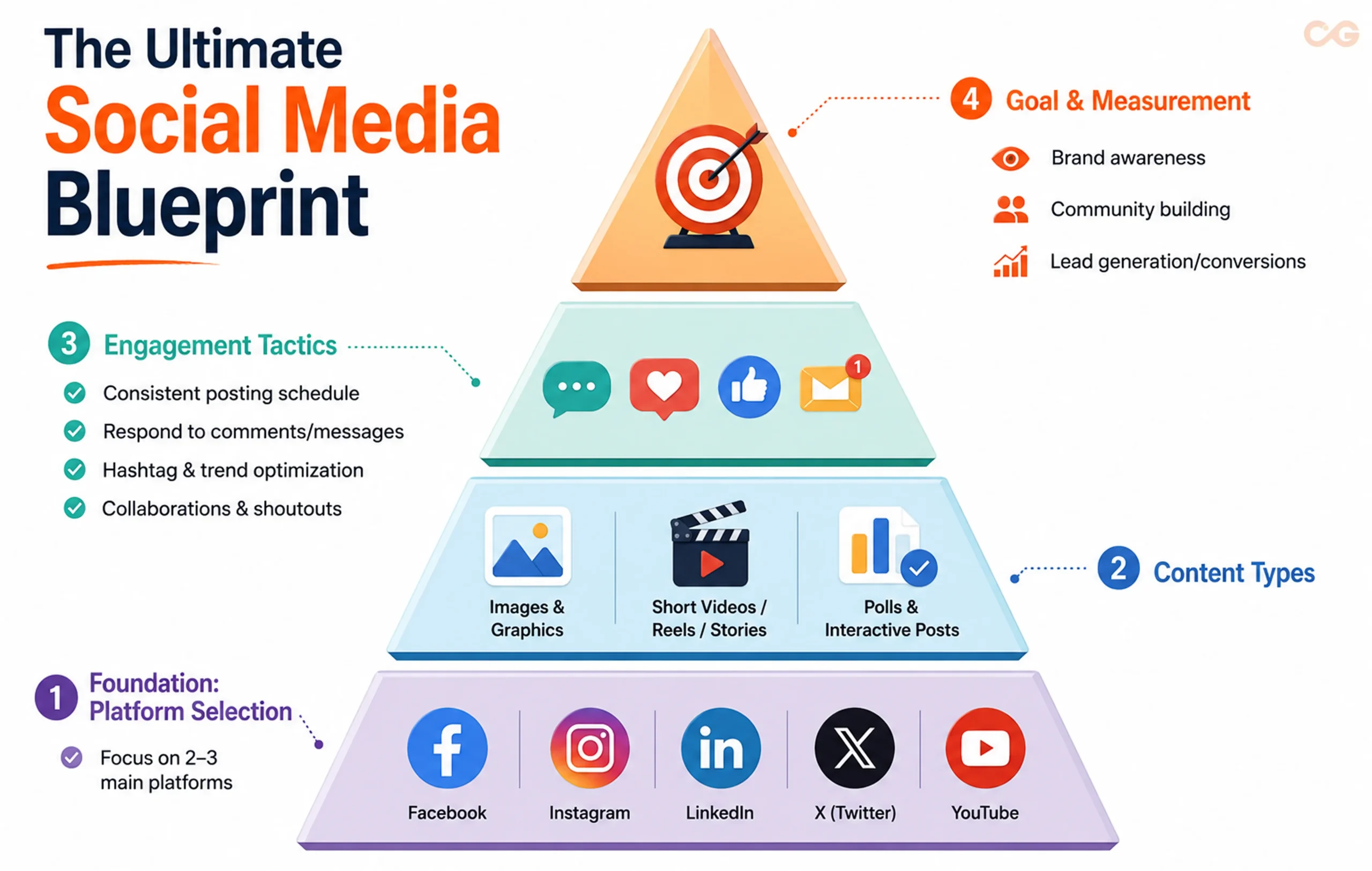
Platform-Specific Strategies
Instagram – Visual Brand Building: Use Reels, Stories, product demonstrations, behind-the-scenes content, customer stories, and user-generated content to showcase your brand personality. Relevant micro-influencer collaborations can also help you reach niche audiences through personal recommendations.
LinkedIn – B2B Brand Building: Share industry insights, case studies, founder perspectives, practical advice, and professional experiences to establish expertise and build credibility within your niche.
YouTube – Educational Brand Building: Create tutorials, explainers, customer stories, founder videos, and behind-the-scenes content that answer relevant audience questions and provide long-term search value.
WhatsApp Business – Customer Communication: Use Status updates, broadcast messages, personalised communication, and responsive customer support to maintain direct relationships with existing customers.
Build Consistency With a Simple Content Calendar
A content calendar helps small businesses maintain a consistent presence without spending hours deciding what to publish. Instead of following trends randomly, assign each content slot a clear branding objective.
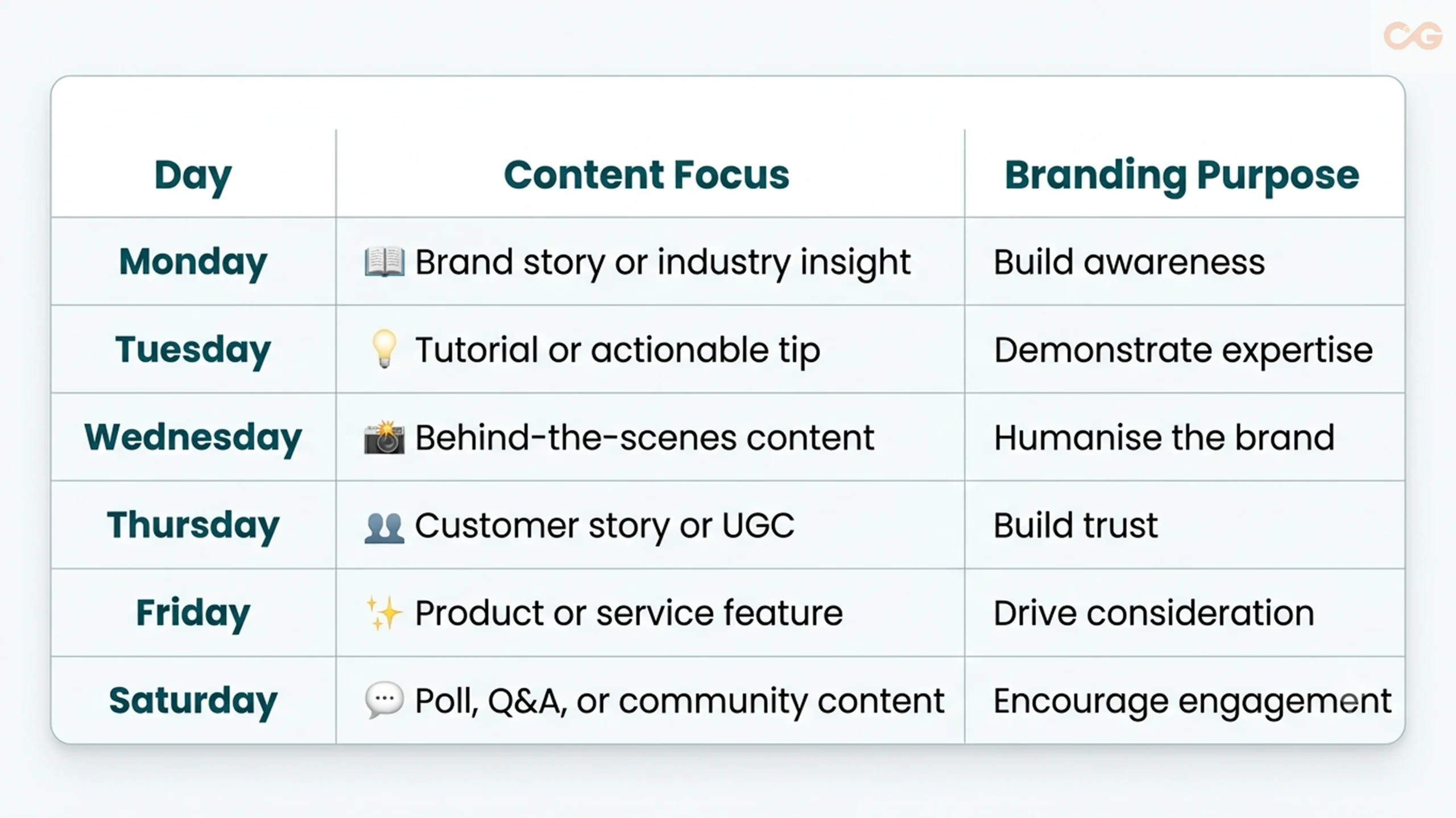
The schedule can be adapted according to your audience, resources, and business goals. The priority should be consistent, relevant content rather than publishing simply to fill a calendar.
People Also Ask: How frequently should I post on social media for my small business?
There is no universal posting frequency that works for every small business. Start with a sustainable schedule that allows you to maintain quality and consistency, then adjust it based on audience engagement and platform performance.
Instagram: Aim for around 3-5 quality feed posts or Reels per week, supported by regular Stories when appropriate.
LinkedIn: Start with around 3-4 valuable posts per week, focusing on expertise, insights, case studies, and industry conversations.
Facebook: Publish around 3-5 useful or engaging posts per week, using a mix of updates, images, videos, and community-focused content.
YouTube: Start with 1-2 useful videos per week if your resources allow, prioritising tutorials, explainers, and stories that provide lasting value.
X: Maintain regular activity through relevant posts, replies, discussions, and commentary rather than relying solely on scheduled promotional content.
The goal is not to maximise the number of posts. It is to build a recognisable, consistent brand presence that your niche audience remembers and trusts.
3. Content Marketing on a Shoestring Budget
Content marketing can help small businesses build visibility, demonstrate expertise, and nurture relationships without requiring a large advertising budget. Instead of creating separate content for every channel, brands can use a single strong piece of content across multiple platforms and formats.
Free and Low-Cost Content Creation Tools
Writing and Blogging: Small businesses can streamline content creation with affordable tools. ChatGPT and Google Gemini support brainstorming, outlining, and initial drafts, while Google Docs enables easy drafting and collaboration. Grammarly improves grammar, clarity, and tone, while AnswerThePublic identifies audience questions and Google Trends highlights relevant search interests.
Video Content: DaVinci Resolve provides advanced video editing capabilities without a subscription. OBS Studio can be used for screen recording and live streaming, while Loom is useful for quick screen and camera recordings. Canva can simplify video creation through templates and ready-to-use design elements.
Podcast Creation: Audacity provides free audio recording and editing capabilities for beginners and small teams. For remote interviews and conversations, Riverside can support online recording with separate audio and video tracks, making it useful for producing podcast or interview content.
Content Repurposing Strategy
One well-developed piece of content can become multiple brand touchpoints:
Blog post → Social media carousel → Short-form video → YouTube video → Podcast discussion → Email newsletter → LinkedIn post
Repurposing allows small businesses to extend the lifespan of their content, maintain consistency across channels, and reach audiences with different content preferences without creating every asset from scratch.
4. Email Marketing: The Small Business Branding Unsung Hero
Email marketing gives small businesses a direct channel for communicating with customers and strengthening brand relationships. Unlike social media audiences, an email list gives businesses greater control over an ongoing customer communication channel.
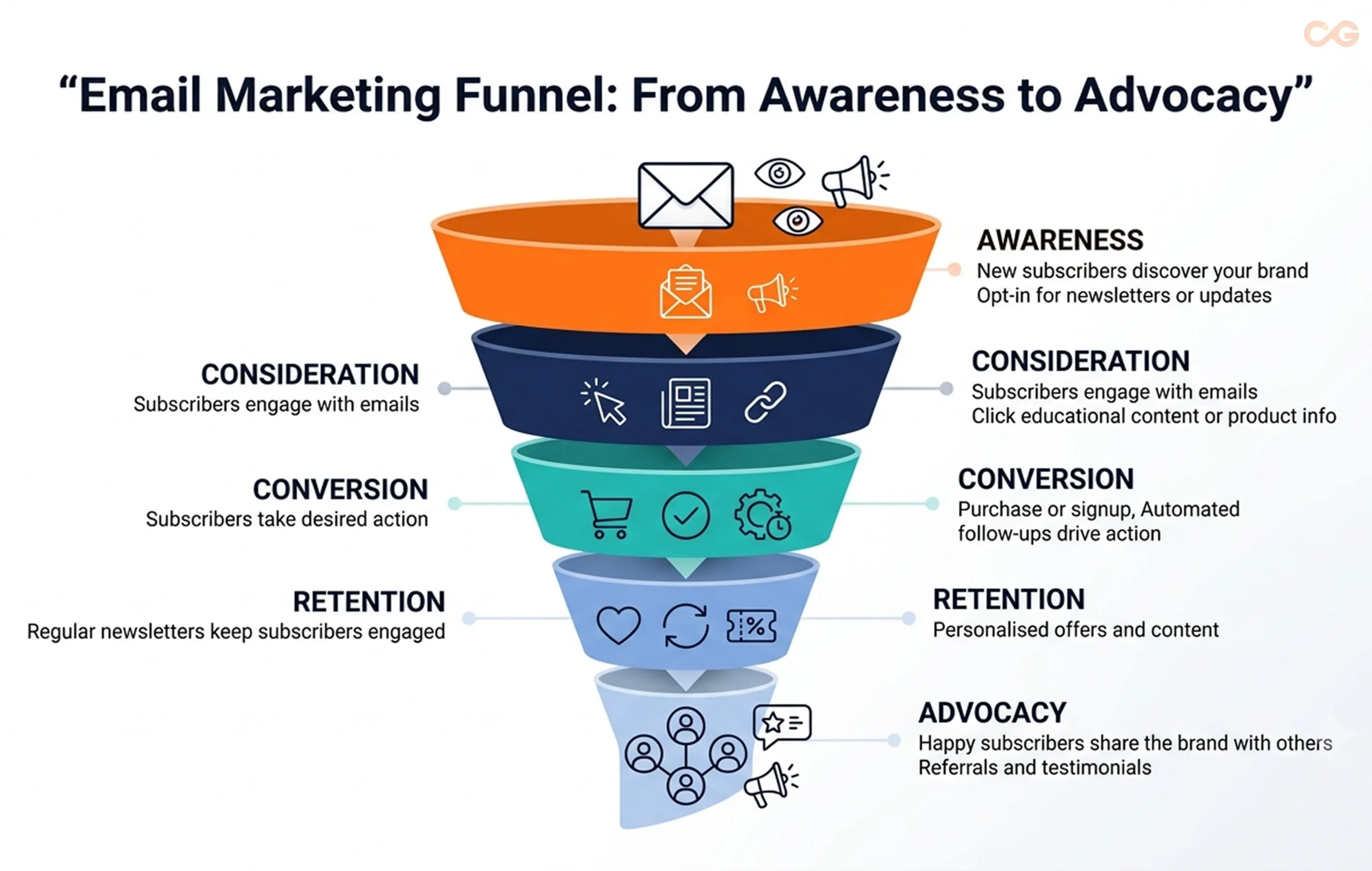
Free and Low-Cost Email Marketing Platforms
Small businesses can use affordable email marketing platforms to build customer relationships and manage campaigns without a significant upfront investment.
- Mailchimp: Offers a free plan for up to 500 contacts, with features including templates, automation, and analytics.
- Brevo (formerly Sendinblue): Supports up to 300 emails per day, along with transactional email and SMS marketing capabilities.
- Kit (formerly ConvertKit): Designed for creators, with a free plan for up to 10,000 subscribers, including landing pages.
- MailerLite: Provides automation, landing pages, and A/B testing, with pricing information available on its official platform.
Email Brand-Building Strategies
Welcome Series: Introduce new subscribers to your business, explain your brand story and values, and set expectations for future communication.
Educational Newsletters: Share useful insights, practical tips, industry developments, and relevant resources to establish expertise and keep your brand valuable between purchases.
Behind-the-Scenes Content: Give subscribers a closer look at your team, processes, product development, or business journey to create a more personal connection.
Customer Spotlights: Feature customer experiences, testimonials, and success stories to provide social proof and strengthen trust.
Case Study: BigBasket’s Email Engagement Growth
BigBasket worked with Netcore to re-engage inactive users through personalised, AI-driven email campaigns. The initiative reportedly delivered a 159% engagement uplift, 20% reactivation of dormant users, and a 9% user reach rate advantage, while maintaining domain health, according to Netcore.
Micro-branding lesson: Personalised email communication can help large-scale campaigns feel more relevant to individual customers – an approach that small businesses can also apply by segmenting audiences and tailoring content to customer interests.
5. Strategic Partnerships and Collaborations
Partnerships can help small businesses expand their reach by combining complementary audiences, expertise, and resources. Instead of paying for exposure independently, businesses can collaborate with organisations that already have access to the audience they want to reach.
Types of Brand Partnerships
Cross-Promotion Partnerships: Collaborate with non-competing businesses that serve a complementary audience. Both brands can introduce their products or services to new but relevant customers.
Content Collaborations: Work with complementary brands, creators, or industry experts to develop blogs, videos, webinars, guides, or social media content. This can combine audiences while strengthening credibility.
Event Collaborations: Co-host workshops, webinars, local events, or community activities to share costs, resources, and promotional responsibilities while creating direct opportunities to engage with potential customers.
Supplier Partnerships: Explore co-marketing opportunities with suppliers and business partners. Joint promotions, product features, or shared campaigns can increase visibility while strengthening existing business relationships.
People Also Ask: How can I find potential brand partners?
Start by looking for businesses that serve a complementary audience rather than a direct competitor. Research local businesses, industry communities, creators, professional networks, and LinkedIn profiles to identify potential partners. Evaluate whether the partnership offers value to both audiences, then approach potential partners with a specific collaboration idea rather than a general request for promotion.
Micro-branding lesson: The strongest partnerships are mutually beneficial. When two complementary brands share audiences, resources, or expertise, both can create greater visibility without having to fund every marketing activity independently.
Takeaway
Turn your niche audience into a clear customer profile and create branding that speaks directly to the people most likely to choose your business.
Scaling Your Micro-Brand: Growing Without Losing Your Soul
Scaling a micro-brand is not simply about reaching more customers. As your business grows, you need to expand your products, markets, team, and marketing activities without losing the identity that made customers connect with your brand in the first place.
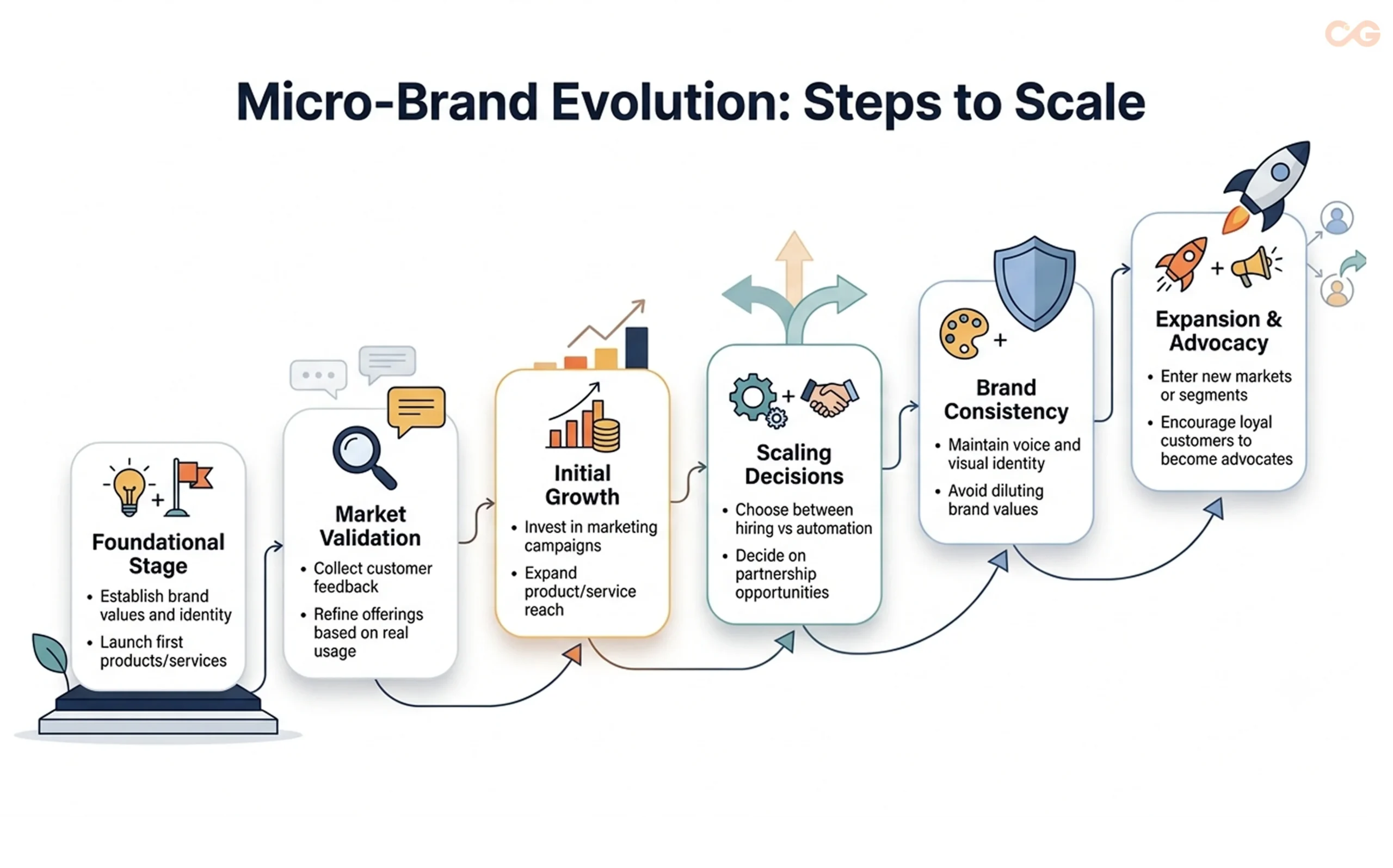
1. Knowing When to Invest in Professional Branding
A micro-brand does not necessarily need a full-scale branding investment from day one. The right time to bring in professional branding support is when the business reaches a stage where its existing identity can no longer support its growth.
Key Brand Evolution Milestones:
- Early-Stage Growth: Establish a clear logo, basic visual identity, and simple brand guidelines to ensure consistency.
- Scaling Phase: Strengthen the brand identity, website, messaging, and customer-facing assets to build greater credibility.
- Established Stage: Revisit the overall brand strategy with professional support to strengthen positioning and support long-term growth.
Market Indicators:
Professional branding or rebranding can become particularly valuable when a business enters new markets, launches new products or services, seeks investment or partnerships, or faces stronger competition. It can also help address brand confusion, weak recognition, or an outdated identity.
People Also Ask: How much should I spend on professional branding?
The investment in professional branding usually varies according to the scope of work, agency expertise, business requirements, and market reach, according to Hogoco.
- Early-Stage Professional Branding (₹1,50,000-₹5,50,000): Suitable when a growing business needs professional support to strengthen its foundational brand identity and establish consistent brand guidelines.
- Growth-Stage Branding (₹5,50,000-₹10,00,000): More comprehensive branding support can become relevant as the business expands its offerings, audience, or market presence and needs a stronger identity and strategic direction.
- Large-Scale/Global Brand Identity (₹10,00,000+): Appropriate for businesses entering larger or international markets and requiring extensive brand strategy, identity systems, and large-scale implementation.
2. Growing Without Losing Brand Authenticity
Growth can introduce pressure to adapt to new customers, markets, investors, and competitive expectations. The key is to distinguish between what defines your brand and what can evolve as the business grows.
Brand Elements That Should Remain Consistent
Brand Values: Define the principles that guide business decisions, customer interactions, and communication.
Mission Statement: Clarify the broader purpose of the brand and the value it aims to create beyond financial returns.
Brand Personality: Establish the human characteristics that shape how the brand communicates and behaves across customer touchpoints.
Origin Story: Preserve the authentic reason behind the business and the journey that helped shape its identity.
Brand Elements That Can Evolve
Visual Identity: Refresh logos, typography, colours, imagery, and other visual elements when necessary while retaining the brand’s core character.
Messaging: Adapt language and communication styles as your audience expands while maintaining a recognisable brand voice.
Product Offerings: Introduce new products or services when they align with the brand’s established values and customer expectations.
Marketing Channels: Expand into new platforms and communication channels while maintaining consistency in personality, positioning, and messaging.
Indian Case Study: Mamaearth
Mamaearth provides a useful example of how a focused brand proposition can support business growth. Founded by Ghazal and Varun Alagh after they struggled to find safer baby-care products for their own child, the brand built its identity around safe, toxin-free products and its Made Safe certification.
As Mamaearth expanded beyond baby care into skincare, haircare, and other personal-care categories, its core positioning around safety and conscious product choices remained central to its brand communication. This allowed the brand to broaden its product portfolio while maintaining a recognisable identity.
Micro-branding lesson: Growth does not require a brand to abandon its original identity. A clearly defined brand proposition can provide a consistent foundation while the business expands its products, audience, and market presence.
Build Consistency With a Simple Content Calendar
As a micro-brand grows, consistency becomes harder to maintain when more employees, agencies, freelancers, and partners become involved. Simple systems can help everyone work from the same brand standards.
Digital Asset Management: Store logos, templates, images, documents, and other brand assets in a central location. This makes approved materials easier to access and reduces the risk of outdated assets being used.
Brand Guidelines: Document essential standards for typography, colours, imagery, tone, messaging, and visual usage. Include clear do’s and don’ts so teams and external partners can apply the identity correctly.
Content Approval Workflows: Establish clear review and approval stages for important brand communications. Assign responsibility to designated brand owners to maintain quality and consistency before content is published.
Brand Training: Introduce employees, freelancers, agencies, and partners to the brand guidelines through onboarding and regular training. This helps everyone understand how the brand should look, sound, and behave.
Brand Consistency-at-Scale Tools
- Canva Teams: Supports collaborative design, shared brand assets, and reusable templates.
- Brandfolder: Helps organise, search, manage, and control access to digital brand assets.
- Frontify: Combines brand guidelines, digital assets, and collaboration in one platform.
- Monday.com: Supports campaign workflows, approvals, project management, and cross-team coordination.
4. Maintaining Brand Consistency as the Team Expands
Hiring more people should increase your brand’s capabilities without creating inconsistent customer experiences. Clearly defined responsibilities can help protect the brand as more people become involved in its communication and delivery.
Key Brand Roles to Define:
- Brand Champion/Guardian: Protects brand integrity, oversees strategic direction, and ensures major initiatives remain aligned with brand standards.
- Content Manager: Manages content and messaging to maintain a consistent brand voice and tone across communication channels.
- Design Coordinator: Oversees visual assets such as logos, layouts, templates, and creative materials.
- Customer Experience Manager: Ensures the brand promise is reflected throughout customer interactions and service experiences.
Brand Training Framework
Week 1 – Brand Foundation: Introduce the company’s history, mission, values, personality, target audience, and market positioning.
Week 2 – Visual Identity: Train team members on logos, colours, typography, imagery, templates, and approved design practices.
Week 3 – Brand Voice and Messaging: Establish guidelines for tone, message structure, communication templates, and channel-specific messaging.
Week 4 – Practical Application: Apply the guidelines through role-specific exercises, content reviews, customer interactions, and quality-control activities.
People Also Ask: How do I maintain brand consistency with remote team members?
Give remote teams access to centralised brand guidelines, approved assets, templates, and communication resources. Combine these with regular check-ins, clear approval processes, and ongoing training so employees and external partners can consistently represent the brand across channels.
Key takeaway: Scaling a micro-brand successfully is not about keeping everything unchanged. It is about protecting the brand’s core while allowing its identity, systems, offerings, and channels to evolve with the business.
Measuring Micro-Branding Success: Track What Matters
A small budget can create a meaningful impact when you know what is working. Measuring the right metrics helps micro-brands understand audience response, strengthen customer relationships, and confidently invest more in the strategies that deliver results. Instead of tracking every available number, focus on metrics that align with your current branding and business goals.
1. Brand Awareness
Measure how effectively your brand is reaching and becoming familiar to your target audience.
- Reach and impressions: Show how frequently your brand and content are being seen by potential customers.
- Branded searches: Indicate growing interest in your brand when people actively search for it by name.
- Direct traffic: Can signal increasing brand familiarity when visitors access your website directly.
2. Audience Engagement
Engagement reveals whether your content is creating genuine interest within your niche.
- Engagement rate: Measures how actively audiences interact with your content.
- Comments, shares, and saves: Highlight content that people find valuable enough to discuss, recommend, or revisit.
- User-generated content: Shows that customers are actively participating in and sharing their experiences with your brand.
3. Customer Trust and Relationships
Strong micro-brands build more than awareness – they develop lasting customer relationships.
- Reviews and ratings: Help assess customer satisfaction and strengthen social proof.
- Repeat purchase rate: Indicates customer loyalty and the ability to encourage continued engagement.
- Email engagement: Metrics such as opens and click-throughs help determine whether your communication remains relevant and valuable.
4. Business Impact
Connect branding efforts with measurable business outcomes to understand where further investment can create value.
- Leads generated: Shows whether branding activities are attracting potential customers.
- Conversion rate: Measures how effectively audience interest translates into desired actions.
- Customer acquisition cost: Helps evaluate the efficiency of your marketing investment.
- Customer lifetime value: Highlights the long-term value generated by strong customer relationships.
Micro-branding takeaway: Choose a focused set of KPIs based on your current objective – whether it is building awareness, increasing engagement, strengthening trust, generating leads, or improving retention. Review these metrics consistently and use the insights to refine your approach and scale the strategies that perform best.
Takeaway
Turn your niche audience into a clear customer profile and create branding that speaks directly to the people most likely to choose your business.
Conclusion: Your Micro-Branding Journey Starts Here
An effective small business branding strategy does not require an unlimited budget. It requires clear positioning, creativity, consistency, and a genuine understanding of the customers you want to serve. India’s startup ecosystem continues to attract significant investment. Indian startups raised $6.9 billion in venture capital funding during the first half of 2026, up 21% from $5.7 billion in the corresponding period of 2025, according to YourStory Research.
However, micro-branding is not limited to startups. It can be valuable for small businesses, niche-focused brands, founders, and established businesses looking to build stronger connections with a specific audience. Its strength lies in focusing resources where they can create the greatest relevance – through distinctive positioning, authentic communication, and meaningful customer relationships.
From identifying the right niche and developing a focused brand identity to using low-cost marketing strategies, measuring performance, and scaling thoughtfully, micro-branding provides a practical framework for building recognition without competing solely on budget.
Whether you are developing a startup branding strategy, launching a niche business, or strengthening an existing small brand, the fundamentals remain consistent: know your audience, communicate your value clearly, stay authentic, and deliver consistently.
Start small. Stay focused. Build with purpose. And turn every customer interaction into an opportunity to make your brand memorable.