
Sonic Branding: The Complete Guide to Building a Memorable Audio Identity
Table of Contents
- Learning About Brand Identity vs. Brand Image Through Sound
- What Technology Powers AI Branding?
- Sonic Identity Elements
- Indian Case Studies: Sonic Branding in Action
- Cross-Platform Audio Strategy
- Measuring the Impact of Sonic Branding
- Managing Sonic Assets and Technology
- Conclusion: The Future of Your Brand’s Sonic Identity
Brands have only seconds to capture attention in an increasingly crowded digital landscape, making every sensory touchpoint an opportunity to build recognition. While visual branding has long been central to brand identity, sonic branding gives businesses another powerful way to create memorable experiences and strengthen emotional connections with audiences.
Think of the Intel chime, Netflix’s “ta-dum,” or the familiar WhatsApp notification sound. You can likely recognise each without seeing a logo or screen. That is the power of a strong sonic identity—distinctive sounds can trigger brand recognition, reinforce familiarity, and make a brand more memorable even when visual cues are absent.
But sonic branding goes far beyond creating a memorable jingle or sound logo. It encompasses the voice, music, sound effects, notifications, and other audio cues that shape how a brand sounds across digital and physical touchpoints. As consumers increasingly interact with brands through voice search, social media, streaming content, apps, and connected devices, audio is becoming an increasingly important part of the overall brand experience.
So, how does a brand develop a distinctive sonic identity? What makes a sound memorable, and how can businesses ensure that their intended sonic identity matches how audiences actually perceive it? This guide explores the foundations of sonic branding, its key elements, real-world examples, cross-platform applications, measurement strategies, emerging technologies, and practical steps for building a consistent audio identity.
The Emergence of Audio-First Branding
The digital landscape is increasingly becoming audio-driven, creating new opportunities for brands to connect with audiences through sound. In 2026, brands are moving beyond one-off audio elements for individual campaigns and recognising the need for sonic identities that can communicate a consistent brand personality across multiple touchpoints. This shift reflects a broader change in how consumers discover, interact with, and experience brands.
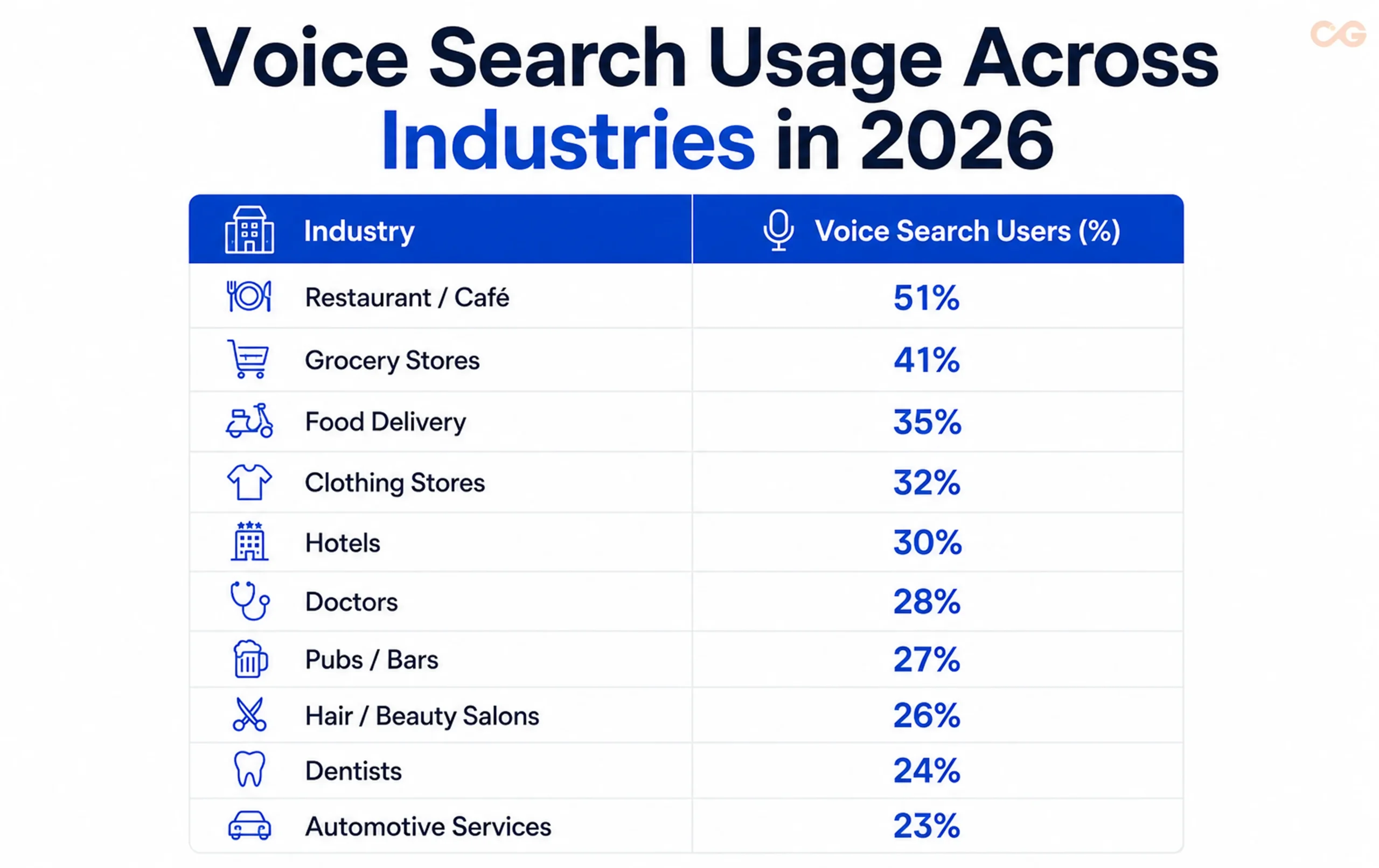
One in five individuals globally now use voice search, highlighting its growing adoption, as per the statistics of Yaguara. Podcast listening has also reached 464.7 million listeners worldwide, as per Answer IQ. At the same time, smart speakers have expanded the number of everyday interactions that take place through voice, while social platforms are placing greater emphasis on audio content, including Twitter Spaces and audio posts on Instagram
As these audio-driven touchpoints continue to grow, brands need more than individual jingles or campaign sounds. A well-defined sonic identity can help create consistency, recognition, and familiarity wherever audiences encounter the brand through sound.
What Is Sonic Branding?
Sonic branding is the strategic use of sound to express a brand’s identity and make it recognisable through audio. It can include sonic logos, jingles, music, voice styles, sound effects, notifications, and ambient soundscapes, with each element designed to reinforce the brand’s personality and create a consistent auditory experience.
Unlike traditional jingles, which were primarily created as memorable musical phrases for radio and television advertisements, modern sonic branding extends across the broader customer journey. It brings different audio elements together under a unified audio branding strategy, allowing a brand to maintain a recognisable sound across digital platforms, physical environments, apps, advertisements, and emerging technologies.
For example, a sonic identity may combine:
- Sonic logos: Short, distinctive audio signatures that can trigger immediate brand recognition.
- Brand voice and tone: A consistent vocal personality across advertisements, virtual assistants, videos, and customer interactions.
- Music and genre associations: Musical styles selected to reflect the brand’s values, personality, and the emotions it wants to evoke.
- Sound effects and notifications: Branded audio cues within apps, websites, devices, and other digital experiences that combine usability with recognition.
- Voice selection: Deliberate choices around voice characteristics, tone, pacing, and delivery to reinforce the brand personality.
- Ambient soundscapes: Background audio designed for physical spaces or digital environments to complement the overall brand experience.
As these audio touchpoints become more integrated into the customer journey, brands need more than individual jingles or campaign-specific sounds. A well-defined sonic identity connects these elements into a cohesive system, helping brands build recognition, familiarity, and emotional association wherever audiences encounter them through sound.
Learning About Brand Identity vs. Brand Image Through Sound
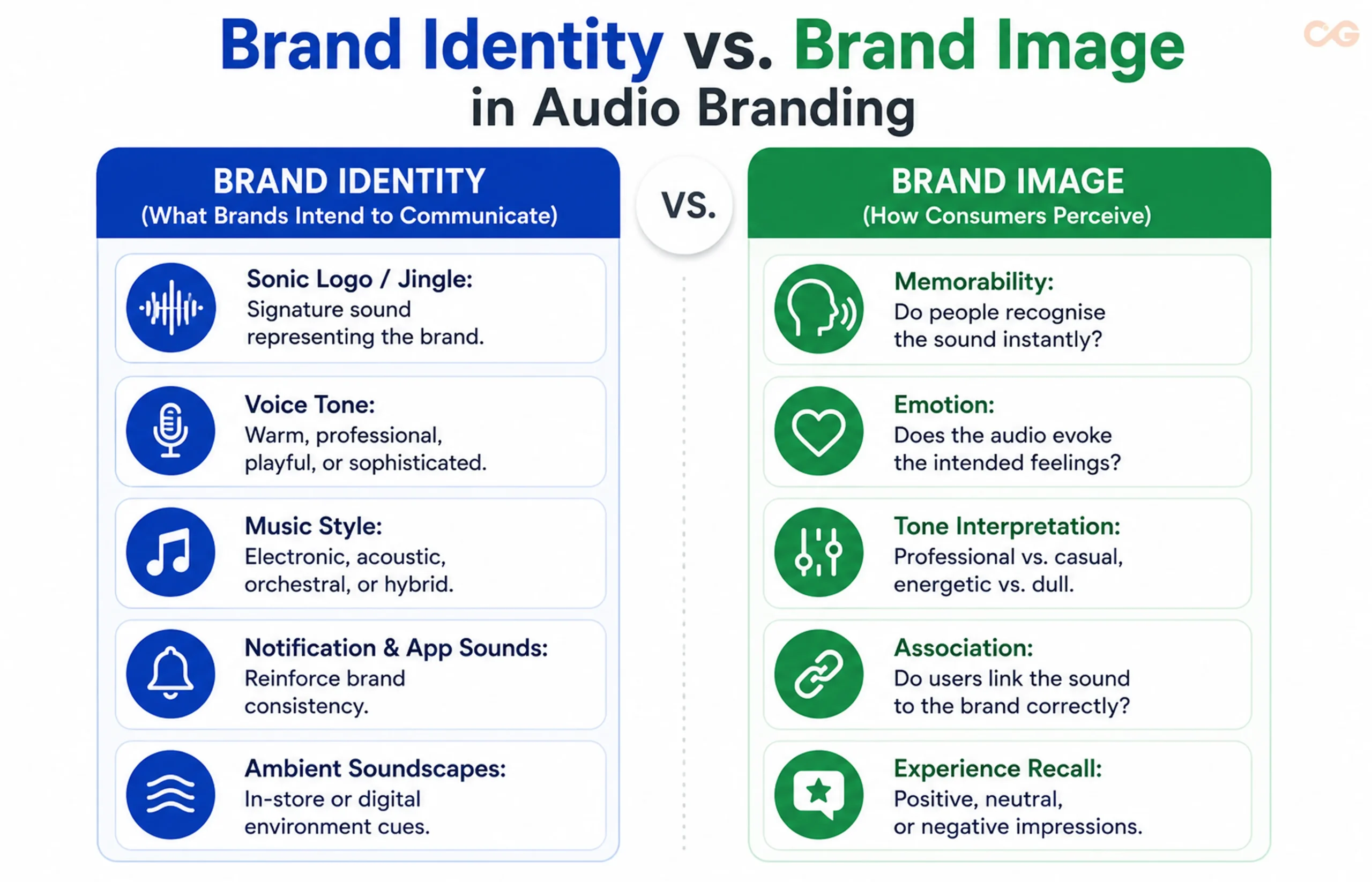
Understanding brand identity and brand image is essential to building an effective sonic brand. While identity is shaped by the sounds a brand deliberately creates, image is shaped by how audiences actually interpret and remember those sounds. The two should work together, but they do not always align.
Brand identity in sonic terms refers to the audio elements a brand intentionally develops to express its personality, values, and positioning. This can include its sonic logo, voice characteristics, music style, sound effects, notification sounds, and other auditory cues. In simple terms, it represents what the brand wants to sound like.
Brand image in sonic terms refers to how audiences actually perceive, interpret, and remember those sounds. Listeners may associate a sonic identity with emotions or characteristics that differ from what the brand intended. In other words, it represents what the brand actually sounds like to its audience.
For example, a technology company may create a futuristic electronic sonic identity to communicate innovation and sophistication. However, if customers perceive those sounds as cold, mechanical, or impersonal, there is a gap between the intended brand identity and the resulting brand image. Identifying and closing this gap is an important part of developing a successful sonic strategy.
How to Align Sonic Brand Identity With Brand Image
Closing the gap between what a brand intends to communicate and what audiences actually perceive requires continuous testing and refinement.
Conduct audio perception research: Gather feedback from your target audience to understand how existing jingles, sonic logos, notification sounds, voices, or background music are perceived. This can reveal whether your current audio assets are communicating the intended personality.
Map emotional associations: Identify the emotions, moods, and associations your sonic elements create. Compare these responses with the emotions your brand wants to evoke and identify any gaps.
Test and refine your audio: Use audience feedback and performance data to refine melodies, voice characteristics, pacing, and sound effects. Testing different versions can help improve recognition, clarity, and emotional relevance.
Maintain cross-channel consistency: Apply core sonic elements consistently across advertisements, apps, websites, social media, customer interactions, and physical environments. Consistency helps strengthen the connection between the sound and the brand.
Monitor audience perception: Track conversations, reviews, social media discussions, and other customer feedback to understand how people respond to your brand’s audio. Ongoing monitoring can reveal shifts in perception and highlight opportunities to refine the sonic identity.
The goal is not simply to create a sound that audiences remember. It is to create a sonic identity that audiences recognise, interpret, and associate with the intended brand personality.
Takeaway

Implementation Guide: Follow a step-by-step framework to build a powerful sonic brand, from auditing your current audio presence and defining your sonic strategy to production, implementation, and ongoing refinement.
Sonic Identity Elements
A strong sonic identity is not built around a single jingle or sound. It is a structured system of audio elements that work together to express the brand’s personality, create consistency, and strengthen recognition across different touchpoints. The key elements include brand voice, sonic logos, music, sound effects, and environmental audio.
Brand Voice: The Foundation of Your Sonic Identity
Your brand voice guide should define more than the words your brand uses. In audio branding, it should also establish how the brand sounds when it speaks. Clear voice guidelines help maintain a consistent personality across advertisements, videos, podcasts, virtual assistants, customer interactions, and other audio-led experiences.
Vocal Characteristics
- Tone: Define whether the voice should sound warm, authoritative, playful, reassuring, or sophisticated, depending on the brand personality and audience.
- Pace: Establish whether communication should feel energetic, measured, or conversational. The right pace can influence both comprehension and engagement.
- Accent and pronunciation: Consider regional accents, pronunciation, and linguistic nuances to ensure the voice feels authentic, culturally appropriate, and easy to understand.
- Voice characteristics: Define qualities such as pitch, texture, age association, and vocal style based on the brand’s positioning and target audience.
- Energy and emotional range: Establish how much vocal energy and emotional variation should be used across different situations, from promotional content to customer support.
Language Style
- Formal vs. conversational: Determine whether the brand should communicate in a professional and structured manner or use a more relaxed and conversational style.
- Technical vs. accessible vocabulary: Balance industry terminology with plain language so the brand can demonstrate expertise without becoming difficult to understand.
- Cultural references and idioms: Use culturally relevant expressions selectively and appropriately to strengthen connection without creating confusion or unintended interpretations.
- Humour and personality: Where appropriate, incorporate humour, wit, or other personality traits that make the brand voice more engaging and distinctive.
Sonic Logo: Your Brand’s Audio Signature
A sonic logo is a short, distinctive audio signature designed to represent a brand and reinforce recognition. While many sonic logos last only a few seconds, their effectiveness depends less on duration and more on whether the sound is distinctive, memorable, emotionally relevant, and consistently used.
An effective sonic logo should meet several key principles:
- Memorability: It should be simple enough to recognise and recall after repeated exposure.
- Distinctiveness: It should have identifiable characteristics that separate the brand from competitors and avoid sounding like a generic industry cue.
- Scalability: The core sound should work across television, radio, social media, apps, websites, podcasts, and other digital environments.
- Emotional resonance: Its melody, rhythm, instrumentation, and tonal qualities should reflect the emotions and personality the brand wants to convey.
- Technical versatility: It should remain clear and recognisable across different devices, speakers, headphones, listening environments, and volume levels.
- Consistency: Once established, the sonic logo should be used consistently enough for audiences to build a strong association between the sound and the brand.
Music Style and Genre: Defining the Brand’s Musical DNA
Music can influence how audiences interpret a brand even when no explicit brand message is being spoken. Therefore, the musical direction should be selected as deliberately as other visual and verbal identity elements.
Key considerations include:
- Genre selection: Choose genres that complement the desired brand personality—for example, electronic music may support a futuristic positioning, while acoustic or organic instrumentation may create a more natural and approachable feel.
- Tempo and rhythm: Faster tempos can communicate energy and excitement, while slower rhythms may create a sense of calm, sophistication, or reflection.
- Instrumentation: The choice of instruments can add distinctive personality. Guitars may create a warm or human feel, while synthesisers can suggest innovation or technology.
- Musical structure: Recurring melodies, chord progressions, rhythms, or motifs can help create consistency across different pieces of branded audio.
- Cultural influences: Incorporating appropriate regional or traditional musical elements can make the sonic identity feel more authentic and relevant to specific audiences, provided they are used respectfully and strategically.
The strongest sonic identities do not treat these elements independently. Voice, sonic logos, music, and other audio cues should work as a cohesive system, allowing audiences to recognise and experience the brand consistently even when its visual identity is not present.
Indian Case Studies: Sonic Branding in Action
Indian brands are increasingly exploring sound as more than a campaign device, using sonic identities to create distinctive experiences across products, services, and customer touchpoints. The following examples demonstrate how sonic branding is being applied across different industries in India.
Mahindra and A.R. Rahman: Extending Sound Into the Automotive Experience
In 2023, Mahindra collaborated with music composer A.R. Rahman to develop a sonic identity and brand anthem, Le Chalaang, for its Born Electric vehicle portfolio. According to Mahindra, the sonic identity included more than 75 specially crafted sounds, extending beyond the brand anthem to cover interior and exterior drive sounds, experience modes, infotainment cues, and functional signals such as seat-belt alerts and turn indicators.
The project demonstrates how automotive brands can integrate sound into the product experience itself, rather than limiting audio branding to advertising. Mahindra also described a range of immersive soundscapes for its electric SUVs, connecting the auditory experience with the vehicles’ design, technology, and sustainability positioning.
Key takeaway: Mahindra demonstrates how a sonic identity can move beyond a recognisable audio signature and become part of the functional and experiential design of a product.
HDFC Bank: Building a Sonic Identity Across Banking Touchpoints
HDFC Bank launched its MOGO, or musical logo, in 2015 as part of its sonic branding strategy. The bank designed the MOGO for use across multiple touchpoints, including ATMs, phone banking, its mobile banking app, and website, with the stated objective of strengthening brand imagery, emotional connection, and recall.
The musical identity was also designed to reflect the bank’s positioning. HDFC Bank states that its MOGO draws on Raag Bilawal, associated with innovation and dynamism, and Raag Shudh Kalyan, associated with a caring and humane quality. Contemporary instruments such as piano and guitar were combined with the sitar to create a blend of global aspiration and Indian cultural character.
Key takeaway: HDFC Bank shows how a sonic identity can provide a consistent auditory layer across multiple customer touchpoints while reinforcing the brand’s intended personality.
Takeaway
Implementation Guide: Follow a step-by-step framework to build a powerful sonic brand, from auditing your current audio presence and defining your sonic strategy to production, implementation, and ongoing refinement.
Cross-Platform Audio Strategy
A sonic identity becomes valuable when audiences can recognise it across different environments without feeling that it has been repeated mechanically. However, the way sound is used should adapt to the format, audience behaviour, and context of each platform. The goal is to maintain the core sonic identity while adjusting its length, intensity, pacing, and presentation.
Adapting Sonic Branding Across Platforms
Instagram Reels and Stories:
Short-form content demands immediate attention, so sonic elements should be brief, recognisable, and easy to integrate without interrupting the content. Brands can use short sonic signatures, recurring audio cues, or distinctive vocal phrases while adapting them to relevant platform trends. The key is to participate in popular audio formats without losing the brand’s own sonic character.
YouTube and Long-Form Video:
Long-form content provides more room for a complete sonic experience. Consistent intro and outro cues can strengthen recognition, while background music should support rather than compete with narration. Strategic use of silence and pauses can also create emphasis and give important messages greater impact.
TikTok and Short-Form Video:
On platforms built around participation and remix culture, sonic elements can be designed to be memorable, repeatable, and adaptable. Short audio hooks or distinctive phrases can encourage users to incorporate branded sounds into their own content. However, brands should respond to trends selectively rather than allowing trending audio to override their established sonic identity.
LinkedIn and Professional Content:
Professional platforms generally benefit from a clearer, restrained, and voice-led audio approach. Consistent narration, appropriate pacing, and subtle musical cues can reinforce credibility without making business content feel overly promotional or entertainment-driven.
The underlying principle across all platforms is sonic consistency with contextual flexibility. A brand should be recognisable through its core audio cues while allowing the execution to change according to the platform.
Extending Sonic Branding to Voice Technology
Voice assistants, smart speakers, and conversational interfaces create another environment where brands can express their identity through sound. Here, sonic branding extends beyond music into spoken interaction and response design.
Brands can establish consistent voice characteristics, response tones, confirmation sounds, and conversational patterns across voice-enabled experiences. A distinctive response sound can signal that an interaction has been completed, while a consistent voice style can reinforce brand personality across different applications and devices.
Rather than simply making a brand name easy to pronounce for voice assistants, the broader opportunity is to ensure that the entire voice experience feels recognisably branded—from the way the system speaks to how it responds, confirms actions, handles errors, and guides users.
The goal is not simply to create a sound that audiences remember. It is to create a sonic identity that audiences recognise, interpret, and associate with the intended brand personality.
Measuring the Impact of Sonic Branding
Sonic branding should be evaluated not only by whether audiences like a sound, but also by whether they recognise it, associate it with the correct brand, and respond to it as intended. Measurement can therefore combine brand research, behavioural data, and audience feedback.
Brand Recognition and Recall
Unaided audio recognition can test whether listeners identify a brand when they hear its sonic logo or other branded audio without seeing a visual cue. Recognition speed can also indicate how quickly an audience connects the sound with the brand.
Testing can be conducted before and after a sonic identity is introduced to determine whether brand recognition and recall improve over time.
Emotional and Brand-Association Measures
A sonic identity should reinforce the emotions and personality associated with the brand. Audience surveys and controlled testing can measure whether listeners associate the sound with attributes such as trust, excitement, sophistication, warmth, or innovation.
For more advanced research, biometric methods such as heart-rate or galvanic skin-response measurements may be used to study physiological reactions to audio. These methods can provide additional insight, but they should complement rather than replace direct audience feedback.
Cross-Platform Performance
A sonic identity should remain recognisable across social media, video, apps, websites, advertisements, voice interfaces, and other touchpoints. Brands can test whether audiences identify the same core sonic cues across different platforms and listening environments.
Performance can also be assessed through relevant digital metrics, including:
- Audio completion rates: How much branded audio content audiences consume.
- Voice interaction data: Usage, repeat interactions, completion rates, and other available metrics from voice-enabled experiences.
- Engagement duration: How long audiences interact with branded audio content.
- Audience sentiment: How consumers describe or respond to branded sounds across social platforms, reviews, podcasts, and other public conversations.
Key Sonic Branding KPIs
Rather than measuring every possible audio interaction, brands can focus on a smaller set of meaningful indicators:
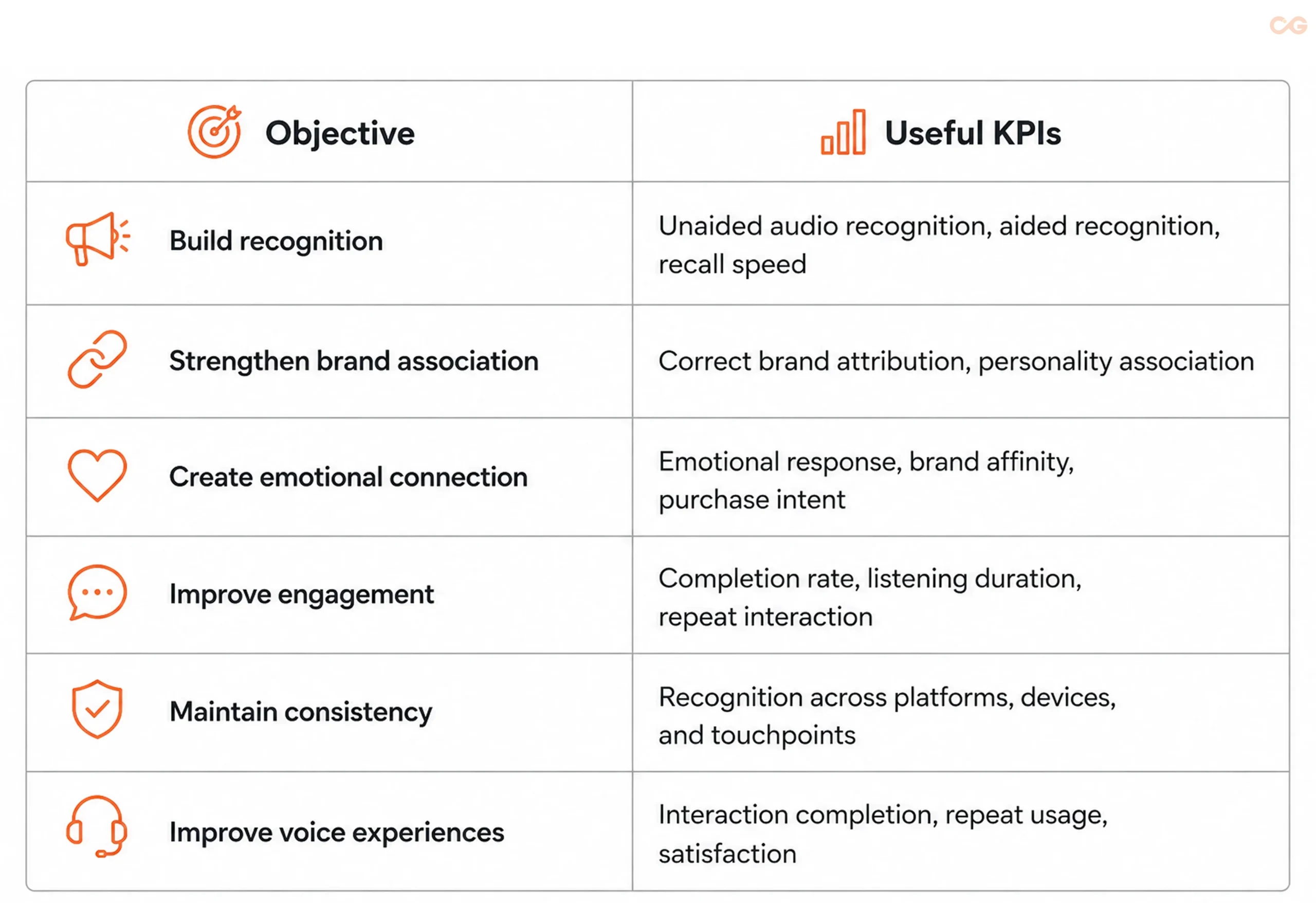
The most effective measurement approach combines recognition, emotional association, engagement, and behavioural data. This allows brands to determine whether their sonic identity is not only memorable but also contributing to a stronger and more consistent overall brand experience.
Managing Sonic Assets and Technology
As sonic identities expand across advertisements, social media, apps, websites, products, and customer interactions, brands need structured systems to create, manage, protect, and deploy their audio assets. The right technology helps teams maintain consistency while making sonic content easier to update and scale.
Managing Sonic Assets
Centralised Audio Libraries: Store sonic logos, music tracks, voice recordings, sound effects, and other approved assets in one centralised library. This gives teams quick access to the correct files and reduces the risk of using outdated or unapproved audio.
Version and Usage Control: Track different versions of sonic assets and monitor where they are being used. Clear version control helps prevent duplication, outdated files, and inconsistent audio across channels.
Licensing and Rights Management: Maintain records of music, voice, and third-party audio licences, including usage restrictions, territories, and renewal dates. This helps brands remain compliant and avoid copyright-related issues when distributing audio across markets and platforms.
Technology for Sonic Production
Professional Audio Production and Quality Tools: Adobe Audition and Pro Tools support professional recording, editing, mixing, and mastering, while iZotope RX helps clean and repair audio to maintain clarity across different listening environments.
AI-Assisted Audio Production: Adobe Firefly supports AI-assisted creation of music, speech, and sound effects, helping brands develop audio variations and adapt assets more efficiently. Human review remains important to maintain sonic consistency and quality.
Voice Technology: ElevenLabs and Microsoft Azure Speech support branded voice experiences across applications, conversational interfaces, and voice-enabled platforms. Brands can maintain consistent tone, pacing, pronunciation, and vocal style across these experiences.
Together, these technologies support the creation, refinement, and deployment of sonic assets while helping brands maintain a consistent audio identity across channels.
Takeaway
Implementation Guide: Follow a step-by-step framework to build a powerful sonic brand, from auditing your current audio presence and defining your sonic strategy to production, implementation, and ongoing refinement.
Conclusion: The Future of Your Brand’s Sonic Identity
The growing importance of audio branding gives brands an opportunity to build recognition beyond visual identity. Sonic branding in advertising has been reported to perform 8.53 times better than visual-only advertising, while Tostitos reportedly increased brand recall by 38% within six months of launching its sound logo, according to Universal Production Music.
As voice search, podcasts, smart speakers, and social audio continue to evolve, sound is becoming an increasingly important part of the brand experience. Brands that develop a distinctive sonic identity can create more consistent and recognisable experiences across digital platforms, products, and customer touchpoints.
The key is to start with strategy, maintain consistency, test audience responses, and design sonic assets for scalability. Your brand is defined not only by what audiences see and what you say, but also by how your brand sounds. In a crowded digital environment, that sound can become a powerful cue for recognition, recall, and emotional connection.