
Why Are Brands Embracing Private Social Networks Like Discord and Telegram?
Table of Contents
- Introduction
- Why Are Brands Moving from Public Social Media to Private Communities?
- Discord and Telegram: How Brands Are Using Private Communities
- Key Benefits of Private Communities for Brands
- Indian Brand Examples Leveraging Private Communities
- How to Build a Private Community for Your Brand
- The Future of Private Communities: A Strategic Imperative for Brands
- Conclusion
Introduction
Over the last decade, the marketing landscape has witnessed a shift from public social media platforms toward private social networks and closed brand communities. These spaces enable brands to build deeper relationships with their audiences, strengthen customer engagement, and foster brand loyalty. By offering greater exclusivity, privacy, and direct customer interaction, private communities have become increasingly valuable to brands looking to create more meaningful connections with their customers.
Unlike traditional public social media, private communities give brands greater control over communication, audience segmentation, targeted marketing, and product-related discussions. They create an environment where brands can facilitate richer conversations, encourage active participation, gather valuable customer insights, and turn engaged users into advocates who are willing to speak on behalf of the brand.
CMSWire reported that brands are increasingly embracing private social networks to counter declining organic reach on public social platforms and strengthen customer retention and digital engagement. A LinkedIn report also highlights that 57% of community managers state that customer retention is the main benefit of nurturing private brand communities.
Through Telegram groups and Discord communities, brands can foster community-driven growth, gain a competitive edge through real-time customer feedback, and explore opportunities for conversational commerce. This shift demonstrates how private social networks are reshaping social media marketing strategies by moving beyond traditional reach-focused approaches toward exclusivity, meaningful interactions, and stronger long-term relationships with customers.
Why Are Brands Moving from Public Social Media to Private Communities?
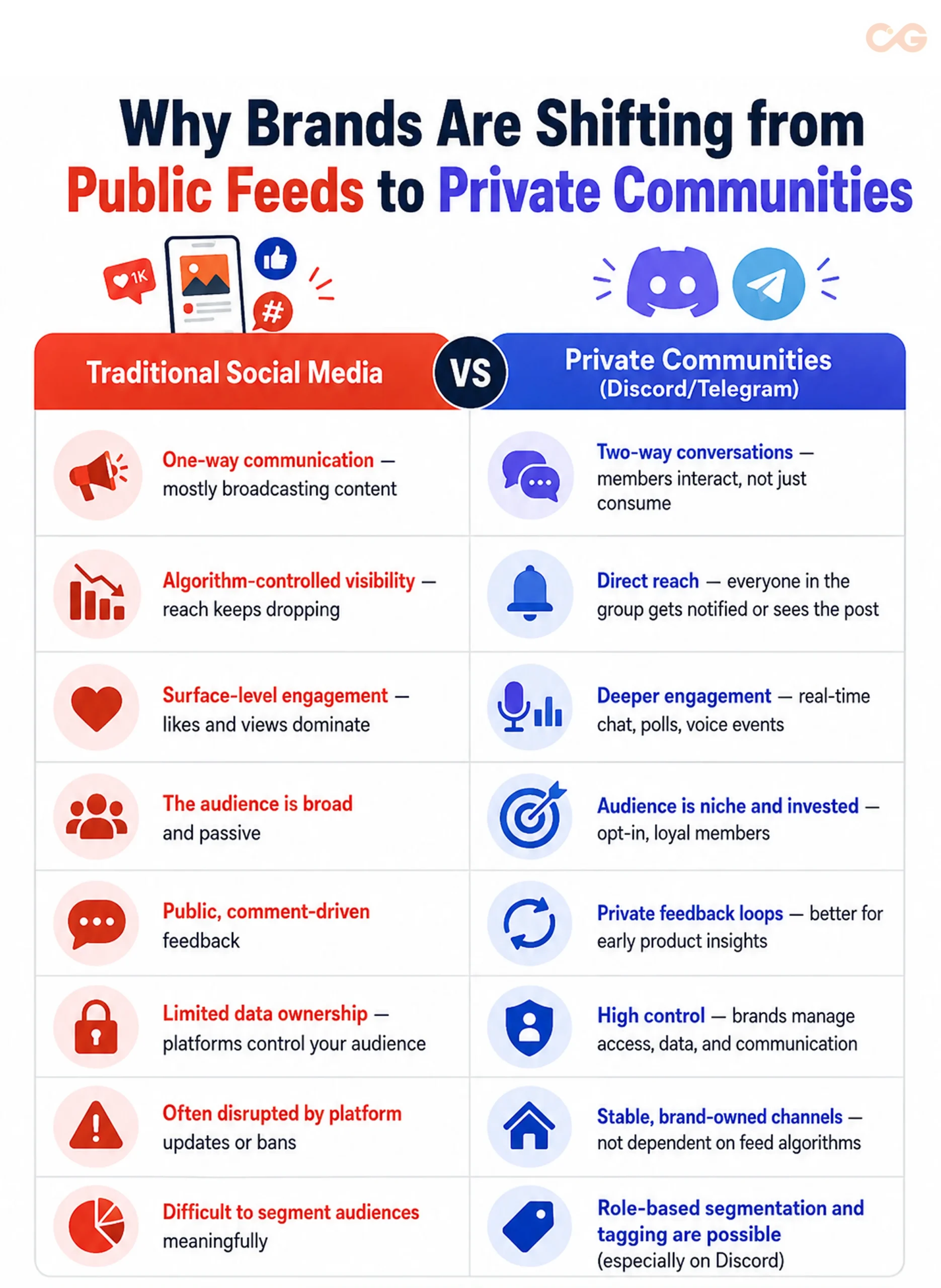
In recent years, brands have faced growing challenges on traditional public social media platforms. Declining organic reach, driven in part by frequent algorithmic changes on platforms such as Facebook and Instagram, has made it increasingly difficult for brands to consistently connect with their audiences without relying heavily on paid advertising. At the same time, content saturation has contributed to ad fatigue, making users less responsive to promotional messages and less likely to actively engage with brand content.
As brands look for ways to complement their public social media efforts, many are turning to private networks and closed brand communities, where they have greater control over how they communicate and interact with their audiences. These niche spaces encourage more direct, two-way conversations and can help brands deliver relevant experiences, gather ongoing feedback, and strengthen relationships. Private brand communities on platforms such as Discord and Telegram can therefore support customer retention and brand loyalty while creating a more engaged community around the brand.
Takeaway

This guide explores user statistics, key differences, ideal use cases, and the pros and cons of Discord and Telegram, helping brands choose the right platform for community-driven growth.
Discord and Telegram: How Brands Are Using Private Communities
Discord: A Versatile Hub for Engaging Brand Communities
Originally designed for the gaming community, Discord has evolved into a broader community and communication platform used across industries. Its combination of text and voice channels, flexible roles, permissions, and automation bots allows brands to create structured spaces where members can interact, collaborate, and participate in real-time. These features help brands foster a stronger sense of community while encouraging user engagement, ongoing conversations, and brand advocacy.
Telegram: A Scalable Channel for Direct Brand Communication
Telegram supports encrypted messaging and groups of up to 200,000 members, according to Capterra. For brands looking to communicate directly with a large audience, Telegram offers features such as channels, broadcasting, file sharing, and bot automation. Its simple interface and privacy-focused features can appeal to users who value convenient and more private digital communication.
For example, The New York Times uses Telegram channels to reach more than 178,000 subscribers, demonstrating how the platform can support direct, large-scale content distribution. Rather than serving primarily as a one-to-one marketing channel, Telegram can help brands deliver updates, exclusive content, announcements, and other relevant information directly to opted-in audiences.
Overall, Discord and Telegram serve different but complementary roles in community building. Discord is well suited to structured, interactive communities that rely on ongoing discussions and collaboration, while Telegram works particularly well for direct communication, broadcasting, and large audiences. Both platforms can help brands strengthen customer engagement, support conversational commerce, and build loyalty through meaningful interactions and exclusive experiences.
Key Benefits of Private Communities for Brands
Private communities offer brands significant advantages that traditional social media cannot match. These benefits include stronger engagement, community-driven growth, exclusivity, and enhanced data privacy — essential elements for building lasting customer relationships and driving success.
Stronger Engagement: Private communities give brands a direct line to their audience without the constraints of algorithms found in public media. This allows for clear communication, genuine conversations, and immediate feedback from customers. Such open dialogue fosters personalised marketing and boosts engagement.
Community-Driven Growth: By building private communities on platforms like Discord and Telegram, brands can transform enthusiastic fans into advocates. This advocacy strengthens brand recognition and customer retention, benefiting the brand greatly.
Exclusivity and Loyalty: A closed network that offers VIP content, early access to product launches, and premium memberships creates an exclusive environment. This fosters brand loyalty and encourages active participation, turning customers into committed supporters and enhancing brand advocacy.
Data Ownership and Privacy: Private communities enable brands to access customer insights directly, eliminating the need for third-party tracking prevalent in traditional social media. This control over data respects user privacy, builds trust, and satisfies the high demand for secure digital engagement.
Indian Brand Examples Leveraging Private Communities
Indian Web3 and crypto companies provide some of the clearest examples of how private social networks can support community building, education, customer engagement, and community-led growth. Shardeum demonstrates how Discord can support a large, interactive community, while CoinDCX shows how Telegram can be used for real-time communication and ongoing Web3 engagement.
Web3 & Crypto: Shardeum’s Discord Community
Indian Layer-1 blockchain project Shardeum provides a strong example of using Discord to build and engage a large community. In its May 2025 marketing report, Shardeum reported 656,081 Discord followers, along with 19,796 visitors and 19,796 communicators during the month. The project also used Discord to recognise community contributors and launched initiatives such as its “Creator of the Week” campaign.
This approach shows how Discord can function as more than a messaging platform. By combining community recognition, interactive activities, and ongoing communication, Shardeum uses Discord to keep members involved in its wider blockchain ecosystem and encourage active participation.
Crypto & Web3: CoinDCX’s Telegram Community
Indian crypto exchange CoinDCX provides a strong example of using Telegram for direct community communication. Its current community page describes its Telegram community as a space for real-time crypto and Web3 updates, CoinDCX announcements, new releases, and community conversations. The company currently states that its Telegram community has 250,000 members.
CoinDCX has also used Telegram as part of its customer and community engagement strategy for several years. In an earlier initiative, the company introduced a Telegram-based assistant to provide users with cryptocurrency price updates and support for recurring queries. Its broader community strategy continues to focus on education, engagement, and helping members participate in the Web3 ecosystem.
What These Examples Show
Shardeum and CoinDCX demonstrate two different ways brands can use private communities. Discord can support structured, interactive community participation, while Telegram can provide a convenient channel for real-time updates, announcements, and ongoing conversations. The key lesson is that successful community building depends not only on choosing the right platform but also on consistently providing useful information, opportunities for participation, and reasons for members to stay engaged.
Takeaway
This guide explores user statistics, key differences, ideal use cases, and the pros and cons of Discord and Telegram, helping brands choose the right platform for community-driven growth.
How to Build a Private Community for Your Brand
Building a successful private community requires more than simply creating a group on Discord or Telegram. Brands need a clear purpose, the right platform, consistent engagement, and effective moderation to create a space where members feel valued and willing to participate.
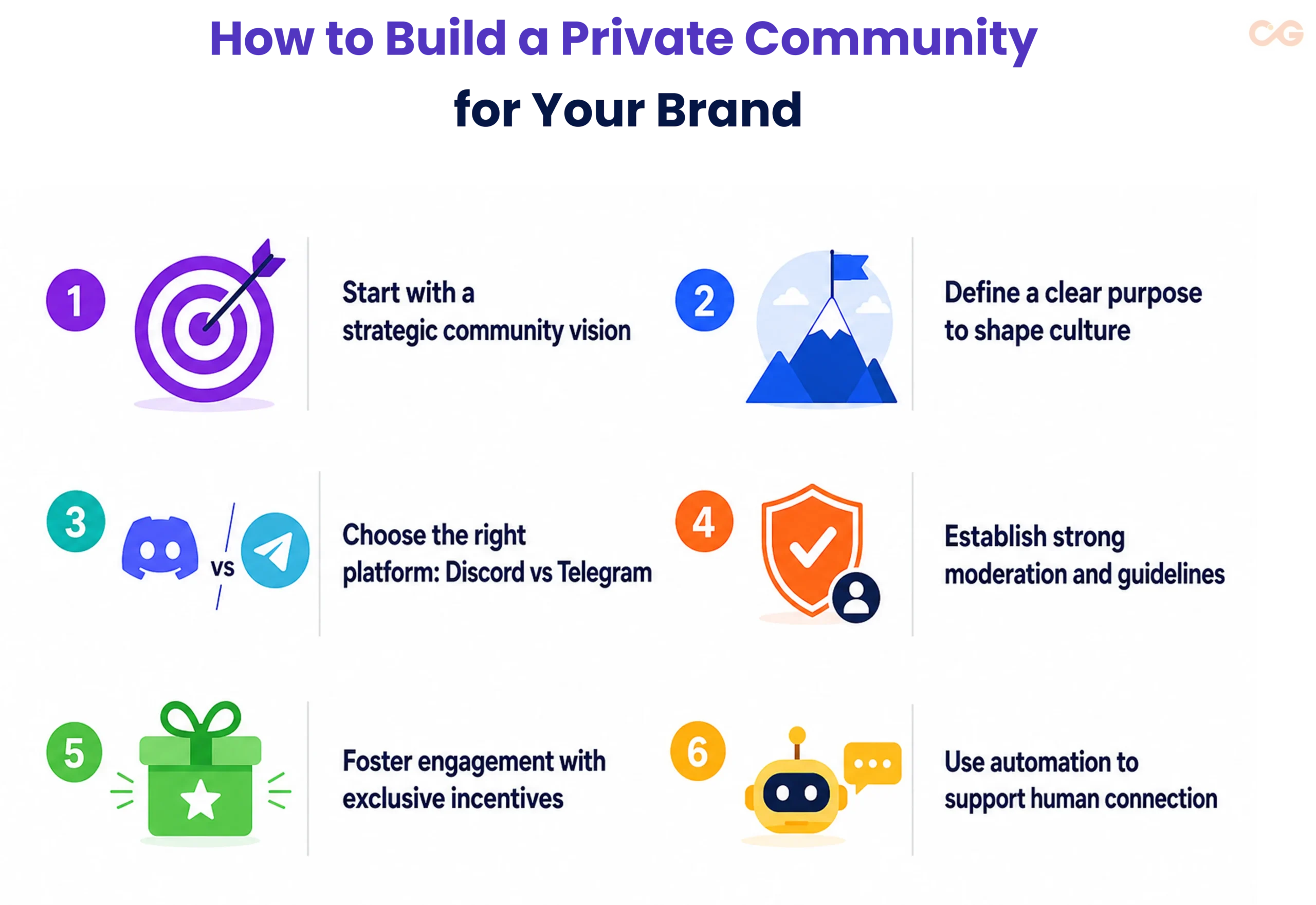
1. Start with a Strategic Community Vision: Begin by defining what the community should achieve and how it fits into the broader marketing strategy. Whether the goal is customer support, product feedback, education, or brand advocacy, a clear vision helps shape the community’s direction and member experience.
2. Define a Clear Purpose and Community Culture: Give members a clear reason to join and stay active. Exclusive customer support, early product feedback, educational discussions, or member-only experiences can provide that purpose. A well-defined community culture also helps create meaningful interactions and stronger relationships.
3. Choose the Right Platform: The choice between Discord and Telegram should depend on the community’s needs. Discord is well suited to structured communities with multiple channels, roles, voice interactions, and ongoing discussions. Telegram works well for direct communication, broadcasting, large audiences, and bot-supported interactions. Choosing the right platform can support stronger user engagement and retention.
4. Establish Clear Guidelines and Moderation: Set clear rules for communication, content, and member behaviour from the beginning. Active moderation helps maintain a respectful environment, reduce spam and misuse, and build trust. A well-managed community creates the foundation for sustained engagement and community-led growth.
5. Encourage Engagement with Exclusive Experiences: Give members meaningful reasons to participate through exclusive incentives, such as early product access, VIP content, members-only events, special offers, or behind-the-scenes updates. These experiences can create a sense of exclusivity, strengthen brand loyalty, and encourage members to remain active.
6. Use Automation to Support Human Connection: Bots and automation can simplify routine tasks such as welcoming new members, answering common questions, sharing updates, and assisting with moderation. However, automation should support rather than replace human interaction. This allows community managers to spend more time building relationships and responding to meaningful conversations.
By combining a clear purpose, the right platform, effective moderation, valuable experiences, and thoughtful automation, brands can create private communities that strengthen customer engagement, loyalty, advocacy, and long-term digital competitive advantage.
The Future of Private Communities: A Strategic Imperative for Brands
As social media algorithms and audience behaviours continue to evolve, private communities are becoming an increasingly important part of brand marketing strategies. In 2026, brands are looking beyond follower counts and focusing more on building meaningful relationships with the audiences they have already attracted. Smaller, focused communities can give members a stronger sense of belonging while creating opportunities for deeper customer engagement, brand loyalty, and sustained customer retention.
The next stage of community building will also involve greater use of AI. Social media teams can use generative AI and social listening tools to understand audience sentiment, identify emerging conversations, and develop more relevant content and experiences. AI-powered tools can also support routine tasks such as content recommendations, member assistance, and moderation, allowing community managers to spend more time on meaningful human interactions.
To stay competitive, brands can combine private social networks such as Discord and Telegram with thoughtful community strategies and AI-supported tools. Providing exclusive experiences, recognising loyal members, and creating interactive, culture-driven activities can help communities remain valuable over time. The goal is not simply to build a larger group, but to create a community where members feel heard, valued, and motivated to participate.
Takeaway
This guide explores user statistics, key differences, ideal use cases, and the pros and cons of Discord and Telegram, helping brands choose the right platform for community-driven growth.
Conclusion
Why Are Private Communities Becoming Essential for Brands?
Private communities are changing how brands build relationships with their audiences by creating more focused spaces for direct communication, feedback, and ongoing interaction. Rather than replacing public social media, they complement it by giving brands another way to nurture relationships beyond the public feed. Platforms such as Discord and Telegram can support customer engagement, exclusivity, community participation, and stronger brand loyalty when used with a clear strategy.
How Can Your Brand Harness the Power of Discord and Telegram?
Brands can use Discord and Telegram to create communities that go beyond simply sharing promotional content. By offering valuable information, exclusive experiences, direct customer interaction, and opportunities for participation, brands can encourage community-led growth, strengthen brand advocacy, and support conversational commerce.
The key is to choose the platform based on the community’s needs, provide consistent value, and balance automation with genuine human interaction. When done well, private communities can become a valuable part of a broader social media marketing strategy and help brands build stronger, longer-lasting customer relationships.