
Digital Transformation for Traditional Indian Businesses: A Practical Marketing Guide
Introduction: The Shift from Traditional to Digital in Indian Business
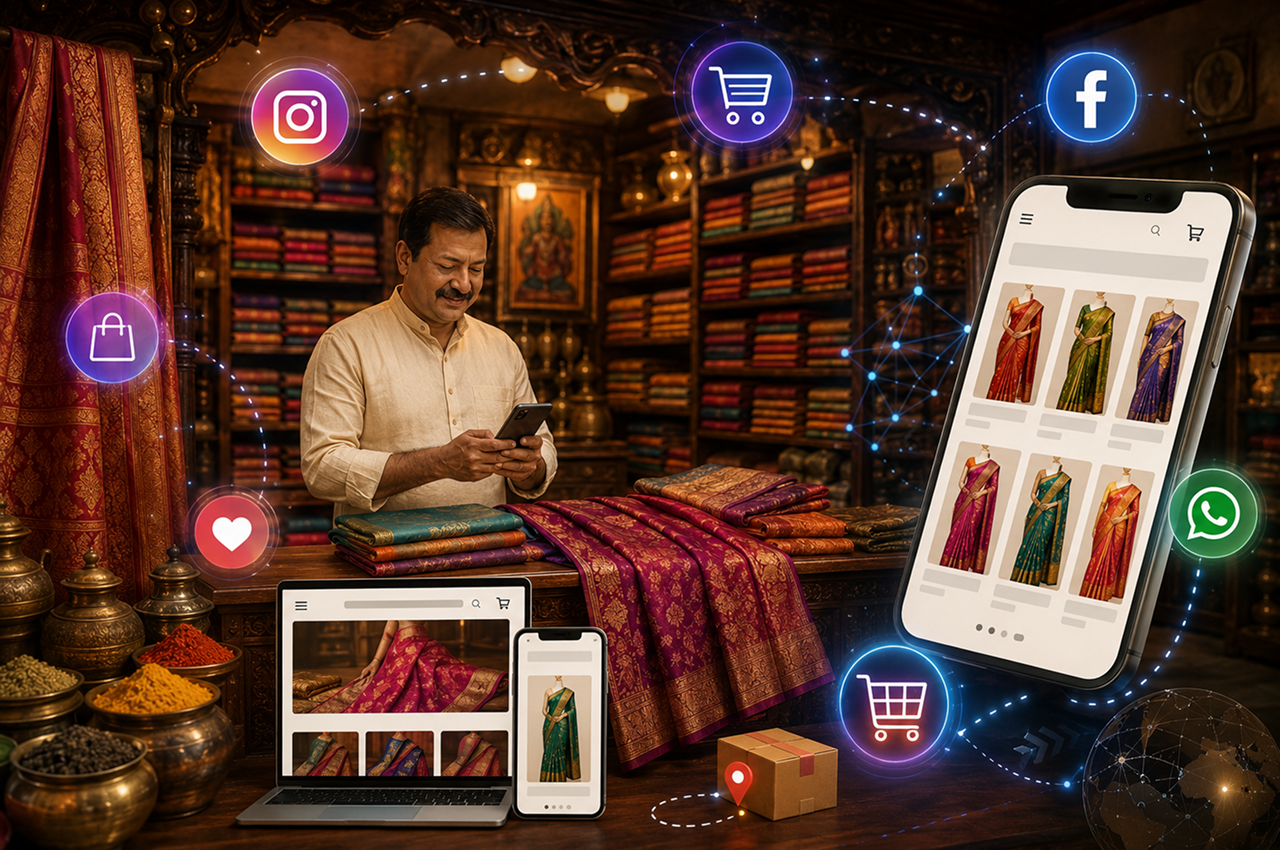
Imagine this: An Old Delhi third-generation sweet shop owner who has been making the same mithais as his family has been making for over 70 years finds himself competing, not only with the next-door shop, but also with Instagram-savvy dessert cafes in the city. His grandson explains to him how their competitor receives orders via WhatsApp in Mumbai and how their loyal customers have no other option but to walk to the store.
This is what is happening to millions of traditional Indian businesses today. The pandemic not only upset business but also disturbed the way customers find, assess and acquire products. And here is the unpleasant reality: digital transformation for small businesses is no longer an option, but a matter of survival.
But here’s the good news. Bringing a traditional business online in India does not imply abandoning your traditional roots or cutting corners when it comes to the values that have made your business so successful. It is about multiplying your strengths, connecting to more customers and ensuring that your legacy will be carried on to the generations to come.
Comprehending the Traditional Indian Business Landscape
What Makes Traditional Indian Businesses Unique?
Our economy is entirely made up of traditional Indian businesses that employ millions of people and maintain centuries-old craftsmanship and knowledge.
These are conventional Indian enterprises like family-owned textile and saree sellers, handicraft work and artisans, local food producers, jewellery shops with vintage designs, ayurvedic product manufacturers and old local retail stores that carry the Indian culture across the generations.
The key difference between these businesses is that they are closely related to culture, service is personalised, trustworthy relationships, and quality that can hardly be duplicated. Nonetheless, they also have their own set of challenges: inadequate marketing funds, the distrust of technology, reliance on physical traffic, and the threat of e-commerce giants.
People Also Ask: What makes the difference between traditional and digital business?
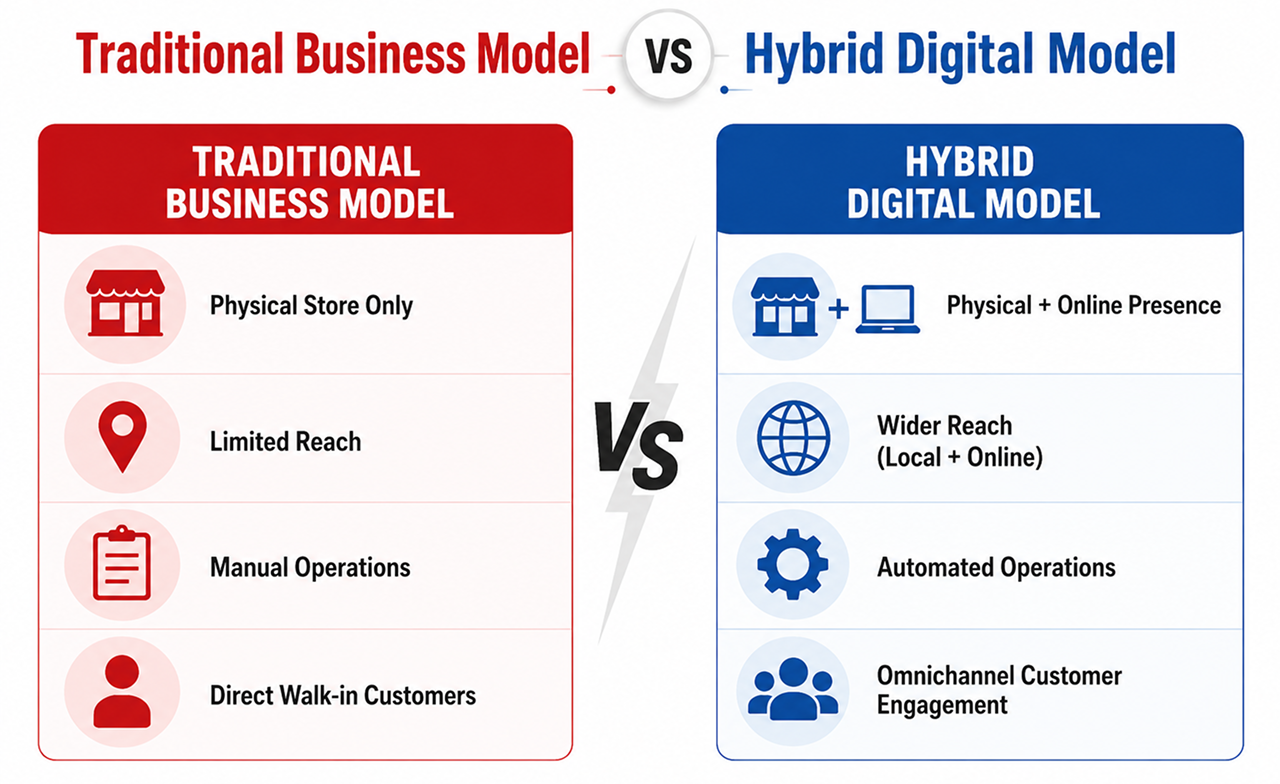
Traditional businesses have physical presence, conduct business by physical means, depend on word-of-mouth advertising, and are limited by geographical coverage.
Digital businesses take advantage of the online platforms, facilitate 24/7 availability, apply data-driven marketing, and have the ability to target international markets, although most successful Indian companies today are a hybrid combination of both.
The Reasons Why Digital Marketing of Traditional Business is Non-Negotiable
The Evolving Indian Consumer
The modern Indian consumer is quite unlike the previous one. Having more than 900 million internet users, according to the report of The Economic Times report, they do their research online and then purchase offline, compare the prices at the various platforms, read reviews and ratings, and demand smooth experiences across channels.
Online marketing usually provides better results compared to offline marketing, and it provides organisations with a more realistic and cheaper means to connect and communicate with their audiences.
The Competitive Reality
Largely, traditional businesses are distribution-based, and digital is disturbing this very foundation by allowing brands to reach consumers directly. Your competitors are online already- unless you are online, you are losing customers by default.
People Also Ask: What can I do to digitalise my traditional business?
Digitisation begins with making your traditional business thrive online, such as a webpage or social media accounts, establishing digital payment methods, digital inventory and customer management tools, and online marketing of offline business approaches. The trick lies in beginning small and growing over time.
Digital Marketing Strategies for Traditional Indian Businesses
In the case of Textile and Saree Businesses
The Indian textile market has its own difficulties in the process of going digital. How do you express the texture, drape, and quality of a Kanjeevaram silk using a screen?
Digital Strategy Blueprint:
- Excellent Visual Materials: Spend on professional photography of fabric, videos of drapes, and 360 shots.
- WhatsApp Business Catalogues: Post designs directly to customers seeking one-on-one service.
- Virtual Try-On Technology: Take advantage of augmented reality on Instagram and Facebook.
- Live Shopping Events: Have Facebook or Instagram Live events where new collections will be shown.
- Regional optimisation: Optimise location-based search, such as wedding sarees in Chennai or Banarasi sarees online.
Case Study: Digital transformation at FabIndia
As a traditional textile retailer, FabIndia was able to retain its historical background and become an omnichannel retailer by preserving its core values and adopting digital channels.
They established a strong e-commerce channel where they featured their traditional textiles, which had a product narrative, a smooth online-to-offline experience in which they would allow customers to book items online and try them in-store and social media to tell the stories of their artisans and connect with them emotionally.
Netcore Cloud states that FabIndia has grown digital revenue by twofold in 120 days with AI-based segmentation and automated marketing on WhatsApp, email, and app notifications.
In the case of Handicraft Artisans and Businesses
Millions of artisans work in the handicraft sector, yet they are not digital and do not have access to the market. E-commerce has been instrumental in helping Indian handicrafts and providing artisans with a new ray of hope to perfect their trade and have their talents rewarded.
Digital Strategy Blueprint:
Storytelling Marketing: Showcase the path of artisans, craft history and manufacturing techniques to engage with customers on an emotional level.
Platform Selection: Add products to marketplaces such as Etsy, Amazon Karigar, or GoSwadeshi, which specialise in handmade products.
Instagram Shopping: Add tags in posts to allow purchasing the products within the platform.
SEO for crafts: attract using the following keywords: handmade brass lamps, Madhubani paintings, Kashmiri papier-mache.
Global Presence: Use Pinterest to display crafts and reach the entire world.
Case Study: the iTokri Success Story
Online Indian handicraft marketplace iTokri, which linked traditional artisans to online customers, has done so through creating detailed artisan profiles with story and video, establishing fair pricing structures so that artisans are fairly compensated, digital literacy training to artisan communities, and content marketing to inform customers about the heritage of craft.
The site has currently enabled more than 10,000 craftsmen in India and international shipping such as the USA, UK and Europe to enable people all over the world to access Indian handicrafts, as per the Facebook account of iTokri.
People also ask: What is the method of selling traditional products online?
To promote traditional products online, it is best to start by determining the right platform (own site, marketplace, or social media), write attractive product descriptions that reflect heritage and craftsmanship, use quality images or photos of the products that show details, provide secure payment and reliable shipment, and perform digital strategies for a family business in India that respects tradition and adopts innovation.
Case Study: the iTokri Success Story
The Indian food enterprises, whether in sweet shops, pickle producers, or regional snack manufacturers, all have enormous digital opportunities and are hindered by hygiene certifications, logistics of delivery and shelf-life communication.
Digital Strategy Blueprint:
The Hyperlocal Delivery Integration: Partner with apps such as Swiggy, Zomato, or Dunzo to deliver to customers in the most efficient and quickest way possible.
Content Marketing
Blog: The Ultimate Guide to Content Marketing That Will Help Indian Businesses Make More Sales
Section: Types of content that will lead to the highest number of conversions in India
Be entertaining by publishing recipes, unique application tips, and behind-the-scenes video content to reach your audience.
Google My Business Optimisation
Blog: Local SEO Strategies for Indian Small Businesses: The Ultimate Guide to Master Your Local Market in 2026
Section: Learning how to use Google My Business to enter the Indian Market
Make sure that your business is visible in the search in the near me section to be more localised.
Food Blogging Partnerships: Collaborate with food bloggers and influencers to raise brand awareness.
WhatsApp Orders: Have a simple ordering system with regular and repeat customers.
Case Study: The Digital Journey of Haldiram
The traditional snack manufacturer Haldiram has been able to adopt the principles of digitalisation of small businesses in India by establishing an e-commerce platform where they sell all their varieties, producing attractive social media content about festivals and events, entering into partnerships with delivery companies to establish quick commerce, and promoting their activities through digital advertising to expand regionally.
As of October 2024, the company is present in 100 countries, including such major markets as the UK, US, and Japan and most of them are franchised by the company, and its annual revenue has increased by an average of 18 per cent in the last five years, according to the report of The Economic Times.
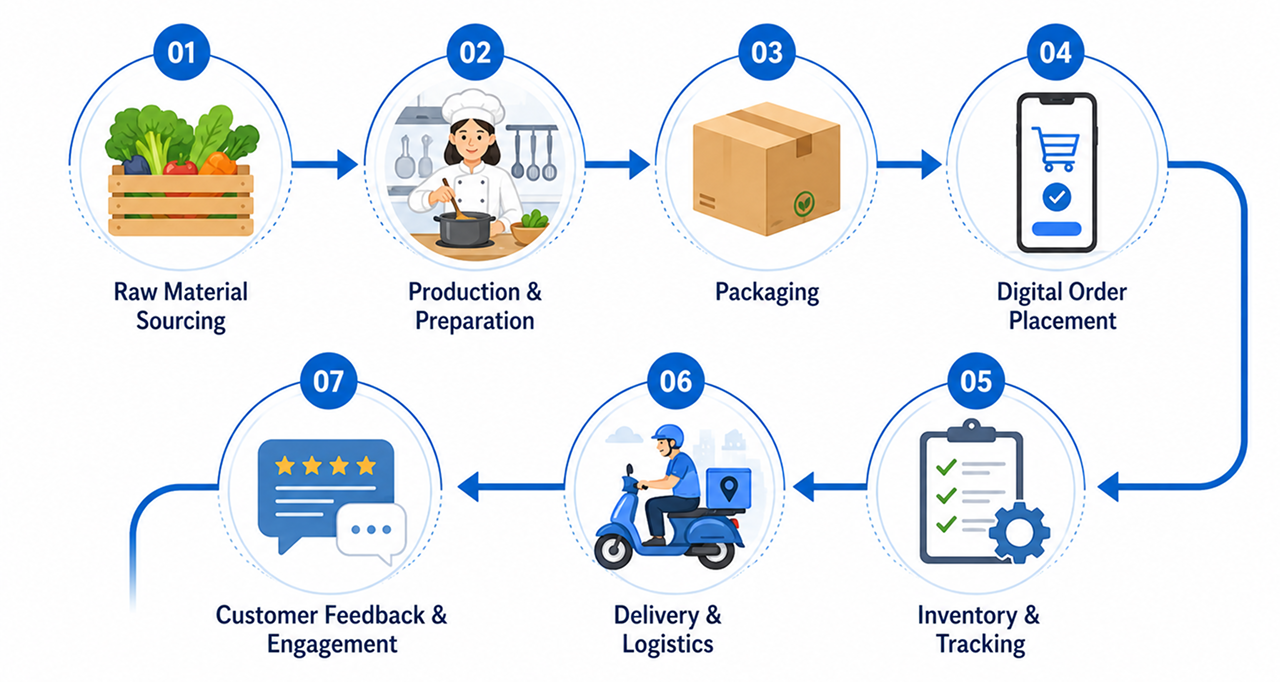
From Kitchen to Customer:
Digital Supply Chain for Food Businesses
The step-by-step guide to building your traditional business presence online
Phase 1: Digital Base (Months 1-2)
1. Take ownership of your digital real estate
Start by establishing your presence online with a domain name, an authenticated Google My Business and social media accounts to ensure that your customers find it easy to locate and interact with your business.
2. Begin with a Mobile-First Approach
The majority of Indian consumers are on smartphones, so make sure your site is mobile-friendly
Blog: Mobile-First Marketing Strategies for Indian Consumers: The Ultimate 2025 Guide,
Section: Understanding the Mobile-First Reality in India
and WhatsApp Business catalogues are updated, and all payment links on mobile should be operating well to allow users to browse on smartphones.
The initial one is doing a digital preparedness test – knowing where your business is going, what your customers require and what digital avenues are going to bring the most value. Begin with one channel, then master it, then expand.
People Also Ask: What is the first step towards digital transformation?
Phase 2: Content and Engagement (Months 3-4)
1. Create Valuable Content
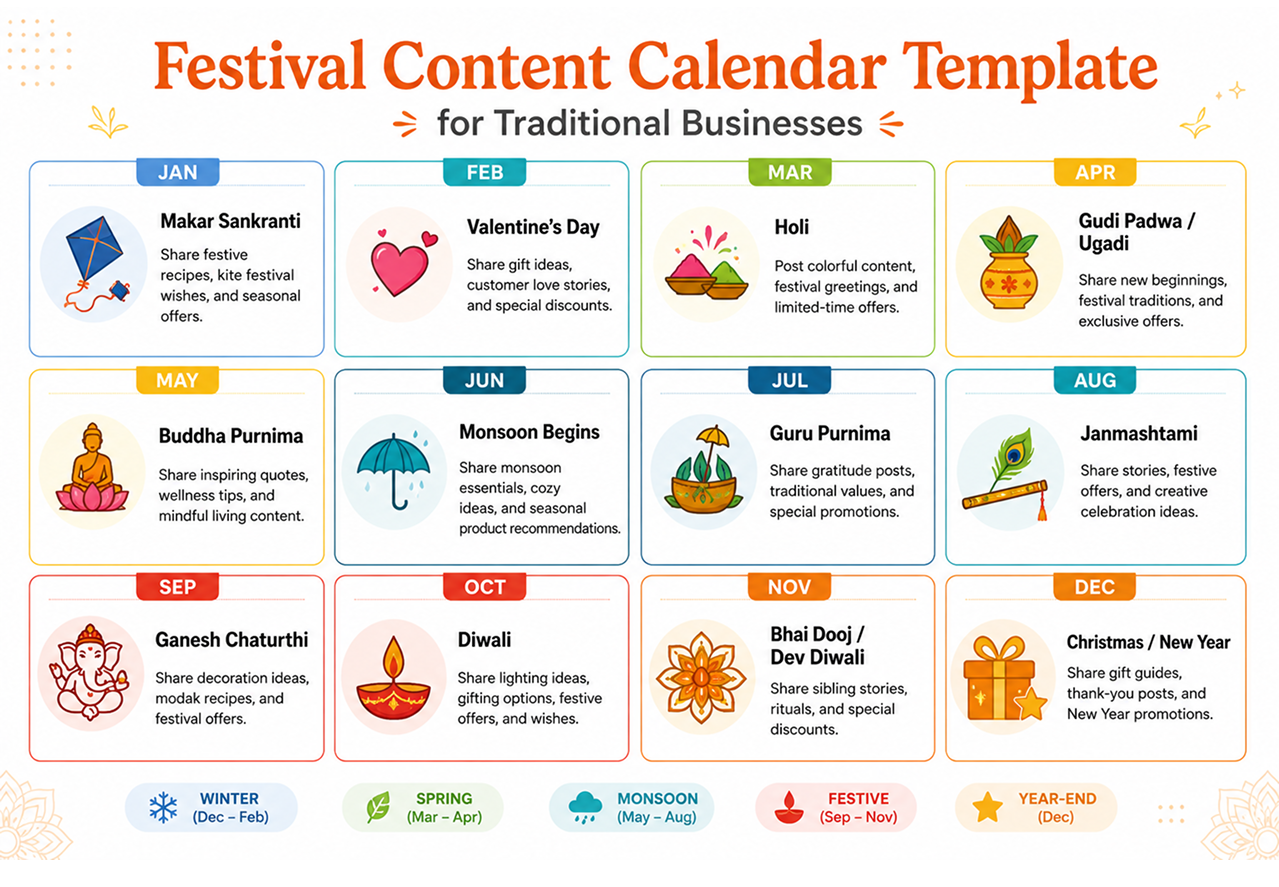
Exceed selling by informing and involving customers. Spread useful product information, customer reviews, and behind-the-scenes craftsmanship when you are enjoying the regional festivals as well, to build an emotional bond with your consumers.
2. Develop Community and not a customer base
Concentrate on building relationships on the Internet. React to all communications, form unique WhatsApp groups, organise polls to increase interest, and provide customer stories to make the buyers become devoted supporters.
Phase 3: E-Commerce Integration (Months 5-6)
1. Choose Your E-Commerce Model
Choose an appropriate online model of business. Places such as Amazon or Meesho have visibility, whereas your personal site has brand command. It is easy to make sales through social commerce, and a hybrid mix will guarantee a broader reach.
2. Set Up Digital Payments
Make transactions easy through UPI connectivity, gateway payment platforms such as Razorpay, PayU, and quick payments through QR code. Add cash-on-delivery to establish credibility among first-time online shoppers.
Connecting the Physical Sales Processes with The Digital Channels
The Omnichannel Approach
The most successful digital transformation of small business stories does not forego traditional methods – they combine them.
Strategy Implementation:
1. Click-and-Collect Model
This is a hybrid format that allows the customer to browse and make purchases online and collect them in your physical store. It decreases the cost of shipping, maintains a personal touch, and assists traditional retailers in integrating online convenience with local, relationship-based trust and service.
2. Showroom to Web Room
Make your store a place of experience that will enable customers to see, feel, and learn about products and then order online to have them delivered to their homes. This creates trust, makes logistics easier and ensures a smooth transition between offline discovery and online convenience to buy.
3. Digital-Enhanced In-Store Shopping
Display more items in a catalogue using digital tools such as tablets, promote items that are only available online and use the data to market to customers on a personalised level. Add online loyalty programs to enhance retention and provide an experience of being connected and modern shopping within your store.
People also ask: What can I do to combine online and offline marketing?
The integration needs to employ the QR codes in the physical stores that connect to online content, collecting email/phone numbers at the physical stores to use in digital marketing, advertising events in stores through social media, following up on the online customers visiting the stores, and being consistent with the branding and messages across all channels.
Cultural Sensitivity in Digital Marketing: Balancing Heritage and Innovation
Knowledge of Regional and Cultural nuances
India is not one market; it is a set of different cultures, languages and traditions. Digital marketing for a traditional business must be diverse.
Cultural Adaptation Strategies:
1. Regional Language Content
Brands ought to produce marketing messages in local languages like Hindi, Tamil, Bengali, or Marathi in order to reach out to many Indian audiences at a personal level. Local festivals, cultural specifics, and regional cooperation with influencers should be included in the strategy to create more emotional ties with target audiences.
2. Festival-Focused Campaigns
The marketing campaigns can be structured by brands based on the important Indian festivals such as Diwali, Eid, Pongal and Durga Puja. Presenting holiday packages, culturally sensitive imagery, and religious sensitivity help increase the appeal to emotion and customer response during the high-season periods.
3. Value-Based Marketing
Value-based marketing is done effectively with emphasis on family values, heritage and authenticity and a balance between tradition and modernity. Embracing the respect of elders and prioritising cultural identity can assist the brands to establish emotional trust as well as maintain relevance in the changing digital landscape in India.
Blending Digital and Traditional Marketing Practices
Blending Digital and Traditional Marketing Practices
The best solution for bringing traditional businesses online in India is to use a combination of digital and traditional marketing to achieve the best results.
Hybrid Marketing Tactics:
1. Print to Digital Bridge
Combine old and new marketing techniques by incorporating QR codes in newspaper advertising that directs to product pages and adding social media accounts on billboards and banners. Provide discounts that are only available online and print to create credibility, as well as push customers to online channels.
2. Word-of-Mouth Goes Digital
Turn word-of-mouth into quantifiable online advocacy by motivating customers who are satisfied with Google reviews to leave one and create referral programs that are digitally tracked. Post genuine reviews on social media and use WhatsApp to boost the recommendations and enhance online reputation.
3. Event Marketing Enhanced
Uses to improve the way traditional event marketing is done by live-streaming product releases and developing special event hashtags that will be used on social media. Gather emails of the attendees and contact them online to continue communication and influence even after the real event.
4. Local Community Building
Build strong ties with the local community through sponsorship of local events and partnership with the local influencers and community leaders. Create geographic content and merge the local print media with digital advertisements to ensure the widest coverage and exposure to the local populations.
People Also Ask: Is it possible to combine traditional marketing and digital marketing?
Absolutely! Integrated campaigns have the best output, in which traditional marketing is used to develop local trust and credibility, and digital marketing is used to reach wider and wider audiences and to monitor and offer convenient buying options. They are complements, not competitors.
Guidelines and Regulations for Traditional Businesses Entering the Digital Age
Legal and Regulatory Requirements
1. Registration and Compliance of Business
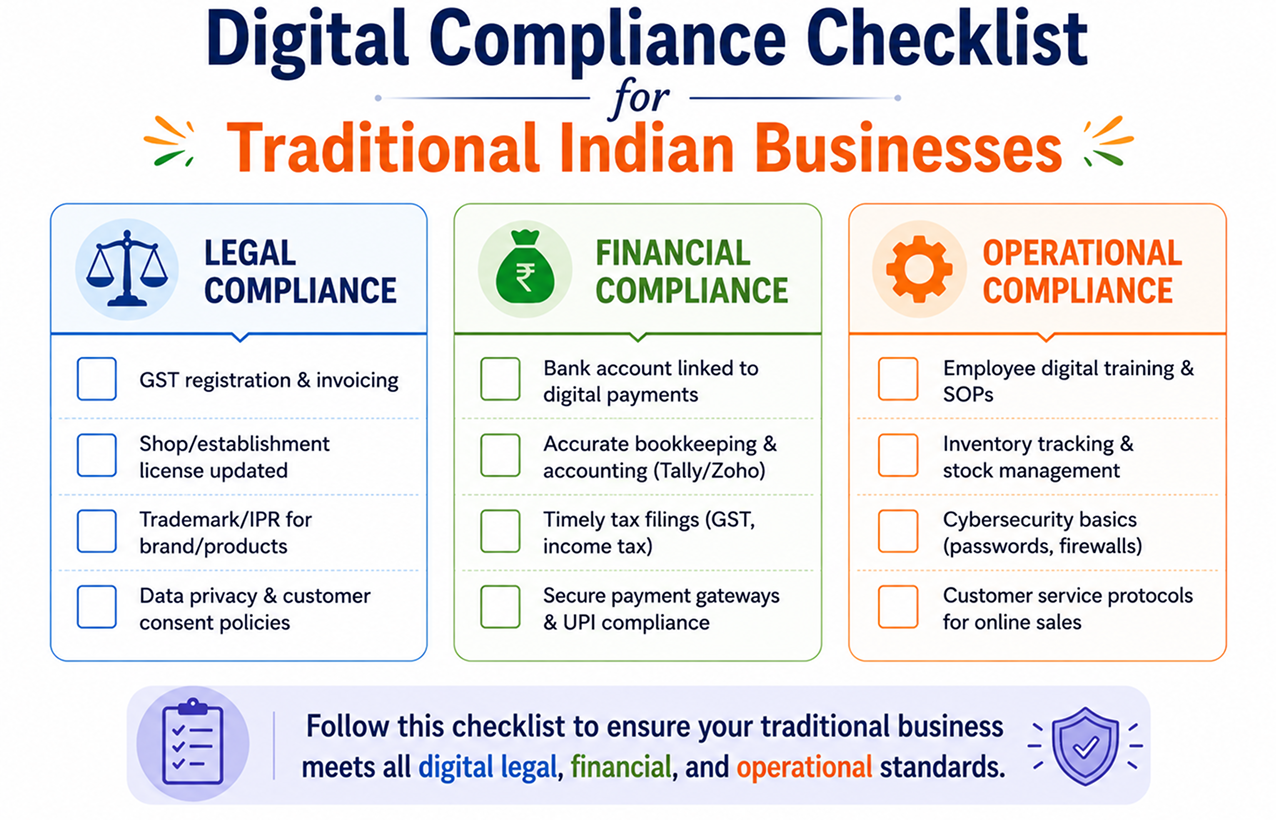
Make sure that your business is legally registered, online sales should be registered according to the GST, food businesses should be registered by issuing an FSSAI license, brand protection by registering a trademark, and privacy policies and terms of service should be provided on your site.
2. Payment Gateway Compliance
Compliant with the requirements of all payment-related regulations, including compliance with PCI DSS requirements, guidelines of the RBI regarding online transactions, an excellent refund policy and cancellation policy, and keeping customer payments secure, to gain trust and prevent any legal concerns.
3. E-Commerce Regulations
Adhere to the e-commerce regulations using the Consumer Protection Act, make the product listing correct and transparent, have a customer grievance redressal system, and follow the data protection and privacy laws to ensure credibility and prevent fines.
4. Industry-Specific Regulations
- Textile and Handicrafts: Meet the requirements of export and register on the GeM portal to sell to government buyers.
- Food Products: Get licensing of FSSAI, labelling of foods with clear display of ingredients, and give correct shelf-life details on all foods.
- Jewellery: Adhere to standards of hallmarking and comply with laws of precious metals.
People Also Ask: Is it possible to combine traditional marketing and digital marketing?
People Also Ask: Is it possible to combine traditional marketing and digital marketing?
Digitising the Supply Chain: Procurement to Delivery
Remodelling Back-End Operations
Digitalisation of small businesses in India is not just about marketing but about operational efficiency.
Digital Transformation in Supply Chain:
1. Inventory Management
Introduce digital inventory tools such as Zoho Inventory or Tally, use barcodes or QR codes to scan products, establish resource alerts, and track product movement. This guarantees proper stock management, avoids shortages, and maximises inventory performance.
2. Vendor and Artisan Management
Vendors onboard digitally and document, make orders digitally, use transparent online payments, and use analytics to monitor performance. This simplifies the process of supplier control, increases the sense of responsibility, the depth of relationships with the artisans, and the efficiency of the entire supply chain.
3. Logistics and Delivery
Combine with delivery services like Dunzo, Shadowfax, or Delhivery, enable instant tracking of orders, automate the generation of shipping labels, and track the effectiveness of delivery. These practices increase performance and minimise mistakes, and customer satisfaction with prompt deliveries.
4. Customer Relationship Management
Keep a database of customers online so as to know their buying history and favourites, send birthday or anniversary e-mails automatically and provide individualised promotions. This strategy enhances interaction, loyalty, and repeat business with relationship management that is based on data.
People Also Ask: What are the advantages of digital transformation to small businesses?
The advantages are greater efficiency in operations, lower cost due to automation, enhanced understanding of customers due to data, greater marketability due to geographic constraints, enhanced customer experience, competitive edge, and the ability to scale without necessarily increasing costs.
Digital Marketing Strategies of Traditional Indian Companies
Digital Marketing Strategies that are cost-effective
Online marketing for an offline business does not require a huge budget. Here are proven tactics:
1. Search Engine Optimisation (SEO)
Localisation of Physical Stores SEO:
Become more visible by improving your Google My Business profile by using the right information and updating it regularly. Engage and reply to customer reviews, develop localised content such as Best silk sarees in Kanchipuram and generate consistency between citations across online directories to increase local search positions.
Product/Service SEO:
Determine the search terms used by customers with the help of free tools like Google Keyword Planner. Write product descriptions and blog entries that are rich in keywords and elaborate on the actual questions of customers. Moreover, optimise all product pictures in a clear file name and phrase description alt text to be discovered better.
2. Social Media Marketing
Platform Selection:
Facebook: This is the best platform to use when local businesses want to establish a community presence and target customers aged 35 years and over.
Instagram: It is the most appropriate platform when the product is visual-driven and is aimed at young consumers, and for building a good lifestyle-driven brand image.
WhatsApp Business: It allows one to communicate with customers directly and personally, ease inquiries, orders and after-sales support.
YouTube: The best place to share tutorials, demonstrations, and brand storytelling by using engaging long-form video content.
LinkedIn: This is useful in the cases of the B2B and traditional business when they need to network, exchange expertise and find professional clients or partners.
Content Types That Work:
- Post behind-the-scenes videos that emphasise true craftsmanship and the effort that goes into every item.
- Publish customer reviews and testimonials to create credibility and inspire trust in potential buyers.
- Use festivals with themed images to display products to seasonal buyers and gain more attention.
- Develop educational content that describes how to take care of your products, e.g. how to care for your Pashmina shawl by washing it and keeping it clean.
- Organise live question and answer sessions where you get to meet the customers and answer their questions at the moment.
- Have customers create content on the website in order to enhance authenticity and brand-community relations.
3. WhatsApp Marketing
In the case of traditional companies, WhatsApp can be the most productive digital channel due to its ability to mimic the personal service which customers expect.
WhatsApp Strategy:
- Use different broadcast lists in reaching the distinct customer segments with product updates.
- Keep your product listing updated regularly to show the newcomers and keep customers interested.
- Provide real-time customer care by responding promptly to make sure that issues are resolved in time and the customer is satisfied as well.
- Deliver personalised greetings of the festival and offers to build a stronger relationship and promote sales.
- Share brief updates, time-based offers or behind-the-scenes business moments through WhatsApp status.
- Develop premium customer groups to provide early access, exclusive discounts, and engagement on the basis of loyalty.
4. Content Marketing:
Transfer good knowledge as a way of building authority in your niche. Share recipe posts on food companies, the care guide on textiles and crafts, cultural heritage posts, customer testimonials, a guide to seasonal trends, and DIY or styling ideas to communicate and entertain your followers.
5. Email Marketing:
Gather emails at points of sale and online. Mail newsletters once a month with new products, promotions of the festivals, cart abandonment, birthday or anniversary deals, and some helpful suggestions to build customer relationships and motivate them to make repeat purchases with the conventional business.
6. Influencer Partnerships:
Work with micro-influencers (5,000-50,000 followers) within your niche. They offer affordable, more authentic engagement, increased interaction and product seeding, product review campaigns, as well as geographic targeting of localities, which are useful in enabling traditional businesses to connect with relevant audiences.
7. Video Marketing:
Use videos to increase engagement more than when using text and pictures separately. Prepare product demonstrations, virtual store tours, interviews with the artisans, consumer unboxing, tutorials, and greetings at the festival.
Measuring Success: ROI Tracking and Analytics
Primary Key Performance Indicators for Traditional Businesses
1. E-Commerce and Website Metrics
- Website traffic: It is the total number of visitors that visit your website in a given period.
- Conversion rate: The percentage of people who visit a website and perform the preferred tasks, such as buying or registering.
- Average order value (AOV): The average price that customers pay on each order they make on your site.
- Cart abandonment: Shoppers who leave without making a purchase after putting items in the cart.
- Product page views: The overall amount of time that particular product pages are visited by visitors.
- Bounce rate: The rate of visitors who do not visit more than one page of your site.
- Time on site: The average time people take to browse your site before leaving or exiting.
2. Social Media Metrics
- Follower growth rate: The rate at which your social media followers are growing.
- Engagement rate: This is the measure of likes, comments, shares, and other interactions on your social posts.
- Reach: This measures the number of distinct users who view your content on social media sites.
- Impressions: Cumulative number of times your content is shown to the users, and also multiple views per user.
- Click-through rate (CTR): Percentage of the viewer population that clicks on links in your posts or advertisements.
- Time and rate of message response: The speed and consistency with which your team responds to incoming messages.
- User-generated content volume: The number of content that customers generate and share on your brand online.
3. Customer Metrics
- Customer acquisition cost (CAC): The average amount used to obtain a new paying customer.
- Customer lifetime value (CLV): The amount of money that a customer is expected to spend with the company during their period of engagement.
- Repeat purchase rate: Percentage of customers who make repeat purchases once they have made the first purchase.
- Customer satisfaction scores (CSAT): Customer satisfaction with received products or services.
- Reviews ratings and volume: The average rating and the number of reviews posted by your customers on the Internet.
- Net Promoter Score (NPS): Determines customer recommendation of your business to other customers.
4. Business Impact Metrics
- Online vs. offline sales ratio: Comparisons between the sales made through digital channels and the sales made through physical stores.
- Revenue growth: This is the increase in the total revenue of your business within a specific period.
- Expansion of geographic reach: Increased number of your customers in new cities, regions or locations.
- New customer segments acquired: Capacity to capture various forms of customers or demographics.
- Improvement in inventory turnover: The rate at which the products are sold and replaced in a given period of time.
- Reduction in the cost of operations: This is a drop in the cost of conducting business operations effectively and profitably.
Tools for Measurement:
Free Tools
- Google Analytics: Measures how people use your site, their traffic, turnover and referrals, allowing you to learn about how people use your site.
- Google My Business Insights: Can see the way the clients locate your business on the Search and on Maps, including the calls or requests to take directions.
- Facebook Insights: This will be an analytics tool that will offer page likes and reach, engagement, and audience demographics to gauge content performance.
- Instagram Insights: This tool shows post, story, reel, follower, and engagement metrics along with profile visits to improve the content strategy.
Affordable Tools
- WhatsApp Business Analytics: Provides insights into message reply rates, read receipts, and responses to interact with customers.
- Mailchimp (Email Marketing): Monitors the performance of email campaigns such as open rates, click-through rates, and the level of engagement with subscribers.
- Zoho CRM: This handles customer relations, leads, sales, and contacts in order to enhance business efficiency and conversions.
Platform-Specific Tools
- WhatsApp Business Analytics: Provides insights into message reply rates, read receipts, and responses to interact with customers.
- Mailchimp (Email Marketing): Monitors the performance of email campaigns such as open rates, click-through rates, and the level of engagement with subscribers.
- Zoho CRM: This handles customer relations, leads, sales, and contacts in order to enhance business efficiency and conversions.
Platform Selection:
- Shopify Analytics: Shopify Analytics offers detailed e-commerce data such as sales, traffic sources, product performance and customer behaviour.
- Amazon Seller Central Reports: Provides sellers with information about product listing, sales, customer reviews and marketplace trends.
People also ask: How do I measure the success of digital transformation?
The measurement is successful on a quantitative (revenue growth, cost reduction, acquisition of customers) level and qualitative (customer satisfaction, employee adoption, operational efficiency, and competitive positioning) level. In the case of traditional businesses, a balance between digital expansion, brand tradition and customer relations is the key.
Addressing Hurdles: The Roadblocks and Remedies
Challenge 1: Poor Digital Literacy
Solution:
Start with easy-to-use platforms, enrol in government digital literacy programs such as Digital India or PMEGP, invest in your own and employee training, recruit young talent or interns, and seek the advice of digital marketing agencies.
Challenge 2: Budget Constraints
Solution:
Begin with free solutions such as Google My Business, WhatsApp Business, and social media, stick with organic reach and paid advertising later, performance-based marketing, government digitisation subsidies, and start small with reinvested profits on digital sales.
Challenge 3: Online Product Quality Perception Maintenance
Solution:
Professional product photography, detailed descriptions, specifications, video demonstrations of quality and workmanship, certifications, customer reviews, and, just like that, easy returns will help establish trust in the buyers.
Challenge 4: E-Commerce Giants Competition
Solution:
Diversify around your distinctive value, such as authenticity, personalisation and heritage, establish community relationships, produce items that big players can not imitate, focus on local associations, generate special propositions, and capitalise on your brand narrative.
Challenge 5: Logistics and Delivery
Solution:
Collaborate with current logistics companies, begin with local deliveries and grow step-by-step, utilise hyperlocal delivery services, provide a variety of fulfilment choices, establish achievable timelines and scheduled times, and make packaging choices that are a representation of the brand values.
The Future of the Traditional Indian Business in the Digital Age
New Technology and Trends
1. Voice Search and Regional Language AI
With voice assistants being more advanced in Indian languages, you have a better chance of optimising your content when it comes to voice search queries such as: Mere paas wale banarasi saree ki dukaan (Banarasi saree shop near me).
2. Product Visualisation (AR) Reality
AR technology is now available, which gives customers the opportunity to put on jewellery virtually, plan furniture in their houses, or view how clothes wrap around people.
3. Social Commerce
Social media, such as Instagram, Facebook, WhatsApp, and others, are turning into full-fledged shopping platforms. The customers get to know about the product, compare and buy without leaving the application.
4. Personalisation with the help of Artificial Intelligence
Social media, such as Instagram, Facebook, WhatsApp, and others, are turning into full-fledged shopping platforms. The customers get to know about the product, compare and buy without leaving the application.
5. Hyperlocal Marketing
Technology also makes it possible to accurately target geographically, and traditional businesses can take over their local markets online and also expand selectively.
6. Blockchain of Authenticity
In the case of high-value traditional products (handicrafts, jewellery, organic products), blockchain can be used to verify authenticity and provenance to create trust.
Success Stories: Real Indian Businesses That Got It Right
Case Study: Bira 91 – Digital Innovation Comes in Traditional Brewing
Although Bira 91 is a contemporary brand, its concept of digital strategies for family business in India provides insight into traditional business:
What They Did:
Bira 91 concentrated on the creation of a robust social media group prior to the broad distribution, applying Instagram stories and reels, making content based on the experience, capitalising on user-generated stories, and developing direct-to-consumer channels.
Results:
The brand was developed as one of the fastest growing beers in India, cultivated a high level of millennial loyalty, gained a large market share and managed to challenge established competitors with some novel approaches, playing with digital and community marketing.
Lessons for Traditional Businesses:
It is a question of community and storytelling over product features, having a consistent brand voice across all channels, and customer experience, as well as using digital strategies, can enable smaller businesses to be competitive when competing with larger businesses.
Case Study: Paper Boat – Innovating the Old Indian Drinks
Paper Boat picked up the traditional Indian beverages (aamras, jaljeera, thandai) and produced their modern brand, which taught a lot regarding digital marketing for traditional businesses.
What They Did:
The brand made the product recognition with the nostalgic feelings of childhood, produced visually friendly content, collaborated with influencers, created a direct distribution channel, and communicated with customers through interactive social media campaigns at their best.
Results:
They have created a ₹668.28 crore brand on a blank piece of paper, created a category leadership in traditional beverages and an adequate digital presence that was successful in complementing their retail distribution channels, according to ENTRACKR.
Lessons for Traditional Businesses:
The heritage itself is a valuable asset, the packaging and presentation are important online, narrative is one of the elements that help to stand out among the competitors, and digital strategies will allow using the existing strengths of the business to target broader audiences effectively.
Takeaway
Empower Your Traditional Business: 90-Day Blueprint of Digital Transformation With Tools and Learning Resources.
Get this entire action plan today and begin changing your business digitally, step by step.
Conclusion: Your Digital Journey Begins Today
The process of becoming a digitally-enabled company instead of a traditional one is not about shedding who you are, but rather enhancing it. The digital age is not a weakness, but an opportunity to leverage your heritage, craftsmanship, and customer relationships. What was once successful in your business and made your business successful through generations, quality, trust, personal service, authenticity, all these are more important now in this world of impersonal transactions.
Digital marketing for traditional businesses is merely a matter of taking your business to where your customers are today, and more of them can be found online. The sweet shop, which used to depend on people passing by, is now able to reach all corners of the city. The struggling handicraft artisan has a chance to reach appreciative customers all over the world. The textile merchant will be able to display all their lines without having to limit them to physical shelf space.
The future businesses will prosper on those that respect the past and welcome the future. It is they who realise that digitalisation of small businesses in India is not something that threatens tradition – it is an instrument to keep it alive.
Your competitors have already started. Your customers are already on the internet. Whether to go digital or not is not a question at all; it is whether you will be at the forefront or behind.
Start small. Start today. You do not need to invest heavily and reinvent yourself to take the first steps towards a digital journey. It involves the readiness to learn, experiment and change. Start with a single step – perhaps it is the creation of that Google My Business account, better product photography, or opening WhatsApp Business.
This legacy that you have created should have a continuation. Your art must come to future generations. The clients who appreciate authenticity are seeking you- ensure that they can locate you.
Your conventional business tells a story. It is merely a new method of telling it in digital marketing.
Are you willing to change your traditional business? And begin with our action plans in the implementation, and remember, the good time to start was yesterday. The second-best time is now.
FAQs
What is the cost of digitalising a conventional business?
Zero investment can be initiated through free solutions such as Google My Business, WhatsApp Business and social media. No more than ₹10,000-25,000 can be spent to create a simple digital presence, such as a domain, a simple site, and initial marketing.
Will online marketing impact on my relationship with the current customers?
Yes, we offer local SEO services, including Google Business Profile optimisation, citation management, and location-focused content tailored for Hebbal searches to improve rankings in “near me” queries.
When will I start seeing the benefits of digital marketing?
First visibility improvement takes place in 2-4 weeks. Significant business impact normally takes place within 3-6 months through consistent effort. Digital marketing is more of a marathon than a sprint.
Will I require the services of a digital marketing agency?
Not necessarily. A large number of small companies handle their digital marketing on their own at first. Look at an agency when you are willing to grow big, do not have time to manage it regularly, or require expert knowledge in other fields, such as paid advertising.
What happens when my products are too conventional to be sold online?
Nearly any product can be sold online, provided it is done in an appropriate manner. Even companies such as fresh flower shops, traditional foods and custom jewellery sell well on the web. The answer is good packaging, effective communication, and dealing with customer expectations.
What should I do about negative reviews on the internet?
Reply to all reviews in a professional and timely manner. Appreciate positive feedback. In case of negative reviews, apologise, take concerns publicly and promise to take matters offline. Never argue or be defensive. A majority of customers like doing business with companies that are responsive to complaints.
Do I need to be on every social media platform?
No. You will have to begin with 1-2 platforms where your customers are most engaged. Learn them and then proceed to learn. Facebook, Instagram, and WhatsApp Business are all that is needed in the case of most traditional Indian businesses.
What should I do in order to compete with large online shops that can offer huge discounts?
Don’t compete on price alone. Contend on the authenticity, personalisation, story, quality, customer service and unique products which they cannot provide. A lot of customers will gladly pay extra for the real traditional products with a story.
How can businesses ensure data security and customer privacy?
Work with reliable sites that have built-in security. Do not store the payment information yourself. Disclose information on data gathering. Adhere to general security guidelines: use secure passwords, use two-factor authentication, and back up. Adhere to the data protection laws.
Is it possible to continue operating traditionally while going online?
Absolutely! Businesses that have succeeded most mix the two. Carry on with your face-to-face dealings with the customer, conventional criteria of quality and business ideals, but leverage digital applications to enhance reach and productivity.