
The Ultimate Content Creation Battle: AI VS Human Copywriting in 2025
Table of Contents
The AI Revolution: Understanding What Really Happening
The Current State of AI Copywriting Tools in 2025
The Human Touch: What AI Cannot Truly Replicate
Indian Success Stories: At the Forefront of the AI Revolution
Essential Skills for the AI Era
AI Content: Ethics and Challenges
The Indian AI Innovation Ecosystem
Just imagine this: You’re on your favorite blog, getting totally absorbed into an article about the future of work. The article has great flow, the insights offered are authentic and contextual, and the whole tone of the blog feels natural and human. And then to your surprise, it was the work of an AI! Mind-blowing, isn’t it?
Welcome to 2025, where the view into the AI-generated content and content of human creativity has become hard to distinguish the difference. That’s why content marketing is going through a great paradigm shift, and 90% of content marketers plan to use AI in the year 2025, as per the study report of Siege Media.
Fasten your seatbelts as we take a deep dive into the enthralling world of AI vs Human Copywriting, exploring everything from astonishing stats to real-life case studies that would forever change the way you think about content creation.
An Understanding of What Is AI-Generated Content
Imagine it as a writing assistant who has read every book, article, or blog of any kind ever written and somehow learned to imitate all these styles and tones. Such content can be produced in seconds, infinitely scaled, and customized for different target audiences at once without getting tired.
The Numbers Don’t Lie: Statistics showing the rise of AI
The statistics around AI copywriting adoption are staggering :
Most of the marketing teams reported that they can save nearly 70% of their time with the help of AI tools in content creation, as mentioned by WrightyMedia.
Companies are saving 40-60% of the cost that is required for content creation work, as per WrightyMedia. 68% of marketing teams that use AI tools in content marketing reported a significant growth in ROI, according to WrightyMedia.
The numbers, however, tell only part of the story. Despite the fact that AI has transformed the world of content creation, there are aspects where the human touch is irreplaceable, and that might just be surprising to many.
The Current State of AI Copywriting Tools in 2025
The tools that are dominating the revolution
AI copywriting has evolved drastically in these years, unlike the robotic-sounding content generation earlier. Now, these AI platforms are understanding context, brand voice, user emotions, and the psychology of the audience by becoming content partners.
ChatGPT: It is one of the popular names in content marketing, but here are some other specialized tools in the professional space;
Jasper AI: It is helping large marketing teams to create content across various channels by maintaining brand voice and consistency, and it is mainly built for enterprise-level content operations.
Copy.ai: It is mainly used for the marketing copy that is focused on more conversions. Those may be ad copies, emails, and product descriptions.
Writesonic: It is for SEO-optimized content at a large scale, such as blog posts, articles, and landing pages.
Grammarly: This tool is mainly used for writing assistance in real-time, especially for grammar, tone, and clarity of the content.
AI-driven tools are boosting the creativity of humans instead of replacing them completely. In 2025, it’s very important to combine AI platforms with human creativity to achieve success in the crowd.
Natural Language Processing is one of the critical technologies working behind AI content creation. It is helping AI to understand the intent, emotion, and problem behind the prompts given by users.
Contextual understanding: It helps to interpret the context of long documents.
Tone adaptation: It’s becoming easy to change the tone of content when it is necessary, such as for social media posts and business writing like blogs and articles.
Real-time fact-checking: AI gives the real data sources for the content to check the authenticity of facts.
Multilingual capabilities: It also provides translation in multiple languages to give localised and personalised content.
Business Intelligence Meets Conversational AI
Integration of NLP with business intelligence dashboards is one of the great developments to get quick insights. You will get instant analytics along with visuals, graphs and charts of data and actionable suggestions when you ask “How well our content performed in the last month?”, making it easy for you to analyse the data and plan according to that.
Democratizing data analysis means that content creators can now:
- Generate data-driven content strategies with no technical expertise
- Produce varied personalized content variations based on audience behavior
- Optimize content performance in real-time
- Predict trending topics just before they become popular
The Human Touch: What AI Cannot Truly Replicate
The Emotional Intelligence Gap
Now, this is where it gets truly interesting: while a computer program can give a copy that may seem perfect but it cannot address the subtle emotional nuances that really make content compelling. Human copywriters bring something unreplicable to the table that is real empathy.
MIT Media Lab research reveals an interesting fact that is people had much more empathy for human-made stories than for those of AI origin, despite being unaware of whether or not the stories were written by humans or it was of AI origin. This is showing the connection not just about their preferences.
Creativity is expressed differently by humans, while AI can hardly grasp the concept fully:
Cultural context: Understanding why a certain reference or idea would click in a particular audience’s mind.
Emotional Timing: Knowing exactly when to be serious, to be playful, or to be provocative.
Authentic voice: Possessing a unique perspective rooted in real human experiences.
Intuitive storytelling: Weaving stories that seem right to the heart and create a strong impact on audiences.
Trust is a very human thing. Content-wise, engagement from readers does not just mean they just gave the information; rather, they begin building a relationship with the voice that has given life to the words. These relationships are built based on:
Shared experiences: “I have been there as well” kind of emotional touch when sharing their own experiences while writing the content.
Vulnerable honesty: Admitting mistakes, doubts can seem vulnerable, but that connects with the audience and makes the content authentic.
Consistent personality: Gradually shaping and solidifying a recognizable voice can maintain the brand voice.
Ethical judgment: Deciding on what information to say and how to put that in front of audiences makes humans stand out.
The Hybrid Approach of the Future: AI and Human Collaboration
The Power of Strategic Partnership
Now, the most successful content operations of 2025 will not be choosing between AI and humans, but rather hybrid content workflows to harness the strengths of both. Thus, the emerging trend would be a hybrid approach.
How does this collaboration exactly work?
1. AI will do the bulk of the work: It works on research, outlining, first drafts, and data analysis
2. The humans will add the emotional touch: They work on strategy, emotional resonance, brand voice, and creative direction
3. AI will take care of optimization: A/B testing variations, SEO optimization, and performance tracking
4. The humans check the quality: Fact-checking, ethical considerations, and final approval
Real-World Successful Cases
There are tremendous outcomes for the companies practicing AI-human collaboration:
Nearly 30% of chances are there to innovate new products and services in the company with the help of human-AI collaboration, as per CONVIN.
According to Scientific Research, 74% increase has seen in engagement rated due to the use of AI in personalisation.
32% reduction in cost is observed in content creation after started to implement AI tools in companies, as per Number Analytics.
39% improvement has been seen in the depth of scroll, as recorded by Number Analytics.
Indian Success Stories: At the Forefront of the AI Revolution
Zomato’s GenAI Experiment: Launch of “Nugget”
Zomato launched its GenAI bet, called “Nugget,” which completely changed the way food delivery platforms create personalized content. The platform utilizes AI to provide personalized recommendations to customers, generate menu descriptions, and advertisement copies based on customer preferences.
Key Results:
– It generates personalised content and handles more than 15 million customer interactions
– By giving instant answers to queries, it reduces the time taken to solve the queries by 25%, as reported in Business Standard.
– It helps to generate automated social media content for restaurant partners
– It gave real-time campaign optimization based on user behavior
Swiggy’s AI-Powered Content Strategy
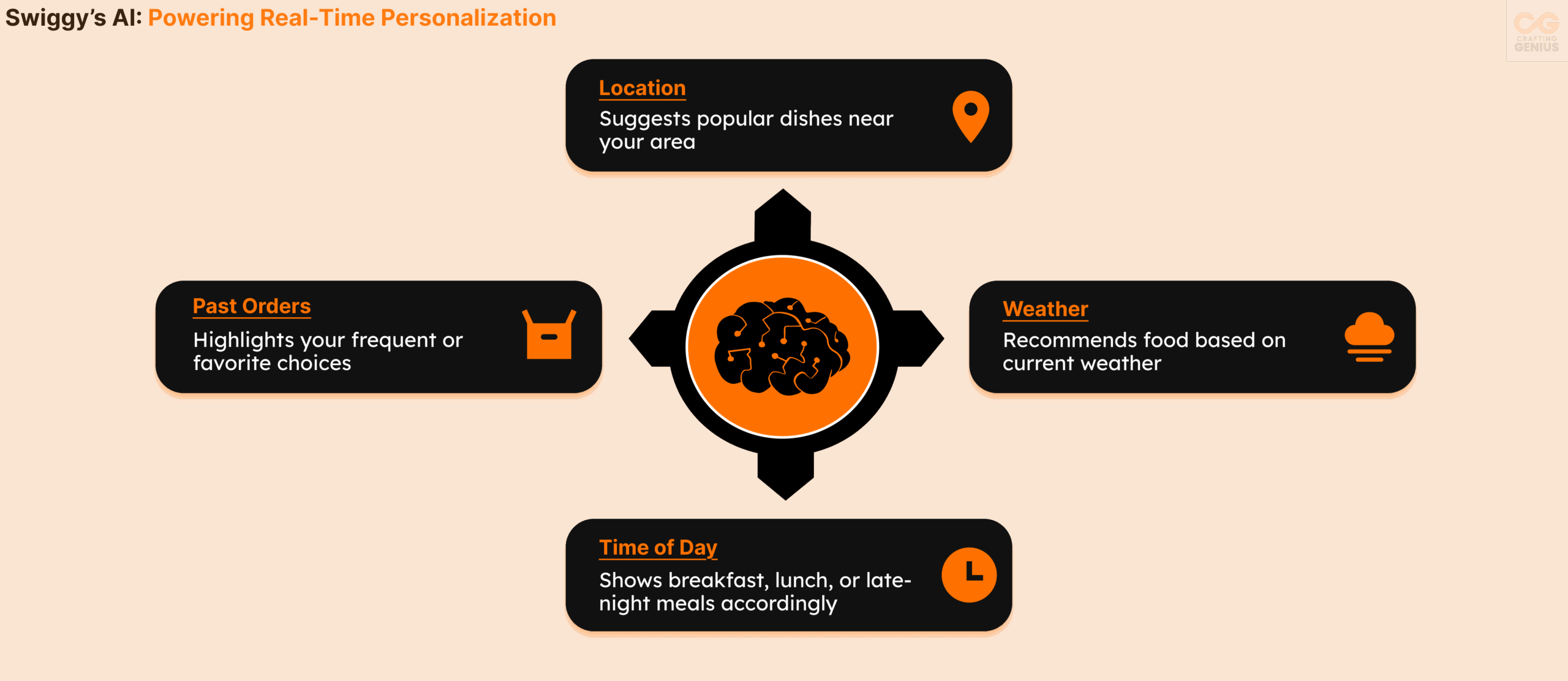
Swiggy utilised AI and machine learning to give highly personalised and data-based experiences to its customers. Below are the benefits the system provides:
- It suggests highly targeted offers and recommendations based on the location of users by detecting that with the help of AI.
- It gives recommendations based on the time, weather, and event context by understanding the needs of users at a specific period of time.
- It arranges campaigns based on festivals and events with the help of AI to give highly personalised and localised experiences like Holi, Diwali, etc.
www.craftinggenius.in
Indian EdTech and AI Content Creation
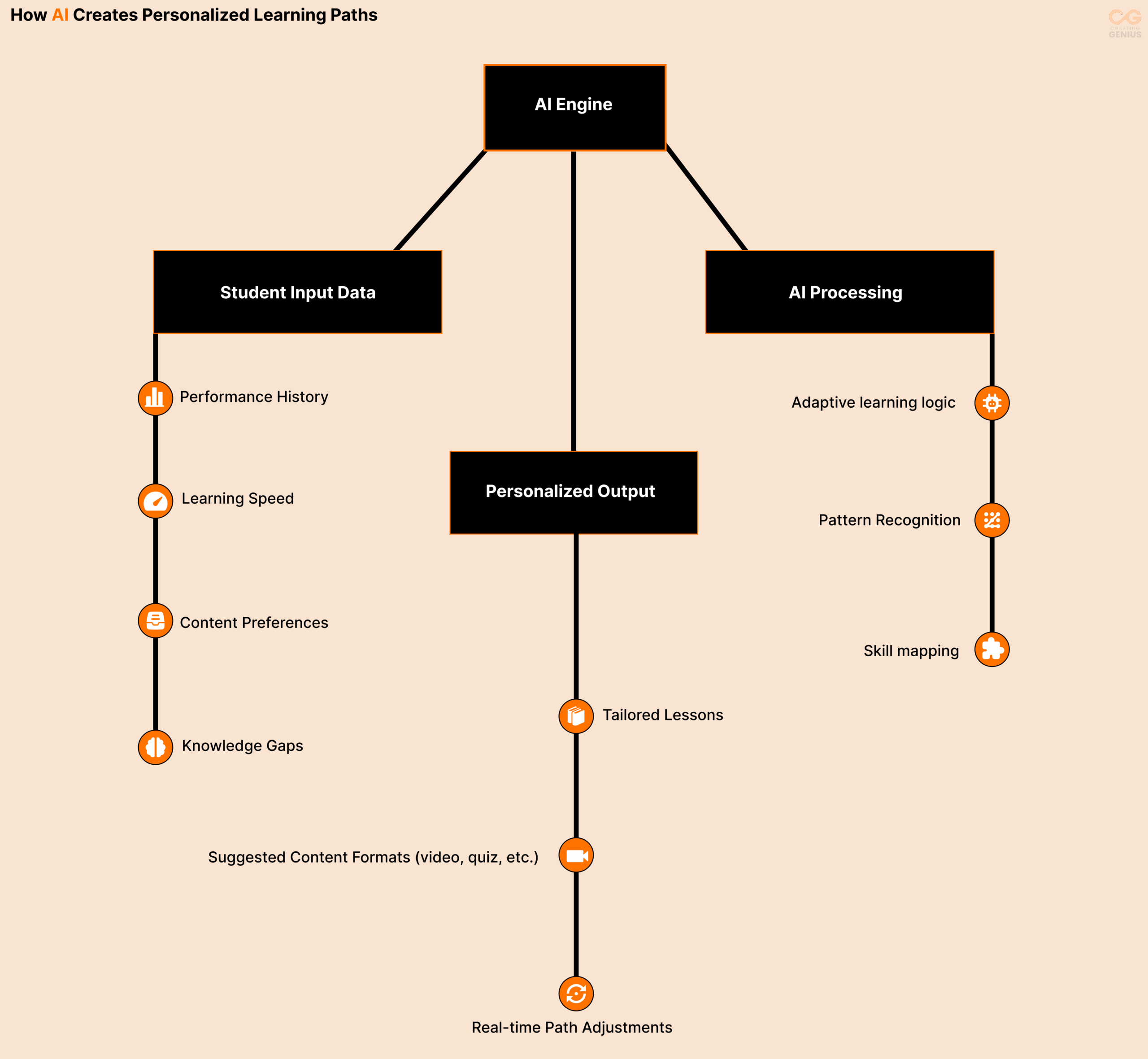
The companies, such as Unacademy and Vedantu, used AI to improve their business growth and succeeded in that. They utilised AI in the following areas:
- It is used AI to generate automated quizzes and educational content.
- To generate highly personalised study materials for different kinds of learning.
- To break the language barrier by providing content in multiple languages.
- To suggest content and give real-time feedback to students.
www.craftinggenius.in

www.craftinggenius.in
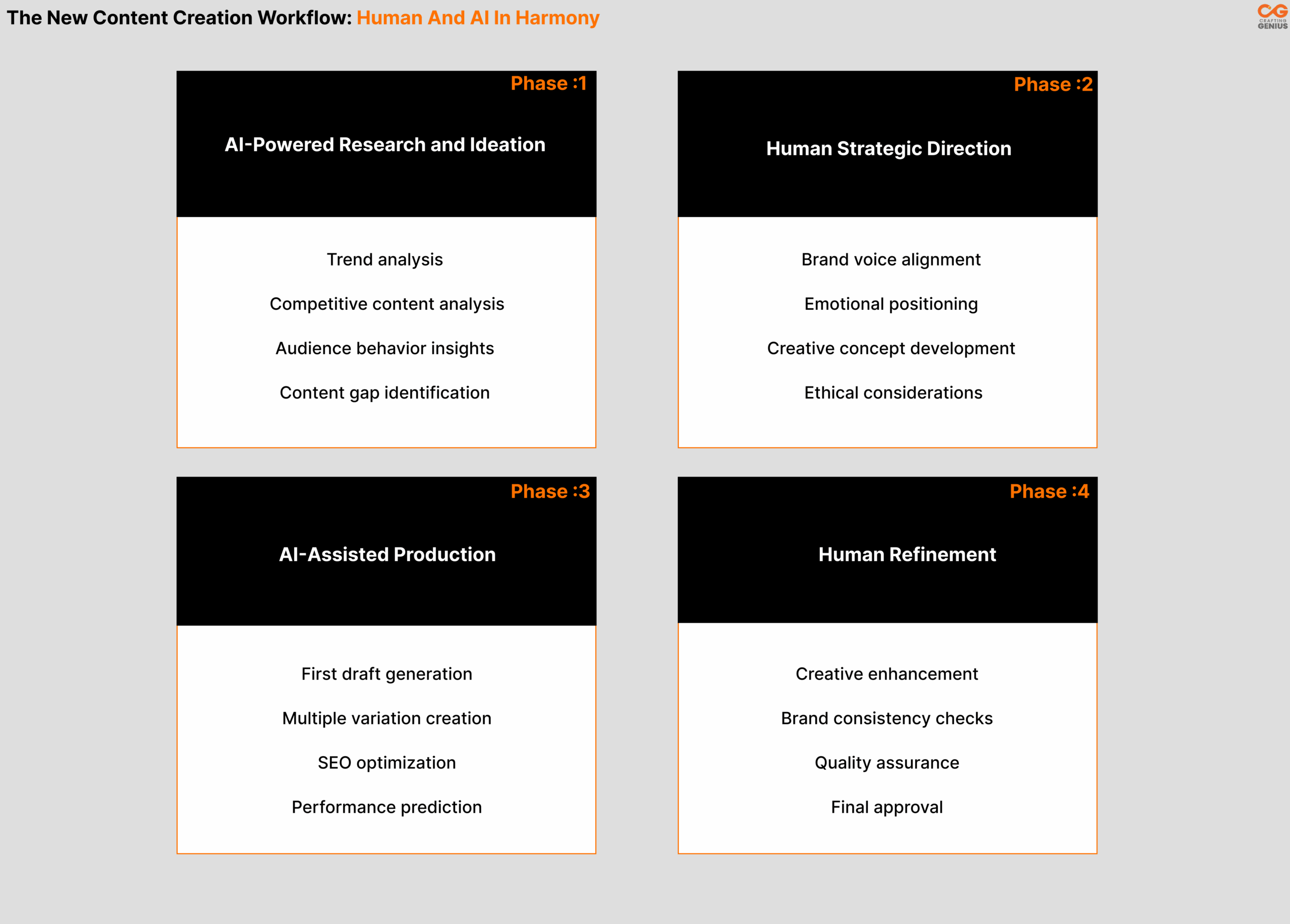
The most effective content marketing strategies in 2025 follow a hybrid model:
Phase 1: AI-Powered Research and Ideation implies using AI tools for trend analysis and topic discovery, competitor content analysis, understanding audience behavior, and identifying content gaps. This phase lays a data-driven foundation on which every campaign builds.
Phase 2: Human Strategic Direction lends further dimension to the program. Human strategists align the content with brand voice, emotional positioning, creative concepts, and ethical considerations in building the content with human touch, so the target audience can connect with it.
Phase 3: AI-Assisted Production is where AI generates first drafts, creates multiple varieties of the content, optimizes it for SEO, and predicts performance outcomes when leveraged for increased efficiency. It ensures choices made are based on data-driven, not assumptions.
Phase 4: Human Refinement is the critical stage here. In this phase, content writers should enhance a creative touch, check on brand consistency, ensure quality, and give the final approval after verifying. This combination of AI power and human wisdom at every stage guarantees that brands are creating quality content that gives a high engagement rate and ROI in this volatile digital era of 2025.
The Skills Evolution: What Writers Need to Know
The Changing Role of Copywriters
By missing the bigger picture, copywriters are panicking over AI is replacing copywriters. AI copywriting changes the rules of the game for sales prospecting professionals. In 2025, it is no longer just about writing texts but creating content most apt for prospects’ needs.
Essential Skills for the AI Era
Professional copywriters of today have evolved into:
Content strategists: Developing overarching narrative frameworks that help to guide brand messaging.
AI prompt engineers: Crafting instructions for the working guide of AI tools.
Brand voice architects: Maintaining consistency across all touchpoints, like the brand tone, consistency, and brand identity.
Performance analysts: Optimize content effectiveness by analysing the data to improve the content for better performance.
The most successful writers in 2025 have these hybrid skills:
Technical Skills:
Prompt engineering: the art of creating good instructions that make AI do what we want.
Data analysis: the comprehension of metrics to know the performance and insights about the audience
SEO optimization: being able to maximize visibility in search results, but in parallel maintain engagement rates.
Multi-platform adaptation: Optimising the content that works well across all the digital channels.
Creative Skills:
Emotional intelligence: To be able to comprehend and express human emotions, to be remembered in the minds of users.
Brand storytelling: Crafting the story that connects and impacts the users.
www.craftinggenius.in
AI Content: Ethics and Challenges
The Transparency Imperative
With AI-generated content becoming more sophisticated, disclosure has become an imperative. India is becoming Ground Zero for how the developing world will push artificial intelligence while respecting copyright and setting precedents for global policies around AI content
Current Challenges:
Trust in the reader: When and how to disclose the AI engagement in the content creation to the users, building authenticity and transparency.
Legal compliance: To adhere to the rules and regulations by the government and regulatory bodies that demand transparency by asking to label the AI-generated content.
Ethical Standards: Keep honesty in content generation while working with AI to increase efficiency.
Brand authenticity: Finding a balance between automated content and human voices to keep the emotional connection intact with audiences.
Copyright Dilemma
Key Considerations for Indian Businesses:
The training data sources: Learn about what content the AI model was trained on, like books, websites, or any other public sources, to avoid the bias and duplication of content.
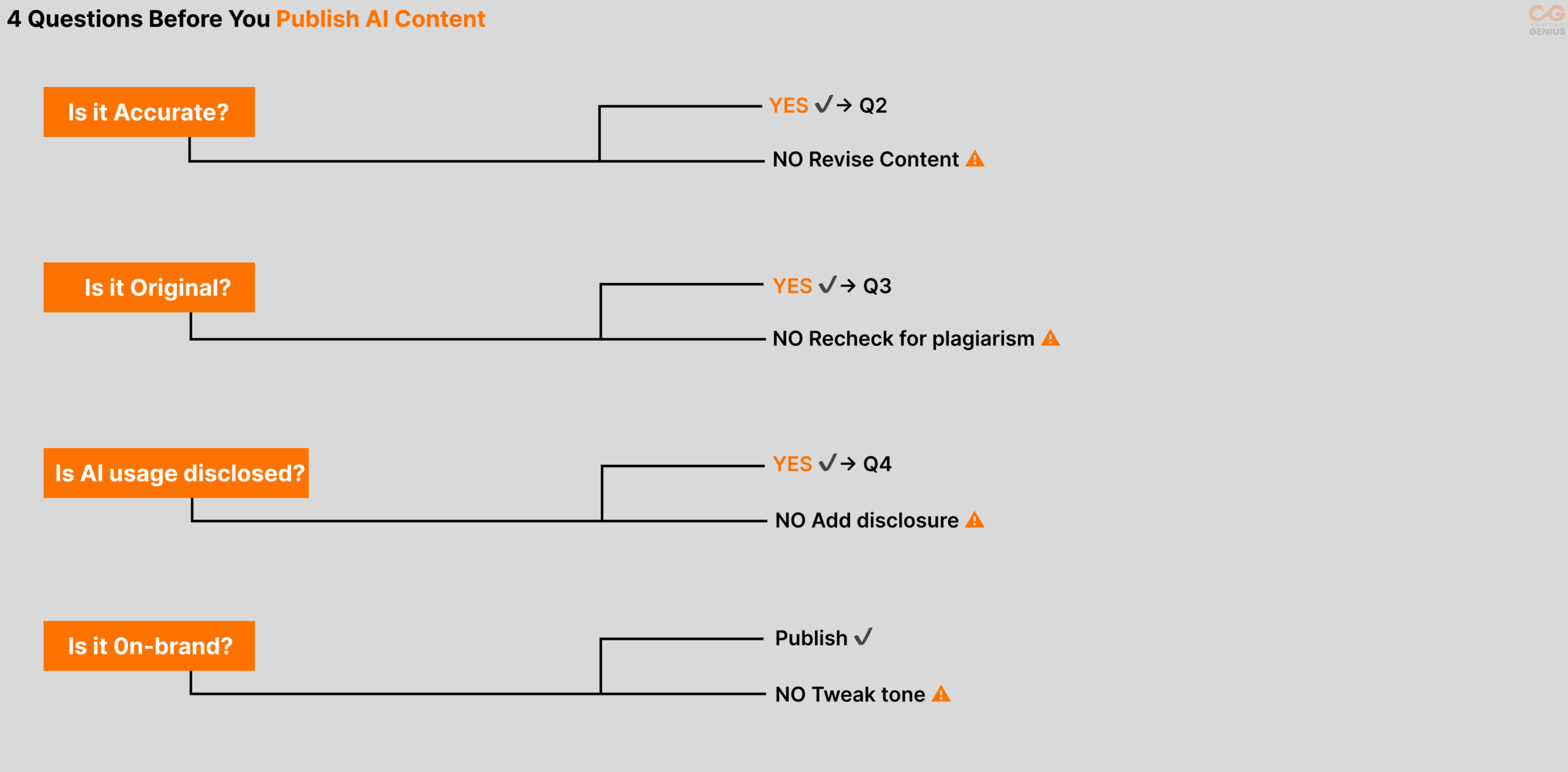
Originality checks: Always make sure that you check the plagiarism to avoid copyright issues by duplicating the content from other published sources.
Attribution requirement: When to acknowledge your sources, if the AI model uses specific sources, it’s important to give credit to the original sources.
Legal schemes: To be aware of all the updated laws regarding copyrights is critical.
How to Focus on Quality in AI Content Era
Quantity over quality: Publishing more content without any proper review of the content.
Consistency Challenge: Keeping the brand voice consistent across the AI-generated content has become a major challenge.
Fact-checking negligently: Not giving attention to fact-checking after the content generation from AI tools.
It’s crucial to review the content carefully, like fact-checking, monitoring the tone and voice of the brand, and checking the clarity and originality of the content.
The Future Landscape: Predictions and Trends
Emerging Technologies and Their Impact
Multimodal AI: It integrates features of generating multiple forms of content like video, text, audio, and images to enhance engagement and make no need to use multiple tools or any manual work.
Real-time personalization: It gives content that is highly personalized to users based on their past interactions, preferences, and location by adapting instantly.
Voice and tone cloning: These advanced features of AI can imitate the voice and tone of brands and also copy the writing style of people, maintaining the consistency in all content formats.
Predictive content: Creating content on predicted trends by analysing future trends, user data, and search patterns of users.
The Indian AI Innovation Ecosystem

www.craftinggenius.in
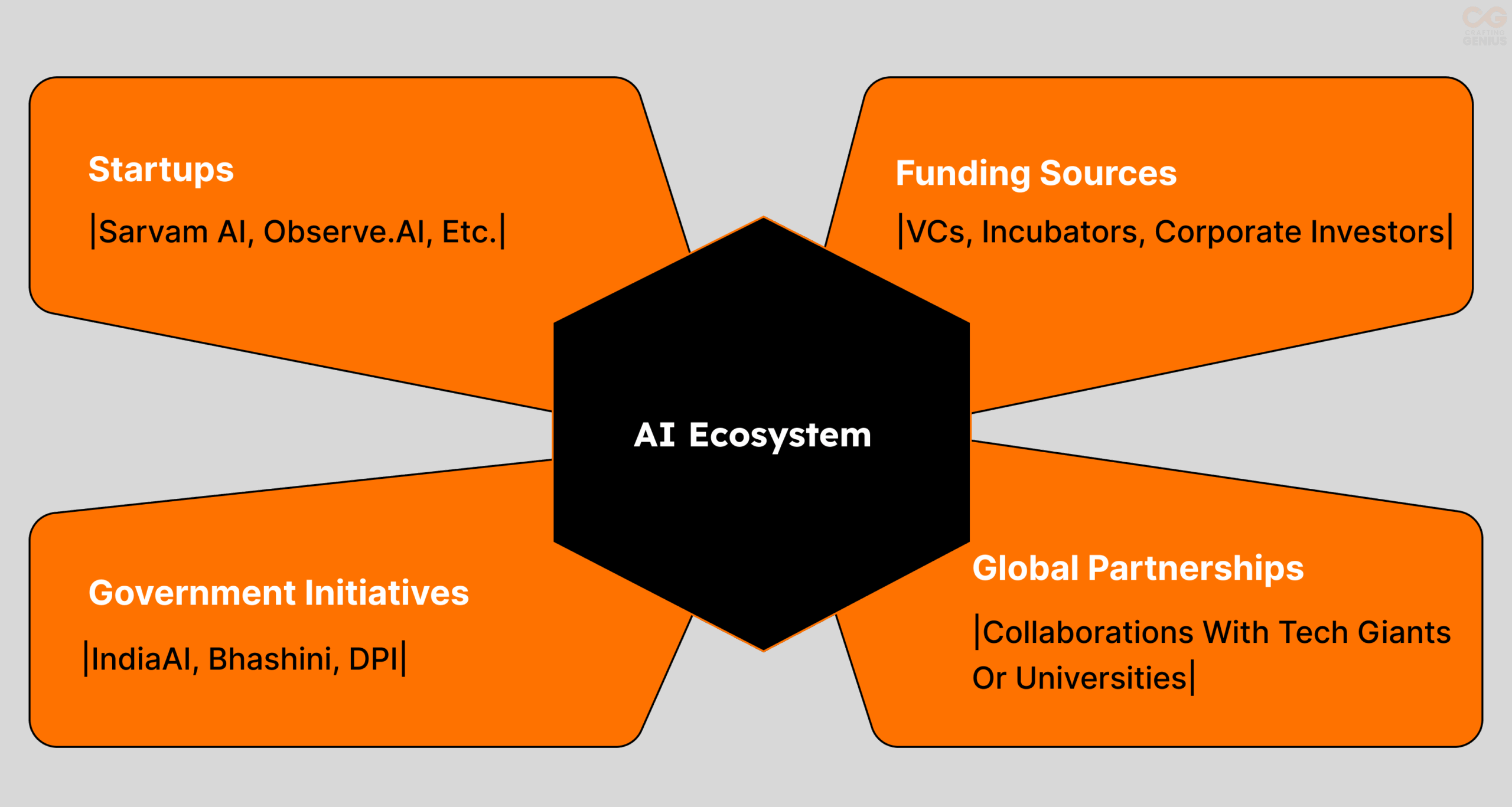
The driving forces act to transform the Indian AI content ecosystem across industries. The National AI Mission of the Government has invested more than ₹10,300 crores in AI research and digital infrastructure, as reported by the Ministry of Electronics and IT. In the meanwhile, initiatives such as BHASHINI have already resulted in over 300 Indian language AI models that enhance inclusivity, as per Microsoft.
www.craftinggenius.in
AI is a number-one strategic priority for 80% of big corporate companies in India, according to ET CIO, and on that count, rapid adoption for content personalization, marketing, and customer support is underway. These activities collectively put India in the direction of scalable AI content solutions, thereby establishing the country as a powerhouse of digital transformation.
Industry-Specific AI Transformations
Product Descriptions at Scale: AI tools create high-quality product descriptions in a minute that can rank on Google SERP by having SEO rich and relevant content and this improves customer engagement.
E – commerce and Retail
Personalized Marketing Campaigns: AI and machine learning help to provide highly personalised content to users based on their search patterns, interests, and past purchases.
Customer Service Automation: Chatbots and virtual assistants enhance customer experiences and reduce the cost for customer service by providing services immediately and anytime.
Social Media Content Generation: AI tools assist humans in so many ways, like analyzing trends, creating posts, and maintaining the brand voice etc., to increase the engagement rate.
Healthcare and Pharma
Medical Content Verification: Natural language processing models analyze clinical documents and are used to flag internal inconsistencies, reducing errors, and maintaining data consistency.
Patient-Education Materials: For instance, AI can further adapt medical information to account for different formats and languages, to enable patients to make their own decisions.
Regulatory Compliance Documents: Automated systems generate and cross-check compliance files, so that less manual input is required, making compliance possible under an exceedingly complicated regulatory framework.
Research Publication Assistance: The AI suggests literature, summarizes important findings, and assists in manuscript preparation, thus fast-tracking medical research.
Financial Services
Compliance Documentation: AI can automate drafting and evaluation of regulatory reports, hence reducing non-compliance risks and speeding up audits.
Customer Communication: Personalized communication powered by AI-engines, chatbots, or messengers would provide improved user experiences and handle the very simple inquiries efficiently.
Market Analysis Reports: The AI models work on large datasets to identify patterns, predict trends, and come out with actionable market-level insights.
Educational Content Creation: AI systems transform complex financial jargon into easy language for diverse audiences in support of financial literacy initiatives.
Measuring Success: KPIs to Track AI Human Collaboration
To weigh the impact of AI-human collaboration upon the creation of content requires a mixture of efficiency and engagement metrics. A few relevant KPIs are:
Efficiency Metrics
Content Production Speed: Time from content briefing to publication must be tracked. Production cycle gets greatly compressed via AI assistance, with the AI tools significantly reducing the time needed to generate the content.
Cost per Piece: Analyze the financial efficiency while calculating the total spend per piece, including the AI licensing fees and any human editing time.
Quality Consistency: Assess standard output quality by monitoring the error rate, factual correctness, and brand guideline adherence to track the quality of the content.
Resource Allocation: Properly analyze assignment distribution between AI and human contributors to make sure there’s a maximum use of both capabilities.
Engagement Metrics
Audience Response: AI versus human-created content engagement rates (likes, shares, comments) should be compared.
Conversion Performance: Track performance metrics such as click-through rates and conversion rates to bind the content creation methodology to business results.
Brand Sentiment: To monitor the sentiments of customers toward your brand, use social listening tools.
Trust Indicators: Always seek feedback from your customers in the form of ratings, comments, and reviews for credibility.
Almost 90% of marketers use AI in their day-to-day marketing activities, and 71% of marketers use AI weekly and sometimes more than that, as per the report of the American Marketing Association and Lightrics.
Building an AI Content Strategy
Implementation Framework
The entire concept of creating a successful AI content strategy requires a concrete, multi-step approach that aligns technology with organizational goals and team capabilities.
Below is a neat framework for guiding your implementation:
1. Evaluation Phase
In this phase, you have to monitor your present workflow, like looking at the strengths and weaknesses, workflow logistics, gaps in content creation process, and existing resources. This will help you to understand what your workflow is lacking and exactly at which areas you need to improve by using AI tools.
2. Selection of tools
In the second stage, you have to do research to know which tools are best for your business needs. And also look at things like scalability, how well it integrates with your current system, and user friendliness, for example, ChatGPT, Jasper, etc.
3. Training the Team
Consider providing AI training to your content team. Investing in workshops and training and providing continuous opportunities for learning would ensure that the team is comfortable working alongside AI tools and is aware of their capabilities and limitations.
4. Pilot Testing
For testing purposes, apply new AI-human workflows to low-risk or less-intriguing content projects in order to weigh the outputs. Take into account feedback from the evaluators and incorporate improvements until it is ready for deployment at a large scale.
5. Scale and Optimize
Scale the successful AI-driven processes to more significant content initiatives. Carefully observe all outcomes, gather analytics, and enforce changes for greater performance towards maximizing strategic impacts.
The Verdict: And Who Really Wins?
After weighing the evidence, statistics, and real-world scenarios, the answer becomes apparent: the future is collaborative.
The Hybrid Edge
Artificial Intelligence Excels At:
Speed and scale: Mass production of content without getting tired, and this is impossible for humans.
Data processing: Researching trends and audience insights by using real-time data to help humans plan the content accordingly.
Consistency: Keeping brand voice intact throughout so many content formats to maintain the consistency of brand voice and tone.
Optimization: A/B testing and improving performance by trying different content formats with performance analysis.
Humans Excel At:
Emotional connections: Creating content that deeply connects with users by adding emotional touch, real experiences, and conversational tone.
Creative innovation: Generating unique points and perspectives on the concept of content by their creativity.
Cultural sensitivity: Gaining contextual understanding of social nuances to adapt the tone, messaging, and visuals according to that.
Ethical judgment: Making responsible content decisions by being aware of misinformation, duplication, and discrimination in the content.
The Bottom Line
By 2025, the most thriving content players will never ask: AI or human? Instead, they’ll ponder: How can we take advantage of both to create better things than either could do in their own way?
Every progressive organization that can make it through the coming years will master this fine line, producing content with all the powers of machines and the spirit of human creativity.
The content battle is not AI versus humans; it is about humans and AI coming together to create something truly amazing.
Takeaway
Excited to level-up your content creation workflow?
Here are the best tools to boost your content creation, along with pricing and best features.